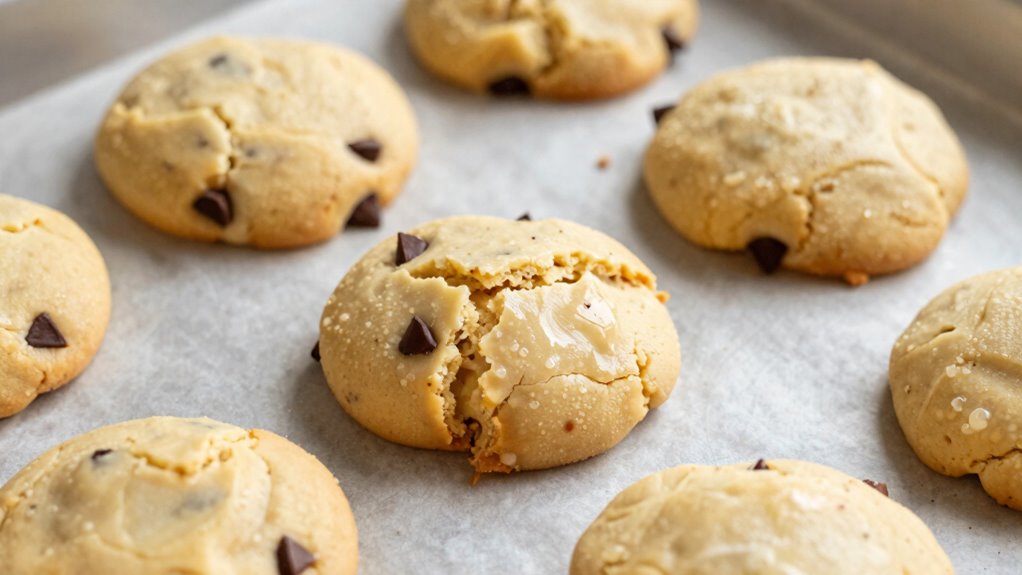

Even if your cookie dough looks perfect before baking, uneven baking can happen due to internal inconsistencies. Factors like dough temperature, handling, and ingredient distribution impact how evenly your cookies bake. Overmixing, uneven heat, or dough that’s too soft or stiff can cause hotspots or undercooked centers, despite their appearance. Understanding these hidden issues helps improve your results, and you’ll discover even more tips to achieve consistently baked cookies as you explore further.

Get baking supplies delivered free with Prime
- Fast, free delivery on millions of items
- Prime Video, Amazon Music and more included
- Member-only deals all year
Key Takeaways
- Variations in internal dough consistency can cause uneven heat penetration despite a smooth exterior.
- Inconsistent dough temperature or texture can lead to uneven spreading and baking results.
- Oven temperature fluctuations or improper calibration result in uneven baking, even if dough looks perfect.
- Overmixing or improper handling affects internal structure, causing uneven baking despite appealing dough.
- Resting dough helps distribute moisture evenly, reducing the risk of uneven baking.
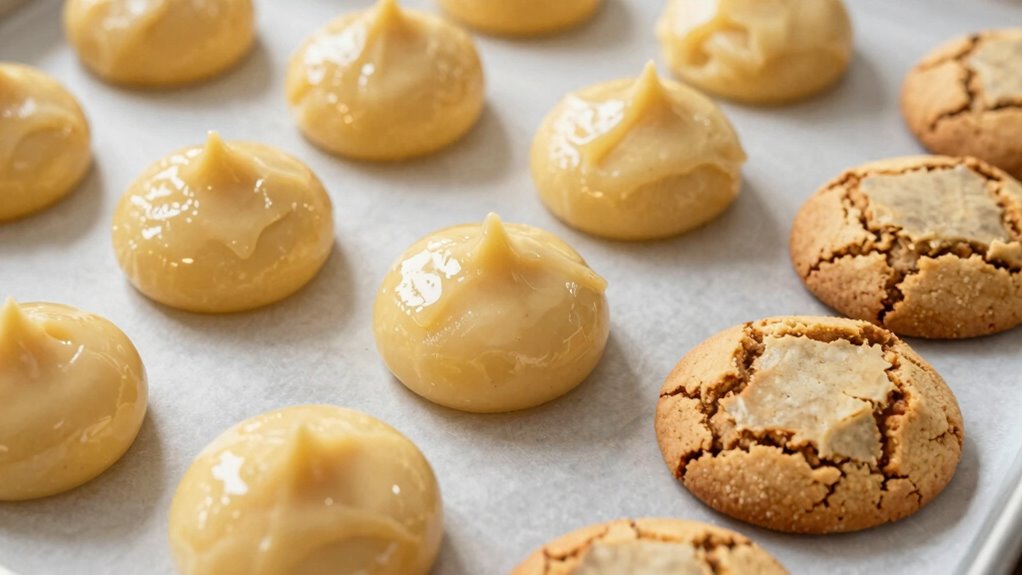
Sometimes, cookie dough can look perfectly smooth and uniform but still bake unevenly. It’s frustrating when your cookies come out with uneven centers or edges that are overdone while the middle remains undercooked. The reason often lies in issues with cookie dough consistency and oven temperature variability. Even if your dough appears perfect to the eye, its internal structure can be inconsistent, affecting how it bakes. If the dough is too cold or too warm, or if it contains unevenly distributed ingredients, certain parts will heat differently in the oven, leading to uneven baking.
Uneven baking can occur even with smooth, uniform dough due to internal inconsistencies and oven temperature issues.
Your cookie dough consistency plays a significant role in how evenly your cookies bake. If the dough is too soft, it spreads too quickly during baking, causing thin, uneven cookies. Conversely, if it’s too stiff, it may not spread enough, resulting in dense, uneven shapes. Achieving the right consistency means balancing ingredients properly—measuring flour accurately, not overmixing, and ensuring butter is at the right temperature. When the dough is uniformly mixed and has a consistent texture, heat penetrates more evenly, resulting in cookies that bake uniformly. Additionally, understanding how oven temperature variability affects baking can help you troubleshoot uneven results more effectively. Paying attention to oven calibration can make a noticeable difference in your baking results. Properly resting the dough before baking can also promote more even baking by allowing ingredients to meld and moisture to distribute evenly. Furthermore, using an oven thermometer can help ensure your oven maintains a consistent temperature throughout baking.
As an affiliate, we earn on qualifying purchases.
Frequently Asked Questions
Can Overmixing Cookie Dough Cause Uneven Baking?
Yes, overmixing your cookie dough can cause uneven baking. When you overmix, it increases the dough temperature and develops too much gluten, resulting in denser, uneven cookies. Using the right mixing technique helps keep the dough temperature consistent and prevents overworking the ingredients. Be gentle when mixing and stop as soon as the ingredients are combined to guarantee even baking and a better texture.
Does Using Different Types of Flour Affect Baking Results?
Using different types of flour can definitely affect your baking results. You might notice flavor inconsistencies because each flour type has a unique taste. Texture variations also occur, as some flours absorb more liquid or create a denser crumb. When you switch flours, it’s best to adjust your recipe accordingly to maintain flavor consistency and achieve the desired texture, ensuring your baked goods turn out perfect every time.
How Does Oven Placement Influence Cookie Baking?
Think of your oven as a silent judge, where placement influences fairness in baking. When you position cookies on the middle rack, you guarantee even oven temperature consistency, like a balanced judge. Placing baking sheets on the top or bottom can cause uneven heat exposure, especially if your baking sheet material isn’t reflective or insulating enough. Always aim for center placement for the most uniform baking results.
Can Substituting Ingredients Impact Cookie Uniformity?
Yes, ingredient substitutions can impact cookie uniformity. When you swap ingredients, like using different types of flour or fats, it affects how the dough bakes and spreads, leading to uneven cookies. Additionally, substitutions can alter flavor variations, which might influence how the dough behaves during baking. To guarantee consistent results, measure substitutions carefully and understand how each change affects the dough’s structure and baking process.
Is It Better to Chill Dough Before Baking?
Chilling your cookie dough before baking is definitely better, as it helps control dough temperature and improves cookie uniformity. When you store cookie dough in the fridge, it firms up, making it easier to handle and ensuring even baking. Plus, cold dough prevents excessive spreading, leading to consistent shapes and textures. So, always chill your dough for better results, especially if you want evenly baked, delicious cookies.
As an affiliate, we earn on qualifying purchases.
Conclusion
So, next time your cookie dough looks perfect but bakes unevenly, remember it’s like trying to smooth out wrinkles on a paper—sometimes, the heat just doesn’t distribute evenly. Adjust your oven temperature, even out your dough, and give your baking sheet a gentle turn halfway through. With these tweaks, your cookies will come out as beautiful and uniform as a well-choreographed dance, turning your kitchen into a baking stage worthy of applause.
As an affiliate, we earn on qualifying purchases.
silicone baking mats for cookies
As an affiliate, we earn on qualifying purchases.
As an affiliate, we earn on qualifying purchases.
Halloween Picks
halloween
As an affiliate, we earn on qualifying purchases.