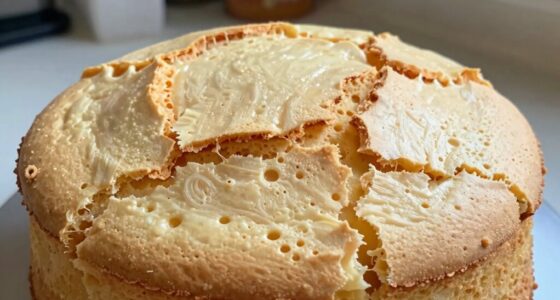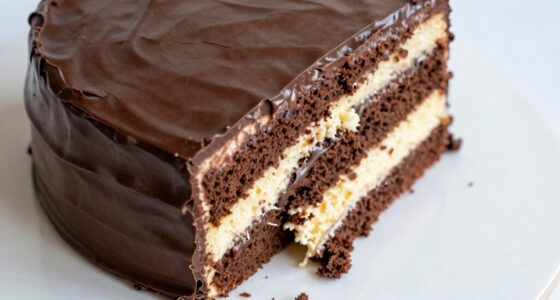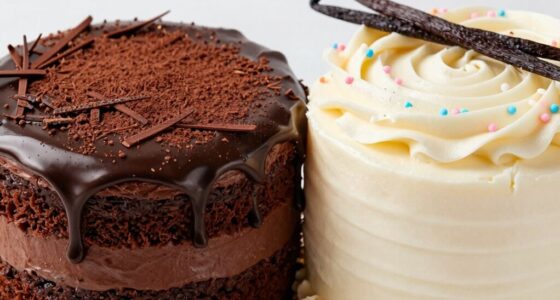

If your cake batter feels excessively sticky, lumpy, or overly dense, it’s a sign that something’s wrong early on. These textures often mean you’ve added too much flour or haven’t incorporated liquids properly, leading to poor consistency. An uneven batter can cause uneven rising and dense spots. Catching these signs now helps prevent bigger problems later. Keep going, and you’ll discover more tips to troubleshoot and improve your batter for perfect cakes.

Get baking supplies delivered free — and shop member deals
- Fast, free delivery on millions of items
- Access to Prime Big Deal Days deals on October 6–7
- Prime Video, Amazon Music and more included
Key Takeaways
- Batter appears streaky or has pooling liquids, indicating poor mixing or ingredient imbalance.
- Excessively sticky or tacky surface signals overmixing or too much fat or sugar.
- Batter feels overly thick or stiff, suggesting too much flour or insufficient liquids.
- Runny, thin batter often points to overmixing or excessive liquid addition.
- Uneven texture with lumps or graininess indicates incomplete blending or improper ingredient incorporation.
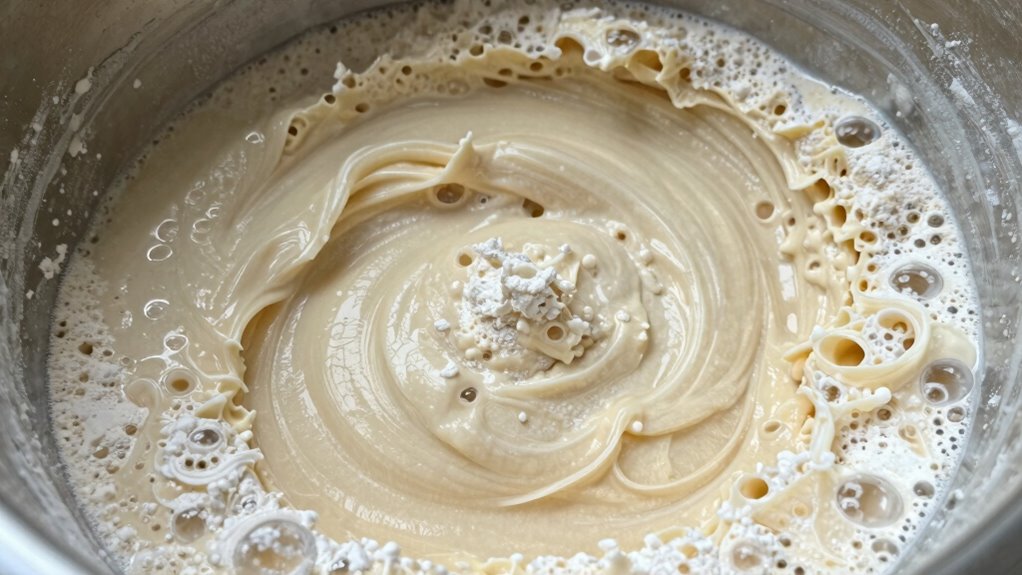
When you’re mixing cake batter, paying attention to its texture can save you from common baking mishaps. The consistency you aim for isn’t just about appearance; it’s a direct reflection of proper baking technique and ingredient balance. If your batter feels too thick or too runny, it’s a sign that something’s off with your ingredient ratios or mixing process. The proper batter consistency ensures your cake bakes evenly and develops the desired texture. Achieving the right baking consistency is crucial because it ensures your cake bakes evenly and develops the desired texture. When the batter is too stiff, it indicates that either too much flour was added or that the liquids haven’t been incorporated properly. Conversely, if it’s overly loose, it might mean you’ve used too much liquid or haven’t mixed enough to develop gluten structure.
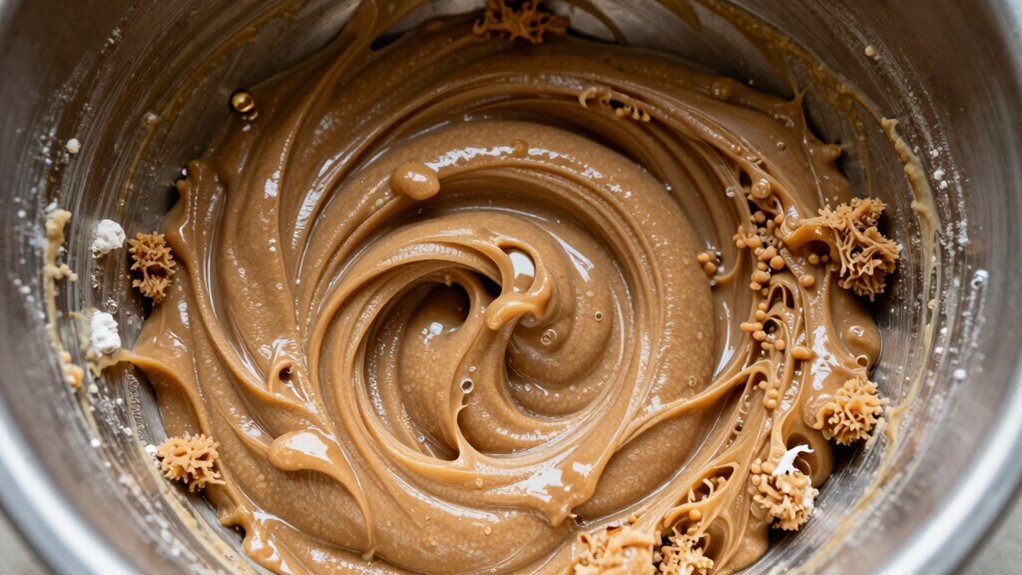
Your goal should be to reach a smooth, pourable consistency that holds some shape but flows easily off the spoon. If you notice air bubbles popping prematurely or the batter looks dense and heavy, it suggests that you’re not balancing your ingredients correctly. Correct ingredient ratios are essential; too much sugar or fat can alter the batter’s texture, making it overly greasy or sticky, while too little can lead to a dry, crumbly cake. Proper measurements and ingredient proportions help maintain the right moisture level and structure, which directly impacts baking consistency. When mixing, be mindful of how the batter feels—if it’s lumpy or grainy, it may mean ingredients haven’t been fully blended or that you’ve added ingredients at uneven rates. Understanding the texture signals your batter gives you can help you make real-time adjustments during mixing.
Another signal that your batter is in trouble is the presence of inconsistent texture throughout. For example, if you see streaks of unmixed flour or pooling liquids, it points to poor mixing or incorrect ingredient ratios. These inconsistencies can cause uneven rising and dense spots in your finished cake. These signals can be more subtle, such as a slightly sticky or tacky surface, but they still indicate a need for adjustment. You should aim for a uniform, glossy batter that falls in slow ribbons from the spatula, indicating proper aeration and ingredient integration. If your batter is thin and runs off the spoon too quickly, it might be overmixed, which can deflate the air bubbles that give your cake its lift. Overmixing or undermixing can both lead to undesirable textures, so paying close attention to how the batter feels and looks helps you catch problems early.
Furthermore, ingredient quality can significantly influence the batter’s texture, so always use fresh, high-quality ingredients for the best results. Being aware of batter consistency signals allows you to troubleshoot effectively during the mixing process and prevent common issues before baking. Recognizing these signals early, especially through texture cues, keeps you from overworking your batter or baking with flawed mixtures, leading to a more successful, delicious result.
As an affiliate, we earn on qualifying purchases.
Frequently Asked Questions
Can Batter Texture Vary Between Different Cake Recipes?
Yes, batter texture can vary between different cake recipes. For example, some cakes require a thicker batter to hold structure, while others need a lighter, more fluid mix. This affects your cake’s texture and even your cake decoration options later. Pay attention to baking timing and batter consistency to guarantee your cake turns out perfect. Adjustments might be necessary to match the specific recipe’s desired texture, so stay attentive during mixing.
How Does Ingredient Temperature Affect Batter Texture Signals?
When ingredient temperature varies, it impacts your batter’s texture signals by influencing flavor consistency and baking temperature. If butter or eggs are too warm, your batter might become too runny, leading to uneven baking and flavor issues. Conversely, cold ingredients can make the batter stiff, affecting rise and texture. To get the best results, keep ingredients at room temperature, ensuring consistent flavor and proper baking temperature for a smooth, well-textured batter.
Are There Safe Ways to Fix Problematic Batter Textures?
Yes, you can fix problematic batter textures safely. If your batter’s too thick, gently fold in a bit of milk or eggs to restore its flow, ensuring flavor consistency. Conversely, if it’s too runny, add a touch of flour or cornstarch. Keep baking temperature in mind, as it impacts texture. These adjustments help you maintain desirable flavor and texture, preventing overmixing or underbaking issues.
Does Overmixing Influence the Batter’s Texture Signals?
Yes, overmixing influences your batter’s texture signals. When you mix at high speed or for too long, gluten develops excessively, making the batter tough and dense. It also alters ingredient ratios, causing air bubbles to deflate and resulting in a heavy cake. To avoid this, mix just until ingredients are combined, using a gentle speed, and pay attention to the batter’s smooth, slightly thick consistency.
What Tools Are Best for Assessing Batter Texture Accurately?
You can accurately assess batter consistency using a few simple tools. A spoon or spatula helps you feel for smoothness and uniformity, revealing if the batter’s overmixed or undermixed. A digital kitchen scale measures weight for precise ingredient ratios, influencing consistency. For a quick check, use your fingers or a thermometer to gauge temperature, which affects mixing techniques. These tools help guarantee your batter’s texture is just right before baking.
As an affiliate, we earn on qualifying purchases.
Conclusion
Keep an eye on your batter’s texture; it’s like a gentle whisper from your ingredients about the journey ahead. If things seem a bit off—perhaps a tad too thick or too runny—it’s a subtle hint that adjustments might be needed. Trust that your senses are guiding you, and with a little attention, you’ll steer clear of any hidden pitfalls. After all, a perfect cake starts with understanding its quiet signals.
As an affiliate, we earn on qualifying purchases.
cake batter consistency thermometer
As an affiliate, we earn on qualifying purchases.
As an affiliate, we earn on qualifying purchases.
Halloween Picks
halloween
As an affiliate, we earn on qualifying purchases.