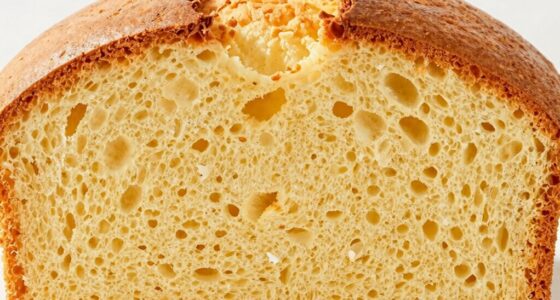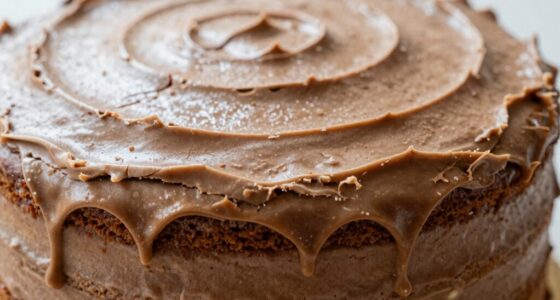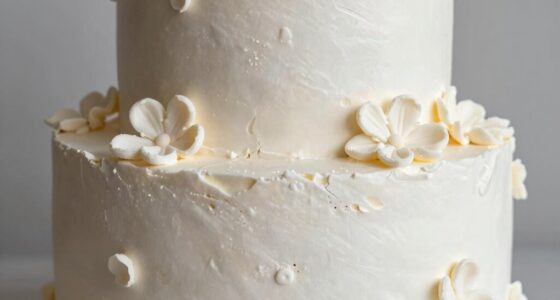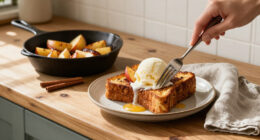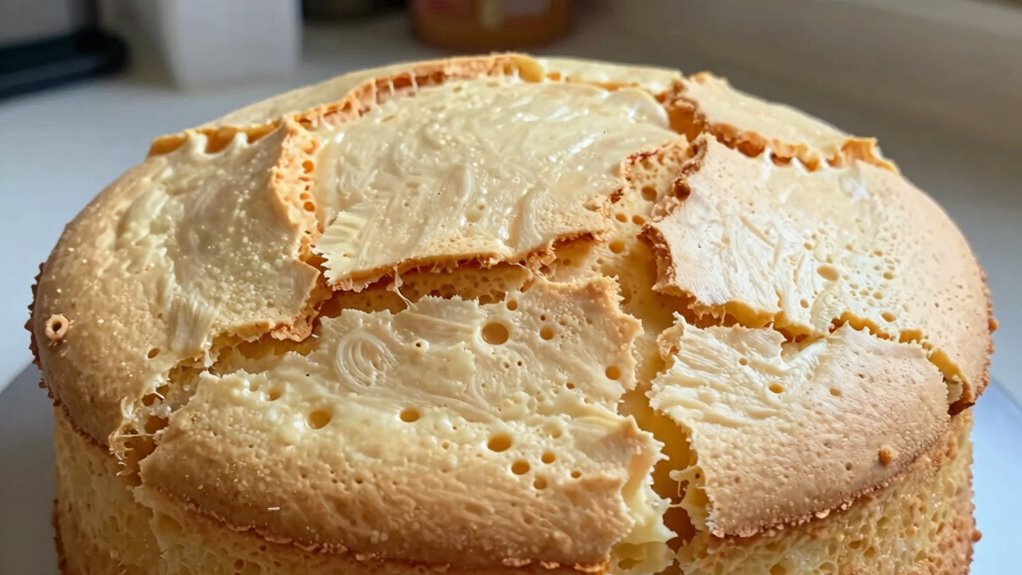

Even if you’re careful, egg foam cakes can fail due to subtle issues like eggs not being at the right temperature or sugar not dissolving fully, which weakens the foam. Overhandling or overbeating can break down the structure, causing the cake not to rise properly. Environmental factors like humidity can also affect foam stability. Pay attention to these details, and you’ll discover how to improve your chances of success with a perfect, light cake.

Get baking supplies delivered free with Prime
- Fast, free delivery on millions of items
- Prime Video, Amazon Music and more included
- Member-only deals all year
Key Takeaways
- Eggs may be too cold or warm, hindering proper foam formation and stability.
- Sugar may not be fully dissolved, weakening the foam’s structure.
- Overbeating or underbeating eggs damages the delicate foam network.
- Rough folding or over-mixing deflates the airiness of the whipped eggs.
- Environmental factors like humidity can cause foam collapse before baking.
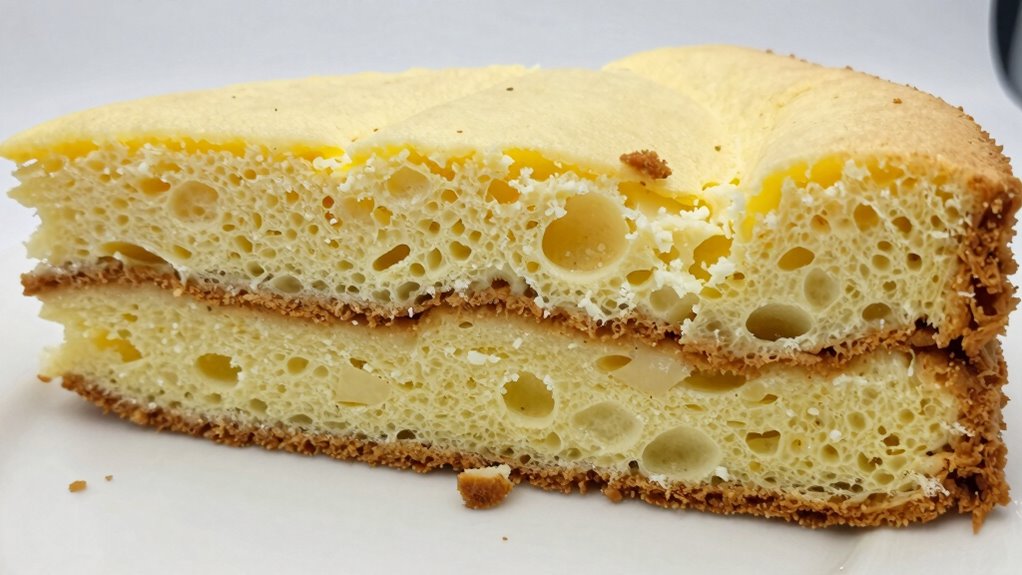
Egg foam cakes can be surprisingly tricky to perfect, and many bakers find themselves disappointed when their cakes don’t rise or turn out dense and flat. Even if you’re careful with your measurements and technique, subtle issues can prevent your batter from reaching its full potential. One key factor is egg temperature. If your eggs are too cold, they won’t whip up into the fluffy foam needed for a light cake. Cold eggs are harder to beat into stiff peaks because the proteins don’t unfold as easily, limiting the amount of air you can incorporate. Conversely, if your eggs are too warm, they can start to cook when beaten, which also hampers the foam’s stability. Ideally, you want your eggs at room temperature—around 68-70°F—so they whip up easily and hold their structure during baking.
Another often-overlooked aspect is sugar crystallization. When you add sugar to your egg whites, it’s crucial to do so gradually. If you add it too quickly, the sugar can cause the egg whites to become gritty and inhibit the formation of a stable foam. Proper sugar crystallization happens when the sugar dissolves completely into the egg whites, creating a smooth, glossy mixture. This process strengthens the foam, making it more resistant to collapsing in the oven. If sugar isn’t fully dissolved, the foam can be weak and prone to deflation, leading to a dense or flat cake. To prevent this, sprinkle sugar slowly and ensure it dissolves thoroughly before proceeding to the next step. Using superfine or caster sugar can also help because it dissolves faster than regular granulated sugar, reducing the risk of crystallization issues.
Even if you’re vigilant about your egg temperature and sugar addition, other factors might be at play. Overbeating the egg whites can break down the foam’s structure, causing it to deflate quickly when baked. Underbeating, on the other hand, results in weak foam that can’t support the batter’s weight. Additionally, mixing the beaten eggs into the rest of the ingredients too roughly can deflate the foam, so gentle folding is essential. Proper technique during folding can make a significant difference in maintaining the airiness of the batter. Understanding protein structure can help you better grasp how eggs whip into foam and why proper technique is crucial. Also, paying attention to temperature control during baking can help ensure your cake rises evenly and maintains its delicate structure. Moreover, maintaining proper humidity levels in your kitchen can influence the stability of the foam during preparation. Being mindful of ambient humidity can help prevent the foam from collapsing prematurely.
As an affiliate, we earn on qualifying purchases.
Frequently Asked Questions
Can Using Different Types of Eggs Affect Cake Success?
Using different types of eggs can definitely affect your cake success. Fresh eggs with high-quality shells whip up better, creating stable egg foam for a light, airy cake. Older eggs or eggs with thin shells may not whip as well, leading to a denser texture. Always choose fresh eggs and check shell quality to guarantee your egg foam cakes turn out perfect every time.
Does Altitude Impact Egg Foam Cake Baking?
Imagine your cake rising unexpectedly high—altitude effects definitely influence your baking. At higher elevations, the thinner air causes egg foam cakes to collapse if you don’t adjust your recipe. Humidity influence also matters; in humid environments, the moisture weakens the foam. To succeed, you need to modify baking times, reduce leavening agents, and stabilize your egg whites carefully, adapting to altitude effects and humidity influence for perfect, fluffy cakes.
How Does Ingredient Temperature Influence Cake Failure?
Ingredient temperature plays a key role in cake success. If your eggs or butter aren’t at the right temperature, it can prevent proper aeration or cause uneven mixing, leading to cake failure. Fresh ingredients tend to whip better, creating stable foam. Also, make certain your oven temperature is accurate; too hot or cold can cause the cake to rise improperly or collapse. Keep ingredients at room temperature and monitor your oven for best results.
Are Specific Brands of Eggs Better for Foam Cakes?
Think of eggs like a paintbrush—some brands offer richer, more reliable strokes. While any fresh eggs can create a fluffy foam, brand consistency and egg freshness matter. Opt for trusted brands known for quality to guarantee your foam peaks stiffen perfectly. Fresh eggs with intact shells provide better volume, so stick to reputable sources. This way, your cake rises beautifully, like a well-executed masterpiece, every time.
Can Overmixing Still Cause Cake Collapse?
Overmixing can definitely cause your cake to collapse because it affects the structure formed by the egg foam. When you mix at high speed or for too long, you break down the air bubbles, reducing the moisture content and weakening the cake’s stability. To avoid this, mix just until the ingredients are combined, and use a gentle speed to preserve the delicate foam, ensuring a light, fluffy texture.
superfine caster sugar for baking
As an affiliate, we earn on qualifying purchases.
As an affiliate, we earn on qualifying purchases.
Conclusion
So, next time your egg foam cake falls flat, remember that even the tiniest mistake can be the culprit. Many believe overbeating or insufficient folding causes failure, but sometimes, it’s just luck or a subtle change in ingredients. Don’t be discouraged; every flop is a lesson. Trust your instincts, stay patient, and keep experimenting. With each attempt, you’ll uncover what truly works, turning failures into sweet successes—because baking is as much about perseverance as it is about technique.
As an affiliate, we earn on qualifying purchases.
silicone folding spatula for baking
As an affiliate, we earn on qualifying purchases.
As an affiliate, we earn on qualifying purchases.
Halloween Picks
halloween
As an affiliate, we earn on qualifying purchases.