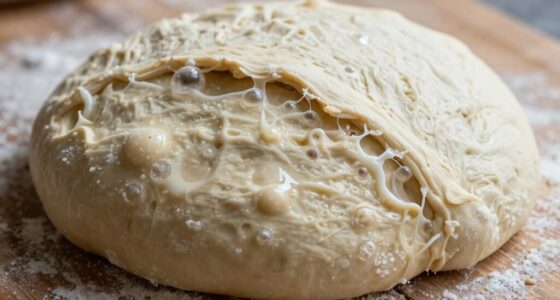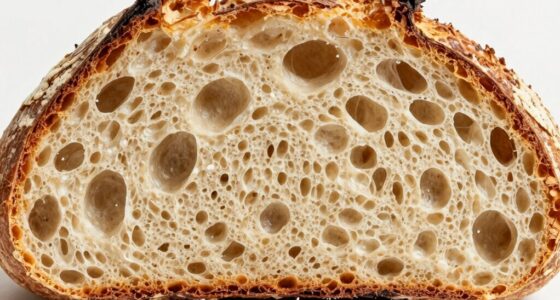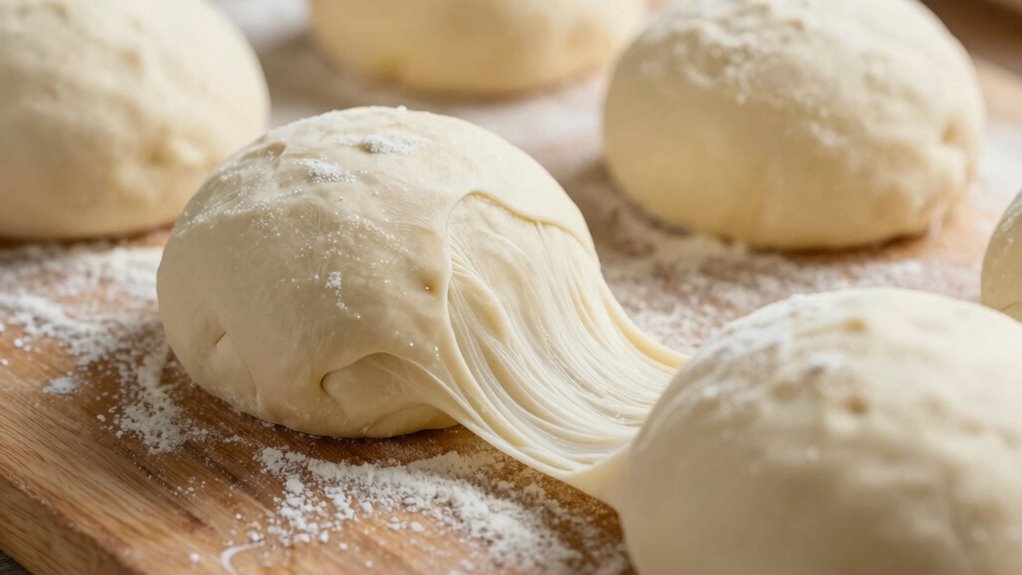

Dough balls skin over when exposed to air because moisture evaporates from their surface, especially if they’re not properly covered or kept in dry, drafty environments. To prevent this, make sure you seal the dough tightly with plastic wrap, an airtight container, or cover it with a damp cloth. Controlling humidity and avoiding rapid temperature changes also helps. Continue exploring these techniques to keep your dough moist and workable longer.
Key Takeaways
- Exposing dough to air causes moisture evaporation, leading to skin formation on the surface.
- Proper covering with plastic wrap or airtight containers traps moisture and prevents skinning.
- Using ingredients like fats, honey, or eggs enhances moisture retention within the dough.
- Maintaining consistent humidity and temperature slows evaporation and keeps the dough moist.
- Handling dough gently and minimizing exposure to drafts prevents surface drying and skin development.

Plastic Bowl Covers for Sourdough Bread Proofing Large Disposable Elastic Food Wraps Fits 12-inch Bowls, Shower Caps for Banneton Bread Proofing Basket Plastic Food Wrap Can Covers 100 Pcs
- Elastic Band for Secure Fit: Fits various round and square bowls
- Transparent for Monitoring: Allows easy observation of sourdough fermentation
- Food-Grade PE Material: Safe, odorless, and non-toxic for food contact
As an affiliate, we earn on qualifying purchases.
As an affiliate, we earn on qualifying purchases.
Why Do Dough Balls “Skin Over”?
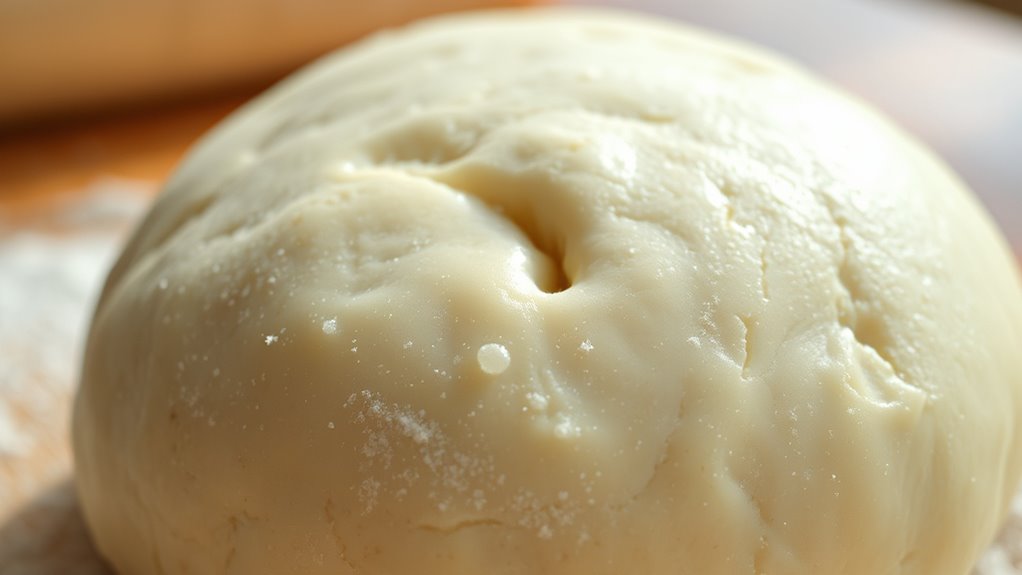
When dough balls sit out for a while, they often develop a thin, dry film on the surface, known as “skinning over.” This occurs because of inadequate dough hydration, where moisture from the surface evaporates into the air. As the water escapes, a skin forms, creating a barrier that halts further hydration. Skin formation is a natural response to exposure and dry conditions, especially if the dough isn’t covered properly. This dry layer can affect the dough’s elasticity and how it behaves during baking. To prevent this, you need to maintain proper dough hydration levels and cover your dough to reduce moisture loss. Controlling moisture helps keep the surface moist and prevents skin formation, ensuring your dough remains smooth and workable. Additionally, understanding the importance of dough elasticity can help you manage dough texture and prevent skin from forming. Proper hydration also supports the overall dough structure, making it easier to work with and shaping a better final product. Regularly monitoring moisture levels and adjusting hydration accordingly can also help maintain the dough’s consistency during preparation. Moreover, using appropriate covering techniques can further minimize evaporation and keep your dough in optimal condition.

Ziliny 1 Pcs 2 Qt Dough Proofing Container with Lid and Red Scale, Red
- Durable Polycarbonate Construction: Resists breaking and cracking for daily use
- Clear with Graduated Design: Easily identify contents and measure volume
- Airtight Seal: Keeps contents fresh and secure
As an affiliate, we earn on qualifying purchases.
As an affiliate, we earn on qualifying purchases.
How Gluten Helps Keep Dough Moist
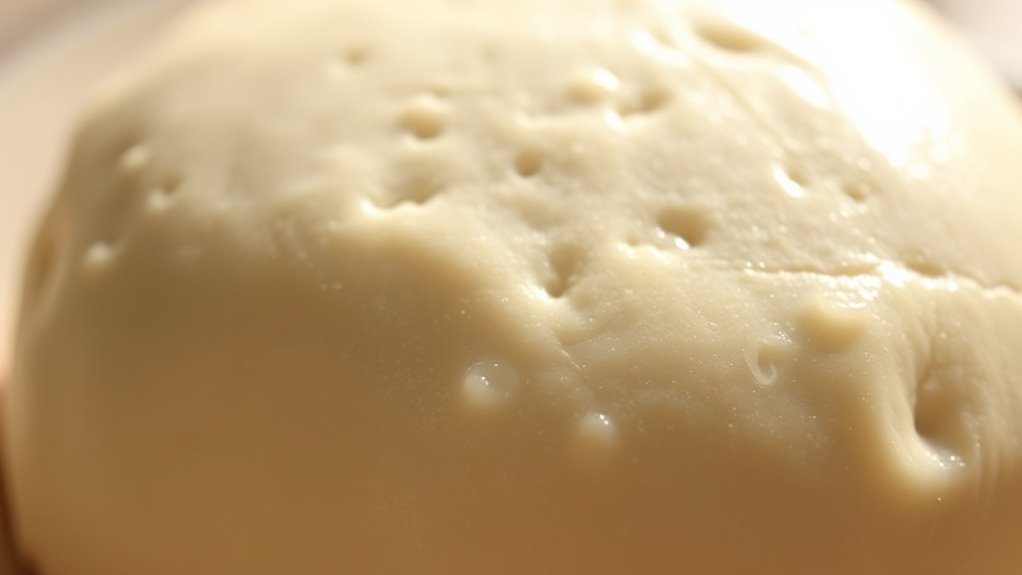
Gluten plays a vital role in maintaining dough’s moisture by forming a flexible, interconnected network that traps water throughout the mixture. This gluten network acts like a web, holding onto moisture and preventing it from escaping too quickly. When you knead the dough, gluten develops and strengthens, creating a structure that retains water more effectively. This moisture retention keeps the dough hydrated, which is essential for a soft, elastic texture. Without a strong gluten network, water can escape easily, leading to a dry surface that skins over. Additionally, proper gluten development is key to achieving the optimal dough texture and consistency. By developing this network, you help your dough stay moist longer, reducing the risk of skin formation and ensuring a tender, well-hydrated final product. Proper gluten formation also influences the structure and rise of baked goods, making it an essential element in bread-making. Furthermore, understanding how gluten development affects moisture retention can help bakers troubleshoot issues with dry or skin-over dough. Developing a good gluten network can also improve overall dough strength, which is crucial for handling and shaping the dough effectively. Enhancing gluten formation through proper techniques can also promote even baking and texture throughout the loaf.

5Pcs Reusable Beeswax Elastic Bowl Covers for Bread Proofing and Food Cover
- Variety of Sizes and Styles: Five different sizes and designs
- Reusable Beeswax Material: Made from beeswax and cotton
- Easy to Clean and Care: Hand wash in cold water
As an affiliate, we earn on qualifying purchases.
As an affiliate, we earn on qualifying purchases.
What Environmental Factors Cause Skin Formation?
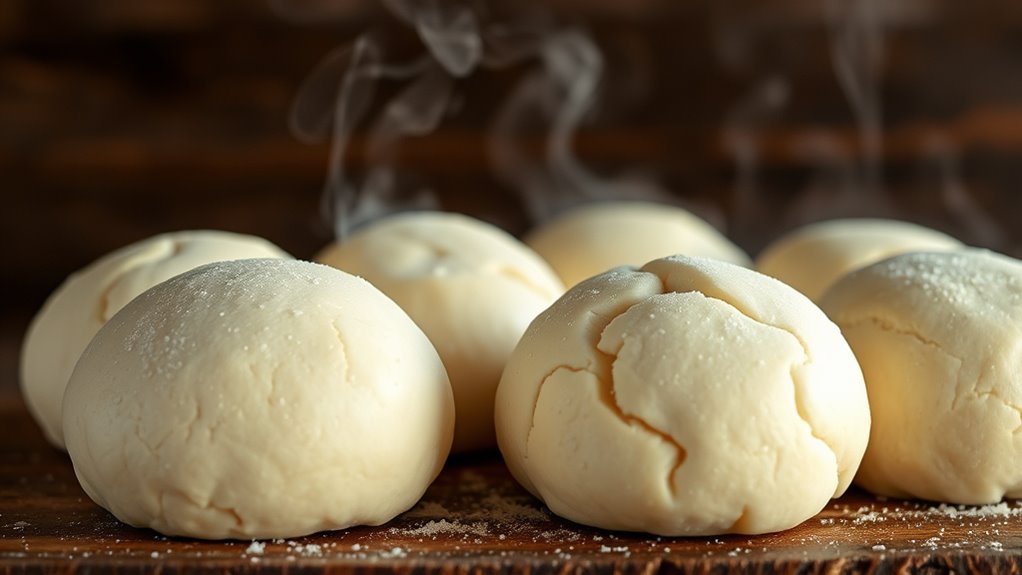
You’ll notice that ambient humidity levels can speed up or slow down skin formation on your dough. Temperature fluctuations cause the dough’s surface to dry out unevenly, leading to a skin. Additionally, air circulation can either dry the surface faster or keep moisture in, affecting how quickly the skin forms. Incorporating connected home fitness devices like smart humidity sensors can help monitor and control environmental factors to optimize dough consistency. Understanding environmental factors can also assist bakers in recognizing subtle changes in dough behavior related to environmental shifts.
Ambient Humidity Levels
Ambient humidity levels play a crucial role in skin formation on dough balls. When humidity is low, moisture escapes quickly from the dough surface, making skin formation more likely. Proper humidity control helps maintain ideal moisture retention, preventing the dough from drying out too fast. High humidity levels slow evaporation, allowing the dough to stay moist and flexible, reducing the risk of a dry, skin-like surface. Conversely, low humidity accelerates surface drying, leading to skin formation and potential cracking. Monitoring and adjusting ambient humidity in your environment ensures consistent moisture retention during dough proofing and handling. This control minimizes surface skin development, resulting in a better dough texture and improved baking quality. Managing humidity effectively is key to preventing dry surfaces and ensuring dough consistency. Additionally, understanding the environmental factors that influence humidity can help bakers optimize their space for ideal dough conditions. For example, air circulation and temperature fluctuations also impact humidity levels and should be considered in your environment management. Proper humidity measurement tools can assist in maintaining stable conditions, further reducing the risk of skin formation. Incorporating humidifiers or dehumidifiers can provide more precise control over your environment’s humidity levels.
Dough Temperature Fluctuations
When environmental factors cause fluctuations in dough temperature, skin formation becomes more likely. Rapid temperature changes can weaken dough elasticity, making it more prone to developing a dry surface. If the dough cools too quickly, the outer layer dries out before the interior can hydrate fully, leading to skin formation. Conversely, excessive heat can cause the surface to dry and form a crust. Proper temperature control helps maintain consistent dough elasticity, preventing these fluctuations. Free Floating techniques can help regulate temperature variations during proofing. By keeping the dough at a stable, ideal temperature, you reduce the risk of skin developing. Monitoring ambient conditions and adjusting proofing environments ensures the dough remains within the ideal temperature range, promoting even hydration and flexibility, and ultimately helping you avoid dry, skin-covered surfaces.
Air Circulation Effects
Poor air circulation can markedly increase the likelihood of dough skin formation by causing uneven drying on the surface. When airflow patterns are inconsistent, certain areas of the dough lose moisture faster, leading to a dry, skin-like layer. Additionally, airflow patterns play a crucial role in moisture distribution across the dough surface. Adequate moisture control depends on maintaining steady airflow, which prevents hotspots and uneven drying. If the air is too still or turbulent in spots, it promotes skin formation in some areas while keeping others moist. Ensuring proper ventilation and consistent airflow helps you regulate moisture levels evenly across the dough ball. This balance minimizes skin formation by reducing the chances of rapid surface drying, keeping the dough soft and workable. Proper air circulation is essential to prevent dry patches and promote uniform moisture retention across the dough surface. By managing airflow patterns, you promote moisture retention, ultimately preventing the crust from forming prematurely.

Dumpling Wrapper Maker Dash Kit, Dumpling Skin Maker, Wooden Press Tool for Making Round Banh Bao Bakeware, Hand Pie, Ball Skin Maker for Qingming Event, Restaurant
- Package Includes: Rolling ball and base set
- Base Dimensions: 100 x 71.5mm
- Ball Diameter: 49mm
As an affiliate, we earn on qualifying purchases.
As an affiliate, we earn on qualifying purchases.
How Does Air Exposure Dry Out Your Dough?
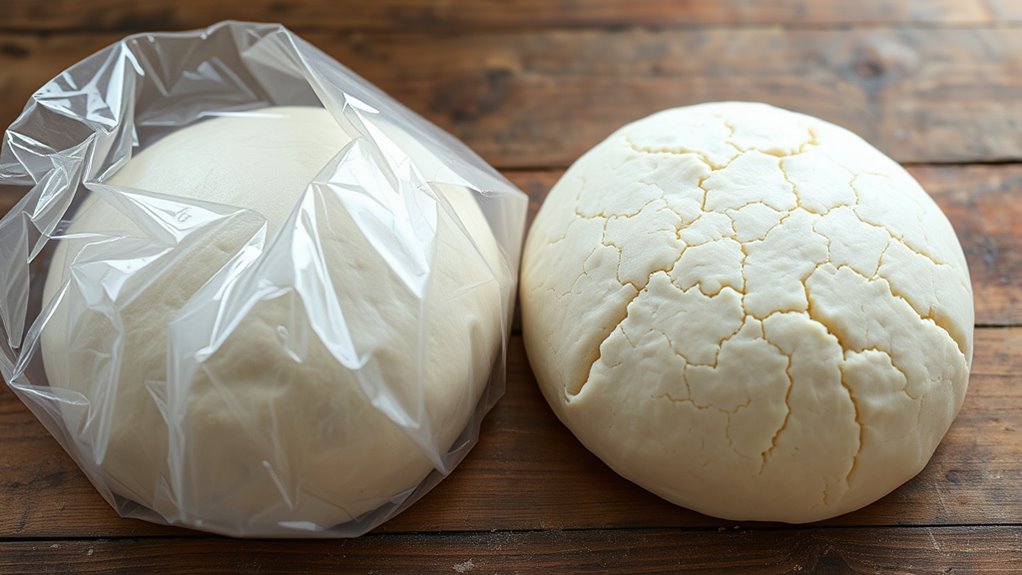
Exposure to air causes your dough’s surface to lose moisture quickly, leading to a dry, tough crust. When your dough is exposed, the moisture inside begins to evaporate into the air, especially if the environment is dry or has a strong airflow. This process reduces dough hydration, which is vital for a soft, pliable texture. As moisture escapes, the outer layer dries out faster than the interior can rehydrate, causing skin formation. Maintaining moisture retention is key to preventing this. Without proper protection, the dough’s surface becomes resistant to stretching and shaping, and the overall quality suffers. To keep your dough moist, it’s essential to limit air exposure as much as possible, ensuring it stays hydrated and maintains a smooth, elastic surface. Additionally, understanding how air circulation impacts moisture loss can help you better control your environment and protect your dough from drying out. Proper covering methods, such as using plastic wrap or damp cloths, help create a moisture barrier that slows down dehydration and keeps your dough in ideal condition. Being mindful of environmental factors like temperature and humidity can also make a significant difference in preventing skin formation.
How Can You Cover Dough Properly to Prevent Skinning?
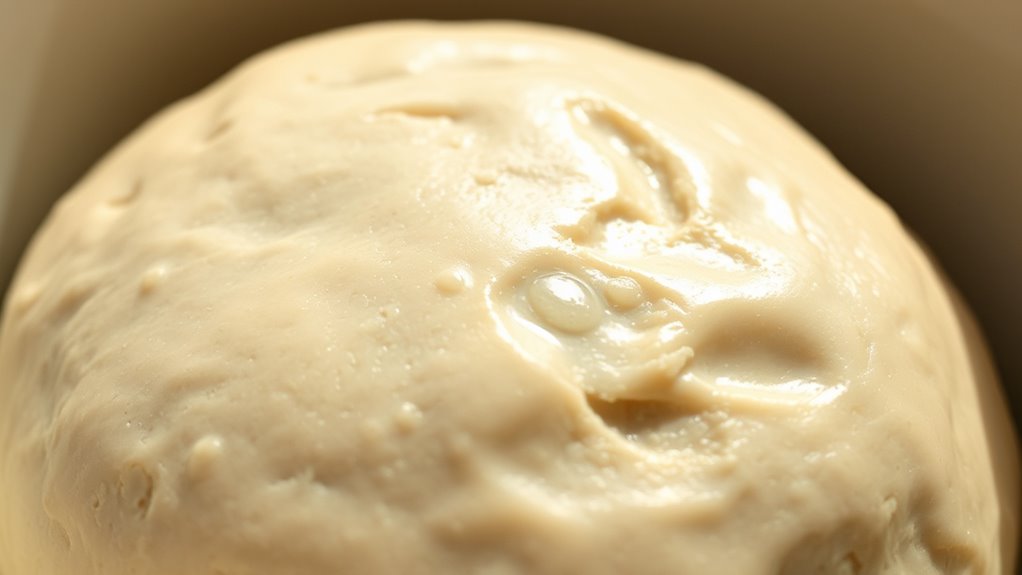
To prevent your dough from skinning over, make sure you cover it properly. Using airtight containers or plastic wrap keeps moisture in and air out, protecting the dough’s surface. Also, refrigerating the dough correctly helps maintain its freshness and prevents skin formation.
Use Airtight Containers
Using airtight containers is one of the simplest and most effective ways to prevent dough from skinning over. These containers trap moisture inside, ensuring better moisture retention and keeping the dough soft and pliable. When you store dough in an airtight container, you minimize exposure to air, which is the main cause of skin formation. Make sure the lid fits snugly to create a complete seal. This not only prevents dryness but also helps maintain the dough’s temperature and consistency. Avoid opening the container frequently, as each exposure to air can cause surface skinning. Airtight containers are ideal for longer storage, giving your dough a better chance to stay fresh and workable without developing a dry, tough surface.
Cover With Plastic Wrap
Covering dough with plastic wrap is an effective way to prevent skinning over by creating a barrier that locks in moisture. When you use plastic wrap, you minimize exposure to air, which causes the dough surface to dry out and form a skin. Proper dough preservation starts with guaranteeing the wrap is tight against the dough, preventing any air pockets. Use a piece of plastic wrap large enough to fully cover the bowl, and press it directly onto the dough surface. This technique keeps the dough moist and ready for the next step. For best results, smooth the plastic wrap over the dough, and avoid leaving gaps. Consistent plastic wrap use helps you maintain ideal dough quality and prevents unwanted skin formation.
- Keeps moisture locked in effectively
- Prevents skin from forming on the dough surface
- Easy, quick, and inexpensive solution
- Compatible with various dough types
- Ensures better dough preservation during proofing
Refrigerate Properly
Properly refrigerating dough is essential to prevent skinning over during storage. When you refrigerate, slow down dough fermentation and yeast activity, reducing surface dryness. To keep it moist, cover the dough tightly, but also consider the environment inside your fridge. Here’s a visual guide:
| Temperature | Covering Method | Result |
|---|---|---|
| Cold | Plastic Wrap | Keeps moisture in |
| Slightly warmer | Damp Cloth | Prevents skin formation |
| Cold | Airtight Container | Maintains freshness |
| Cold | Aluminum Foil | Offers extra protection |
| Cool | Proofing Bag | Controls dehydration |
Choose the right combination to maintain moisture, inhibit skinning, and preserve yeast activity for perfect dough when you’re ready to bake.
Which Ingredients Help Keep Dough Moist?
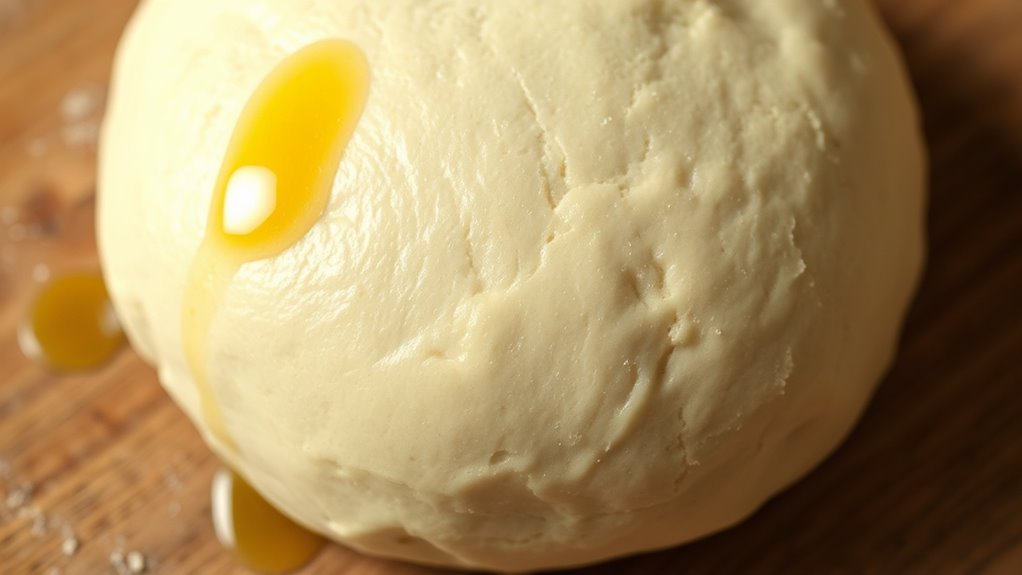
What ingredients are essential for keeping dough moist and supple? To improve ingredients preservation and moisture retention, certain components are key. These ingredients help prevent the surface from drying out and maintain the dough’s elasticity. Including the right ingredients ensures your dough stays workable and prevents skin formation.
- Hydrating water or liquids like milk
- Fat sources such as olive oil or butter
- Honey or sugar for moisture retention
- Eggs, which add moisture and richness
- Critical wheat gluten to improve elasticity and moisture binding
Adding these ingredients thoughtfully enhances the dough’s moisture content and prevents it from skinning over. Using the right combination not only preserves freshness but also keeps your dough easy to work with and delicious.
What Are the Best Ways to Rest and Store Fresh Dough?
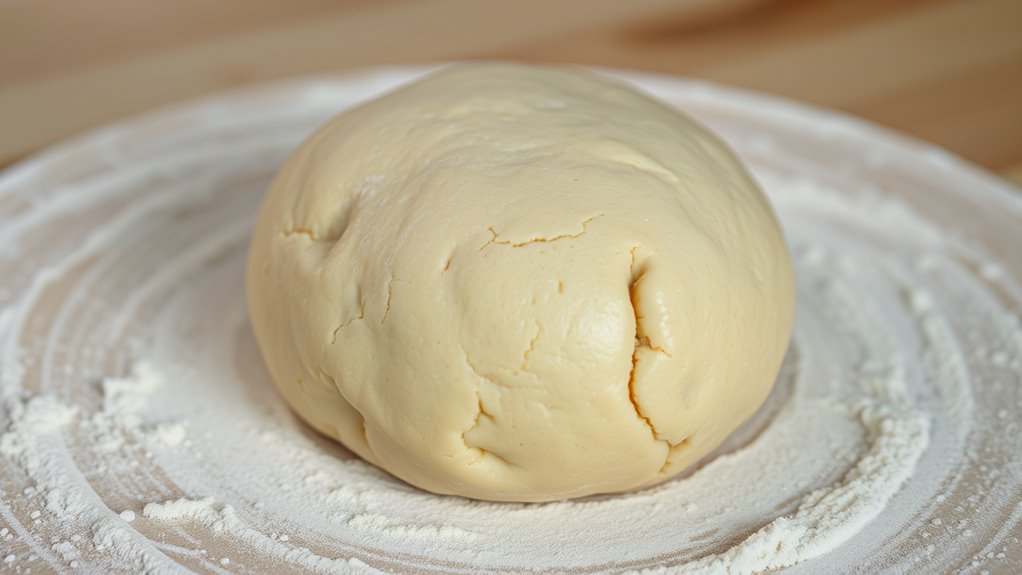
After adding the right ingredients to keep your dough moist and supple, the next step is to rest and store it properly to maintain its quality. Proper resting allows dough hydration and dough fermentation to develop flavor and texture. To preserve freshness, cover the dough tightly with plastic wrap or a damp cloth to prevent skin formation. Store it in a cool, consistent temperature, ideally in the refrigerator if overnight. For quick use, a short rest at room temperature works well. Use this table as a quick guide:
| Resting Method | Storage Temperature | Duration |
|---|---|---|
| Covered at room temp | 70°F (21°C) | 30 min – 2 hours |
| Refrigeration | 35-40°F (2-4°C) | Up to 24 hours |
| Freezing | Below 32°F (0°C) | Up to 3 months |
How Do You Handle and Shape Dough to Maintain Moisture?
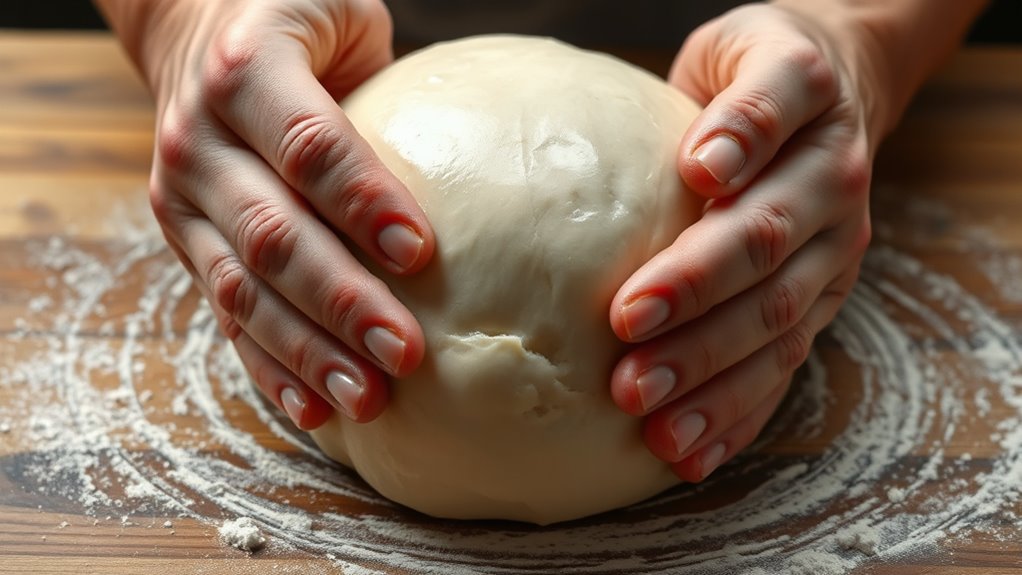
Handling and shaping dough carefully is essential to preserve its moisture and prevent it from drying out. Proper technique supports dough fermentation and encourages ideal gluten development, resulting in a smooth, elastic texture. When shaping, avoid overworking the dough, which can break gluten strands and cause surface skinning. Use gentle motions and keep the dough covered to retain moisture. To maintain hydration, handle the dough quickly yet delicately, and consider using a bench scraper or your hands to shape it uniformly. Additionally, ensure your workspace isn’t too dry, as this can speed up surface drying. Proper handling not only preserves moisture but also helps develop a strong gluten network, leading to a better rise and a tender crumb.
Handle dough gently and keep it covered to preserve moisture and ensure optimal gluten development.
- Keep dough covered during handling
- Use minimal flour to prevent drying
- Handle dough with gentle, swift motions
- Maintain a humid workspace if possible
- Shape dough uniformly to avoid thin spots
What Mistakes Cause Dough Skinning and How to Avoid Them?

One common mistake that leads to dough skinning is exposing the dough to dry air for too long. When the surface dries out, it forms a skin that prevents proper dough hydration and hampers moisture retention. To avoid this, keep your dough covered with a damp cloth or plastic wrap during resting periods. Skipping this step allows the moisture to evaporate quickly, resulting in a dry, skin-over surface. Additionally, working in a warm, dry environment accelerates skin formation. Be mindful of these conditions and maintain consistent humidity levels to protect the dough’s moisture. Proper handling and covering techniques help preserve dough hydration, preventing skinning and ensuring a smooth, pliable surface for shaping and baking.
Frequently Asked Questions
How Long Does It Take for Dough to Skin Over During Resting?
Dough typically skins over in about 30 minutes to an hour during resting, depending on factors like dough elasticity and moisture retention. As it rests, a thin surface layer forms, which helps prevent it from drying out. To keep this from happening too quickly, cover your dough with a damp cloth or plastic wrap. This maintains moisture retention and guarantees the dough remains flexible and easy to work with later.
Can Adding Oil Prevent Dough From Forming a Skin?
Like a trusty knight’s shield, oil application can help prevent your dough from forming a skin. When you coat the surface with a thin layer of oil, it locks in dough moisture and keeps the skin from drying out. This simple step makes certain your dough stays soft and pliable, making it easier to work with and preventing that undesired dry surface. Just don’t overdo it—less is more!
Does the Type of Flour Affect Skin Formation?
Yes, the type of flour affects skin formation. Higher protein flour, like bread flour, creates more gluten, which can slow skin formation and keep dough moist longer. Conversely, low-protein flours, such as cake or pastry flour, have finer granularity and less gluten, leading to quicker skin development. So, choosing flour with the right protein content and granularity helps control how quickly your dough skins over, preventing it from drying out.
How Does Humidity Influence Dough Skinning?
Humidity impact markedly influences dough skinning; higher humidity keeps the surface moist, preventing it from drying out and forming a skin. When environmental control maintains consistent humidity levels, you reduce the risk of skin formation, ensuring your dough remains pliable and easy to work with. Conversely, low humidity accelerates drying, so monitor and adjust your environment to keep humidity steady, maintaining ideal conditions for perfect dough consistency.
Are There Specific Techniques to Rehydrate Dried Dough Surfaces?
Yes, you can rehydrate dried dough surfaces by spritzing or lightly misting them with water to improve dough hydration. Gently rub the surface to reduce surface tension, helping the dough regain moisture and elasticity. Cover the dough with a damp cloth and let it rest for a few minutes, allowing moisture to absorb evenly. This method restores flexibility and prevents cracking, ensuring better workability and dough quality.
Conclusion
If you want your dough to stay tender and prevent that pesky skin from forming, paying attention to environmental factors and proper covering is key. But what if there’s an even simpler trick that could change everything? Stay tuned—you might discover a game-changing tip that keeps your dough irresistibly moist every time. Don’t miss out on this secret—your perfect, skin-free dough is just a step away. Ready to reveal it?