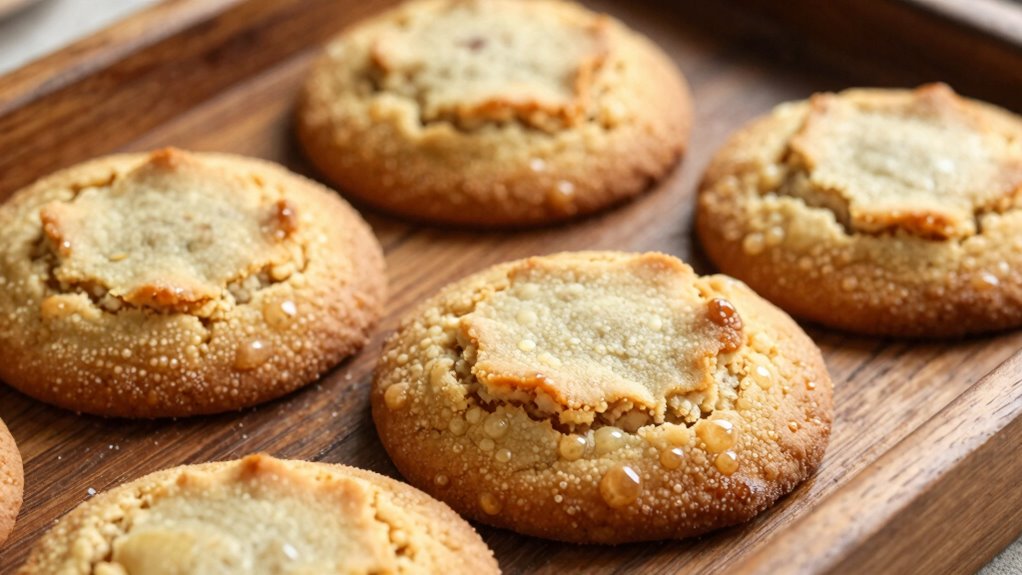

If your cookies taste soapy, it’s probably caused by using too much baking soda or unreacted soda left behind after baking. Baking soda, when not balanced properly with acids or measured accurately, can leave a bitter, alkaline flavor that resembles soap. To fix this, try reducing the amount of baking soda or switching to baking powder. Understanding how baking soda works helps you stop the soapy taste—keep exploring to learn more about avoiding this common problem.
Key Takeaways
- Excess or expired baking soda can leave residual unreacted soda, causing a soapy, bitter taste in cookies.
- Improper ingredient ratios or insufficient mixing prevent complete reaction of baking soda, leading to soap-like flavors.
- Overbaking or moist dough can intensify the soap taste caused by unneutralized baking soda.
- Using too much baking soda or not balancing acids in the recipe increases the likelihood of a soapy flavor.
- Switching to fresh baking soda and measuring carefully can prevent soap tastes and improve cookie flavor.
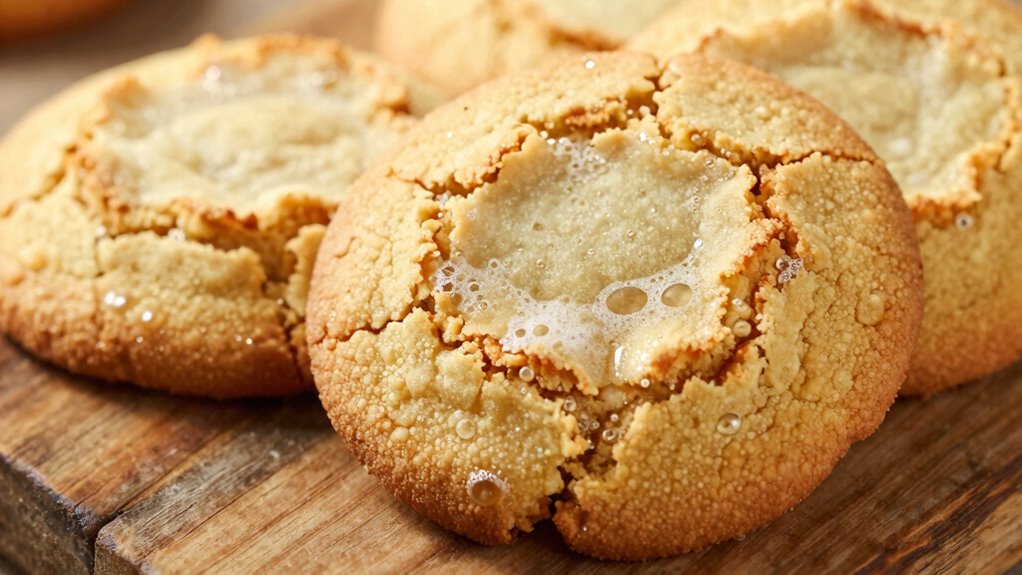
Have you ever bitten into a cookie only to be hit with an unexpected soapy taste? If so, you’re likely dealing with an issue related to baking soda reactions or soap flavor causes. Baking soda is a common leavening agent that helps cookies rise, but when not used correctly, it can leave behind an unpleasant, soapy aftertaste. This often happens if too much baking soda is incorporated or if it reacts improperly during baking, producing compounds that taste bitter or soapy. Recognizing these baking soda reactions is the first step to avoiding that strange flavor in your treats.
The soap flavor causes stem from the chemical properties of baking soda, which is sodium bicarbonate. When it’s exposed to moisture and heat, it produces carbon dioxide gas, helping your cookies puff up. However, if there’s excess baking soda, or if it doesn’t fully react during baking, residual unreacted soda can linger in the cookie. This leftover baking soda has a naturally bitter, alkaline taste that can resemble soap, especially if the cookies are overbaked or the dough is too moist. Additionally, using baking soda that’s past its expiration date or improperly stored can intensify these soap flavor causes because the chemical stability of the baking soda is compromised, leading to more pronounced off-flavors.
You might wonder why some recipes turn out fine while others produce that soapy taste. It’s often a matter of measuring carefully and understanding how baking soda reacts in your specific recipe. Too much baking soda disrupts the balance, and the excess reacts with acids in the dough—like buttermilk, yogurt, or vinegar—to produce the desired rise. But when that balance is off, unreacted soda remains, resulting in an unpleasant flavor. Furthermore, if you don’t mix your ingredients thoroughly, pockets of baking soda can concentrate in certain areas, increasing the likelihood of tasting that soapy note in each bite.
Proper measurement and thorough mixing prevent soapy flavors in your baked goods.
To prevent soap flavor causes from ruining your cookies, always measure your baking soda precisely. Use fresh, properly stored baking soda to ensure it reacts fully during baking. Be careful with your ingredient ratios, and mix your dough thoroughly so the baking soda disperses evenly. If you notice a soapy taste after baking, consider reducing the amount of baking soda in your recipe or switching to baking powder, which contains a stabilizer that helps prevent these reactions. Additionally, understanding the chemical reactions involved in baking can help you better control the outcome. Ultimately, understanding the chemistry behind baking soda reactions will help you avoid soap flavor causes, resulting in cookies that taste just right—no strange aftertastes, just delicious treats.
Frequently Asked Questions
Can Overusing Baking Soda Cause a Soapy Taste?
Yes, overusing baking soda can cause a soapy taste in your cookies. When you add too much, it disrupts the flavor balance and alters the pH levels, resulting in a chemical or soapy flavor. To prevent this, measure carefully and stick to the recipe’s recommended amount. Proper balancing of ingredients ensures your cookies taste delicious without unwanted flavors.
Does the Type of Baking Soda Affect the Soapy Flavor?
Think of baking soda like a rare spice; its purity and sourcing matter. If you use a lower-quality or impure baking soda, it can introduce impurities that cause a soapy flavor. Opt for baking soda with high purity, sourced from reputable suppliers. This guarantees your cookies taste clean and fresh, avoiding the soapiness. So, always check the ingredient sourcing to keep your baked goods delicious without unwanted off-flavors.
How Does Baking Soda Interact With Other Ingredients in Cookies?
Baking soda interacts with ingredients like acids in your cookie recipe, releasing carbon dioxide that helps cookies rise. These interactions influence flavor balance, so using too much or not enough can cause off-flavors, like a soapy taste. To get the best results, measure carefully, and guarantee your other ingredients—like vinegar or buttermilk—balance the baking soda’s effects. Proper ingredient interactions create perfect texture and flavor.
Can Baking Soda Expiration Date Impact the Taste?
You might notice a change in taste if your baking soda has passed its expiration date, as freshness affects flavor preservation. Over time, baking soda loses its potency, which can lead to less effective leavening and a strange, soapy flavor in your cookies. Always check the expiration date to verify your baking soda is fresh, so your baked goods turn out perfect and delicious without any off-putting taste.
Are There Alternative Leavening Agents to Avoid Soapy Flavors?
Yes, you can use natural leavening agents like baking powder or whipped egg whites to avoid soapy flavors caused by improper chemical reactions. Baking powder contains a balanced mix of acids and bases, ensuring a smoother rise without the off-putting taste. These alternatives react differently during baking, providing leavening without the harsh chemical reactions that sometimes lead to soapy flavors in your cookies.
Conclusion
If your cookies taste soapy, it’s likely due to too much baking soda, which can overwhelm your taste buds. Did you know that just half a teaspoon of excess baking soda can make a batch taste noticeably off? Next time, measure carefully and double-check your recipe. With a little attention, you’ll avoid that unpleasant soapiness and enjoy perfectly balanced cookies that everyone will love. Remember, small changes make a big difference in baking!