If your bread feels rubbery, you’re likely overmixing the dough, which overdevelops gluten and creates a dense, tough crumb. To fix this, knead just until ingredients are combined and the dough is smooth—avoid overworking it. Also, watch your oven temperature and baking time to prevent overbaking. Proper cooling, shaping with minimal flour, and using quality ingredients help too. Keep exploring these tips to perfect your bread texture and avoid rubberiness.
Key Takeaways
- Overmixing dough develops excessive gluten, resulting in dense, rubbery texture; knead just until ingredients are combined.
- Baking at too high a temperature or overbaking causes tough, chewy bread; monitor oven temperature carefully.
- Not cooling bread properly allows condensation and moisture buildup, leading to a rubbery crumb; cool on a wire rack for at least 30 minutes.
- Using too much flour during shaping creates a barrier, hindering gluten development and causing a dense texture.
- Insufficient hydration or poor-quality ingredients can lead to a rubbery feel; choose high-quality flour and proper hydration levels.
Top picks for "rubbery bread probably"
Open Amazon search results for this keyword.
As an affiliate, we earn on qualifying purchases.
Don’t Overmix Your Dough—Here’s Why It Makes Bread Rubbery

Overmixing your dough can lead to a rubbery bread texture because it develops the gluten structure too much. When you knead excessively, even with different kneading techniques, you force gluten strands to become overly elastic, resulting in a dense, tough crumb. If you’re making ingredient substitutions, like swapping out bread flour for whole wheat or adding extra moisture, be cautious. Overmixing these variations can intensify gluten development, worsening the rubbery effect. Instead, knead just enough to combine ingredients and develop a mild gluten network. Pay attention to your dough’s texture—stop kneading when it’s smooth and elastic, not overworked. This gentle approach prevents gluten overdevelopment, ensuring your bread stays tender, light, and enjoyable.
Avoid Using Too Much Flour During Shaping to Keep Bread Soft

Using too much flour during shaping can cause your bread to become dry and tough instead of soft and tender. Excess flour dusting creates a barrier that prevents proper gluten development and moisture retention. To avoid this, consider these shaping techniques:
- Use just enough flour to prevent sticking—a light dusting is sufficient.
- Keep your hands lightly floured to minimize excess.
- Work quickly to avoid over-flouring the dough surface.
- Always shake off or brush away excess flour before baking.
Get the Oven Temperature and Baking Time Just Right

Make sure you preheat your oven thoroughly before baking, so the temperature is consistent from the start. Use an accurate timer to keep track of your baking time and avoid over or undercooking. Keep a close eye on your bread’s progress to ensure it’s baked perfectly and doesn’t turn rubbery. Additionally, maintaining the correct oven temperature throughout baking helps achieve the ideal texture and prevents rubberiness. To further improve your results, consider using smart oven technology that can monitor and adjust temperature in real-time for consistent baking. Incorporating temperature control features can optimize your baking process and prevent common issues like rubbery bread. Employing precision baking techniques can also help you fine-tune your oven settings for superior results. Paying attention to baking environment factors, such as humidity and oven placement, can also contribute to preventing rubbery bread.
Preheat Oven Properly
Preheating your oven to the right temperature is essential for achieving the perfect bread texture. An accurate oven temperature guarantees even baking and prevents rubbery results caused by under or over-baking. To preheat properly:
- Set your oven at the recommended temperature, considering your dough hydration—higher hydration dough may need slightly longer preheating.
- Allow the oven to fully preheat before placing your bread inside; a short warm-up can lead to uneven baking.
- Use an oven thermometer to verify the actual temperature, as built-in gauges can be inaccurate.
- Avoid opening the oven door early, which can cause temperature fluctuations and affect crust development. Proper preheating helps your bread develop the ideal crust and crumb. Accurate oven temperature is crucial for consistent baking results.
- Remember that oven calibration can drift over time, so periodically checking and adjusting it ensures your oven heats accurately.
- Ensuring the oven is properly preheated will also help in achieving the desired crust formation, which is vital for good bread quality. Additionally, maintaining the right baking environment with consistent heat supports optimal rise and texture.
- For best results, consider using an oven with even heat distribution, which helps avoid hot spots and uneven baking.
Use Accurate Timer
Setting a precise timer during baking guarantees your bread reaches the perfect doneness without over- or under-cooking. Timing precision is essential to follow your baking schedule accurately. Use a reliable timer, whether it’s on your oven or a separate device, to ensure you don’t accidentally leave the bread in too long or pull it out too early. Check the recommended baking time for your recipe and adjust if needed based on your oven’s performance. Consistently using an accurate timer helps you develop a consistent process , reducing guesswork and improving results. Remember, even a few extra minutes can make a difference between soft, fluffy bread and rubbery, overbaked loaves. Detecting passive voice can also help identify areas where clearer, more active sentences improve readability. Stick to precise timing, and your bread will turn out just right every time.
Monitor Baking Progress
How can you guarantee your bread bakes perfectly without becoming rubbery? Monitoring baking progress is key. First, use an oven thermometer to verify the actual temperature, since oven dials can be inaccurate. Second, follow proofing techniques carefully; over-proofed dough can lead to dense, rubbery bread. Third, keep an eye on baking time—don’t rely solely on recipes, as ingredient substitutions like adding more moisture can alter baking duration. Fourth, check for visual cues: a golden crust and hollow sound when tapped signal doneness. Adjust oven racks or temperatures if needed. These steps help ensure your bread reaches the right internal temperature without overcooking, resulting in a tender crumb and perfect texture. Proper oven calibration ensures consistent baking outcomes and helps avoid under- or over-baking. Additionally, understanding the baking process can help you develop an intuition for when your bread is perfectly baked. Being familiar with common baking indicators allows you to make real-time adjustments for optimal results. Tracking internal temperature with a reliable thermometer can further prevent over-baking and rubberiness. Incorporating baking techniques such as steam injection can also improve crust quality and overall texture.
Control Humidity and Storage to Preserve Bread’s Tenderness
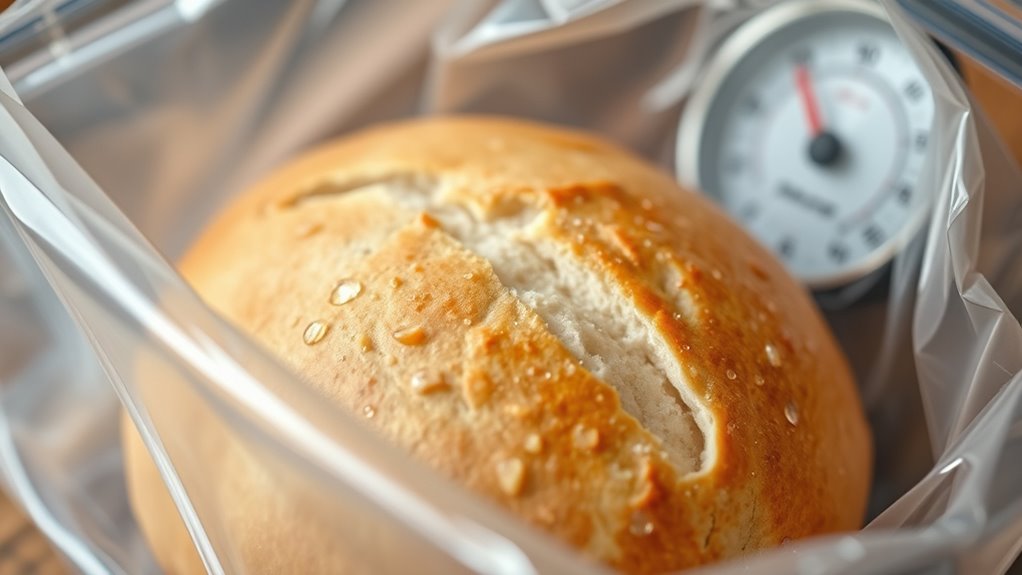
Maintaining the right humidity levels is key to keeping bread tender and fresh. Proper storage techniques, like using airtight containers or paper bags, help control moisture and prevent it from becoming rubbery. By paying attention to humidity and storage, you can enjoy soft, delicious bread for longer.
Humidity Levels Matter
Humidity levels play a crucial role in keeping bread tender and fresh. Proper humidity control ensures the right moisture balance, preventing bread from becoming dry or rubbery. To maintain this balance:
- Store bread in airtight containers or resealable bags to retain moisture.
- Use a bread box with a controlled environment to regulate humidity levels.
- Avoid refrigeration, as it depletes moisture, making bread stale faster.
- Add a damp cloth or paper towel inside the storage area to boost humidity when needed.
- Incorporating auditory processing techniques such as sound discrimination can help you better understand and control your storage environment, ensuring optimal humidity levels. Being mindful of your environmental conditions can also assist in maintaining the perfect moisture balance for bread preservation. Additionally, understanding cultural practices related to bread storage in different communities can provide valuable insights into effective humidity management.
Controlling humidity helps preserve the bread’s soft crumb and prevents it from drying out or becoming overly moist. By paying attention to moisture balance, you’ll keep your bread fresh, tender, and delicious for longer periods.
Proper Storage Techniques
Proper storage techniques are key to keeping bread tender and fresh for as long as possible. To preserve its softness, store bread in airtight containers or bread bags that control humidity. Avoid open-air storage, which exposes bread to air and moisture fluctuations, causing it to become stale or soggy. Use the following visual guide:
| Ideal Storage Method | Resulting Effect |
|---|---|
| Airtight containers | Maintains moisture, freshness |
| Bread bags | Keeps bread soft, prevents drying |
| Room temperature | Best within 2-3 days |
And for extended freshness, consider using free floating storage options that adapt to environmental conditions. Incorporating smart storage solutions can help maintain optimal humidity levels and prolong bread’s freshness. Additionally, understanding humidity control techniques can further enhance storage effectiveness. Using proper sealing techniques is also crucial to prevent unwanted air exchange and moisture loss.
Choose the Right Flour and Ingredients for Soft, Fluffy Bread

Choosing the right flour and ingredients is essential for achieving soft, fluffy bread. High-quality ingredients guarantee ideal gluten development, giving your bread the perfect structure and tenderness. To get it right, focus on these key points:
Using high-quality flour and ingredients is key to soft, fluffy bread with perfect texture.
- Use bread flour with a higher protein content for better gluten formation.
- Opt for fresh, high-quality yeast to ensure active fermentation.
- Incorporate natural sweeteners or fats like honey or butter to enhance softness.
- Avoid low-quality additives that may hinder gluten development or alter texture.
Cool and Slice Your Bread Properly to Maintain Freshness

Once your bread has finished baking and cooled slightly, handling it correctly is key to keeping it fresh. Proper bread cooling prevents condensation, which can make the bread soggy and promote mold. Allow the bread to cool on a wire rack for at least 30 minutes before slicing. When it’s time to bread slicing, use a sharp serrated knife to avoid crushing the crumb. Slicing too soon can cause uneven texture and moisture loss, leading to rubbery bread. Store the slices in an airtight container or bread box once fully cooled to lock in freshness. Avoid wrapping hot bread tightly, which traps steam and promotes spoilage. Proper bread cooling and careful bread slicing are essential steps to maintain the bread’s softness and flavor longer.
Frequently Asked Questions
Can Using Whole Wheat Flour Cause Bread to Become Rubbery?
Yes, using whole wheat flour can cause bread to become rubbery if you don’t manage gluten development properly. Whole wheat flour has higher flour protein content, which means more gluten forms during mixing. If you knead too much or don’t balance hydration, this excess gluten can make the bread tough and rubbery. To avoid this, knead just enough and use proper hydration to develop gluten without overdoing it.
Does Adding Fats or Oils Affect Bread’s Softness and Texture?
Adding fats or oils impacts your bread’s softness and texture positively. Oil effects help keep the crumb tender, making it less likely to become rubbery. Fats coat the gluten strands, reducing elasticity and creating a softer, more pliable loaf. For best results, incorporate a moderate amount of oil or butter into your dough. This simple step enhances moisture, improves freshness, and results in a more delightful, soft bread every time.
How Does Altitude Influence Bread Baking Outcomes?
Imagine baking at a mountain’s summit, where the air thins like a delicate souffle. Altitude effects mean your bread rises faster and may overexpand, causing it to collapse or become dense. To counteract this, you need baking adjustments, like reducing leavening agents and increasing liquids. These tweaks help your dough maintain structure, ensuring your bread turns out perfect, even when the elevation challenges your baking skills.
Is It Better to Refrigerate or Freeze Bread for Freshness?
You should freeze bread for better freezer preservation and longer-lasting freshness. Refrigerating bread can cause it to become stale faster, so it’s best to store it in an airtight bag or container and freeze it if you won’t eat it within a few days. When you’re ready, thaw slices at room temperature or toast them directly. Freezing keeps bread fresh longer and prevents mold, making it your best option for storage.
What Role Does Kneading Time Play in Bread Rubberiness?
Kneading time directly affects gluten development and dough elasticity, which in turn impacts bread rubberiness. If you knead too little, the gluten won’t develop enough, making your bread dense and rubbery. Over-kneading, however, can cause excessive gluten development, leading to a tough, chewy texture. Aim for the right amount of kneading to balance gluten development and dough elasticity, resulting in soft, tender bread without rubberiness.
Conclusion
Now that you know these common mistakes, aren’t you excited to try baking perfect, soft bread? Remember, avoiding overmixing, using just the right amount of flour, and getting your oven settings right make all the difference. Keeping humidity in check and choosing quality ingredients will have you slicing tender loaves every time. So, aren’t you ready to impress yourself with bakery-worthy bread right at home? Happy baking!