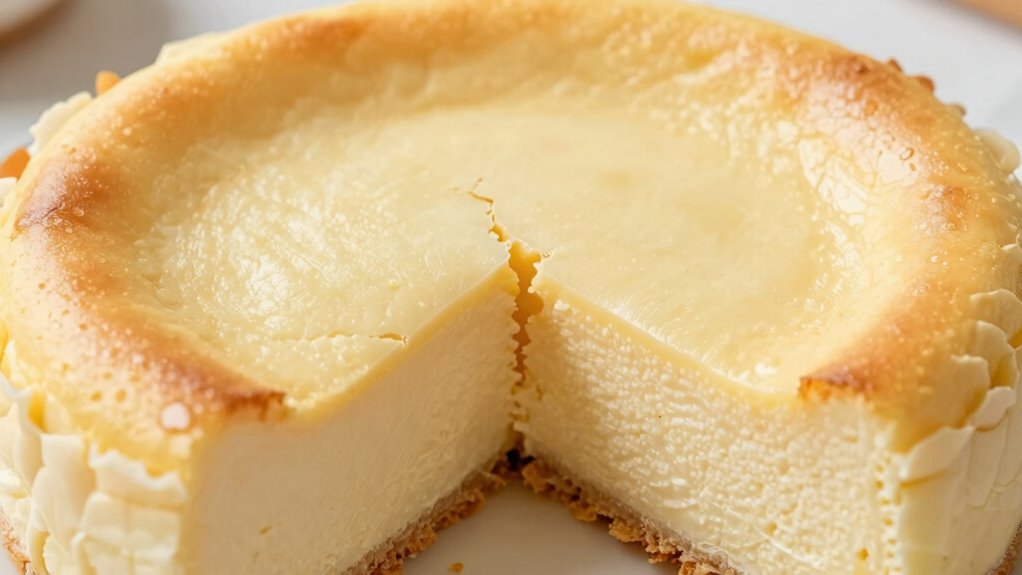

Cheesecake cracks mainly happen due to sudden temperature changes during baking or cooling, uneven heat, or overmixing the batter. Using a water bath helps prevent temperature shocks, while gently mixing ingredients ensures a smooth batter without air pockets. Proper cooling—gradually in the pan before transferring—also minimizes cracks. For a flawless finish, handle the batter carefully and control oven temperature. Keep exploring for more tips on achieving a smooth, crack-free cheesecake.
Key Takeaways
- Temperature fluctuations during baking and cooling cause the cheesecake’s structure to stress and crack.
- Uneven heat distribution leads to inconsistent expansion, increasing crack risk on the surface.
- Overmixing or improper blending introduces air pockets, weakening the batter and causing cracks during baking.
- Baking without a water bath or at incorrect temperatures can cause rapid drying and surface cracks.
- Rapid cooling or sudden temperature changes after baking create stress that results in surface cracks.
What Causes Cheesecake Cracks?
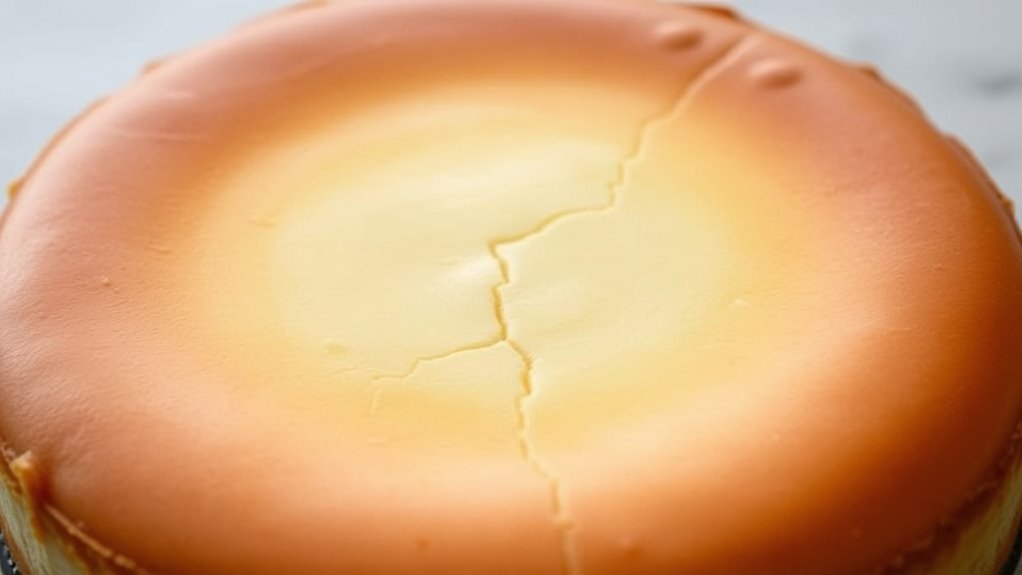
Cheesecake cracks often happen because of temperature changes during baking and cooling. These cracks can affect the cheesecake’s texture, making it look less appealing and affecting the overall experience. One key cause is uneven heat distribution, which can cause parts of the cheesecake to expand or contract at different rates. The quality of your ingredients also plays a role; using low-quality cream cheese or eggs can result in a less stable batter, increasing the likelihood of cracks. When your ingredients aren’t fresh or properly blended, the batter may develop air pockets or uneven consistency, leading to cracks as it bakes. Ensuring high-quality ingredients and avoiding sudden temperature shifts can help maintain a smooth, creamy texture and prevent cracks. Additionally, incorporating connected kitchen appliances with precise temperature controls can help monitor and maintain optimal baking conditions to minimize cracking. Proper baking techniques and gradual cooling are also crucial to avoid stress on the cheesecake’s structure and keep it crack-free. Using accurate oven calibration can further help ensure even baking and prevent unexpected temperature fluctuations. Being mindful of baking environment conditions, such as humidity and airflow, can also contribute to more consistent results and fewer cracks.
How Can You Prevent Cracks While Baking?
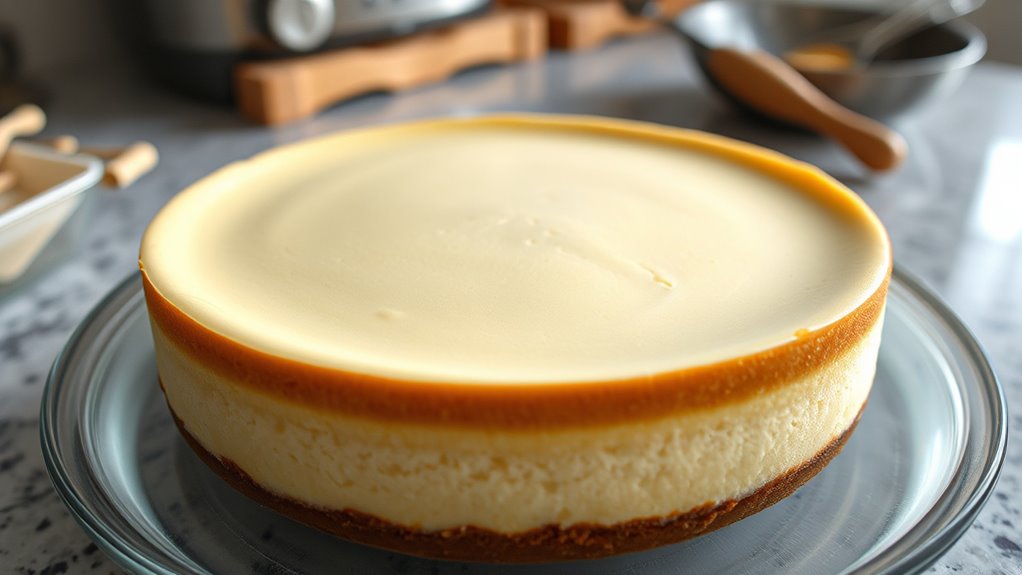
To prevent cracks in your cheesecake, start by using a water bath to keep it moist and evenly heated. Make sure you don’t overmix the batter, as that can cause stress and cracks during baking. Also, bake at the correct temperature to avoid sudden rises and collapses that lead to cracks. Additionally, monitoring the oven temperature with an accurate thermometer helps maintain a consistent environment and prevents uneven baking. Using the right baking tools, such as a springform pan, can also help achieve a smooth, crack-free surface. Incorporating smart kitchen appliances with temperature sensors can further ensure your oven stays at the optimal temperature for perfect results. Paying attention to contrast ratio and how it affects the appearance of the cheesecake can also help you judge doneness and texture more accurately. Furthermore, understanding the importance of proper baking environment conditions can contribute to preventing cracks and achieving a flawless cheesecake surface.
Use Water Bath Method
Using a water bath during baking creates a gentle, even heat that helps prevent cracks in your cheesecake. The water bath guarantees the temperature around the cheesecake stays consistent, reducing the risk of sudden heat changes that can cause cracking. Before baking, wrap your springform pan with foil to prevent water from seeping in. Place the pan in a larger baking dish filled with hot water, about halfway up the sides of your cheesecake. This process promotes gentle mixing of heat, minimizing stress on the batter. The result is a smooth, crack-free surface. The water bath also helps maintain moisture, keeping your cheesecake tender and evenly cooked. Proper temperature control is essential for achieving a professional-looking, crackless cheesecake, and the water bath method is a reliable way to help you get there.
Avoid Overmixing Batter
Overmixing the batter can introduce excess air and disturb the delicate balance of ingredients, increasing the likelihood of cracks forming during baking. To prevent this, focus on gentle mixing techniques that combine ingredients smoothly without overdoing it. Use a low speed and mix just until the ingredients are incorporated. Be mindful of ingredient ratios—adding too much cream or eggs can weaken the batter’s structure, making cracks more likely.
- Mix until just combined, avoiding prolonged beating
- Use a spatula instead of a mixer for better control
- Pay attention to ingredient ratios to keep batter stable
Bake at Correct Temperature
Baking your cheesecake at the right temperature is essential to prevent cracks. If your oven temperature is too high, the edges will firm up too quickly, causing stress on the center and leading to cracks. Conversely, too low a temperature can result in uneven baking and a runny center. To avoid this, set your oven to the recommended temperature, typically around 325°F (160°C), and use an oven thermometer for accuracy. Pay close attention to baking duration; overbaking dries out the cheesecake and increases the risk of cracks. Check for doneness by gently shaking the pan—just a slight jiggle in the center is ideal. Maintaining a consistent oven temperature and adhering to the correct baking time guarantees a smooth, crack-free cheesecake. Additionally, using a water bath can help distribute heat evenly and reduce the likelihood of cracks forming during baking. Proper baking techniques, like avoiding sudden temperature changes, can also help prevent cracks. Ensuring the batter is properly mixed and avoiding overmixing can also prevent stress that leads to cracks. Using gentle mixing methods and proper batter preparation can further help maintain batter stability during baking. Incorporating correct ingredient ratios will also support an even texture and prevent cracking.
Cooling and Finishing Tips for a Crack-Free Cheesecake
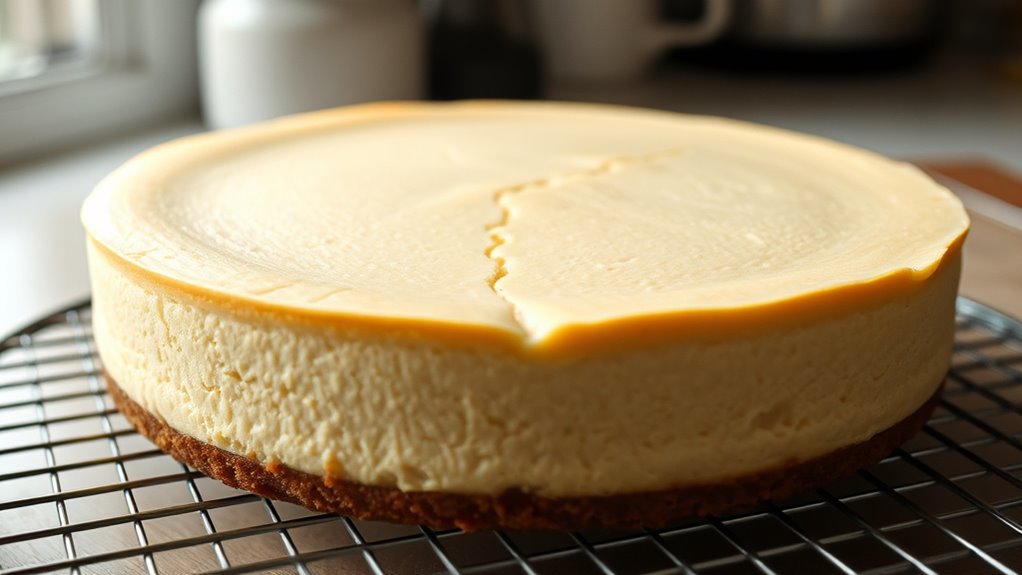
Cooling your cheesecake properly is essential to prevent cracks and achieve a smooth finish. Once out of the oven, let it cool gradually in the pan, then transfer it to a wire rack. This slow cooling minimizes temperature shock that can cause cracking. When the cheesecake is fully cooled, apply frosting techniques carefully—use a spreader or spatula for even layers. For decorative toppings, wait until the cheesecake is completely chilled; this helps toppings adhere better and prevents melting. To finish, consider a light dusting of powdered sugar or fresh fruit for a polished look. Remember, patience is key: rushing the cooling or decorating process can lead to unwanted cracks and uneven surfaces. Proper cooling techniques help prevent cracking and ensure a smooth, professional appearance. Additionally, understanding the importance of consistent temperature control during cooling can further protect against cracks and ensure a professional-quality result. Maintaining a steady cooling environment contributes significantly to crack-free cheesecakes.
How Do You Fix a Cracked Cheesecake?

If your cheesecake develops cracks, don’t worry—there are simple ways to fix and improve its appearance. One effective method is to use a creative presentation, like adding a decorative topping or fruit arrangement that covers the cracks. You can also gently fill the cracks with whipped cream, fruit compote, or a smooth glaze, which not only conceals imperfections but adds flavor pairing opportunities. For a more polished look, consider placing fresh berries, chocolate shavings, or a drizzle of caramel or fruit sauce over the surface. These touches distract from any cracks and turn your cheesecake into a stunning dessert. Remember, a beautifully decorated cheesecake can be just as impressive as a flawless one, especially when it’s paired with complementary flavors. Additionally, understanding cheesecake chemistry can help prevent cracks in future batches. Maintaining the correct baking temperature and avoiding overbaking are also crucial in preventing such imperfections and ensuring a smooth, creamy texture. Using proper mixing techniques can also reduce the likelihood of cracks by preventing air bubbles that cause surface breaks.
Additional Tips for a Flawless Cheesecake
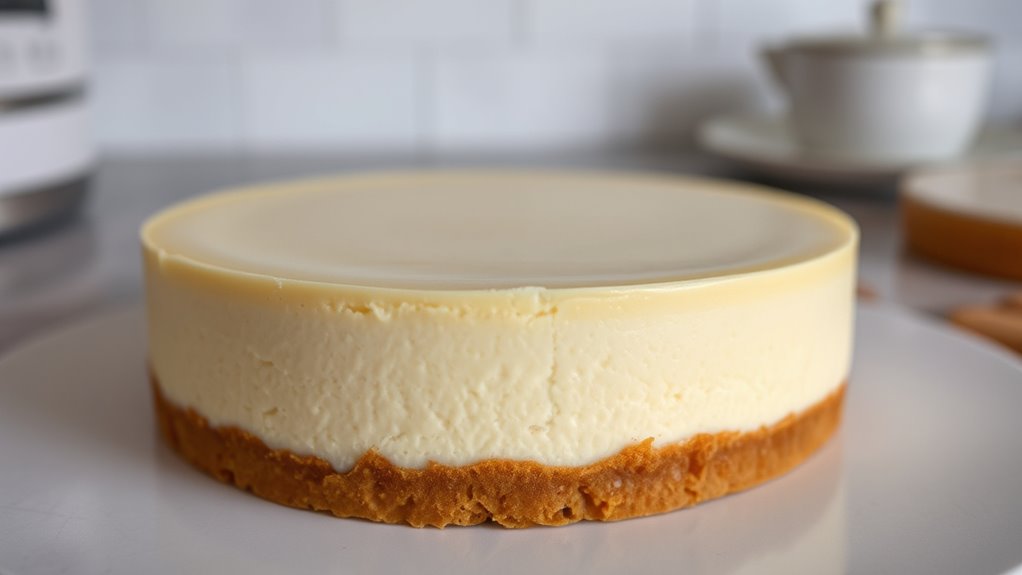
To prevent cracks and achieve a smooth cheesecake, make sure to use a water bath properly—it helps regulate the oven’s heat. Chill the cheesecake before serving to improve texture and appearance. Also, avoid overmixing the batter to keep it light and prevent cracks from forming. Additionally, selecting the right baking tools can make a significant difference in achieving a flawless result.
Use Water Bath Properly
Using a water bath properly is essential for achieving a smooth, crack-free cheesecake. It helps regulate the oven’s temperature and prevents uneven baking that causes cracks. To guarantee success, pay attention to proper placement of the water bath:
- Place your filled cake pan inside a larger pan, then add hot water until it reaches halfway up the sides of the cheesecake pan.
- Use aluminum foil around the bottom of your cheesecake pan to prevent leaks.
- Ensure the water bath sits on the oven rack before placing your cheesecake inside, so it’s stable and secure.
These steps help maintain consistent heat and prevent sudden temperature changes. Proper placement of the water bath ensures even baking, giving you that perfectly smooth, crack-free cheesecake every time.
Chill Before Serving
After carefully baking your cheesecake with a proper water bath, the next step is to let it chill thoroughly before serving. Chilling not only sets the texture but also enhances the cheesecake presentation. Properly chilled cheesecake is easier to slice cleanly and looks more appealing on the plate. To guarantee ideal results, allow it to rest in the refrigerator for at least 4 hours or overnight. Use the table below to understand key chilling tips:
| Tip | Benefit |
|---|---|
| Chill uncovered briefly | Prevents condensation on surface |
| Cover loosely afterward | Maintains freshness and prevents cracks |
| Chill for at least 4 hours | Ensures firm, sliceable texture |
| Serve cold for best presentation | Enhances flavor and appearance |
Following these steps guarantees a flawless, crack-free cheesecake with stunning presentation.
Avoid Overmixing Batter
Overmixing your cheesecake batter can lead to cracks and a dense texture. To keep your batter smooth without overdoing it, focus on gentle mixing techniques. Use low speed and mix just until ingredients are combined to avoid incorporating excess air. Pay close attention to ingredient ratios; too much liquid or sugar can make the batter too loose, increasing the risk of cracks. Here are some tips:
- Mix until ingredients are just blended, avoiding prolonged mixing.
- Use a spatula to fold ingredients gently instead of vigorous stirring.
- Keep an eye on ingredient ratios, especially liquids, to maintain batter stability.
Sticking to proper mixing techniques and balancing ingredient ratios helps create a creamy batter that bakes evenly and resists cracking.
What Are the Best Practices for a Smooth Cheesecake?

To achieve a smooth, crack-free cheesecake, it is vital to follow specific best practices throughout the baking process. Start with proper crust preparation by ensuring your crust is evenly pressed and pre-baked if needed, providing a stable base that helps prevent cracks. Use high-quality ingredients; fresh cream cheese and eggs contribute to a smoother batter with fewer imperfections. When mixing, avoid overworking the batter, which can introduce air bubbles that cause cracks. Make certain all ingredients are at room temperature to promote even blending. Additionally, gentle handling and slow baking help maintain a uniform texture. These practices work together to create a stable, smooth cheesecake, reducing the risk of cracks and delivering a professional finish.
How to Achieve a Perfectly Smooth, Crack-Free Cheesecake
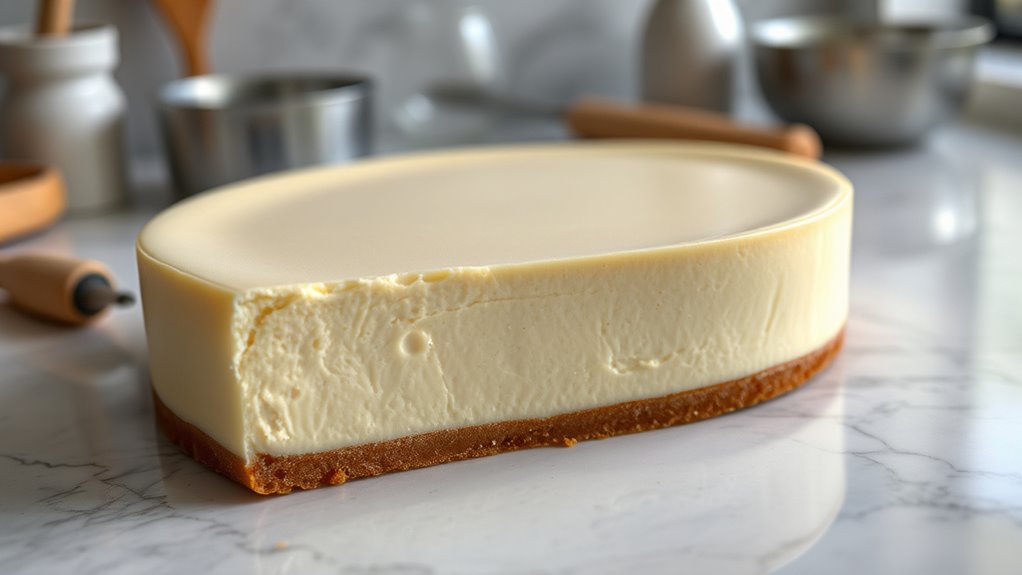
Achieving a perfectly smooth, crack-free cheesecake starts with careful attention to your baking technique. Focus on controlling the oven temperature and avoid overmixing, which can affect cheesecake texture. To guarantee a smooth surface, follow these tips:
- Use room temperature ingredients for even mixing and a better crust consistency
- Bake in a water bath to regulate heat and prevent rapid temperature changes
- Let the cheesecake cool gradually, avoiding sudden temperature shifts that cause cracks
These steps help maintain a uniform cheesecake texture and prevent cracks from forming. Proper technique ensures your cheesecake remains silky and smooth, with a crust that complements the creamy interior. Consistency in your process makes all the difference in achieving a flawless, crack-free dessert.
Frequently Asked Questions
Can Overmixing the Batter Cause Cheesecake Cracks?
Yes, overmixing the batter can cause cheesecake cracks. When you overmix, you break down the batter’s structure, leading to a more airy and inconsistent consistency. This can cause the cheesecake to expand unevenly during baking, resulting in cracks. To prevent this, use a gentle mixing technique and aim for a smooth, but not overly whipped, batter consistency. Stick to mixing just until ingredients are combined to avoid cracks.
Does Baking Temperature Affect Crack Formation?
It’s no coincidence that oven temperature impacts crack formation in your cheesecake. If the oven heat is too high, your cheesecake might rise rapidly and then crack as it cools. Conversely, a low, steady temperature allows gentle baking, minimizing cracks. Make certain you maintain a consistent oven temperature, ideally around 325°F (163°C), and avoid sudden temperature changes. Proper oven heat control keeps your cheesecake smooth and crack-free.
Is It Necessary to Use a Water Bath?
Using a water bath isn’t always necessary, but it can help you control oven temperature and prevent cracks. The water bath creates a gentle, even heat, reducing the risk of sudden temperature changes that cause cracking. If your oven runs hot or fluctuates, a water bath provides stability, ensuring your cheesecake bakes evenly. So, consider using one for a smooth, crack-free cheesecake, especially if you’re concerned about oven temperature variations.
How Does Ingredient Temperature Impact Cracking?
You’ll find that ingredient temperature directly impacts cracking by affecting batter consistency. If your cream cheese, eggs, or other ingredients are too cold, they create a lumpy batter that’s harder to blend smoothly, leading to cracks. Let your ingredients sit at room temperature before mixing to attain a silky batter consistency. This ensures even baking and reduces stress on the cheesecake, helping to keep it crack-free and perfectly smooth.
Should I Remove the Cheesecake From the Oven Immediately After Baking?
You shouldn’t remove your cheesecake from the oven immediately after baking. Instead, let it cool gradually by turning off the oven and leaving the door slightly open during the cooling process. This slow cooling helps prevent cracks caused by sudden temperature changes. Proper oven timing ensures even baking, and patience during the cooling process keeps your cheesecake smooth and crack-free. Rushing this step can lead to unwanted surface cracks.
Conclusion
Remember, a cracked cheesecake might be a flaw in appearance, but it doesn’t diminish its deliciousness. Sometimes, perfection means embracing imperfections, like cracks that tell a story of your baking journey. With patience and care, you can achieve a smooth, flawless finish—yet even a cracked cheesecake remains a rich, comforting treat. So, don’t stress the imperfections; they’re just proof you’ve created something truly homemade and heartfelt.