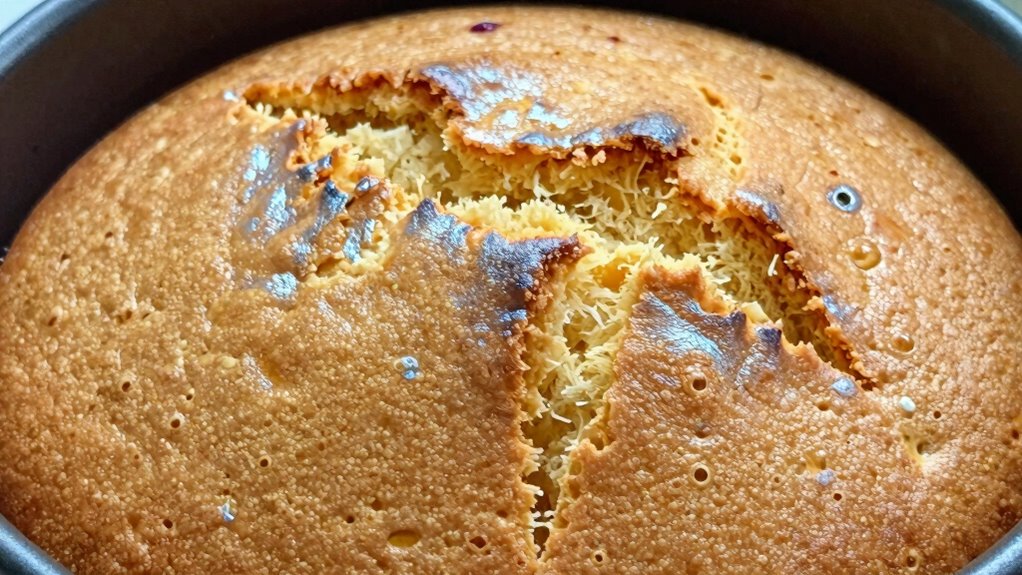
A metallic taste in cakes often happens when leavening agents like baking powder or soda react with acidic ingredients or reactive utensils, such as aluminum or copper pans. These reactions can release metallic ions that taint the flavor. Using old ingredients or mismeasuring can make it worse. Switching to non-reactive utensils, ensuring freshness, and proper baking techniques can help prevent this. Keep exploring to discover more tips for avoiding metallic flavors in your baking.

Get baking supplies delivered free with Prime
- Fast, free delivery on millions of items
- Prime Video, Amazon Music and more included
- Member-only deals all year
Key Takeaways
- Metal leaching from reactive utensils like aluminum or copper pans can impart a metallic flavor to cakes.
- Acidic ingredients in the batter can accelerate metal leaching from cookware during baking.
- Using non-reactive, food-grade utensils prevents metal transfer and preserves cake flavor.
- Old or improperly stored leavening agents may cause chemical reactions that produce metallic notes.
- Insufficient cleaning or damaged utensils increase the risk of metallic tastes in baked goods.

A metallic taste in cakes can be unsettling and often indicates an underlying issue with ingredients or preparation. One common cause is baking ingredient interactions, which happen when certain components in your ingredients react chemically, producing a metallic flavor. For example, when baking powder or baking soda interacts with acidic ingredients like buttermilk or lemon juice, it can sometimes create a bitter or metallic aftertaste. These reactions aren’t inherently bad, but if not balanced properly, they can lead to off-flavors that linger in your cake. Additionally, overusing or using the wrong type of leavening agents can intensify this metallic note, especially if they are old or improperly stored. It’s essential to measure ingredients accurately and follow recipes closely to prevent these unwanted reactions.
Another frequent culprit is utensil contamination. If your mixing bowls, spatulas, or measuring spoons are made of reactive metals like aluminum or copper, they can transfer trace amounts of metal into your batter. Over time, these metals can leach into food, especially when exposed to acidic ingredients, resulting in a metallic taste. Even stainless steel utensils can sometimes cause issues if they are of poor quality or have been scratched or damaged, exposing underlying reactive layers. To avoid this, make sure you’re using non-reactive, food-grade utensils, or thoroughly clean and inspect your equipment regularly. Using glass or silicone utensils can drastically reduce the risk of contamination and ensure your cake’s flavor remains true to the recipe.
It’s also worth noting that storage conditions and ingredient freshness contribute to metallic flavors. Old baking powders or poorly stored ingredients can degrade and produce metallic notes. Always check expiration dates and store ingredients properly to maintain their integrity. When preparing your batter, pay attention to the quality of your utensils and ingredients, as these small details make a big difference. If you notice a metallic taste, consider whether your utensils might be reacting with the batter or if your ingredients have gone off. Sometimes, simply switching to non-reactive tools or ensuring all ingredients are fresh can eliminate the problem altogether. Additionally, using high-quality utensils can help prevent metal leaching and preserve the intended flavor of your baked goods.
As an affiliate, we earn on qualifying purchases.
Frequently Asked Questions
Can Using Non-Stick Pans Prevent the Metallic Taste?
Using non-stick pans can help prevent a metallic taste in your cakes. These pans are coated to reduce metal contact, minimizing reactions that cause a metallic flavor. When you bake, this coating acts as a barrier, so you’re less likely to notice any metallic taste. However, make sure to use non-stick pans properly and avoid scratching the surface, as damaged coatings might still lead to metallic flavors.
Does the Type of Cake Affect the Pan Reaction?
Yes, the type of cake affects the pan reaction because different cake compositions interact differently with pan materials. For example, acidic ingredients like fruit or citrus can react with metal pans, causing a metallic taste. Your choice of pan material, such as aluminum or stainless steel, also influences this reaction. Consequently, consider both the cake’s ingredients and the pan material to prevent unwanted metallic flavors.
Are There Specific Ingredients That Cause the Metallic Flavor?
Imagine a dance where certain ingredients, like acidic fruits or vinegars, trigger aluminum leaching from your pan, creating a metallic taste. You’ll notice that highly acidic ingredients heighten this reaction, making the metallic flavor more prominent. To avoid this, use non-reactive pans and balance acidity with other ingredients. By understanding ingredient acidity, you control the flavor’s outcome, ensuring your cake tastes as delightful as it looks.
How Does Baking Temperature Influence the Metallic Taste?
Your baking temperature directly influences the metallic taste by affecting flavor development. Higher temperatures can intensify the reaction between certain ingredients and metals in your pan, leading to a stronger metallic flavor. Conversely, lower temperatures may minimize this reaction, resulting in a milder taste. To avoid metallic notes, keep your baking temperature moderate and guarantee your pans are non-reactive, helping you achieve a better-balanced flavor in your cakes.
Can Storing Cakes in Certain Containers Cause Metallic Flavors?
Like a whisper of tarnished silver, metallic contamination can seep into your cakes if you store them in the wrong containers. Aluminum storage, especially reactive ones, can impart a metallic flavor, turning your sweet creation bitter and unwelcome. To keep your cakes tasting as delightful as intended, avoid aluminum and opt for non-reactive containers. This simple switch preserves your cake’s flavor and keeps that unwanted metallic note at bay.
As an affiliate, we earn on qualifying purchases.
Conclusion
Next time your cake surprises you with a metallic taste, remember it’s like discovering a hidden twist in a familiar story. Just last month, I baked a batch and noticed a strange flavor—turns out, it was the reaction of certain metallic utensils with the baking soda. Understanding the chemistry behind these reactions helps you avoid surprises and perfect your baking. So, keep experimenting and don’t let unexpected tastes spoil your sweet successes.
bakery-grade stainless steel measuring spoons
As an affiliate, we earn on qualifying purchases.
As an affiliate, we earn on qualifying purchases.
baking ingredient freshness tester
As an affiliate, we earn on qualifying purchases.
As an affiliate, we earn on qualifying purchases.
Fall Picks
fall essentials
As an affiliate, we earn on qualifying purchases.