

If your KitchenAid Artisan Series stand mixer is making a grinding noise, it can indicate a variety of issues from simple misalignments to more serious mechanical problems. Addressing these early can prevent further damage and restore smooth operation. This guide provides clear, step-by-step instructions to identify the cause and fix the noise safely.

Get baking supplies delivered free with Prime
- Fast, free delivery on millions of items
- Prime Video, Amazon Music and more included
- Member-only deals all year
Whether it’s a persistent squeal or a grinding sound during operation, follow these practical tips to troubleshoot and resolve the issue effectively.
Key Takeaways
| Identify unusual noises early | Grinding noises can stem from misaligned attachments, debris, or worn parts. |
| Regular maintenance helps | Cleaning and checking components can prevent noise and extend your mixer’s lifespan. |
| Safety first | Always unplug the mixer before inspecting or repairing parts. |
| Use the right tools | Proper screwdrivers and brushes make troubleshooting easier and safer. |
| When in doubt, replace parts | Worn or damaged components should be replaced to restore proper function. |
Step 1: Unplug and Inspect
- Always unplug your KitchenAid stand mixer before beginning any inspection or repair.
- Remove any attachments, such as beaters or grinding attachments, to check for debris or damage.
- Visually inspect the mixer’s head, gears, and attachment socket for signs of wear, debris, or misalignment.
Step 2: Check the Attachments and Burrs
- Ensure attachments are correctly seated and locked into place.
- Inspect the grinding attachment or other accessories for any lodged debris or damage.
- If using a food grinder or pasta roller, check for any buildup or blockages that could cause grinding sounds.
Step 3: Clean and Lubricate Moving Parts
- Use a soft brush or cloth to clean around the gears, attachment socket, and inside the mixer head.
- Apply a small amount of food-safe lubricant to the gear mechanisms if you notice any stiffness or squeaking.
Step 4: Test and Troubleshoot
- Reassemble attachments securely and plug in the mixer.
- Run the mixer at low speed to see if the grinding noise persists.
- If noise continues, identify if it’s coming from a specific attachment or internal gear area.
Step 5: Replace Damaged Components
- If you find worn or damaged parts, such as gears or attachment sockets, consider ordering replacements.
- Follow the manufacturer’s instructions for replacing these parts or consult a professional for repairs.
The Products in This Guide
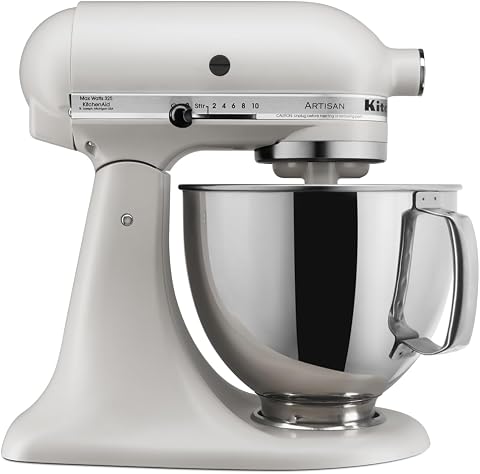
KitchenAid Artisan Series 5 Quart Tilt Head Stand Mixer
- ✔ Weight: 26 pounds
- ✔ Dimensions: 14 x 8 x 14 inches
- ✔ Warranty: 1 year

KitchenAid Stand Mixer Attachment
- ✔ Weight: 5 pounds
- ✔ Dimensions: 8 x 6 x 10 inches
- ✔ Warranty: N/A
KitchenAid Artisan Series 5 Quart Tilt Head Stand Mixer
The KitchenAid Artisan Series 5 Quart Tilt Head Stand Mixer is built with sturdy metal construction and features 59 touchpoints around the bowl for thorough mixing. Its tilt-head design allows easy access for cleaning and changing attachments, making it a versatile kitchen companion.
Pros:
- Durable metal construction
- Easy tilt-head access
- Multiple speed options
- Large capacity bowl
Cons:
- Can be heavy to move
- May be noisy under heavy load
- Attachment compatibility needed for certain functions
Best for: Baking enthusiasts and large batch cooks
Not ideal for: Small kitchens with limited space or light-duty use
Bottom line: A dependable mixer with versatile features, ideal for serious home bakers.
KitchenAid Stand Mixer Attachment
The KitchenAid Metal Food Grinder attachment connects seamlessly to your stand mixer, offering a reliable way to grind meat, vegetables, and more. Its durable construction and multiple grinding plates make it a versatile addition to your kitchen tools.
Pros:
- Sturdy metal build
- Multiple grinding plates
- Large food tray
- Easy to store
Cons:
- Requires separate purchase
- Cleaning can be time-consuming
- Attachment needed for use
Best for: Homemade sausages, ground meat, fresh grinding
Not ideal for: Light-duty or infrequent use
Bottom line: A robust attachment perfect for fresh grinding projects.
Frequently Asked Questions
Why is my KitchenAid mixer making a grinding noise?
Grinding noises can occur from debris lodged in attachments, misaligned parts, or worn internal gears. Regular cleaning and inspection can often resolve the issue.
Can I fix internal gears myself?
If you have mechanical skills and proper tools, replacing internal gears is possible. However, for safety and accuracy, consider professional repair or contacting KitchenAid support.
Is it safe to continue using the mixer if it’s making noise?
No, continue using it only if the noise is minimal and no other issues are present. Unusual grinding sounds should be addressed promptly to prevent further damage.
How often should I maintain my KitchenAid mixer?
Regularly clean the attachment socket and gears after heavy use, and check for wear every few months to ensure optimal performance.
Keep Your KitchenAid Running Smoothly
Addressing grinding noises early helps maintain your KitchenAid stand mixer’s performance and longevity. Regular inspection, cleaning, and timely replacement of worn parts ensure your mixer continues to serve you well. Always prioritize safety, and don’t hesitate to seek professional help if needed. With proper care, your mixer will be a reliable kitchen companion for years to come.
Affiliate disclosure: As an Amazon Associate we earn from qualifying purchases. Prices and availability are accurate as of the time of publishing.
Fall Picks
fall essentials
As an affiliate, we earn on qualifying purchases.