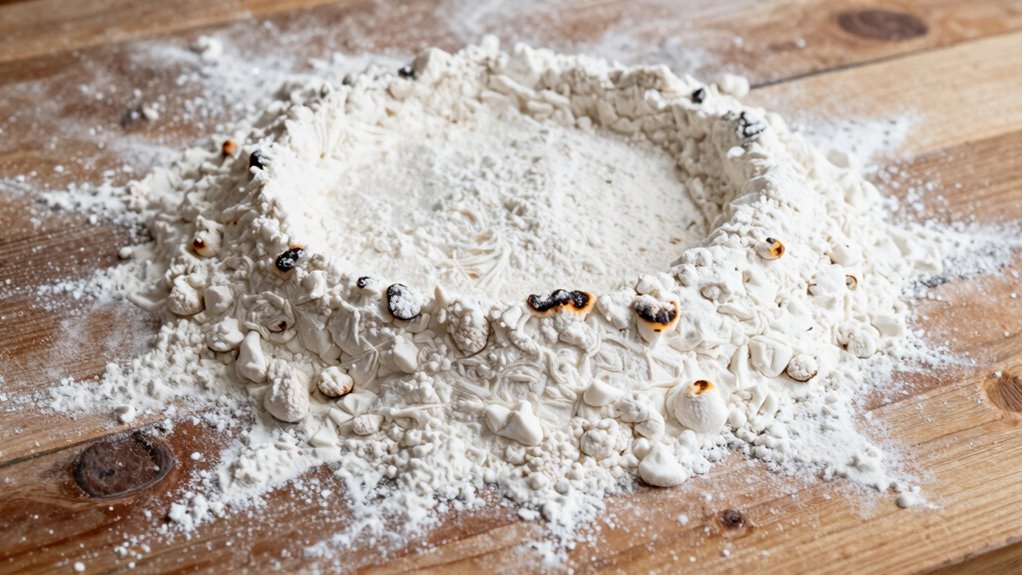
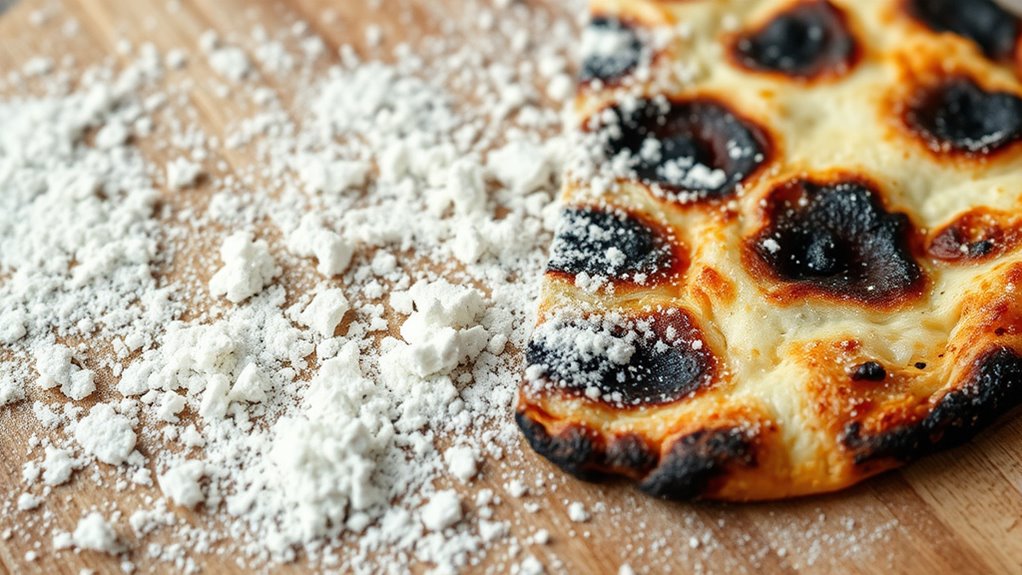
Using too much flour on your pizza peel causes it to burn and turn bitter because excessive flour can scorch at high oven temperatures, creating blackened spots and off-flavors. The flour layer absorbs heat quickly, leading to burning and bitterness, especially if it’s thick or low-quality. To avoid this, apply just a light dusting and learn more tips to prevent your flour from burning and ruining your pizza.
Key Takeaways
- Excess flour can burn quickly at high oven temperatures, leading to bitter, charred flavors on the crust.
- Over-floured dough absorbs more heat, causing uneven burning and developing a bitter taste during baking.
- Thick layers of flour create burnt spots and blackened crust due to rapid caramelization and sugar burning.
- Using low-quality or impure flours increases the risk of bitterness when they burn on the peel.
- Applying too much flour makes it harder to slide the pizza, increasing contact with high heat and promoting bitterness.
Why Do Bakers Put Flour on the Pizza Peel?

Bakers put flour on the pizza peel to prevent the dough from sticking as they transfer it to the oven. When you’re doing pizza tossing, flour helps keep the dough manageable, making it easier to spin and stretch without tearing. Preheating the oven is vital, but without flour, your dough might cling to the peel, causing frustration and uneven transfer. Applying a light dusting of flour creates a slippery surface, allowing you to slide the pizza onto the hot baking stone smoothly. It also helps maintain the dough’s shape during the final move. Proper flour application ensures a clean transfer, preserves the integrity of your pizza, and makes the whole process more efficient. Keep in mind, too much flour can burn, so strike a balance for the best results. Proper flour application is essential for achieving a consistent and professional pizza crust. Additionally, understanding the impact of flour on heat retention can help prevent burning and ensure a perfect bake. Using the right type of flour like rice flour or semolina can further improve sliding and reduce sticking issues. To optimize your technique, experimenting with different flour types and quantities can help you find the ideal balance for your baking style. Being aware of how flour affects heat transfer can make a significant difference in your final outcome.
How Flour Prevents Your Pizza From Sticking
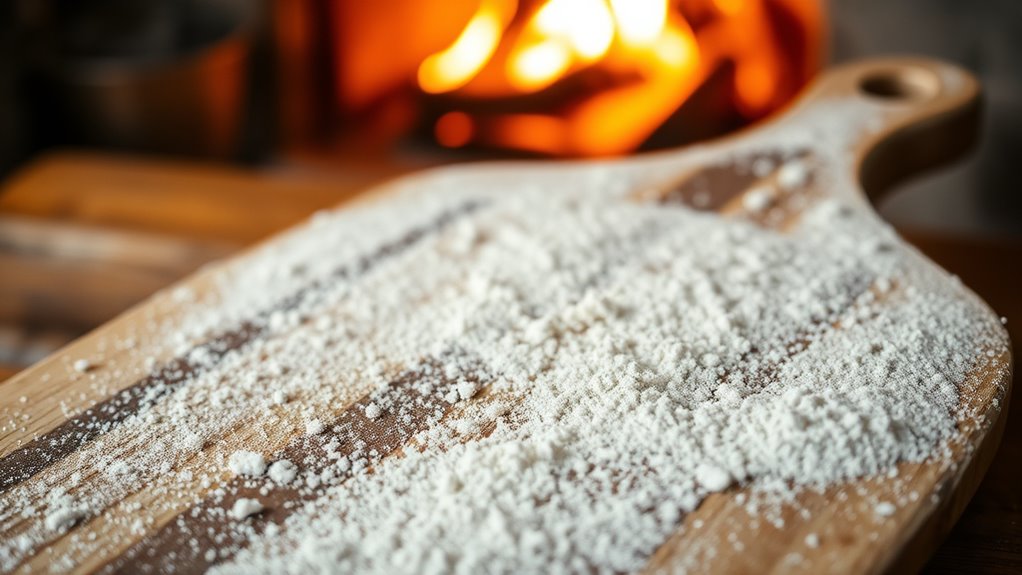
To stop your pizza from sticking, you need to guarantee the flour is spread evenly on the peel. Choosing the right type of flour helps create a barrier, preventing the dough from sticking as it bakes. Be careful not to use too much flour, or your crust could become dry or tough. Additionally, selecting energy-efficient cloud servers can reduce your overall environmental impact while maintaining reliable performance. Proper wall decor choices, such as using adhesive strips or wall mounting brackets, can also help protect your space and make cleaning easier. Ensuring your knife skills are precise can also help in handling the dough more effectively and prevent tearing. Using the appropriate yarn for scarves can make handling the dough easier if you’re practicing a multi-tasking kitchen. Moreover, incorporating quality ingredients into your dough can improve its consistency and make it less prone to sticking during baking.
Proper Flour Distribution
Ensuring an even layer of flour on your pizza peel is key to preventing sticking. Distribute the flour evenly across the surface before placing your pizza dough. Too little flour, and the dough may stick; too much, and it might burn during baking. Use a sifter or a gentle shake to spread the flour uniformly. Keep in mind that the right oven temperature also influences sticking; a hotter oven requires a more careful flour layer. To help visualize, here’s a quick comparison:
| Flour Distribution | Effect on Pizza |
|---|---|
| Thin, even layer | Prevents sticking, easy slide |
| Thick layer | Risk of burning, tough crust |
| Uneven spread | Uneven sticking, tearing |
| No flour | Likely sticking, difficult flip |
| Excess flour | Burnt spots, bitter flavor |
Proper flour distribution ensures a smooth slide and perfect bake. Additionally, understanding heat transfer principles can help optimize your baking process for consistent results. Recognizing how heat is transferred during baking can help you adjust your techniques for better outcomes and avoid burning your crust. Being mindful of baking techniques can further enhance your pizza-making skills and prevent common issues like burning or sticking. Paying attention to flour types can also influence how well your dough releases from the peel and how evenly it bakes. For example, selecting the right flour type can make a significant difference in achieving a well-baked crust and easy release.
Choosing the Right Flour
Choosing the right flour is essential for preventing your pizza from sticking, as different types have varying properties that affect how well they work as a non-stick barrier. The key is understanding flour types and dough hydration—higher hydration doughs can be stickier, requiring a flour that can handle moisture without becoming too soft. Opt for low-protein flours like bread or all-purpose for a sturdy, less sticky surface, while avoiding overly soft or fine flours that can turn gummy. The right flour absorbs moisture effectively and provides enough structure without sticking excessively. Using the correct flour type helps you control dough stickiness, making it easier to work with and transfer onto your pizza peel. Additionally, selecting flours with moderate protein content ensures optimal elasticity and handling during shaping. Proper flour selection is also vital for managing mammography guidelines, especially in women with dense breast tissue, since different properties can influence how well the dough (or breast tissue) responds to testing procedures. Being aware of gluten development in your dough can also influence how sticky it becomes, aiding in better control during preparation.
Avoiding Excess Flour
While selecting the right flour helps prevent dough from sticking, using too much flour during shaping and transfer can create new problems. Excess flour can absorb moisture, reducing dough hydration and making the crust dry and tough. It also increases the risk of burning in the oven, especially if the oven temperature is high. To avoid this, lightly dust your peel with just enough flour to prevent sticking—think a thin, even layer. Shake off any excess before sliding the pizza into the oven. Maintaining proper dough hydration ensures flexibility and easier handling, reducing the temptation to over-flour. Keeping the oven at the right temperature helps the pizza cook evenly without burning the flour. Less is more when it comes to flour on the peel.
What Causes Flour to Burn in High-Temperature Ovens
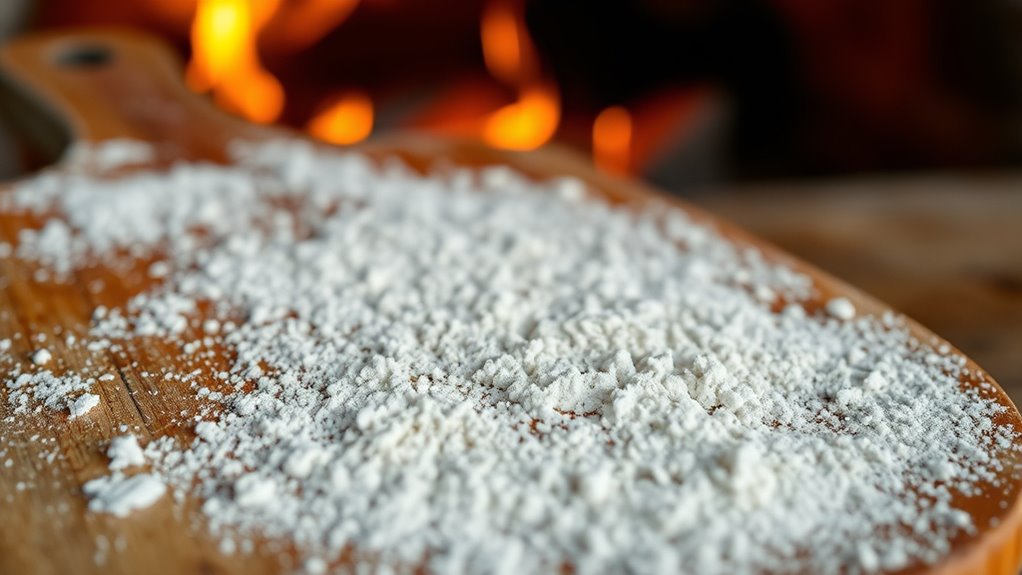
When you bake at high temperatures, the Maillard reaction speeds up, causing the flour to brown and potentially burn faster. Sugar in the flour caramelizes quickly, leading to burnt spots if not watched carefully. Additionally, the protein in the flour has a burning threshold, and once exceeded, it can produce a bitter taste and undesirable char. Proper temperature control can help prevent these issues and ensure your baked goods turn out perfectly. Using modern kitchen technology, such as smart ovens with precise temperature sensors, can assist in maintaining the ideal baking environment. Implementing temperature regulation techniques can further help avoid overheating and burning.
Maillard Reaction Acceleration
The Maillard reaction, responsible for browning and flavor development, accelerates markedly at high temperatures, increasing the risk of burning flour on the peel. When your oven heats up, this reaction speeds up, especially if the dough’s hydration is high, which can keep moisture in the flour longer but also intensifies browning. As oven temperature rises, sugars and amino acids react faster, leading to quicker browning and potential burning. To manage this, consider adjusting dough hydration levels and monitoring oven heat closely.
- Too high oven temperature speeds up Maillard browning and risks burning
- Low dough hydration can cause uneven browning
- Excess moisture delays browning, but too much can cause steaming
- Rapid heating intensifies Maillard reaction, risking bitterness
- Proper temperature control helps prevent burnt, bitter flavors
Sugar Caramelization Speed
High temperatures in your oven can cause sugar within the dough to caramelize rapidly, which in turn can lead to burning flour on the peel. When oven temperature rises too high, sugar molecules break down quickly, forming a sticky, browned layer. This rapid caramelization reduces dough elasticity, making the crust more prone to burning if not monitored carefully. The faster sugars turn to caramel, the more likely they’ll scorch before the heat evenly cooks the dough interior. To prevent this, regulate your oven temperature to slow the caramelization process, allowing the sugars to brown gradually. Controlling oven temperature helps maintain a balanced browning process and prevents burnt spots, ensuring your crust develops a rich flavor without bitterness. Managing oven heat is essential to keep caramelization at a desirable pace, protecting your flour from burning. Additionally, understanding the sugar caramelization speed can help you fine-tune your baking process to achieve perfect results without over-browning.
Protein Burn Threshold
As oven temperatures soar, the proteins in your flour can reach their burning point, causing the flour to develop a bitter flavor and dark, undesirable spots. When the oven is too hot, these proteins—mainly gluten-forming proteins—start to break down and burn, especially if your dough hydration is low. High oven temperatures accelerate this process, making it easier to cross the burn threshold. To avoid this, keep an eye on your dough’s hydration levels and temperature settings. Additionally, understanding the nanotechnology behind heat distribution can help in designing ovens that mitigate hot spots and prevent uneven burning.
- Overly dry dough accelerates protein burn
- Excessive oven heat speeds up burning
- Thin crusts expose flour to higher temps
- Insufficient dough hydration reduces heat buffer
- Moving baked goods too close to heat source increases risk
Why Too Much Flour Turns Black and Bitter
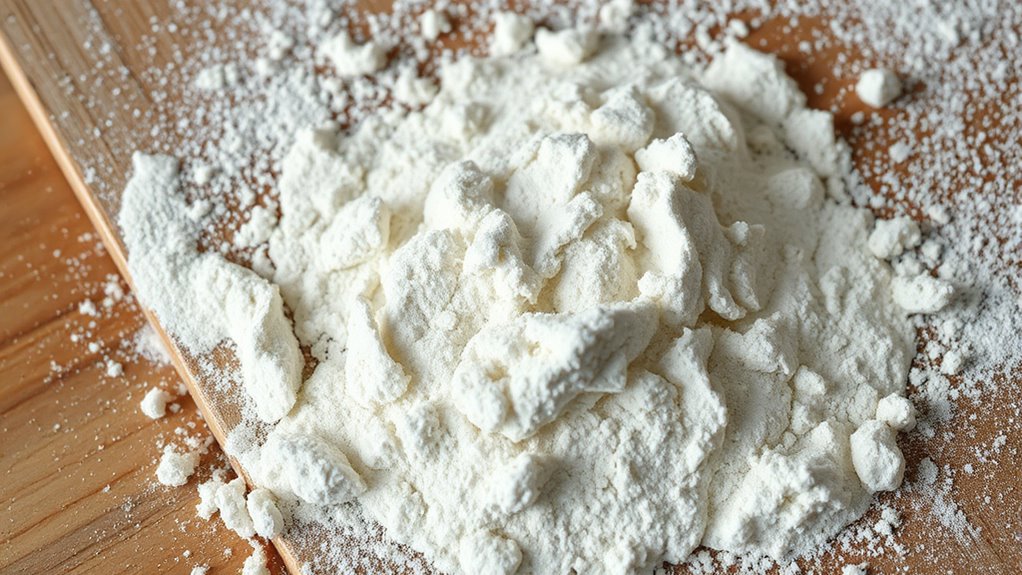
When you add too much flour to your dough, it can quickly turn black and develop a bitter taste. This happens because low-quality flour often contains impurities that burn easily, especially when exposed to high heat. Using the right kitchen tools, like a sturdy spatula or sieve, helps you measure and mix flour accurately, preventing excess. Overflouring creates a thick layer on the surface, which chars faster. To avoid this, choose high-quality flour and handle it carefully. Here’s a visual to clarify:
| Flour Type | Kitchen Tool | Effect of Excess Flour |
|---|---|---|
| All-purpose | Measuring spoon | Burns faster, bitter flavor |
| Bread | Sieve | Causes blackening when overused |
| Whole wheat | Mixing spatula | Turns bitter if over-applied |
| Gluten-rich | Dough scraper | Burns easily when excess present |
| Low-protein | Wooden spoon | Tends to burn and turn bitter |
Being mindful of the flour quality can significantly impact the outcome of your baked goods and prevent undesirable flavors.
How Can You Tell If You’re Using Too Much Flour?
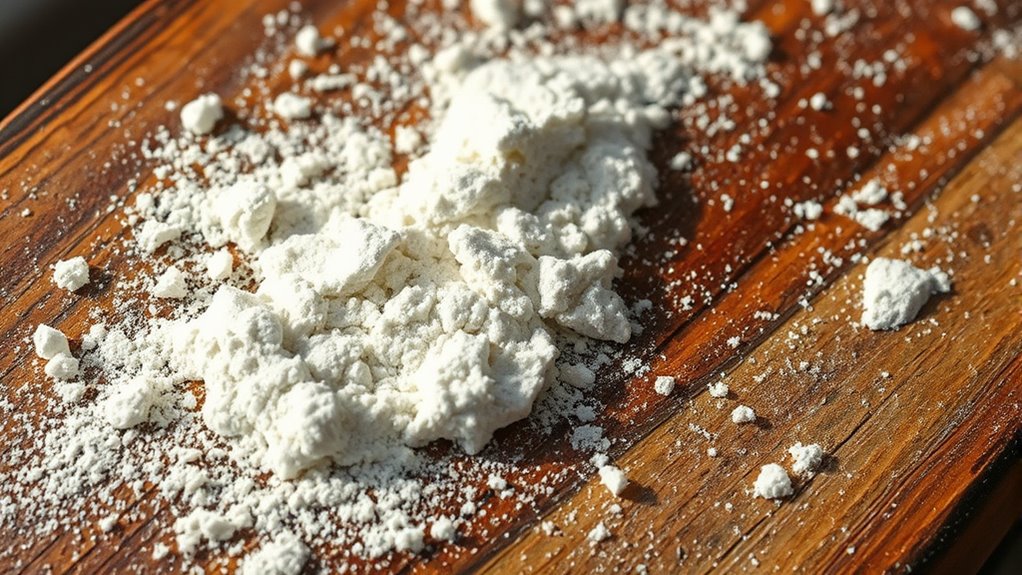
Ever wonder how to tell if you’ve added too much flour to your dough? Too much flour can make your dough stiff, dry, or tough to work with. Signs include poor dough hydration, where the dough feels crumbly instead of elastic, and difficulty shaping it smoothly. You might also notice the flour on the surface becomes thick and powdery, not just a light dusting. When baking, an oven temperature that’s too high can cause excess flour to brown quickly or burn, highlighting over-floured surfaces. To avoid this, check if your dough feels overly dry or dense, observe if the flour isn’t integrating well, and keep an eye on your oven’s heat. Proper hydration and controlled oven temp help prevent too much flour from ruining your pizza.
How to Apply Flour Properly on Your Peel
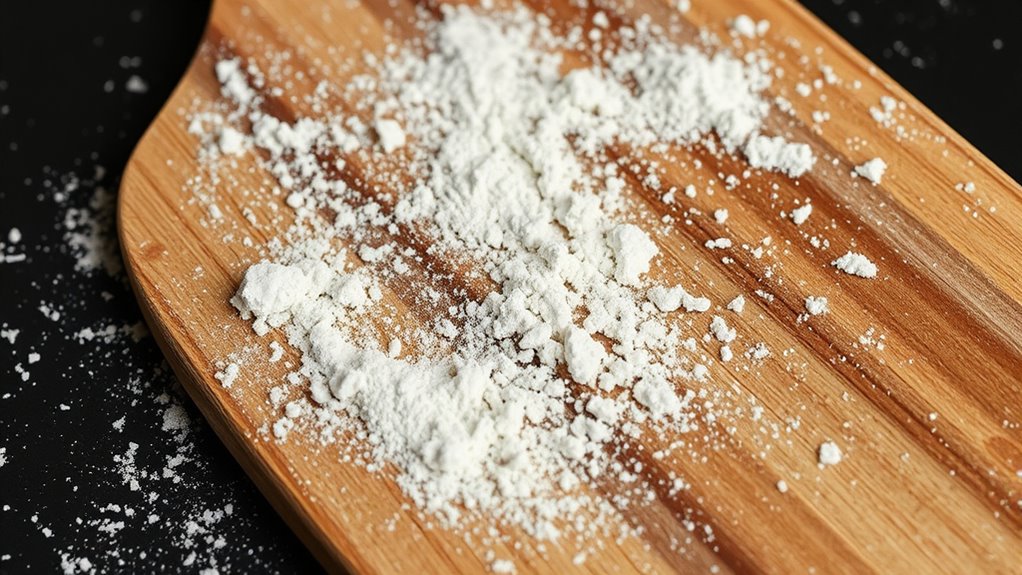
Applying flour properly on your peel is essential to prevent sticking and guarantee smooth dough transfer. Start with a light, even dusting of flour, especially if you’re working with different topping variations that can affect dough hydration. Too much flour can cause burning, while too little increases sticking risks. To apply correctly, sprinkle flour onto the peel before placing your dough, then gently shake or tap the peel to distribute it evenly. Adjust the amount based on dough hydration; wetter doughs may need a slightly thicker layer of flour. Aim for a thin, uniform coating that allows the dough to slide easily without excess residue. Proper flour application ensures a smooth transfer, reduces sticking, and helps you achieve crisp, evenly cooked pizza.
What Are the Best Alternatives to Flour for a Non-Stick Peel
While flour is a popular choice for preventing sticking on your peel, there are several effective alternatives that can work just as well or better, especially if you want to avoid excess residue or burning. Gluten-free alternatives like rice flour, almond flour, or coconut flour can be great options, providing non-stick benefits without gluten. Cornstarch substitutes, such as arrowroot powder or potato starch, also work well and often produce a smoother surface. These options help reduce burning and residue, making your pizza transfer cleaner. Additionally, you might try using fine semolina or crushed cornmeal, which offer a non-stick surface and add a bit of texture. Experiment to find the best fit for your style and oven, ensuring a perfect pizza transfer every time.
How to Transfer Pizza Perfectly Without Burning the Flour
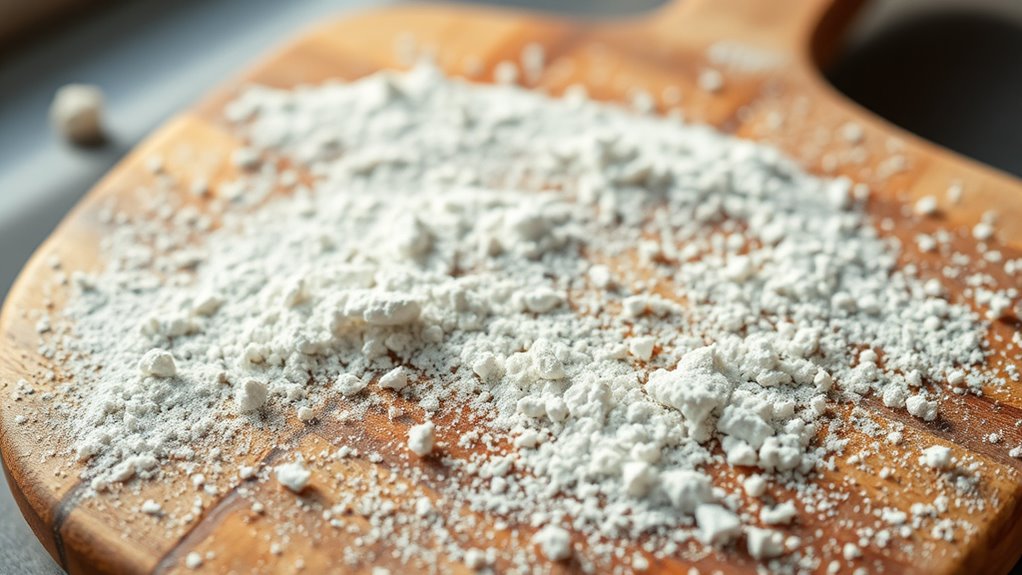
To transfer your pizza without burning the flour or other non-stick coating, it’s vital to work quickly and confidently. Start by ensuring your dough has proper hydration—neither too dry nor too sticky—so it slides easily. Check that your oven is calibrated correctly; a hot oven can burn flour instantly. To minimize burning, prepare a well-floured peel but remove excess flour just before sliding the pizza onto the oven. Use this table to optimize your process:
| Tip | Why it Matters |
|---|---|
| Proper dough hydration | Prevents sticking and tearing |
| Oven calibration | Ensures even cooking without burning flour |
| Minimal excess flour | Reduces risk of burning and bitterness |
| Confident, quick transfer | Keeps flour from burning and sticking |
Frequently Asked Questions
How Does Flour Type Affect Burning and Taste?
The type of flour you use impacts burning and taste because of gluten content and flour granularity. High-gluten flours create a chewy texture but can burn more easily if not handled properly. Fine-grained flours, like cake flour, burn less quickly and taste milder. Using the right flour for your dough helps prevent burning, ensuring a better flavor and texture. So, choose your flour carefully based on these factors for ideal results.
Can Humidity Influence the Flour’s Performance on the Peel?
Like a sailor steering uncertain waters, you’ll find humidity affects your flour’s performance on the peel. High moisture levels from damp storage conditions cause the flour to clump and stick, making it harder to slide off. Conversely, dry conditions keep it light and powdery. To avoid trouble, store your flour in airtight containers, and keep an eye on humidity. Proper storage ensures your pizza-making remains smooth and flavorful.
Is There a Difference Between Rice Flour and Wheat Flour for Pizza?
You’ll notice that rice flour and wheat flour differ mainly in gluten content and flour granularity. Rice flour has little to no gluten, making it ideal for preventing sticking without affecting dough elasticity, while wheat flour’s higher gluten provides structure and chewiness. The finer granularity of rice flour helps it glide smoothly on the peel, reducing burning risks, whereas wheat flour’s coarser texture can lead to burning and bitterness if used excessively.
How Long Can Flour Stay on the Peel Before It Burns?
You should remove excess flour from your peel within a minute or two before baking. Too much flour can burn quickly, creating bitterness and sticking to the oven. When your dough has proper hydration, it resists sticking longer, but high oven temperatures accelerate burning. Keep an eye on the clock, and gently shake your peel to prevent flour buildup from turning bitter, ensuring a perfect, crisp crust every time.
Does Pre-Wetting the Peel Help Reduce Flour Burning?
Pre-wetting the peel can help reduce flour burning because it minimizes excess flour during peel preparation. When you pre-wet, the moisture prevents the flour from burning quickly once in the oven, leading to a cleaner crust. Focus on proper flour application—using just enough to prevent sticking without excess—and consider pre-wetting to improve your peel preparation, ensuring your pizza cooks evenly without bitterness caused by burnt flour.
Conclusion
Using just the right amount of flour on your peel keeps your pizza slipping smoothly without burning. Did you know that over-flouring can cause bitter, blackened spots, ruining your pizza? Stick to proper techniques, like brushing off excess flour before baking, to avoid this. With a little practice, you’ll master the art of transferring perfectly baked, delicious pizza without the burnt, bitter flavors that come from too much flour.