Dough hooks often fail due to poor geometry and misalignment with the bowl, leading to slipping or ineffective mixing. If the hook shape, size, or bowl compatibility isn’t optimized, dough may not grip or turn properly, causing uneven results. Common issues include gaps, incorrect angles, or instability during operation. Understanding how design and alignment affect performance helps prevent these problems—keep going to discover how smart solutions can improve your kneading experience.
Key Takeaways
- Misalignment between hook and bowl shapes causes improper fit, leading to slippage and ineffective kneading.
- Incompatible geometries prevent full contact, resulting in dough slipping or uneven mixing.
- Incorrect hook size or angle hampers proper ingredient engagement and dough movement.
- Bowl design that doesn’t match hook geometry creates gaps, reducing kneading efficiency.
- Lack of proper alignment or secure attachment increases the risk of hook-to-bowl misfires during operation.
How Do Dough Hook and Bowl Designs Impact Performance
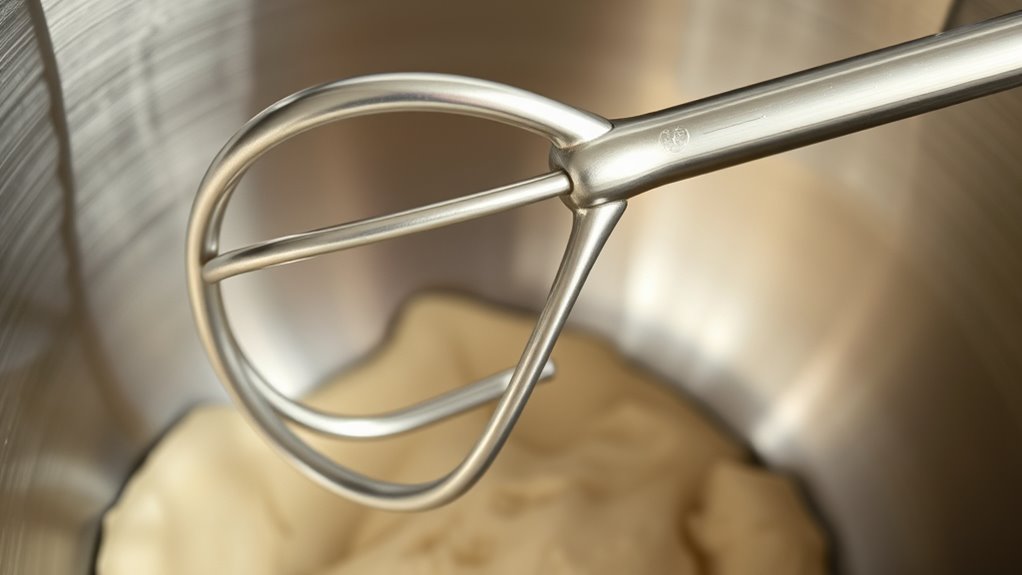
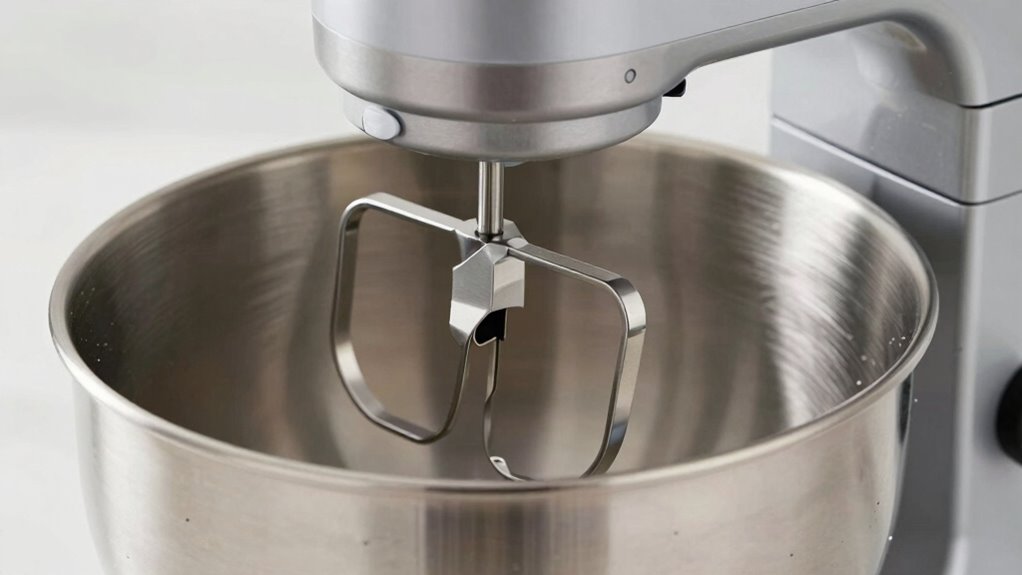
The design of dough hooks and mixing bowls plays a crucial role in how well your stand mixer performs. When the hook’s shape and size complement the bowl’s geometry, it enhances dough elasticity, making kneading more effective. A well-designed hook ensures it reaches all ingredients, promoting proper ingredient hydration and uniform mixing. The bowl’s shape influences how thoroughly ingredients combine; a deeper or wider bowl can improve movement and contact, reducing under-mixed spots. If the designs are mismatched, you might experience uneven dough development, affecting elasticity and texture. Good synergy between hook and bowl optimizes performance, ensuring your dough develops the right consistency. Proper design prevents overworking the dough, saves time, and results in a better final product.
What Geometric Problems Cause Hook Slippage?
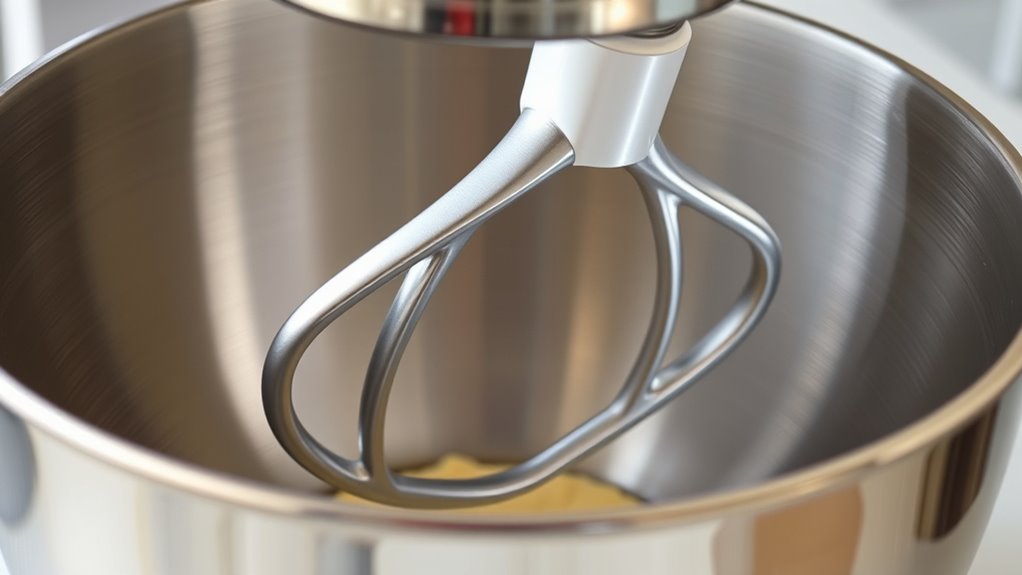
When your dough hook slips, the problem often lies in misalignment between the hook and bowl or an incorrect hook size. If the hook isn’t properly aligned or is too small or large, it won’t grip the dough effectively. Understanding these geometric issues helps you identify and fix slippage quickly.
Misaligned Hook and Bowl
Misaligned hooks and bowls often cause slippage because their geometric shapes don’t fit together properly. When the hook’s shape doesn’t match the bowl’s curvature, it can’t grip the dough securely. This issue becomes more pronounced when working with dough that has high elasticity, which resists deformation and tends to slip if not held firmly. Additionally, ingredient adhesion plays a role; if ingredients stick unevenly or don’t bond well to the bowl’s surface, the dough may slide against the hook instead of moving smoothly with it. Proper alignment guarantees the hook maintains contact with the dough throughout mixing, reducing slippage. When misaligned, even slight geometric mismatches can lead to inefficient mixing, increased wear on equipment, and frustration during your baking process.
Improper Hook Size
Using hooks that are too small or too large for your bowl can cause slippage during mixing. When the hook size isn’t right, it struggles to grip the dough properly, especially as dough hydration increases or yeast activation produces more elasticity. This mismatch leads to inconsistent kneading, risking underdeveloped gluten or overmixing.
Consider these critical points:
- A small hook can’t handle high-hydration dough, causing slipping.
- An oversized hook may not spin freely, losing contact with the bowl.
- Improper size disrupts dough kneading, affecting gluten development.
- Slippage worsens as yeast activation creates more sticky, elastic dough.
Choosing the correct hook size guarantees proper contact, reduces slippage, and promotes ideal dough development.
How Does Hook-to-Bowl Alignment Affect Mixing?
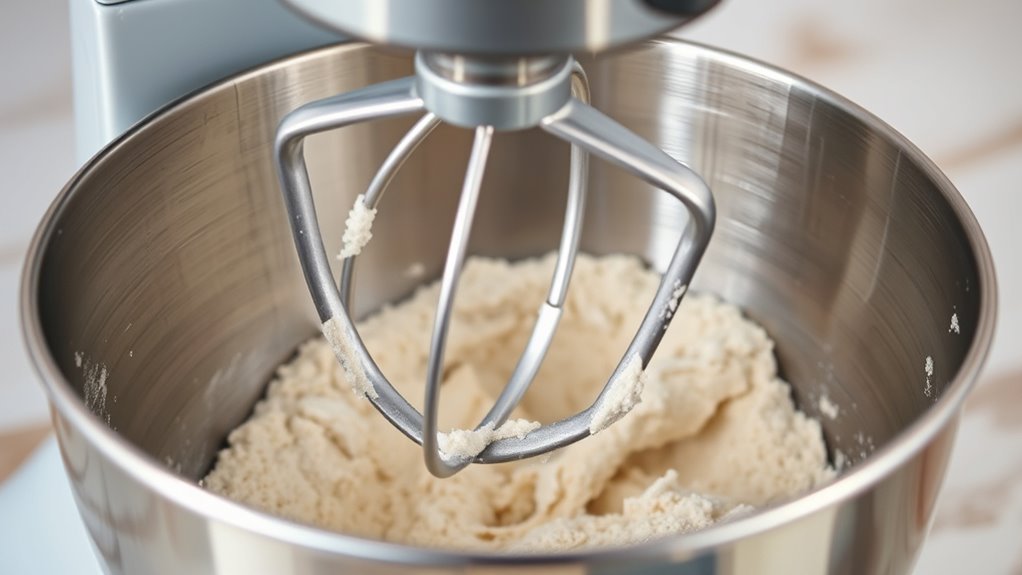
Proper hook-to-bowl alignment is vital for efficient mixing, as it directly influences how well ingredients are incorporated. When the hook is correctly aligned, it guarantees consistent dough hydration by evenly distributing moisture and flour. This optimal positioning also promotes better yeast activity, as the dough develops uniformly, creating the perfect environment for fermentation. If the hook is misaligned, ingredients may clump or remain unmixed, leading to uneven dough consistency. Poor alignment can cause the hook to skip or spin inefficiently, reducing the kneading effect and slowing down gluten development. As a result, your dough may be under-hydrated or overworked, negatively affecting texture and rise. Proper hook-to-bowl alignment is essential for seamless mixing, consistent results, and efficient dough preparation. Additionally, maintaining correct machine calibration ensures the mixer operates at optimal performance, further supporting consistent mixing outcomes. Ensuring proper gear engagement can prevent slippage and improve overall mixing efficiency. Regularly checking component alignment can help troubleshoot and prevent hook failure issues before they occur, and understanding the mechanics of the mixer can aid in diagnosing common problems.
Why Hook Shape and Size Matter for Good Engagement?
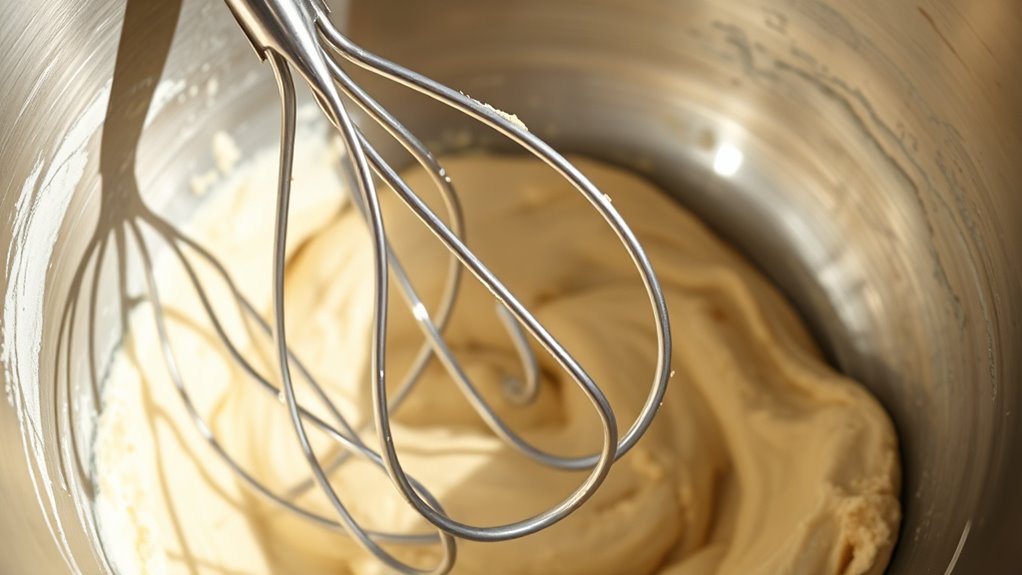
The shape and size of your dough hook directly impact how effectively it engages with the ingredients in the bowl. A well-designed hook promotes better dough elasticity and ingredient adhesion, leading to a smoother, more consistent mixture. If your hook is too small or too flat, it won’t create enough surface area for proper kneading. Conversely, an oversized hook may overwhelm the bowl, causing poor contact and uneven mixing. Ensuring the reliability of your equipment can help prevent common failures and maintain optimal performance. Consider these key factors: 1. Proper size enhances dough elasticity, making it easier to develop gluten. 2. Appropriate shape ensures better ingredient adhesion, reducing sticking and uneven mixing. 3. Matching hook size to batch volume** prevents under- or over-mixing. 4. Optimized shape improves engagement, which can help avoid premature wear and other issues. Additionally, selecting a design that promotes durability can extend the lifespan of your tools and prevent early wear, ensuring consistent results. Regular maintenance and choosing high-quality materials are also crucial for long-term performance** and avoiding premature damage.
How Can You Troubleshoot and Adjust Your Mixer Setup?
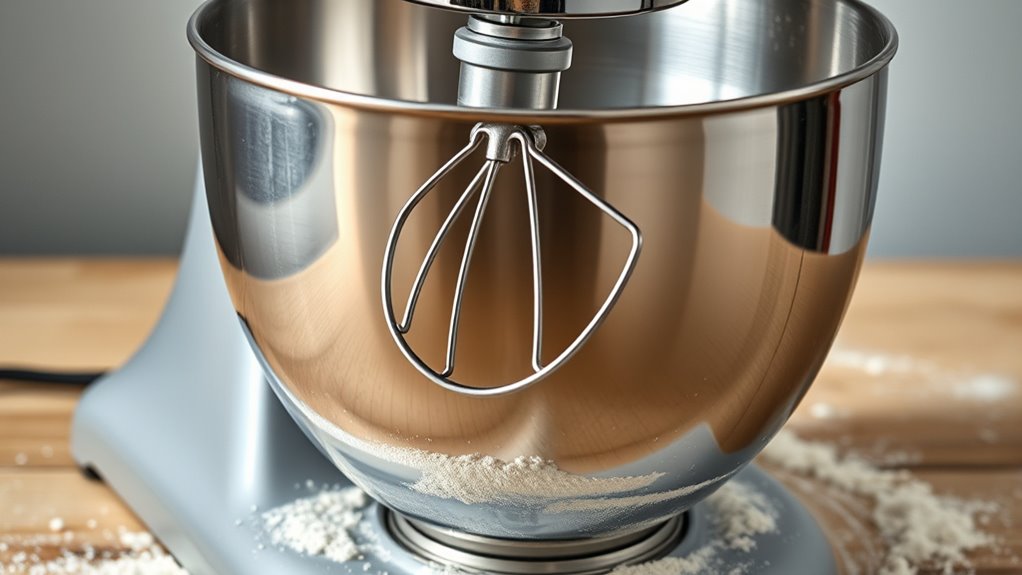
When your mixer isn’t performing as expected, troubleshooting begins with a close inspection of the setup to identify potential issues. Check that the hook is properly attached and aligned with the bowl to guarantee optimal engagement. Sometimes, ingredient substitutions, like replacing bread flour with all-purpose flour, can affect dough consistency and mixing performance—adjust your recipe accordingly. Regular cleaning maintenance is vital; verify the hook and bowl are free of residue or buildup that could interfere with proper contact. Also, confirm that the bowl is securely positioned and that the mixer settings are appropriate for the dough type. Small adjustments—such as tightening the hook or cleaning components—can greatly improve performance and prevent hook-to-bowl geometry problems. Additionally, ensuring your mixer’s local automation features are correctly configured can help optimize operation and prevent mechanical issues. Understanding machine calibration can further assist in maintaining the proper alignment between the hook and bowl during operation. Performing proper maintenance regularly will help catch misalignments early and keep your mixer running smoothly, especially when considering the design and construction of the mixer components that influence their interaction. Regularly inspecting component wear can also help identify when parts need replacement before problems develop.
What Design Innovations Help Prevent Hook-to-Bowl Issues?
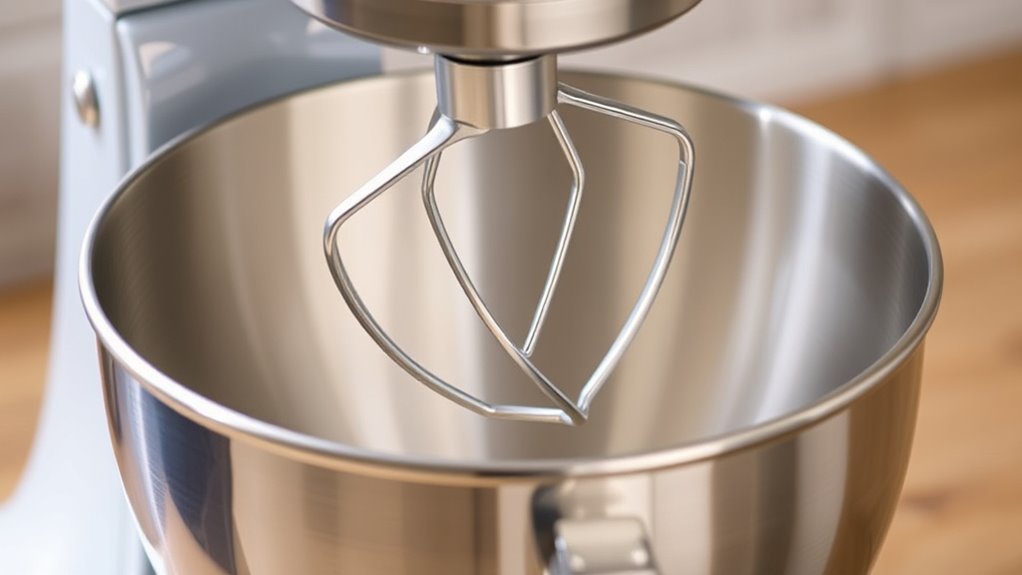
Innovative designs like enhanced hook geometry improve how the dough moves, reducing the risk of it slipping out of the hook. Bowl compatibility features guarantee your hook fits securely and works smoothly with different mixers. Adaptive mixing mechanisms adjust the motion dynamically, preventing issues between the hook and bowl during operation. Incorporating total-cost clarity into design considerations ensures long-term value and reliable performance. Additionally, understanding product compatibility helps consumers select attachments that will perform reliably over time. Considering kitchen science & materials can also inform how different designs influence durability and efficiency, leading to better overall results. Furthermore, designing with design innovation in mind can significantly enhance the functionality and longevity of the dough hook. Paying attention to material selection can further improve the durability and safety of the attachment over years of use.
Enhanced Hook Geometry
To prevent hook-to-bowl issues, manufacturers have turned to enhanced hook geometries that improve mixing efficiency and reduce misalignment. These innovative designs better accommodate dough elasticity, ensuring consistent ingredient absorption. By refining the shape and angle, the hook maintains better contact with the ingredients, minimizing gaps that cause misfires. Incorporating ergonomic handle designs can also improve user control and reduce fatigue during mixing.
Bowl Compatibility Features
Design innovations focused on bowl compatibility considerably reduce hook-to-bowl issues by making certain the hook fits securely and moves smoothly within the bowl. Features like tapered edges, anti-slip bases, and optimized bowl shapes help maintain proper ingredient distribution and accommodate varying dough hydration levels. When the bowl’s design matches the hook’s geometry, dough mixing becomes more uniform, preventing stuck hooks and uneven kneading. Consider the following features:
| Feature | Benefit | Impact on Mixing |
|---|---|---|
| Tapered Edges | Fits hooks snugly, reduces wobble | Ensures smooth movement, better dough contact |
| Anti-slip Base | Prevents slipping during operation | Maintains stability, consistent mixing |
| Curved Bowl Shape | Guides dough evenly around hook | Promotes uniform ingredient distribution |
Adaptive Mixing Mechanisms
Adaptive mixing mechanisms employ smart features that adjust to different bowl shapes and dough consistencies, actively preventing hook-to-bowl issues. These innovations respond dynamically, ensuring your dough stays where it should, even with ingredient substitution or recipe variations. Imagine the confidence of mixing complex doughs without constant manual intervention.
Here are four ways these mechanisms inspire confidence:
- Automatic speed adjustments for ideal kneading.
- Flexible arm movement adapts to bowl sizes and textures.
- Intelligent sensors detect dough consistency changes.
- Customizable settings for ingredient substitutions or recipe tweaks.
With these features, you can tackle any dough challenge, knowing your mixer adapts seamlessly, reducing frustration and ensuring perfect results every time.
Frequently Asked Questions
Can Material Differences in Hooks Influence Their Slippage Risk?
Yes, material differences in hooks can influence their slippage risk. Hooks made from stronger materials resist deformation, maintaining proper geometry during mixing, while softer materials may deform or wear over time. Additionally, surface friction plays an essential role; hooks with textured or rough surfaces increase grip against the bowl, reducing slippage. Choosing hooks with ideal material strength and surface friction helps guarantee stability and effective dough mixing.
How Does User Technique Affect Hook-To-Bowl Engagement?
Mastering your maneuver with the dough hook makes all the difference. When you use an ergonomic grip and handle with confidence, you guarantee better boundary-busting engagement between hook and bowl. Proper user handling promotes precise positioning, preventing slipping and slumping. Pay attention to your technique—smooth, steady strokes help secure a snug fit, minimizing mishaps. With mindful movement, you maximize mixing mastery and maintain harmonious hook-to-bowl harmony.
Are There Specific Brands Known for Better Hook-To-Bowl Compatibility?
You’ll find that certain brands, like KitchenAid and Cuisinart, tend to offer better hook-to-bowl compatibility because they adhere to strict design standards. These brands prioritize consistent design standards, ensuring their dough hooks fit securely and function efficiently with their bowls. When choosing a brand, look for those known for reliable brand compatibility, which minimizes issues with hook-to-bowl engagement and makes baking smoother.
What Maintenance Practices Can Prevent Hook Failure?
Ever wonder how you can keep your dough hook in top shape? Regular cleaning routines remove dough residue that can cause wear, while proper lubrication practices guarantee smooth operation and prevent rust. Do you inspect your hook for signs of stress or damage? By maintaining your equipment diligently, you reduce the risk of failure, ensuring consistent mixing and extending the lifespan of your dough hook.
How Does the Age of the Mixer Impact Hook Performance?
As your mixer ages, its longevity decreases, and wear patterns develop that can weaken the dough hook. Over time, metal fatigue and accumulated debris cause the hook to lose its ideal shape, reducing efficiency and increasing failure risk. Regular inspections and maintenance help mitigate these effects, but eventually, aged mixers need part replacements or upgrades to guarantee consistent performance and prevent common hook-to-bowl geometry issues.
Conclusion
Understanding dough hook and bowl design is key to better mixing. Did you know that improper hook-to-bowl alignment can reduce mixing efficiency by up to 30%? By paying attention to geometric details, adjusting your setup, and exploring innovative designs, you can prevent common slippage issues. Take control of your mixer and improve your baking results—small tweaks make a big difference in achieving perfectly mixed dough every time.