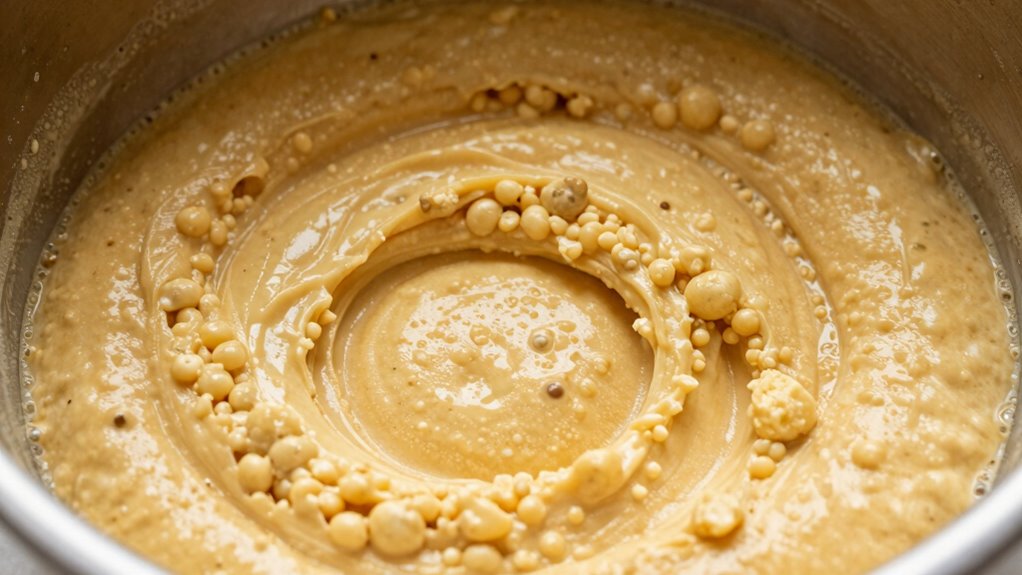

When your batter looks curdled, it’s often due to rapid ingredient addition, temperature differences, or overmixing, which cause fats or proteins to seize or separate. Usually, this can be fixed by adding liquids gradually, adjusting ingredient temperatures, or gently remixing. Small adjustments can restore smoothness and stability. If you keep going, you’ll discover simple techniques to prevent and fix curdling, ensuring your baked goods turn out perfect every time.
Key Takeaways
- Curdling occurs when rapid temperature changes, overmixing, or ingredient imbalance destabilize the batter’s emulsion.
- Using ingredients at different temperatures, especially cold liquids or fats, increases the risk of separation.
- Minor curdling can often be corrected by gentle stirring, gradual addition of liquids, or folding to restore smoothness.
- Maintaining consistent, moderate mixing speeds and adding liquids slowly helps prevent and fix curdled batter.
- Severe curdling may require starting over, but many cases are fixable with careful adjustments and patience.
How Can You Spot Curled Batter?
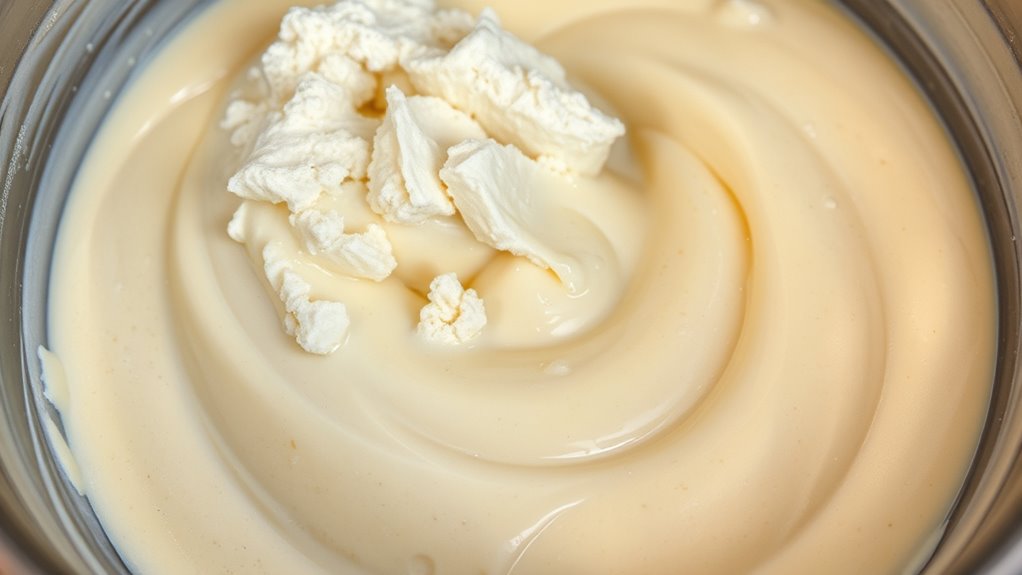
How can you tell if your batter has curled? The key is observing its batter consistency and visual cues. When batter is curdled, it often appears lumpy or separates into uneven, greasy-looking patches. You might notice streaks of butter or oil floating on top, which indicates it’s not smooth and well-emulsified. The mixture may also look thicker or thinner than it should be, depending on the ingredients used. Visual cues like a curdled appearance—clumps or a grainy texture—are signs your batter has started to curdle. It might also look slightly frothy or uneven, rather than smooth and shiny. Recognizing these signs early helps you decide whether to fix it or start over for the best baking results. Additionally, understanding how different ingredients react can help you prevent curdling in the first place.
What Causes Batter to Curdl?
When your batter curdles, it’s often caused by temperature shock or mismatched ingredient temperatures. Adding cold liquids to hot ingredients, or vice versa, can cause the proteins to tighten and curdle. Ensuring all your ingredients are at similar temperatures helps keep your batter smooth. Additionally, understanding how calibration affects ingredient interactions can help prevent curdling and improve overall results. Proper temperature control is essential for consistent baking outcomes and avoiding curdling issues. Being mindful of ingredient temperature compatibility can further reduce the risk of curdling and ensure better texture. Recognizing the importance of ingredient interaction can help bakers troubleshoot and refine their technique.
Temperature Shock Effects
Temperature shock occurs when your batter experiences sudden changes in temperature, causing the proteins and fats to tighten and separate. This rapid shift disrupts batter consistency, making it look curdled or lumpy. When cold ingredients hit a hot pan or hot ingredients are added too quickly, the stability of the ingredients is compromised. Proteins denature and fats melt unevenly, leading to separation. Maintaining a steady temperature helps preserve ingredient stability, ensuring the batter remains smooth and cohesive. Sudden temperature changes cause the mixture’s structure to break down, resulting in curdling. To avoid this, add ingredients gradually, avoid direct heat, and let ingredients come to room temperature if needed. Consistent temperatures support batter integrity, making curdling less likely.
Ingredient Temperature Mismatch
Ingredient temperature mismatch occurs when you combine ingredients that are at markedly different temperatures, causing the batter to curdle. When your wet and dry ingredients are too cold or too hot, it can disrupt the emulsion, leading to lumps or a broken appearance. This mismatch can happen if you add cold eggs directly from the fridge into warm liquids or if butter is too cold to blend smoothly. Your mixing techniques also play a role; overmixing after adding ingredients at different temperatures can exacerbate curdling. To prevent this, bring ingredients to similar temperatures before mixing and incorporate them gradually. Proper ingredient temperature management and gentle mixing help maintain a smooth, cohesive batter and avoid curdling caused by ingredient temperature mismatch. Temperature control is essential for achieving a consistent, lump-free batter. Additionally, using a thermometer to monitor ingredient temperatures can help ensure they are within the ideal range for mixing.
How Do Temperature Differences Lead to Curdling?
Sudden changes in temperature can cause your batter to curdle because the proteins and fats react quickly to these shifts. When ingredients experience rapid temperature differences, it disrupts the delicate balance of ingredient interactions necessary for a smooth batter. For example, adding cold liquids to warm eggs or butter can cause proteins to tighten and fats to solidify unevenly, leading to curdling. Maintaining temperature stability helps guarantee these interactions happen gradually, allowing ingredients to blend seamlessly. When the temperature changes too quickly, the proteins coagulate prematurely, and fats separate, resulting in a lumpy, curdled appearance. Temperature control is essential for preventing these issues during mixing. To prevent this, bring ingredients to similar temperatures before mixing, and add cold ingredients slowly to avoid shocking the mixture. Proper temperature management supports consistent ingredient interactions, reducing the risk of curdling. Understanding ingredient interactions and how they respond to temperature changes can help you better control the process and achieve a smooth batter. Additionally, using consistent mixing techniques can further prevent abrupt reactions that lead to curdling. For example, gradually incorporating ingredients helps maintain emulsion stability, preventing separation and curdling.
Why Do Rapid Ingredient Additions Cause Curdling?
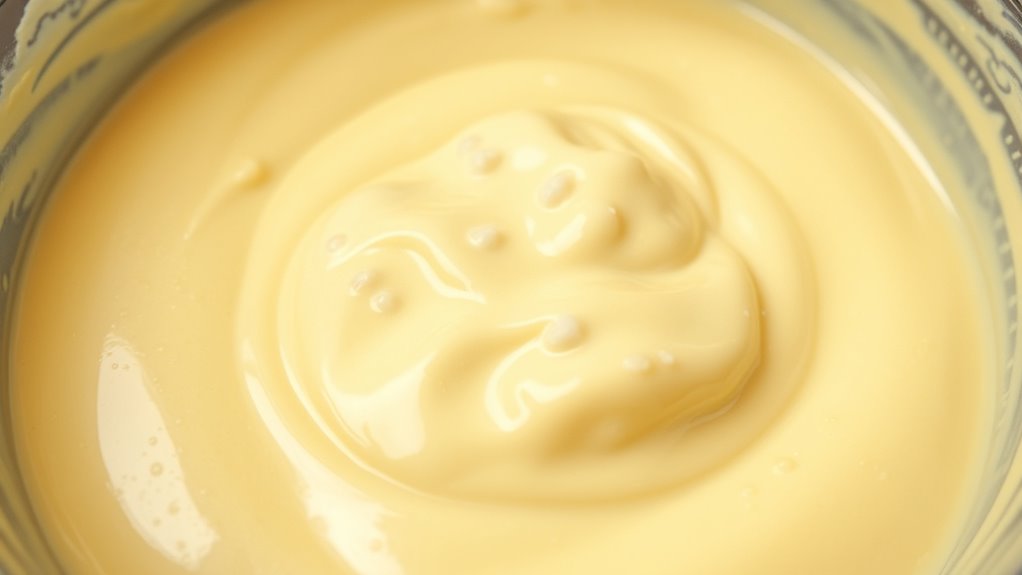
Adding ingredients too quickly can overwhelm the mixture, causing proteins and fats to react unpredictably. When you dump in ingredients all at once, the sudden change in composition disrupts the delicate balance of baking chemistry, leading to curdling. For example, rapid ingredient substitution, like swapping out milk or eggs, can cause abrupt temperature or acidity shifts that the batter struggles to accommodate. This quick addition prevents the ingredients from blending smoothly, causing the proteins to coagulate and fats to separate. To avoid this, add ingredients gradually, giving the mixture time to adjust. This controlled approach allows the batter’s proteins and fats to incorporate evenly, preventing curdling and ensuring a smoother, more stable texture. Understanding emulsification can help bakers better manage ingredient incorporation and achieve a cohesive batter.
How Does Overmixing or Under-Mixing Affect Batter Texture?
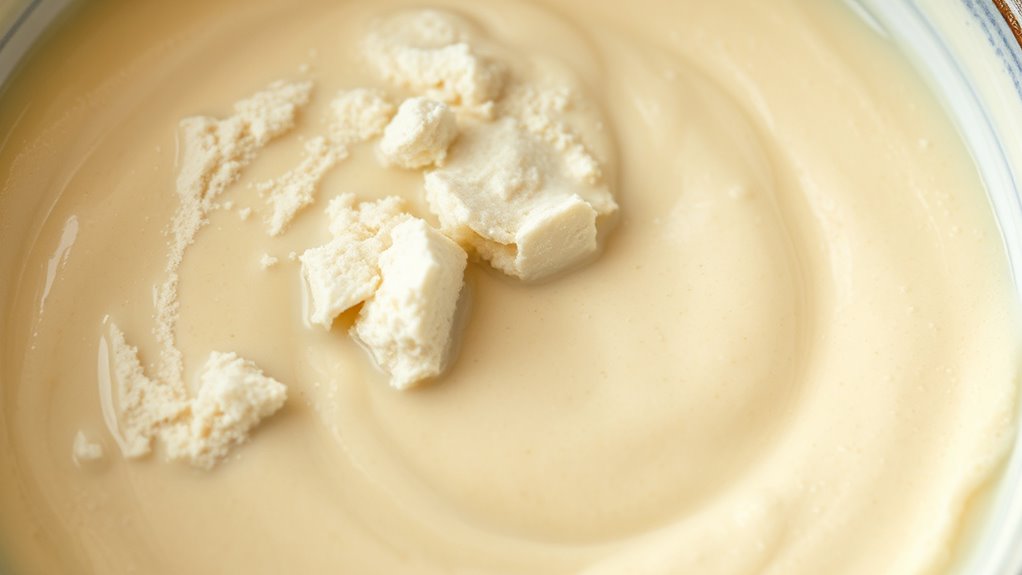
Overmixing the batter can make it dense and tough by developing too much gluten, while undermixing can leave it uneven and lead to a crumbly texture. Your mixing techniques and ingredient proportions directly impact this balance. To achieve the perfect batter, keep these points in mind:
- Mix just until ingredients are combined to avoid overworking gluten.
- Use gentle folding for delicate batters to prevent overmixing.
- Ensure dry and wet ingredients are incorporated evenly to maintain proper texture.
- Adjust mixing time based on ingredient proportions—more flour or liquids may require different approaches.
- Proper home charging practices can help ensure your appliances and tools function optimally during baking or cooking processes.
- Creating an organized workspace allows for better workflow and reduces the risk of overmixing or under-mixing due to chaos or distractions. For optimal results, pay attention to your ingredient proportions as they play a crucial role in batter consistency.
What Are Simple Ways to Prevent Curdling During Mixing?
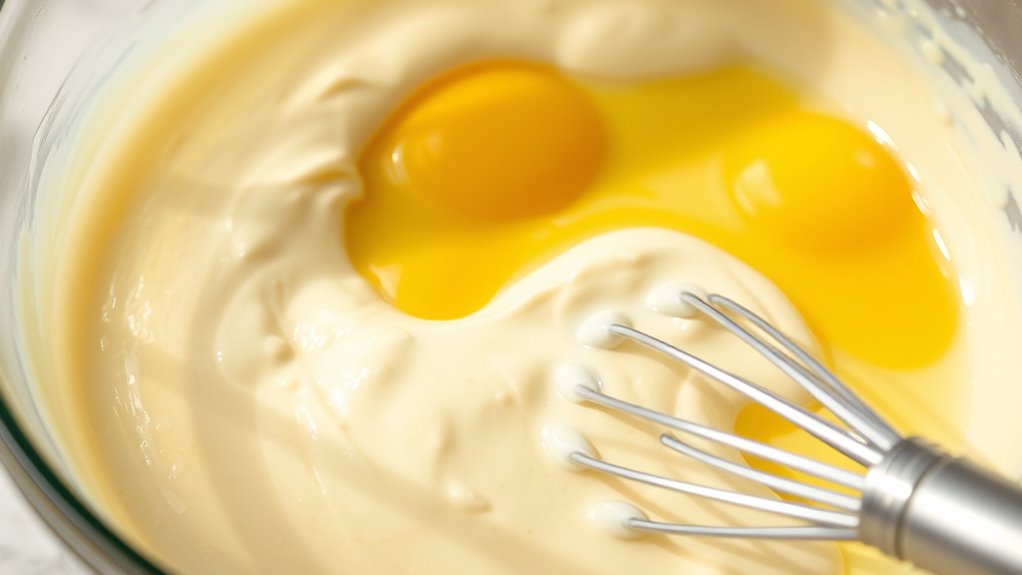
To prevent curdling, start by using ingredients at room temperature, which helps everything combine smoothly. Add liquids slowly, giving the batter time to incorporate them evenly. Keep your mixer at a steady speed to avoid sudden changes that can cause the mixture to curdle. Using a high-quality mixing tool can also improve the consistency of your batter. Additionally, ensuring your ingredients are properly measured can prevent overloading the mixture and causing curdling.
Use Room Temperature Ingredients
Ensuring your ingredients are at room temperature before mixing helps prevent curdling by allowing them to combine smoothly. Cold ingredients can cause fats to seize or liquids to separate, increasing the risk of curdling. To keep things consistent:
- Let eggs, butter, and dairy sit out for 30-60 minutes before use.
- When using ingredient substitution, choose items at similar temperatures to avoid upsetting the batter’s balance.
- Adjust oven temperature if your recipe involves baking, as a too-hot oven can affect ingredient integration.
- Always check that liquids are warm enough to blend seamlessly, especially when replacing ingredients, to maintain proper emulsification.
Using room temperature ingredients guarantees even mixing and better batter stability, reducing curdling chances.
Add Liquids Gradually
Adding liquids too quickly can cause your batter to curdle, as sudden moisture shifts disrupt the emulsion. To prevent this, introduce liquids gradually, in small amounts, while continuously mixing. This steady approach helps the ingredients combine smoothly, reducing the risk of curdling. When making ingredient substitutions, especially replacing butter with oil or dairy with plant-based alternatives, slow addition becomes even more critical, as different fats and liquids emulsify at different rates. Use mixing techniques like scraping down the bowl often and starting with dry ingredients before slowly adding liquids. This careful process ensures a stable emulsion and a uniform mixture, minimizing curdling. Additionally, maintaining a consistent mixing speed helps keep the batter stable during the process. By controlling the rate of liquid incorporation, you maintain a stable batter that’s easier to work with and results in a better final product.
Maintain Proper Mixing Speed
Maintaining the right mixing speed is essential for preventing curdling, as overly fast or slow mixing can destabilize the batter. When your mixing speed is off, batter consistency suffers, leading to lumps or separation. To avoid this, keep these tips in mind:
- Start slow to combine ingredients smoothly before increasing speed.
- Use moderate speed when adding liquids to prevent sudden temperature changes.
- Avoid high speeds that whip air into the batter, causing instability.
- Adjust speed gradually to maintain a smooth, uniform batter consistency.
- Consistent mixing helps ensure ingredients blend evenly and reduces the risk of curdling.
- Paying attention to mixing technique can also improve overall batter stability, especially when working with delicate ingredients.
- Monitoring mixing speed carefully during different stages of blending can further help prevent curdling and ensure a silky texture.
- Being mindful of ingredient temperatures can also contribute to smoother mixing and prevent separation.
Controlling your mixing speed ensures your batter stays stable, shiny, and lump-free. Proper speed helps ingredients blend evenly, reducing the risk of curdling and resulting in a better final product.
How Can You Fix Curled Batter and Keep It Stable?
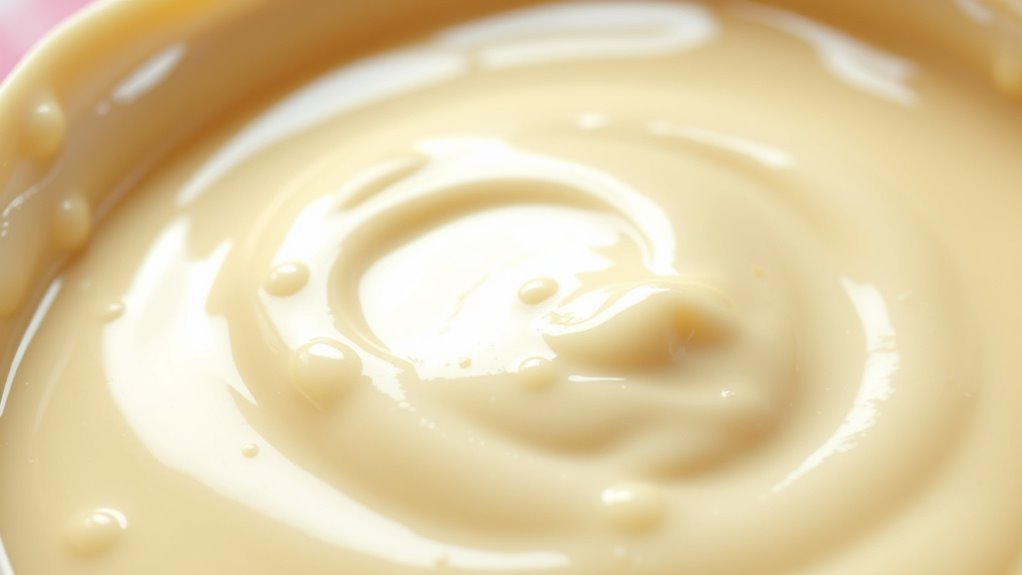
When batter starts to curl, the key is to identify and correct the underlying imbalance. To restore batter stability, focus on gentle, consistent mixing techniques. Overmixing can introduce too much air or cause the batter to become too thick, leading to curling. To fix this, stop mixing immediately and assess the batter’s texture. If it’s too thick or lumpy, add a small amount of liquid—like milk or water—gradually, stirring gently until smooth. Use a spatula instead of a whisk to fold ingredients carefully. Proper mixing techniques help maintain the right emulsion, preventing curling and ensuring a stable batter. Keep your movements light and steady, and avoid overworking the mixture. This approach helps you achieve a consistent, curdle-free batter with better batter stability.
When Should You Start Over or Keep Baking Curled Batter?
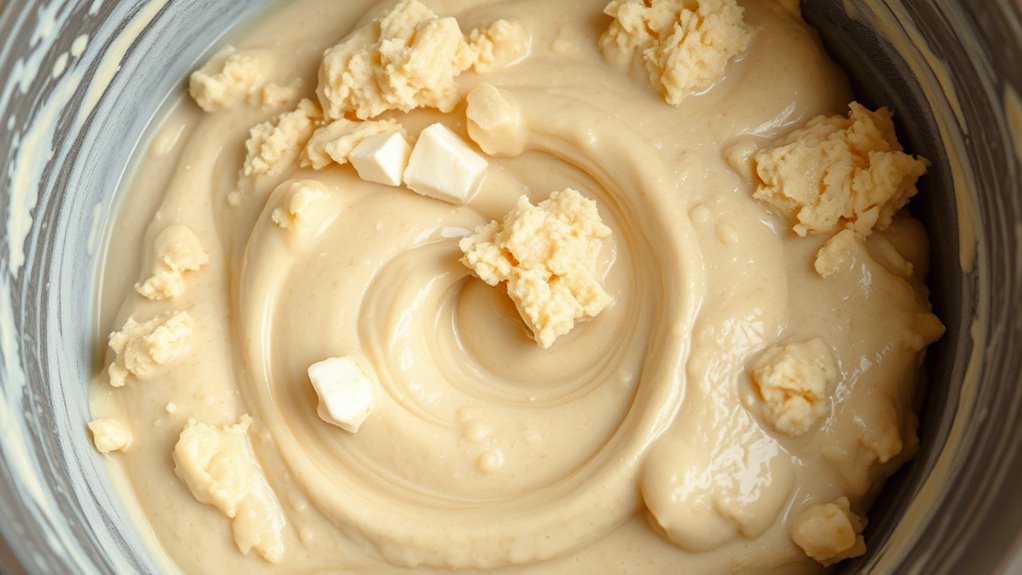
Deciding whether to start over or continue baking curled batter depends on how the severity of the curling is and the stage of your baking process. If the batter’s consistency is markedly affected or you’ve just begun mixing, starting fresh might be best. However, if the batter is only slightly curdled and you’re near the end, you can often salvage it by gently re-mixing or adjusting ingredient substitution.
Consider these points:
- Minor curdling early on can often be fixed without starting over.
- Severe curdling with a grainy texture usually warrants starting fresh.
- Adjusting ingredient substitution, like adding more liquid, can help if you decide to keep baking.
- If batter remains unstable after fixes, it’s better to start anew for best results.
How Can You Prevent Curdling in Different Baked Goods?
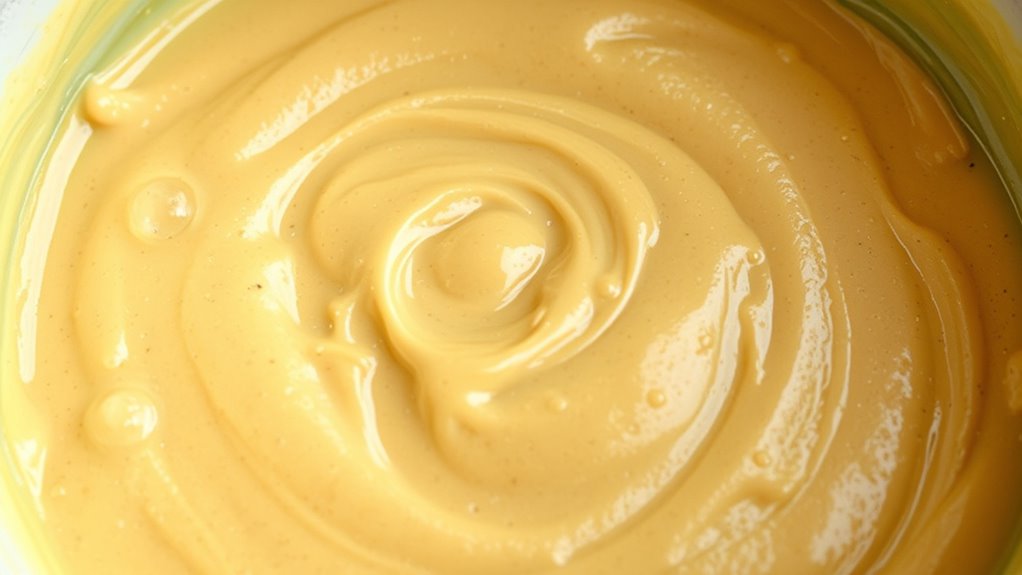
To prevent curdling in different baked goods, it’s essential to pay attention to ingredient temperature and order. For example, when using cream cheese, soften it gradually to avoid sudden temperature changes that cause curdling. When incorporating fruit fillings, add them at the right stage—usually after the batter is well combined—to prevent liquid separation. Mixing ingredients in the proper sequence helps maintain a smooth, stable batter. Also, avoid adding cold ingredients directly into hot mixtures, as this can cause curdling. If you’re combining dairy products, temper them by gradually warming before mixing. These steps help keep fats and liquids evenly dispersed, reducing the chance of curdling in your baked goods. Proper technique ensures a uniform, appealing texture every time.
Frequently Asked Questions
Can Curdled Batter Still Produce a Good Final Product?
Yes, curdled batter can still produce a good final product. Don’t let the emotional impact of seeing curdling shake your baking confidence. Often, it’s a minor issue that can be fixed with gentle mixing or adding a bit more liquid. Trust your skills, stay positive, and remember that many baked goods turn out perfectly even with imperfect batter. Your effort will still lead to delicious results.
Does the Type of Flour Affect Batter Curdling?
Think of your batter as a delicate dance; the type of flour you choose leads the rhythm. Higher protein flours, like bread flour, develop more gluten and can cause curdling if mixed too vigorously, while lower protein flours, like cake flour, keep the dance smooth. So, yes, the flour’s protein content affects gluten development, influencing whether your batter curdles or stays silky. Choose wisely for a flawless final product.
Is Curdling More Common in Certain Recipes?
Yes, curdling is more common in certain recipes like cake recipes and pancake batter. You might notice it when you mix ingredients that have different temperatures or when you add liquids too quickly. For example, if you add milk or eggs too fast, the batter can curdle. To prevent this, mix gently and gradually combine ingredients. Usually, slight curdling isn’t a big problem and can be fixed easily.
Can Using Different Liquids Prevent Curdling?
You might find that using different liquids, like dairy alternatives or a liquid substitution, can help prevent curdling. Sometimes, it’s just a coincidence that certain liquids react poorly with other ingredients. Switching to coconut milk, almond milk, or even water can stabilize your batter. Keep in mind, experimenting with these options often results in a smoother mixture, so don’t hesitate to try different liquids to find what works best for your recipe.
How Long Does It Typically Take for Batter to Curdle?
Batter usually takes just a few minutes to curdle if it’s unstable. Poor mixing techniques or adding liquids too quickly can disrupt batter stability. To prevent this, stir gently and incorporate liquids gradually. If it starts to curdle, don’t worry—slowly adding a bit more liquid or gently re-mixing can often remedy the issue. Keep an eye on your batter’s consistency to ensure it stays smooth and well-integrated.
Conclusion
Now that you know why batter curdles, you can easily prevent it from turning your baking dreams into a disaster. With a few simple tricks, you’ll keep your batter smooth as silk and your baked goods perfect every time. Don’t let curdling ruin your baking adventure—think of it as a tiny hiccup in your culinary masterpiece. Armed with this knowledge, you’re unstoppable in the kitchen, ready to conquer any recipe with confidence and flair!