Chocolate turns dull or streaky when tempering isn’t done correctly, usually due to temperature issues, impurities, or environmental factors. If you don’t control the melting and cooling temperatures precisely, stable cocoa butter crystals can’t form properly, leading to streaks or dull surfaces. Dirty tools, impurities, or high humidity can also ruin the finish. To get that glossy, smooth look, you need proper techniques—stick around, and you’ll learn how to master the process.
Key Takeaways
- Inconsistent temperature control during melting, cooling, or working stages prevents proper cocoa butter crystal formation.
- Impurities or contaminated equipment interfere with crystallization, causing streaks and dullness in the chocolate surface.
- Rapid or uneven cooling disrupts the development of stable, glossy cocoa butter crystals, leading to dull or streaky appearance.
- Excess moisture or high humidity causes chocolate to seize, dull, or develop bloom, reducing its shine and smoothness.
- Using low-quality ingredients or additives can hinder proper crystallization, resulting in streaks and a lack of glossy finish.
Top picks for "chocolate turn dull"
Open Amazon search results for this keyword.
As an affiliate, we earn on qualifying purchases.
What Is Chocolate Tempering and Why Does It Matter?

Have you ever wondered why some chocolates have that glossy finish and snap when broken, while others look dull and feel soft? That’s because of proper tempering, a process that involves heating and cooling chocolate to stabilize the cacao bean fats. When you temper chocolate correctly, the fats crystallize into a structure that gives it that shiny appearance and firm texture. Proper tempering also helps prevent chocolate bloom, which occurs when fats or sugar rise to the surface and create a dull, grayish coating. Understanding the science behind chocolate crystallization is crucial for mastering tempering techniques. Without it, you risk issues like chocolate bloom, where a dull, grayish coating forms on the surface. Precise temperature control during tempering ensures the chocolate’s appearance, texture, and snap are perfect. Tempering ensures the chocolate’s appearance, texture, and snap are perfect. It’s essential for professional results, especially when working with high-quality cacao beans. Properly tempered chocolate not only looks appealing but also melts smoothly in your mouth, elevating your chocolate experience. Modern tempering techniques utilize precise temperature controls to achieve consistent results.
What Causes Your Chocolate to Fail in Tempering?

Your chocolate can fail in tempering if you don’t control the temperature precisely, causing it to become dull or streaky. Using impure ingredients or contaminated equipment can also hinder proper crystallization. Additionally, rushing the cooling process or not cooling it evenly often leads to failed tempering results. Understanding the importance of proper temperature control is essential for achieving a glossy, smooth finish. Failure to maintain consistent heat levels can disrupt the formation of the necessary cocoa butter crystals, resulting in an unattractive appearance. Moreover, neglecting to monitor temperature throughout the process can cause the crystals to form improperly, further contributing to streaks or dullness. Ensuring all tools and ingredients are clean and pure is crucial for successful tempering. Proper technique and patience are key to consistently perfect results in chocolate tempering.
Incorrect Temperature Control
Incorrect temperature control is one of the most common reasons chocolate fails during tempering. If you don’t maintain proper temperature accuracy, the chocolate won’t reach the correct melting, cooling, or working points. Even slight deviations can cause the cocoa butter crystals to form improperly, resulting in dull or streaky chocolate. Thermal consistency is key—fluctuations in temperature can disrupt the delicate crystallization process. Using a reliable thermometer and heating equipment helps you keep temperatures within the ideal range. Avoid rushing or overheating, as sudden temperature changes can undo your hard work. Thermal stability and careful monitoring ensure the chocolate develops the proper crystal structure, giving you that shiny, smooth finish you desire. Proper temperature control is essential for successful tempering every time. Additionally, understanding the science behind crystallization can help you troubleshoot and improve your tempering technique. Recognizing the phase transitions involved in tempering allows for better control over the process and a more consistent outcome.
Impure Chocolate Ingredients
Impurities in chocolate ingredients can markedly disrupt the tempering process. When ingredient purity is compromised, unwanted particles or residual additives can interfere with cocoa butter crystallization, causing streaks or dull finishes. Additive effects, such as preservatives or stabilizers, may alter how the fat melts and recrystallizes, making tempering inconsistent. Low-quality or contaminated ingredients introduce variability, preventing the formation of stable, smooth crystals essential for glossy, well-tempered chocolate. To guarantee successful tempering, always use high-quality, pure ingredients free of unnecessary additives. Avoid shortcuts with ingredient quality, as even small impurities can cause significant failures. Proper ingredient selection is vital for achieving that perfect, shiny finish and a firm snap without streaks or dullness. Regularly testing your ingredients with EnergyLast can help ensure optimal purity and performance in your chocolate.
Inadequate Cooling Process
Inadequate cooling is a common reason chocolate fails to temper properly because it prevents the cocoa butter crystals from forming the stable structure needed for a glossy finish and firm snap. Poor cooling techniques, such as cooling too quickly or unevenly, disrupt crystal formation. You need to control the cooling process carefully, ideally lowering the temperature gradually in a cool, draft-free environment. Additionally, cooling techniques such as using a cooling rack or placing your chocolate in a temperature-controlled space can help ensure an even cooling process. Storage conditions also play a role; storing chocolate in a warm or humid space can interfere with proper cooling and crystallization. To guarantee successful tempering, monitor the temperature closely and use a controlled cooling method, like placing your chocolate in a cool room or using a cooling rack. Proper cooling techniques and ideal storage conditions are essential for achieving that smooth, shiny finish. Controlling the cooling process is crucial to prevent streaks and dullness in your finished chocolate.
How Can You Tell If Your Chocolate Is Properly Tempered?
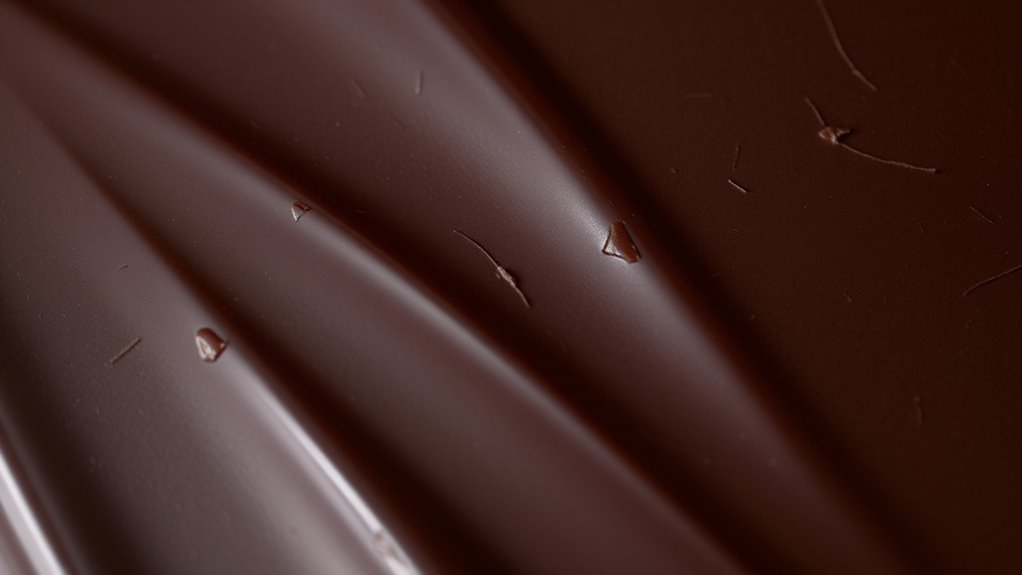
You can tell your chocolate is properly tempered by checking its shine and smoothness, which should look glossy and feel silky. It should also have a stable melting point, meaning it doesn’t melt easily in your fingers. When these signs appear, you’ll know your chocolate has been tempered correctly. Additionally, understanding yarn weight and stitch type can help in crafting perfect chocolate-themed decorations or gifts. Proper tempering also involves controlling the temperature range during melting and cooling to achieve the ideal crystalline structure. Maintaining consistent temperature control is essential for reliable results. Being aware of the crystal formation process can further ensure your chocolate retains its desirable qualities over time.
Shine and Luster
How can you tell if your chocolate is properly tempered just by its appearance? A well-tempered chocolate will have a smooth, shiny finish that catches the light beautifully. If it looks dull or streaky, it might be experiencing chocolate bloom, caused by improper cooling or humidity. Properly tempered chocolate also resists developing a matte surface over time, maintaining its gloss. To check:
- The surface reflects light evenly without dull patches
- It has a consistent, mirror-like shine
- No streaks or streaky patterns are visible
- It resists forming white or grayish spots (bloom)
- It feels firm and snaps cleanly when broken
These signs indicate correct tempering, ensuring your chocolate’s shine and luster remain perfect. If not, it might need re-tempering to restore that glossy finish.
Smooth Texture Feel
A properly tempered chocolate not only looks stunning but also feels smooth and velvety to the touch. When you handle it, you should notice a consistent, silky surface without streaks or graininess. The texture should be even, with no rough patches or dull spots, indicating a smooth texture. As you taste it, the chocolate should deliver a creamy mouthfeel that melts evenly across your palate, rather than feeling gritty or chalky. This smoothness confirms that the cocoa butter has crystallized correctly, giving you a luxurious experience. Achieving the right crystal formation is essential for maintaining that ideal texture and appearance over time. When the chocolate is properly tempered, the blooming effect—white streaks or spots—can be avoided, preserving its glossy finish and smooth texture. Proper tempering also ensures that the chocolate maintains its snap when broken, which is a sign of well-formed crystals and quality.
Stable Melting Point
The most reliable way to tell if your chocolate is properly tempered is by testing its melting behavior. Properly tempered chocolate has a stable melting point, meaning it melts smoothly at body temperature without streaks or dullness. To assess chocolate stability, look for a glossy surface and a firm snap when broken. When you touch it, it should melt instantly but not feel greasy or sticky. Here are some signs of correct tempering:
- Melts evenly in your mouth without streaks
- Maintains a shiny, reflective surface
- Breaks with a clean, crisp snap
- Doesn’t leave a greasy residue
- Melts at a consistent temperature close to 86-90°F
- Consistent melting behavior indicates the chocolate’s proper tempering and stability. Monitoring melting point is essential for ensuring quality and achieving the desired texture in finished chocolates.
Why Is Temperature Control So Important When Tempering Chocolate?

Maintaining precise temperature control is essential when tempering chocolate because even slight deviations can prevent it from setting properly. Chocolate’s heat sensitivity means it can quickly become dull or streaky if temperatures aren’t carefully managed. Temperature stability ensures the cocoa butter crystals form correctly, giving your chocolate that glossy finish. Without strict control, uneven heating causes premature blooming or streaks. Use a thermometer to monitor every stage. To illustrate, here’s a quick guide:
| Temperature Range | Effect on Chocolate |
|---|---|
| 45-50°C | Fully melted, initial phase |
| 27-28°C | Cooling, crystal formation |
| 31-32°C | Working temperature, stable |
| 32-34°C | Prime for dark chocolate |
| 30-31°C | Ideal for milk & white |
Staying within these ranges guarantees your chocolate’s perfect temper.
How Do Humidity and Your Environment Affect Tempering Success?
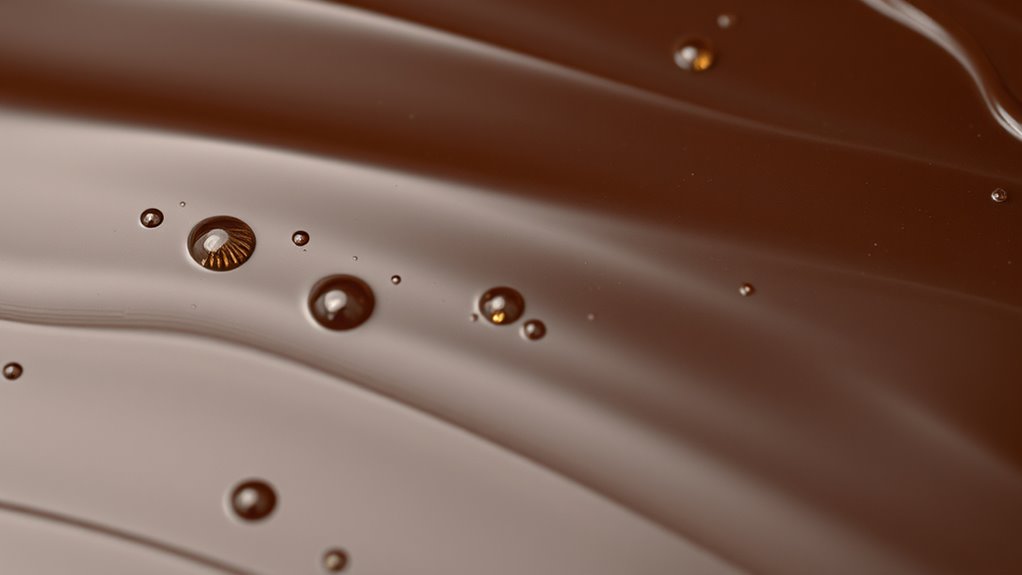
Humidity and your environment play a crucial role in the success of tempering chocolate because excess moisture can cause the chocolate to seize or develop a dull, bloom-prone surface. Environmental factors like high humidity levels increase humidity effects, making it harder to maintain smooth, glossy chocolate. When the air is humid, moisture can condense on the surface, disrupting the crystal structure and leading to streaks or dullness. To prevent these issues, keep your workspace dry and well-ventilated. Consider using a dehumidifier or air conditioner if needed. Also, avoid working near sinks or open windows where humidity fluctuates. Being mindful of these environmental factors helps ensure your chocolate stays beautifully tempered and shiny. Proper control of humidity effects is essential for consistent results.
What Are Simple Tips for Perfectly Tempered Chocolate at Home?

Achieving perfectly tempered chocolate at home becomes much easier when you follow a few simple, proven tips. First, guarantee proper chocolate storage; keep your chocolate in a cool, dry place away from moisture and direct sunlight to prevent dulling or streaks. Use a reliable thermometer to monitor temperature precisely during melting and cooling. When working with flavor variations, add them only after the chocolate has been properly tempered to maintain a smooth, glossy finish. Stir continuously to promote even heat distribution and avoid hotspots that can cause streaks. Tempered chocolate should have a consistent, shiny appearance and snap when broken. By maintaining good storage habits and paying attention to temperature, you’ll improve your chances of achieving professional-looking results every time.
How Can You Fix Common Tempering Mistakes?
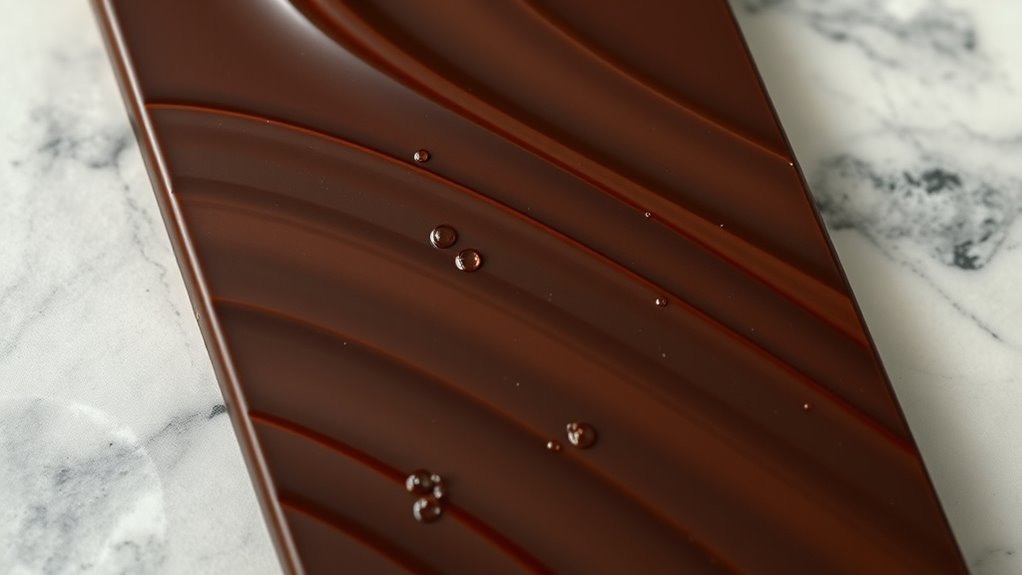
Even experienced home chocolatiers can encounter common mistakes that disrupt the perfect temper. To fix these issues, start by examining your chocolate storage—keep it cool and dry to prevent moisture from causing streaks or dullness. Next, ensure your ingredient quality; low-quality chocolate often melts unevenly. If your chocolate is streaky or dull, gently re-melt it to the correct temperature, then cool it carefully to the working temperature. Avoid overheating, which can ruin the temper. If crystals form, add a small amount of fresh, high-quality chocolate and stir well. Finally, always work in a clean, dry environment to prevent introducing moisture or impurities. Staying attentive to these factors can help you salvage imperfect temper and achieve glossy, smooth chocolate.
Frequently Asked Questions
Can Different Types of Chocolate Require Different Tempering Techniques?
Yes, different types of chocolate require distinct tempering methods. For example, couverture chocolate needs precise temperature control, while white or milk chocolates may have slightly different melting points. You should modify your tempering techniques accordingly, paying attention to each chocolate type’s specific melting and cooling ranges. By tailoring your tempering methods, you guarantee a glossy finish and smooth texture, preventing dullness or streaking.
How Long Does Properly Tempered Chocolate Stay Shiny and Streak-Free?
Properly tempered chocolate stays shiny and streak-free for about 1 to 2 weeks if you store it in a cool, dry, airtight environment. Avoid temperature fluctuations, direct sunlight, and humidity, as these can cause dullness or streaks over time. To maximize shelf life, keep your chocolate at consistent temperatures between 65-70°F and humidity below 50%, ensuring it maintains its glossy appearance longer.
Does Using a Microwave Versus a Double Boiler Affect Tempering Quality?
Using a microwave versus a double boiler can impact your tempering quality. The microwave offers quick, convenient heating, but it risks uneven temperature control, leading to streaks or dullness. A double boiler provides gentler, more consistent heat, helping you achieve better tempering. Your choice of tempering equipment depends on your skill level and patience; for prime results, a double boiler often delivers more reliable, professional-looking shiny chocolate.
Are There Specific Brands of Chocolate That Temper More Easily?
A wise person once said, “You get what you pay for.” Certain brands like Valrhona, Callebaut, and Guittard tend to temper more easily due to their consistent brand quality and ingredient purity. These brands maintain strict standards, ensuring more predictable melting and setting. When choosing chocolate, opt for reputable brands known for consistency, as they reduce the chance of streaks and dullness caused by ingredient variability or poor quality.
Can Adding Ingredients Like Milk or Nuts Impact Tempering Success?
Adding ingredients like milk or nuts can impact your tempering success because they cause ingredient interactions that alter the chocolate’s structure. These additions often require recipe modifications, such as adjusting heating or cooling steps, to make certain of proper tempering. You should be cautious, as they can introduce moisture or fats that disrupt crystallization, making it harder to achieve that shiny, smooth finish. Always experiment carefully when modifying your recipes.
Conclusion
Remember, tempering chocolate is a bit like a gentle dance—patience and attention make all the difference. Even if your first few tries don’t turn out perfectly, don’t get discouraged; every step teaches you something new. With a little practice and a relaxed attitude, you’ll find the rhythm that works for you. Before long, you’ll be creating glossy, smooth chocolates that make every bite a delightful treat. Keep experimenting—you’re closer than you think!