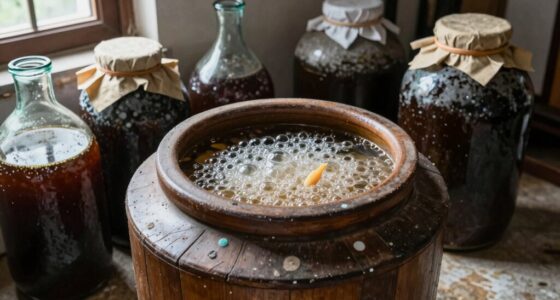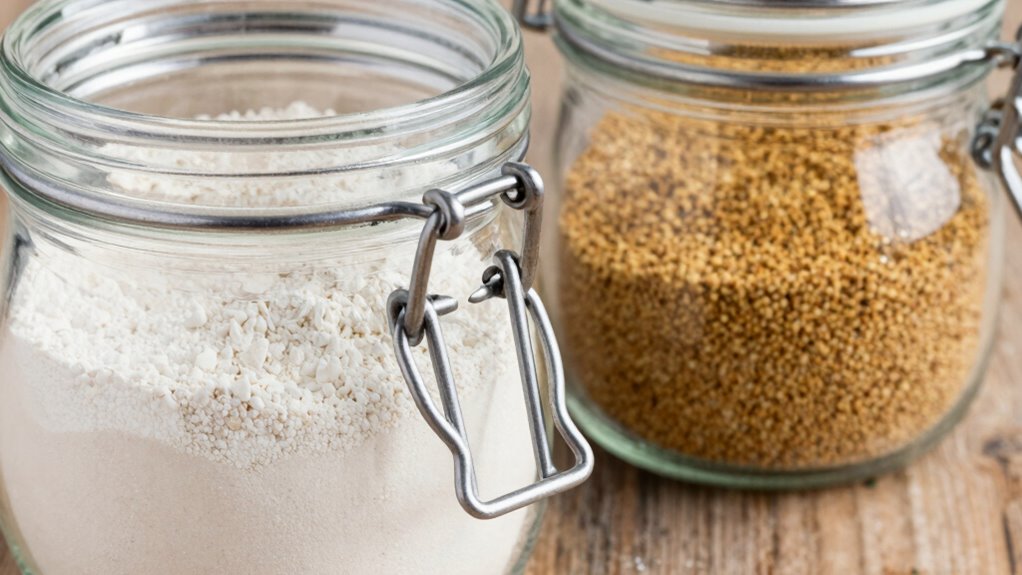

To keep bugs out and preserve the power of your flour and yeast, store them in airtight containers made of glass or high-quality plastic. Keep these containers in a cool, dark place like your pantry, away from heat and sunlight. For extra protection, especially in warm or humid climates, use your refrigerator or freezer. Properly stored ingredients stay fresh longer and maintain their potency, so explore more tips to make sure your baking ingredients stay in top shape.

Get baking supplies delivered free with Prime
- Fast, free delivery on millions of items
- Prime Video, Amazon Music and more included
- Member-only deals all year
Key Takeaways
- Use airtight containers made of glass or high-quality plastic to prevent bugs and moisture infiltration.
- Store flour and yeast in a cool, dark place away from heat sources and direct sunlight.
- For warm or humid environments, refrigerate or freeze ingredients in airtight containers to maintain freshness.
- Label containers with purchase or expiration dates and regularly check for signs of spoilage or pests.
- Keep ingredients at room temperature before baking and ensure proper sealing to preserve potency and prevent contamination.
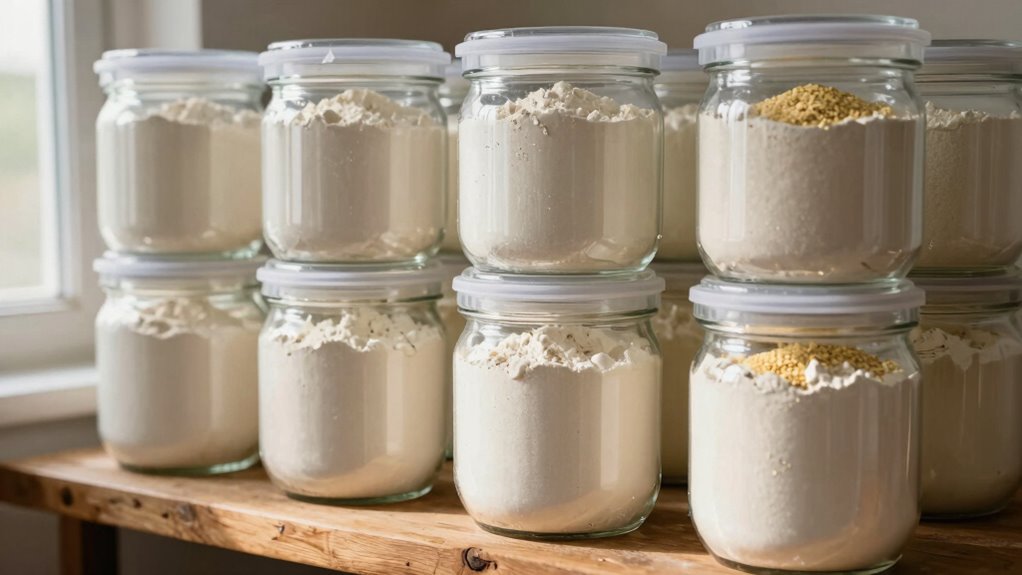
Storing flour and yeast properly is essential to keep them fresh and prevent spoilage. When you want your baked goods to turn out perfect every time, how you store these ingredients makes all the difference. Using airtight containers is one of the best ways to shield flour and yeast from moisture, pests, and air exposure. These containers create a sealed environment that keeps out bugs, humidity, and contaminants, ensuring your ingredients stay dry and fresh longer. When choosing containers, go for ones made of glass or high-quality plastic with tight-fitting lids. This way, you prevent air from entering and moisture from slipping in, both of which can cause your flour to become clumpy or your yeast to lose its potency.
Cool storage is equally important. Flour and yeast should be kept in a cool, dark place—ideally somewhere away from heat sources like the stove or direct sunlight. Heat accelerates spoilage and can diminish the effectiveness of yeast, making it less active when you need it most. A pantry or a cupboard away from appliances that generate heat works well for storing these ingredients. If you live in a particularly warm or humid climate, consider storing flour and yeast in the refrigerator or freezer. Just make sure to use airtight containers or resealable bags to prevent moisture and odors from seeping in. When you take flour or yeast out of cold storage, let it come to room temperature before baking to ensure consistent results.
Proper storage conditions, including temperature control, are crucial to maintaining the potency of yeast and the quality of flour over time. Label your containers clearly with the date of purchase or expiration date so you can keep track of freshness. This practice helps you avoid using old flour or expired yeast, which can negatively affect your baked goods. Properly stored flour and yeast can last for several months, sometimes even longer if kept in the right conditions. Regularly check your stored ingredients for signs of spoilage, such as off smells, discoloration, or clumping. If you notice any of these, it’s best to discard them and replace them with fresh supplies.
Ultimately, taking the time to store flour and yeast correctly saves you money and guarantees better baking outcomes. Airtight containers combined with cool storage create an effective barrier against spoilage and pests while maintaining the ingredients’ potency. Keep your pantry organized and your ingredients protected, and you’ll always have the right essentials on hand for perfect bread, rolls, and pastries. Proper storage isn’t just about keeping bugs out; it’s about preserving power and ensuring your baking success every time.
Products Worth Considering

Vitamix Propel Series 750 Professional-Grade Blender, 4 Programs, Black

KitchenAid Classic Series 4.5 Quart Tilt-Head Stand Mixer K45SS, Onyx Black

Ninja PossibleCooker PRO Plus 11-in-1 8.5 qt Trace Blue (MC2002BL)
As an affiliate, we earn on qualifying purchases.
Frequently Asked Questions
Can I Store Flour and Yeast in the Freezer Long-Term?
Yes, you can store flour and yeast in the freezer long-term. Freezer storage helps preserve their freshness and extends their shelf life. Plus, it’s an effective pest prevention method, preventing bugs from contaminating your supplies. Just make sure they’re in airtight containers or sealed bags to prevent moisture and freezer burn. When you’re ready to use them, allow the flour and yeast to come to room temperature for best results.
How Do I Tell if Flour or Yeast Has Gone Bad?
You’ll notice flour or yeast has gone bad if it develops an off smell or visible mold growth—molds can grow in just 48 hours in moist environments. An interesting fact is that over 60% of pantry pests thrive in flour within a week. To check freshness, do a moisture detection test; if it feels damp or clumpy, discard it. Fresh flour and yeast should smell neutral or slightly yeasty, not sour or musty.
What Are Natural Alternatives to Preservatives for Storage?
To use natural preservation and organic storage methods, you can incorporate airtight containers, vacuum sealing, or storing in cool, dark places to extend shelf life. Adding natural preservatives like herbs, spices, or essential oils may also help deter bugs and mold. Keep your flour and yeast fresh by regularly checking for signs of spoilage, and consider using oxygen absorbers or silica gel packs for extra protection without chemicals.
Does Storing in Plastic Containers Affect Freshness?
Storing in plastic containers can affect freshness if they’re not airtight sealed. Plastic containers with good sealing prevent moisture from entering, which helps maintain the flour and yeast’s freshness longer. Be sure to choose containers designed for airtight sealing and keep them in a cool, dry place. Proper moisture control stops mold and bugs, ensuring your baking ingredients stay fresh and ready to use whenever you need them.
How Do I Prevent Pests From Contaminating Stored Flour and Yeast?
Pest prevention starts with proper container sealing—make sure your containers are airtight to block bugs from slipping in. Store flour and yeast in sturdy, sealed containers, and keep them in cool, clean, and dry spots. Regularly inspect your supplies for signs of pests, and consider adding natural repellents like bay leaves. Staying vigilant and sealing your containers effectively keeps pests out and your baking ingredients fresh and pest-free.
Conclusion
Now that you know how to keep bugs out and preserve power in your flour and yeast, you’ll enjoy baking without worry. It’s easy to protect your ingredients from unwanted pests, yet just as simple to keep them fresh and potent. Don’t let tiny invaders or lost freshness ruin your bread and pastries. Instead, stay vigilant, store smartly, and take control. With these tips, your baking will be as flawless as your ingredients are protected.