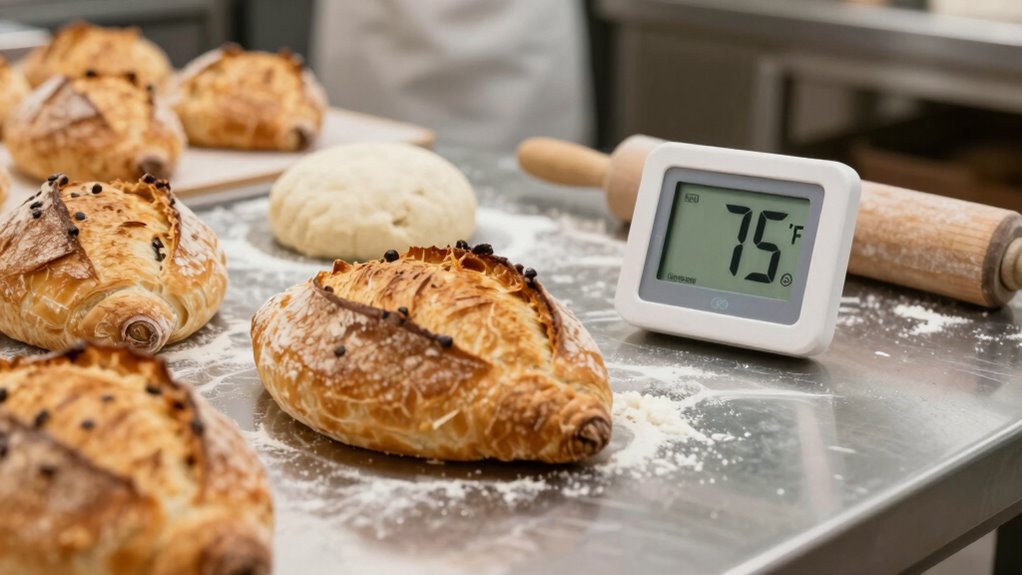
Leaving baked goods out at room temperature becomes risky when they contain moisture, dairy, eggs, or fruit fillings, as these ingredients promote mold and bacteria growth. Items like cookies and crackers usually stay safe for two days, but perishable treats should be refrigerated promptly. Proper storage in airtight containers and noting storage times help prevent spoilage. To keep your baked goods safe and tasty longer, understanding when and how to store them is essential—more tips await you.
Key Takeaways
- Baked goods with perishable ingredients like dairy, eggs, or fruit fillings should not be stored at room temperature beyond two days.
- Moist, sugary, or dairy-rich baked items left out at room temperature can promote bacterial and mold growth.
- Items with crusts such as bread and cookies are generally safe at room temperature for up to two days; longer storage increases spoilage risk.
- In warm, humid environments, even baked goods without perishables are riskier to keep at room temperature due to mold and bacteria proliferation.
- Proper refrigeration or airtight storage is essential for maintaining safety and quality, especially for items with high moisture or perishability.
What Are the Food Safety Risks of Leaving Baked Goods Out?
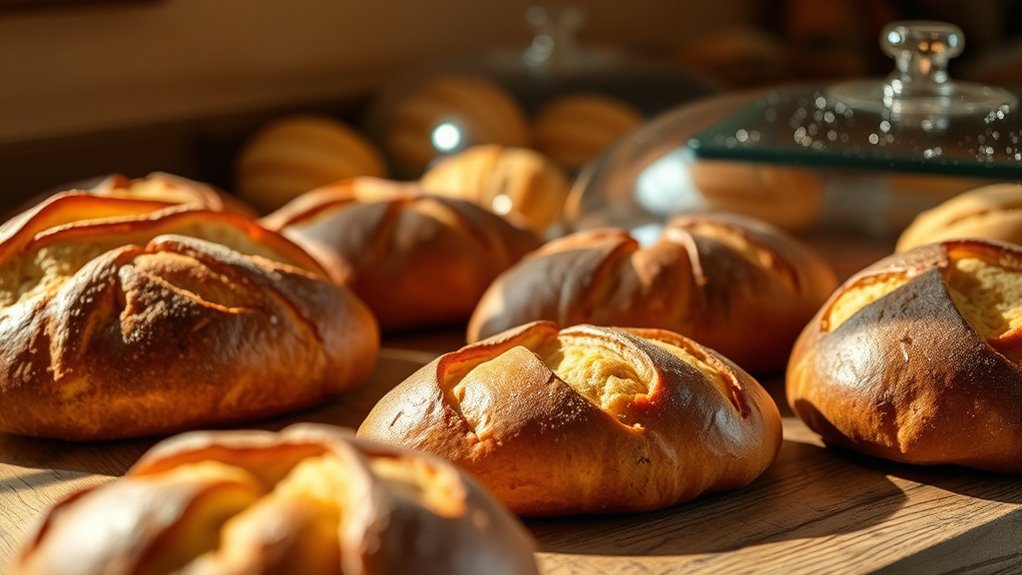
Leaving baked goods out at room temperature can create serious food safety risks. When left out, bacteria growth can accelerate quickly, especially in moist, sugary, or dairy-rich items. These bacteria can multiply to harmful levels that may cause foodborne illnesses if consumed. Additionally, mold development is a common concern; mold spores in the environment can settle on baked goods and grow unnoticed, particularly in warm, humid conditions. Proper storage of baked goods in airtight containers or refrigeration helps inhibit mold growth and bacterial proliferation. Using appropriate storage containers and techniques can further prevent contamination and maintain food safety. Consuming moldy baked goods can lead to allergic reactions or illness. Even if baked goods appear fine, bacteria and mold can be invisible yet dangerous. To minimize these risks, it’s essential to store baked items properly, usually in airtight containers or refrigeration, especially if they contain perishable ingredients. Proper storage practices are crucial for maintaining food safety and preventing health issues.
Which Baked Goods Can Stay Safe at Room Temperature?
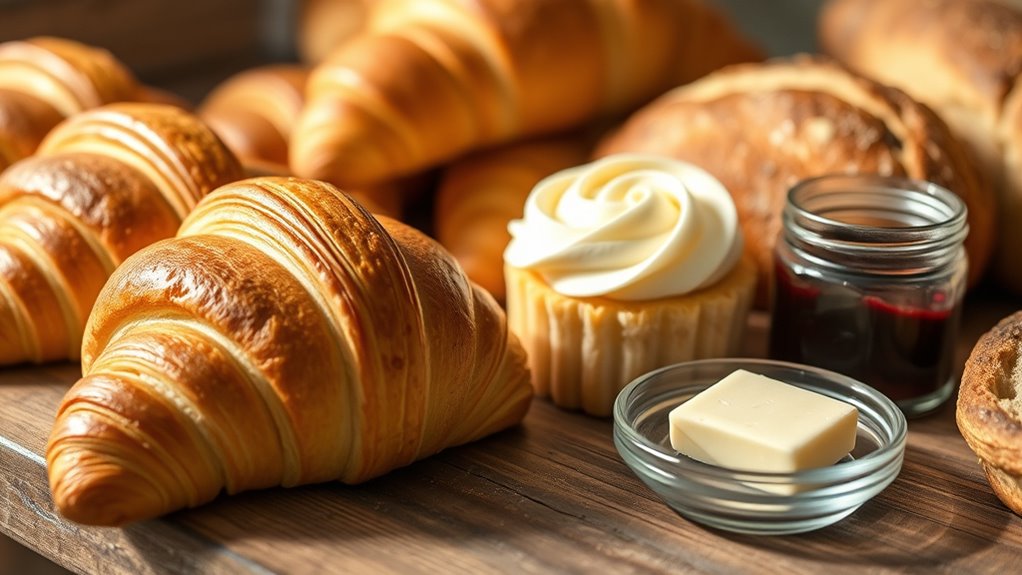
Many baked goods can safely stay at room temperature for a short period, but knowing which ones is essential to guarantee food safety. Generally, items like cookies, crackers, and bread with a crust can remain safe for up to two days. These foods have a longer shelf life without refrigeration and help preserve their flavor. Pastries with fruit or cream fillings, however, should be stored in the fridge due to higher moisture and perishability. To maintain flavor preservation, keep baked goods in airtight containers away from direct sunlight and heat. Understanding which baked items are safe at room temperature helps prevent spoilage and mold growth while ensuring your products retain their taste and texture. Always assess the ingredients and storage conditions for ideal safety.
When Should You Refrigerate Your Baked Items?

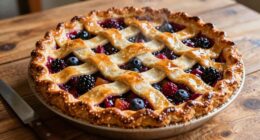
You should refrigerate baked items promptly when they contain perishable ingredients like dairy, eggs, or fruit fillings, as these components can quickly promote bacterial growth if left out. Proper baking techniques and ingredient preservation are key to maintaining safety. If your baked goods include these moist or nutrient-rich elements, refrigeration slows bacterial proliferation, reducing the risk of foodborne illness. Items like cheesecakes, cream-filled pastries, or fruit-topped cakes should be cooled and stored in airtight containers in the refrigerator. Even if baked without perishable ingredients, consider refrigerating if you plan to keep the items for more than two days. Proper refrigeration preserves freshness and flavor while ensuring safe consumption. Always evaluate the ingredients and storage duration to determine when refrigeration is necessary.
How Can You Store Baked Goods Properly to Keep Them Safe and Fresh?
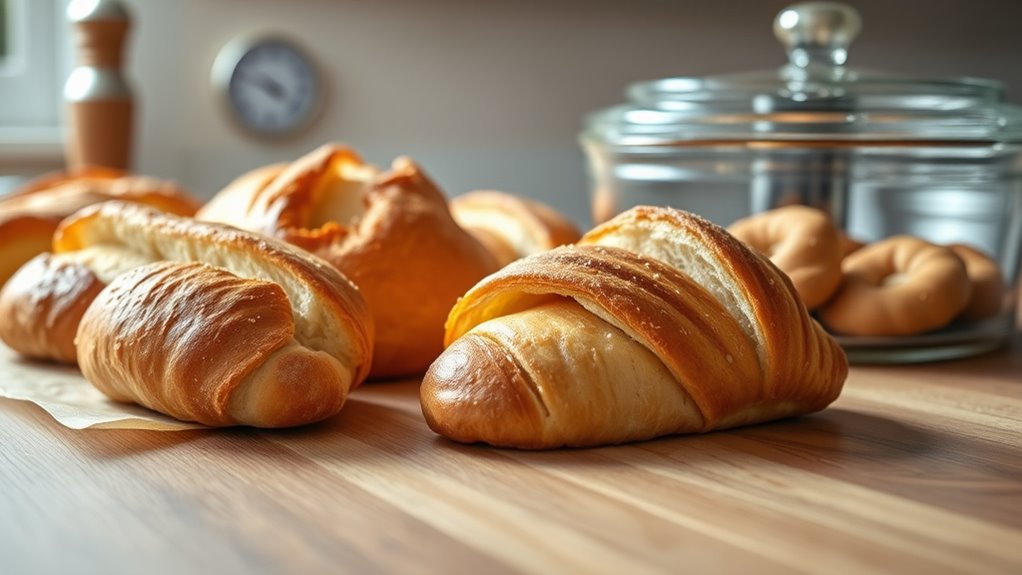
To keep your baked goods safe and fresh, you need to store them at the right temperatures and in proper packaging. Knowing how to recognize spoilage signs guarantees you don’t serve unsafe or stale items. Proper storage techniques help maintain quality and prevent foodborne illnesses. Using appropriate storage methods is essential for ensuring reliability and safety, especially when managing multiple baked goods or large quantities. Additionally, understanding the role of temperature in food preservation can significantly extend shelf life and reduce microbial growth. Implementing proper precious metal IRA strategies can also be a valuable way to secure your financial future alongside food safety practices.
Optimal Storage Temperatures
Storing baked goods at the right temperature is essential to maintain their freshness and guarantee food safety. Keep items at 70°F (21°C) or below to prevent microbial growth and preserve ingredient freshness. For longer storage, refrigeration is recommended, ideally between 35-40°F (1.5-4°C). Proper temperature control supports ingredient preservation and helps avoid spoilage. When storing, consider these tips: temperature management is crucial to ensure baked goods stay safe and tasty. 1. Use airtight packaging to minimize moisture loss and contamination. 2. Avoid temperature fluctuations by keeping baked goods in a consistent environment. 3. Label stored items with date and type to monitor freshness and prevent waste. Additionally, maintaining a stable ambient temperature reduces the risk of microbial proliferation, ensuring your baked goods stay safe longer. Incorporating proper storage techniques can further extend the freshness and safety of your baked treats.
Proper Packaging Methods
Using proper packaging methods is essential to keep baked goods fresh and safe from contamination. Select packaging materials that promote ingredient preservation by preventing moisture loss and limiting exposure to air, which can cause staling or mold growth. Use airtight containers, resealable bags, or wrapping with food-grade materials like parchment or foil. Verify packaging is clean and dry before use. Properly sealed packages help maintain texture, flavor, and freshness while reducing the risk of cross-contamination. Be mindful of the type of baked good when choosing packaging; for example, bread benefits from breathable paper bags, while cookies and cakes often require airtight wrapping. Correct packaging not only extends shelf life but also protects your baked goods from environmental hazards and spoilage. Incorporating innovative European cloud servers can help bakeries manage inventory and monitor storage conditions more effectively, ensuring product safety and quality. Additionally, understanding food safety protocols is critical in preventing contamination and ensuring your baked goods remain safe for consumption. Proper training in food safety procedures is also vital for staff to maintain hygiene standards and prevent issues during storage and handling. Implementing regular temperature monitoring is another crucial step to prevent spoilage, especially for perishable items.
Recognizing Spoilage Signs
Even when you store baked goods properly, it’s important to stay alert for signs of spoilage that can compromise safety and quality. Recognizing freshness indicators helps prevent consumption of unsafe items. First, check for mold detection: fuzzy or discolored spots signal spoilage. Second, look for changes in texture, such as excessive hardness or sogginess, which indicate staleness or moisture issues. Third, smell the baked goods; sour or off odors suggest bacterial growth. If you notice any of these signs, discard the product immediately. Proper storage slows spoilage but doesn’t prevent it entirely. Regularly inspecting baked goods, especially those stored at room temperature, ensures you catch spoilage early and keep your baked goods safe for consumption. Additionally, understanding paint storage and handling can help maintain the quality of ingredients used in baking, reducing the risk of spoilage from contaminated or improperly stored supplies. Incorporating sound healing science principles about vibrations and frequencies can also subtly influence the freshness perception of baked goods, although proper storage remains essential. Proper temperature control and storage techniques are key to extending the shelf life of baked items.
What Are Common Myths About Storing Baked Goods at Room Temperature?

Have you ever wondered if leaving baked goods out at room temperature is always safe? Many bakers buy into storage misconceptions, believing that all baked treats can sit out indefinitely. Myth busting reveals that this isn’t true—especially for items like cookies, bread, or cakes with fillings. Some assume that storing baked goods at room temperature prevents mold, but in reality, warmth and humidity can accelerate spoilage. Others think that refrigeration ruins texture or flavor, which isn’t always accurate. These misconceptions can lead to unsafe practices, risking foodborne illnesses. The truth is, proper storage depends on the ingredients used and the type of baked good, as some are more prone to spoilage than others. Understanding these myths helps you make smarter choices, keeping your baked goods fresher and safer longer. Additionally, food safety guidelines recommend specific storage methods to minimize health risks. Proper storage techniques also consider perishable ingredients, which significantly influence how long baked items remain safe at room temperature. Moreover, awareness of microbial growth conditions can help prevent potential food safety hazards.
How Can You Tell If Your Baked Goods Are Unsafe to Eat?
While knowing how to store baked goods properly helps prevent spoilage, it’s just as important to recognize when they’ve become unsafe to eat. First, check the baked goods expiration date; if they’ve passed, toss them. Second, look for mold development, which appears as fuzzy spots in green, white, or black. Mold indicates contamination and potential health risks. Third, trust your senses—if baked goods smell sour, off, or have a strange taste, discard them immediately. These signs help you avoid consuming spoiled or unsafe items. Proper storage techniques are essential for maintaining freshness and safety over time. Additionally, understanding foodborne illness risks can help you make better safety decisions. The presence of microbial contamination can also signal that baked goods are no longer safe to consume. When in doubt, it’s safer to throw it out than risk health issues. Additionally, passive voice detection tools can help identify unclear or weak phrasing in your recipes or safety instructions.
What Are the Best Practices to Keep Baked Goods Safe and Delicious?
To keep baked goods safe and delicious, you should follow proper storage practices from the start. Use effective baking techniques to assure your products are fully cooked and cooled properly, reducing the risk of bacterial growth. Once baked, focus on ingredient preservation by storing goods in airtight containers or wrapping them tightly to prevent moisture loss and contamination. Keep items at appropriate temperatures—refrigerate perishable baked goods if needed, especially in warm environments. Label and date your baked goods to track freshness and avoid keeping them too long. Proper handling and storage minimize spoilage and maintain flavor, texture, and safety. Implementing these best practices helps you deliver delicious baked goods that are both safe to enjoy and visually appealing.
Frequently Asked Questions
How Long Can Baked Goods Safely Sit Out at Room Temperature?
You should not leave baked goods at room temperature for more than two days. Bacterial growth accelerates once food storage exceeds this period, increasing the risk of foodborne illness. If you want to keep your baked items fresh longer, store them in airtight containers or freeze them. Always check for signs of spoilage before consuming, as proper storage helps prevent bacterial growth and keeps your baked goods safe to enjoy.
Are Gluten-Free Baked Items More Prone to Spoilage at Room Temp?
Yes, gluten-free baked items are more prone to spoilage at room temperature because their shelf life is typically shorter, and they lack the preservatives found in traditional baked goods. You need to be extra cautious with gluten-free spoilage, ensuring they’re stored properly and consumed within recommended time frames. Regularly check for signs of mold or off odors, and when in doubt, refrigerate to extend freshness and reduce risk.
Does Humidity Affect the Safety of Storing Baked Goods?
Humidity can make or break your baked goods’ safety. If you don’t control humidity, your items might become moldy or soggy, turning into a recipe for disaster. Proper storage conditions, like storing in airtight containers and controlling humidity levels, keep baked goods fresh and safe longer. Remember, a little humidity control goes a long way—don’t let moisture be your undoing. Keep an eye on storage conditions to prevent spoilage.
Can Homemade Baked Goods Be Left Out Longer Than Store-Bought?
You can leave homemade baked goods out a bit longer than store-bought, but caution is key. Homemade preservation methods often lack preservatives found in store-bought items, so their shelf life at room temperature is shorter. To stay safe, consume homemade baked goods within 1-2 days, especially if they contain perishable ingredients. Always check for signs of spoilage and store leftovers properly to guarantee safety and freshness.
What Signs Indicate Baked Goods Have Developed Harmful Bacteria?
You’ll notice harmful bacteria on baked goods through mold growth and a foul odor. Mold appears as fuzzy spots in various colors, while a strong, sour, or rotten smell indicates spoilage. If you see mold or detect an unpleasant odor, discard the item immediately. These signs mean bacteria and other pathogens have developed, making the baked goods unsafe to eat. Always trust your senses to guarantee food safety.
Conclusion
Think of your baked goods as precious heirlooms—they need proper care to stay safe and delicious. Just like you wouldn’t leave a fragile antique in direct sunlight, don’t leave your treats out too long. By following proper storage practices, you’re shielding your creations from hidden dangers, ensuring every bite remains fresh and safe. When in doubt, refrigerate—your baked treasures will thank you, and your loved ones will savor every safe, tasty piece.