To guarantee food safety with printed decorations, always choose food-grade, allergen-free materials like edible inks and specialty papers. Handle everything with clean hands or tools, and store decorations in airtight containers away from moisture, light, and odors. Maintain proper temperature control, sanitize your equipment regularly, and apply decorations carefully to prevent contamination. Following these essential practices helps keep your creations safe; explore further to learn more about proper handling and safety protocols.
Key Takeaways
- Verify printed decorations are free from allergens and use food-safe, non-toxic inks and materials.
- Handle decorations with clean hands or utensils and store in airtight, cool, dry conditions away from contaminants.
- Ensure proper temperature control, keeping decorations between 35°F and 45°F, and maintain equipment sanitation.
- Use dedicated, food-grade equipment for printing and application to prevent cross-contact and contamination.
- Label all storage containers and ink supplies clearly, and train staff on allergen management and hygiene practices.
What Are the Food Safety Rules for Printed Decorations?
Are printed decorations safe to use on food? The answer depends on proper food allergen management and clear allergen labeling. You need to verify that any printed decoration is free from allergens that could harm consumers. Always check ingredients carefully and verify that the materials used are food-safe and do not contain common allergens like nuts, dairy, or gluten. Labeling is essential—accurately indicate any allergens present to prevent cross-contact and protect sensitive individuals. Following food safety guidelines is crucial to ensure compliance and prevent contamination. Strict hygiene practices during production help avoid contamination and ensure safety. If you’re unsure about the safety of a decoration, consult food safety guidelines or suppliers’ allergen information. Proper allergen management and clear labeling help you reduce risks and ensure your edible decorations are both beautiful and safe for everyone. Additionally, understanding the safety standards related to food contact materials can further ensure compliance and consumer safety. Maintaining awareness of food allergen regulations is key to preventing accidental exposures and ensuring customer trust. Being informed about conventional safety practices also contributes to overall food safety and consumer confidence. Incorporating proper handling procedures is essential to prevent cross-contact and maintain product integrity.
How Do I Choose Safe Materials for Edible Printing?
Choosing the right materials for edible printing starts with understanding what makes a material safe for food use. You need to select edible ink formulations that are approved for consumption and won’t pose health risks. Always check that the inks are food-grade, non-toxic, and made specifically for edible printing. When choosing paper options, opt for safe paper options designed for food contact; avoid standard printer paper, which can contain harmful chemicals. Look for specialized edible paper like rice paper or wafer paper that’s certified food-safe. Ensuring these materials meet food safety standards helps prevent contamination and guarantees your decorations are safe to eat. It is also important to consider material durability to ensure the printed decorations hold up during handling and display. Carefully verify the ingredients and certifications of all materials before use to maintain food safety and quality. Additionally, understanding food safety standards can help you select compliant and safe options for your edible decorations. Being aware of regulatory guidelines ensures your edible printing practices adhere to safety laws and best practices. Furthermore, choosing materials with stable ink adhesion can improve the longevity of your printed images on edible surfaces. Incorporating halal-certified materials is also crucial for ensuring that all edible decorations meet specific dietary requirements and are permissible for Muslim consumers.
How Should I Handle and Store Printed Food Decorations?
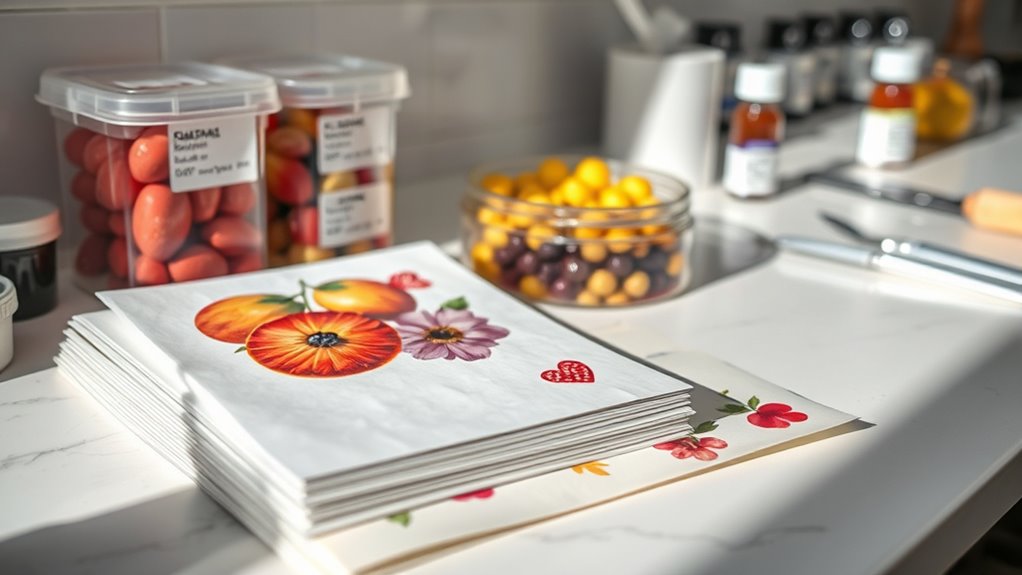
To keep printed food decorations safe, you need to store them properly and control the temperature. Always handle them with clean hands or utensils to prevent contamination. Proper storage techniques include keeping decorations in airtight containers and away from moisture, which can compromise their quality and safety. Maintaining proper storage conditions is essential to ensure your decorations stay fresh and safe to eat. Additionally, understanding toilet maintenance and repairs can help you prevent potential issues that might affect your kitchen environment, ensuring a clean and safe space for food preparation.
Proper Storage Techniques
Proper storage of printed food decorations is essential to maintain their freshness, appearance, and safety. To do this effectively, make certain you use appropriate storage containers that keep decorations protected from moisture, air, and contaminants. Choose airtight containers that prevent ingredient freshness from deteriorating and avoid exposure to light or humidity, which can cause fading or spoilage. Store decorations in a cool, dry place away from direct sunlight, chemicals, or strong odors that could transfer to the decorations. Label containers clearly for easy identification and to prevent mishandling. Keep decorations separated from raw ingredients or other foods that might pose a risk of cross-contamination. Suprem fabric is known for its durability and resistance to wear, making it an ideal material for storing delicate decorations that require long-lasting protection. Proper storage not only prolongs their shelf life but also ensures they remain safe and visually appealing for your finished products. Additionally, understanding vetted wave and wind conditions can help you select the best environment for storing decorations, especially if outdoor storage is necessary. Considering climate control can further enhance storage conditions by preventing temperature fluctuations that may compromise decoration quality. Maintaining optimal storage conditions aligns with food safety standards, ensuring your decorations stay both beautiful and safe for consumption. Being aware of storage environment factors such as humidity and airflow can also help prevent mold and spoilage, further safeguarding your decorations’ quality.
Temperature Control Tips
Maintaining the correct temperature is essential for keeping printed food decorations safe and visually appealing. Proper temperature management prevents spoilage and preserves their quality. Always store decorations in accordance with refrigeration guidelines, ideally between 35°F and 45°F. Avoid leaving them at room temperature for extended periods, as heat can cause deterioration or mold growth. When storing, keep decorations in airtight containers to prevent moisture absorption and cross-contamination. If refrigeration is necessary, ensure they are placed away from raw meats or other sources of contamination. Before use, verify that the decorations are still within safe temperature ranges. Temperature control is a critical factor in preventing bacterial growth and ensuring food safety. Consistent temperature management minimizes food safety risks and keeps your decorated treats looking fresh and appealing for longer. Additionally, monitoring air quality considerations within storage areas can help prevent mold and spoilage, especially since poor air circulation can lead to condensation and microbial development. Maintaining proper refrigeration practices further enhances food safety and prolongs the shelf life of your decorated treats.
Handling Safety Measures
Ever wonder the best way to handle and store printed food decorations to guarantee safety and quality? Proper handling begins with good hygiene practices, like washing hands before touching decorations and using clean tools. Store decorations in airtight containers away from raw ingredients to prevent cross contamination. Keep them in a cool, dry place, and avoid exposing them to moisture or direct sunlight. Use separate utensils for different tasks to reduce contamination risks. Label storage containers clearly to avoid mix-ups. Here’s a quick visual:
| Storage Method | Hygiene Practice | Cross Contamination Prevention |
|---|---|---|
| Airtight containers | Wash hands regularly | Use separate utensils |
| Cool, dry storage | Clean tools after use | Keep away from raw foods |
| Labelled for clarity | Avoid touching with bare hands | Store away from raw ingredients |
What Strategies Prevent Cross-Contamination During Printing?
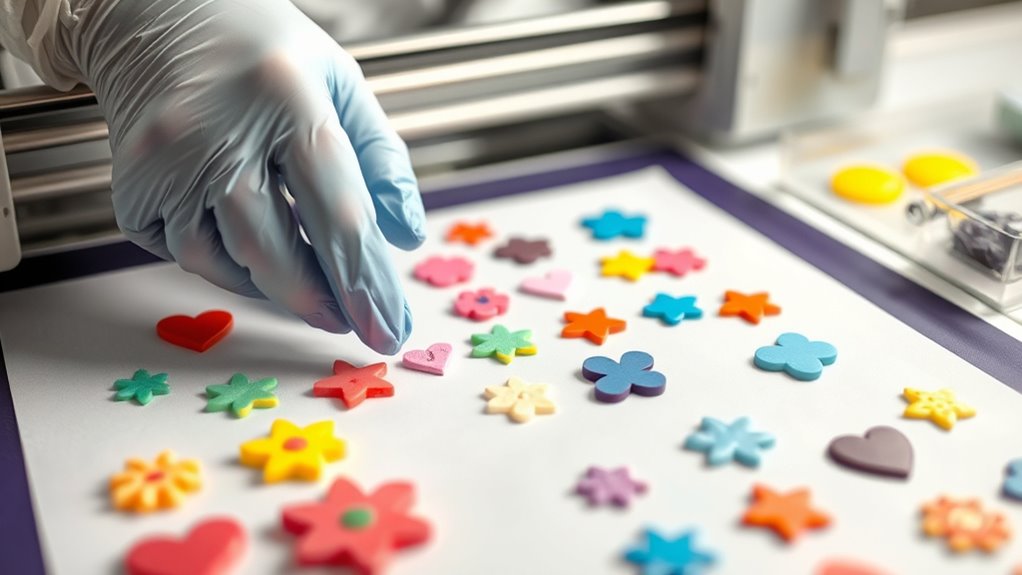
To prevent cross-contamination during printing, you need to use dedicated equipment for different tasks. Make sure to clean everything properly between uses, and always keep food and ink separate. These strategies help guarantee food safety and maintain product quality.
Use Dedicated Equipment
Using dedicated equipment during printing is essential to prevent cross-contamination. When you assign specific tools for certain ingredients or decorations, you minimize risks linked to equipment maintenance and ingredient sourcing. This approach guarantees that flavors and allergens stay isolated, protecting your customers’ health. Think of your equipment as a safeguard; sharing it across different products increases contamination chances. To maintain high safety standards, regularly inspect and replace worn parts. The table below highlights the emotional impact of using dedicated equipment:
| Confidence | Safety | Trust |
|---|---|---|
| Peace of mind | Customer loyalty | Brand reputation |
Implement Proper Cleaning
How can you effectively prevent cross-contamination during printing? The key is implementing strict cleaning schedules and sanitation protocols. Regularly cleaning equipment after each use guarantees no residues transfer between products. Follow these strategies:
- Adhere to a detailed cleaning schedule, emphasizing high-touch areas.
- Use approved cleaning agents suited for food contact surfaces.
- Sanitize all equipment and tools before switching between different printed products.
- Document each cleaning process to maintain accountability and consistency.
Separate Food and Ink
Preventing cross-contamination during printing starts with physically separating food products from ink supplies and equipment. Use designated tools and surfaces for edible items to reduce allergen management risks. Consistently clean and sanitize all equipment before switching between food and ink tasks. Implement clear labeling requirements for ink containers to prevent accidental use on food products. Keep separate storage areas for raw ingredients, printed decorations, and printing supplies. Train staff to recognize allergen concerns and enforce strict protocols. Ensure printers and brushes used on edible items are dedicated and never shared with non-food inks. This approach minimizes the risk of allergen transfer and cross-contact, protecting consumers and complying with safety standards. Proper separation and labeling are essential in maintaining a safe, allergen-free environment during printing.
How Do I Clean and Sanitize My Printing Equipment Properly?
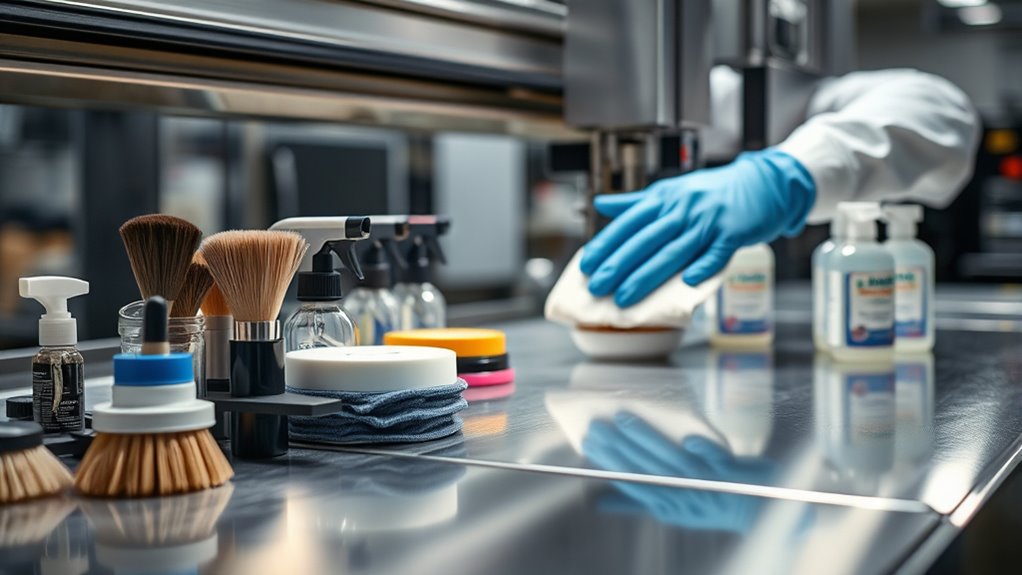
Wondering how to keep your printing equipment clean and safe? Proper cleaning and sanitization are essential to prevent cross-contamination and ensure food safety. Follow these steps to maintain your equipment effectively:
- Remove all ink residues and debris using a food-safe cleaning agent.
- Follow strict cleaning protocols, scrubbing all surfaces thoroughly.
- Rinse equipment with warm water to eliminate soap or cleaner residues.
- Apply sanitization procedures, using an approved sanitizer to disinfect all contact surfaces.
Make sure to allow sufficient contact time for sanitizers to work effectively. Regular cleaning and sanitization help prevent bacteria buildup and ensure your printed decorations are safe for food contact. Consistently adhering to these steps keeps your equipment in top condition and maintains food safety standards.
What Are the Best Ways to Apply Printed Decorations Safely?
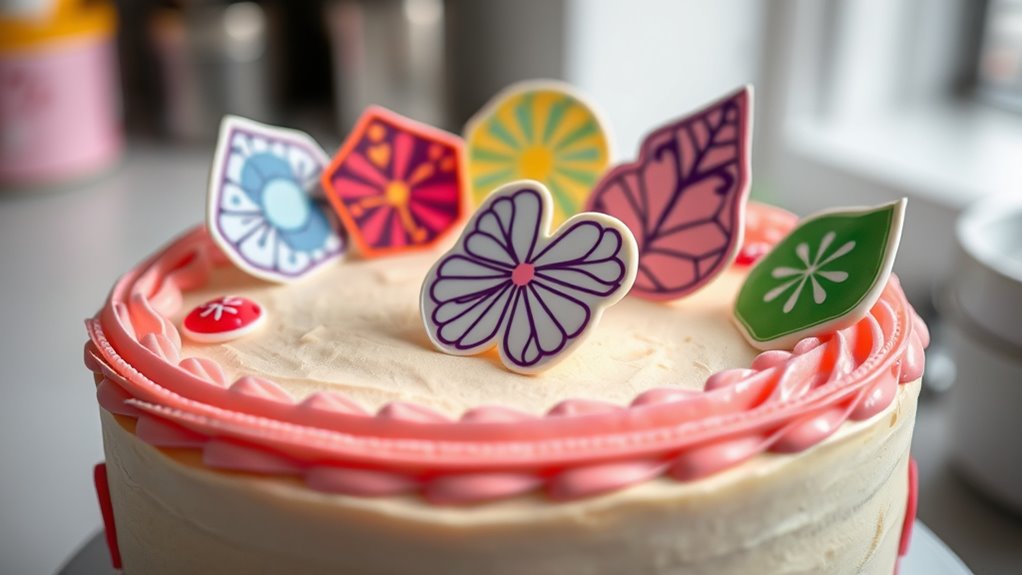
Applying printed decorations safely is essential to guarantee they remain food-safe and do not contaminate your products. Start by ensuring your hands and tools are thoroughly cleaned and sanitized to prevent cross-contamination. When applying decorated edible images, handle them with clean utensils or gloves, and avoid touching the printed surface directly. Use gentle, precise techniques to place decorations, preserving their decorative artistry without damaging the design. Make sure the surface of the baked good is dry and at the right temperature to prevent peeling or smudging. Proper application not only maintains food safety but also preserves flavor enhancement, ensuring your treats look appealing and taste great. Following these best practices helps you deliver beautifully decorated, safe, and delicious products to your customers.
Frequently Asked Questions
Are There Specific Certifications I Should Look for in Edible Printing Supplies?
You should look for edible printing supplies with certification standards that guarantee safety and quality. Check for safety labels indicating compliance with food safety regulations, like NSF or FDA approval. These certifications confirm the products meet strict hygiene and safety requirements, reducing risks of contamination. Always verify that your supplies have the proper safety labels, so you can confidently use them in food decoration without concerns about safety or regulatory issues.
How Long Can Printed Decorations Safely Remain on Food Items?
You can generally keep printed decorations on food items for up to 24 hours, but this depends on the type of decoration and storage conditions. To maximize shelf life, store the decorated items in a cool, dry place away from direct sunlight. Follow storage tips like keeping the decorations refrigerated if necessary and avoiding moisture, which can cause smudging or spoilage. Always check for signs of deterioration before serving.
Can I Reuse Printed Edible Decorations Across Different Food Products?
You shouldn’t reuse printed edible decorations across different food products because it increases cross contamination risks. To minimize this, follow storage best practices by keeping decorations in a sealed, clean container away from raw foods and contaminants. Always inspect decorations for signs of damage or contamination before reuse. When in doubt, use fresh decorations for each product to guarantee safety and maintain food quality.
What Are the Signs of Spoiled Printed Edible Decorations?
You’ll know printed edible decorations are spoiled if you notice color fading or mold growth. Color fading indicates the decoration has been exposed to improper storage or age, reducing quality and safety. Mold growth is a clear sign of spoilage and potential health risks. Always inspect your decorations carefully before use, discard any with changes in color, texture, or visible mold, and store them properly to maintain freshness and safety.
Are There Age Restrictions for Handling Edible Printing Equipment?
You might think there are strict age restrictions for handling edible printing equipment, but it really depends on local regulations and the complexity of the device. Generally, handling requirements suggest that younger individuals should be supervised by adults to ensure safety and proper use. If you’re considering training someone under the legal age, check with local health authorities or manufacturer guidelines to guarantee compliance and safety.
Conclusion
By following these food safety basics, you can guarantee your printed decorations are not only beautiful but also completely safe to enjoy. Remember, neglecting proper handling and sanitation can turn your masterpiece into a food safety disaster faster than you can say “contamination.” Stay vigilant, keep your tools clean, and choose safe materials—because your creations deserve the best protection. When it comes to food safety, it’s better to be meticulous than risk a catastrophe!