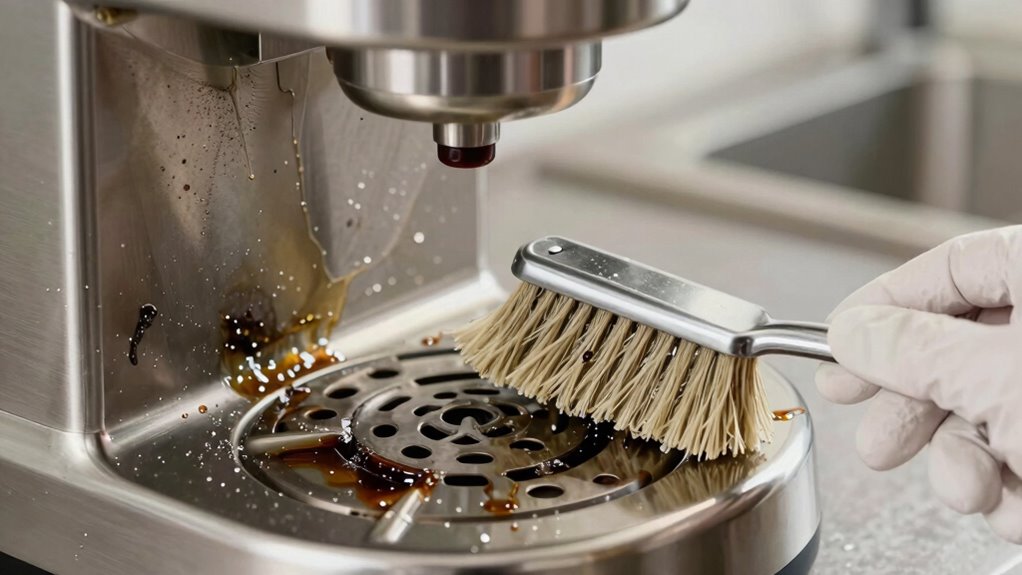

To clean sugar and fat buildup on appliances, start by unplugging and removing removable parts. Use a combination of natural cleaners like vinegar and baking soda or commercial degreasers to break down residues. Scrub surfaces gently with soft brushes or microfiber cloths, focusing on sticky spots and edges. Regular maintenance helps prevent future problems. Keep going to discover detailed cleaning tips and tricks that will make your appliance spotless again.

Get baking supplies delivered free with Prime
- Fast, free delivery on millions of items
- Prime Video, Amazon Music and more included
- Member-only deals all year
Key Takeaways
- Use natural solutions like vinegar-water mixtures or mild degreasers to dissolve sugar and fat residues effectively.
- Regularly inspect appliances for early signs of discoloration or sticky spots to prevent stubborn buildup.
- Clean removable parts separately with warm soapy water to remove accumulated sugar and grease deposits.
- Apply gentle scrubbing with soft brushes or non-abrasive pads, focusing on edges and seams for thorough cleaning.
- Establish a consistent cleaning schedule and wipe down surfaces after each use to prevent hardening of residues.
Products Worth Considering

Breville Smart Grinder Pro Conical Burr Coffee Grinder, Brushed Stainless Steel

Traeger Woodridge Pro Wood Pellet Grill and Smoker, 970 sq. in., WiFIRE

Instant Pot Duo 6-Quart 7-in-1 Electric Pressure Cooker
As an affiliate, we earn on qualifying purchases.
What Causes Sugar and Fat Buildup on Appliances
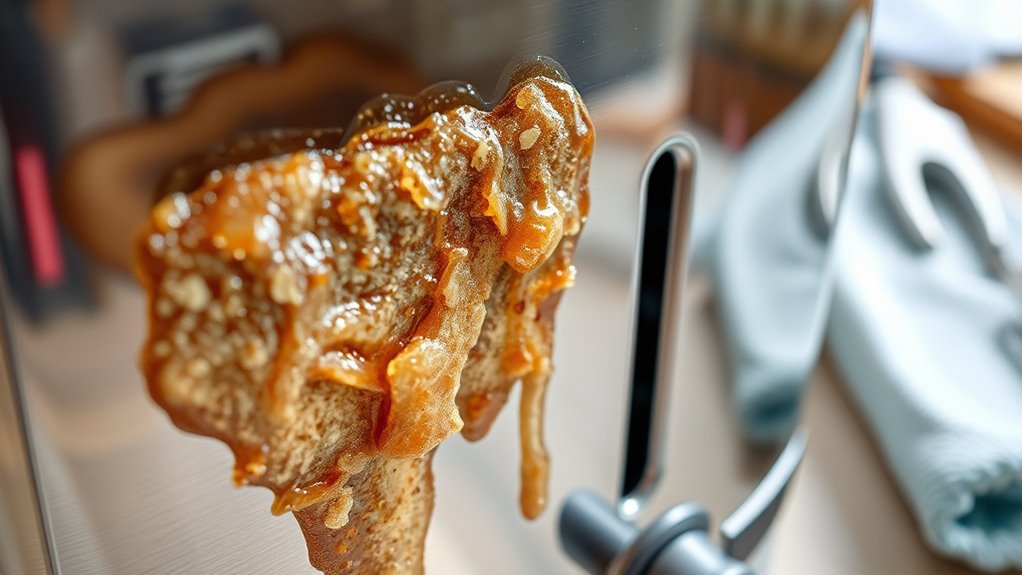
Sugar and fat buildup on appliances mainly occurs because these substances are sticky and tend to melt or liquefy when exposed to heat. Over time, this sticky residue can accumulate if you don’t practice proper appliance maintenance. When you cook or bake, spills often happen, and if you don’t clean them promptly, the sugars and fats can harden and stick to surfaces. Repeated heating further liquefies and re-solidifies these residues, making them difficult to remove later. To prevent this buildup, it’s essential to focus on residue prevention by cleaning appliances regularly and wiping away spills immediately. This proactive approach reduces the risk of stubborn deposits and keeps your appliances functioning efficiently, ultimately extending their lifespan. Additionally, practicing regular appliance maintenance can help identify early signs of buildup before it becomes more challenging to clean. Regularly inspecting and maintaining your appliances can also prevent damage caused by buildup, saving you money on repairs or replacements. Incorporating preventive cleaning practices into your routines is a key step toward avoiding excessive residue accumulation. Regular cleaning not only maintains appliance appearance but also enhances their energy efficiency, leading to lower utility costs and a more sustainable household.
How to Spot Residue Buildup Before It Gets Worse
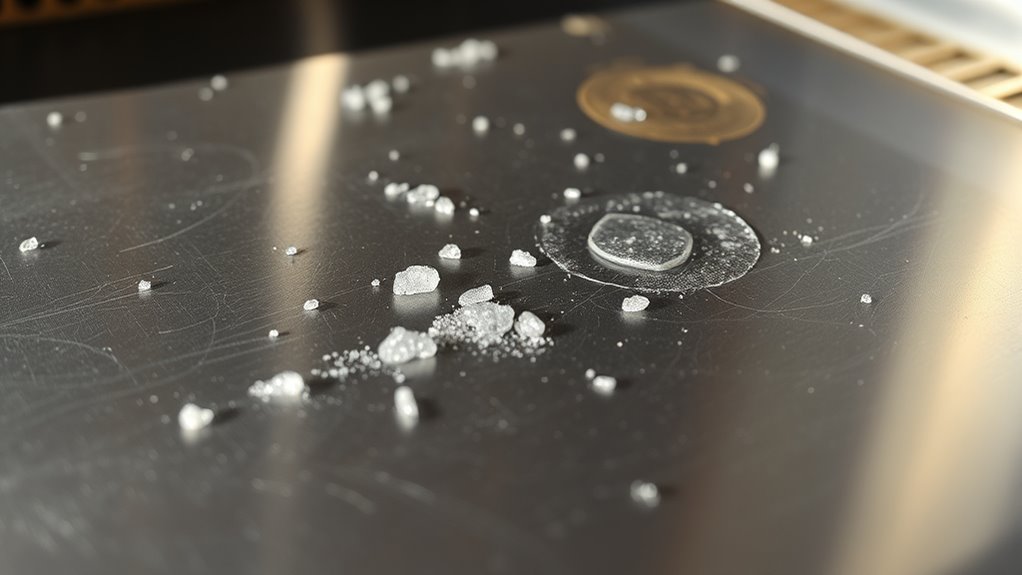
Keep an eye out for sticky spots on your appliances, as they often signal residue buildup. Discoloration, such as darkening or staining, can also indicate that grime is accumulating. Catching these signs early helps you clean before the buildup becomes harder to remove. Regular maintenance and using appropriate cleaning techniques can prevent the accumulation of connected device residues, ensuring your appliances stay efficient and hygienic. Additionally, understanding the contrast ratio of your appliances can help you identify when their performance is declining due to residue interference. Monitoring the sensor accuracy can also reveal subtle signs of residue affecting appliance operation. Being familiar with cleaning schedules tailored to your devices can further help prevent extensive buildup before it impacts performance. Recognizing early signs of residue accumulation can save time and maintenance costs in the long run.
Spot Sticky Spots
Keeping an eye out for sticky spots is essential to prevent stubborn residue from building up on your appliances. These spots often signal early residue buildup that can lead to appliance discoloration if ignored. To spot them, check areas prone to splatters and spills, especially around controls and seams. Look for shine loss or slight stickiness that’s hard to wipe away. Use your fingertips or a soft cloth to feel for tacky patches. Regularly inspecting these areas helps you catch residue prevention issues early, avoiding deeper cleaning later. Incorporating routine inspections can prevent buildup and make cleaning easier over time. Additionally, understanding the importance of filter maintenance can help prolong appliance lifespan by addressing issues before they worsen. This proactive approach also supports appliance longevity by addressing issues before they worsen. Here’s a helpful visual:
| Area to Check | Sticky Indicator | Action Needed |
|---|---|---|
| Control panel | Slight tackiness | Clean with a damp cloth |
| Door seals | Residue buildup | Wipe gently |
| Handles | Discoloration | Clean thoroughly |
| Inside surfaces | Sticky spots | Spot clean regularly |
| Vents | Residue signs | Dust and wipe down |
Stay vigilant to keep appliances clean and prevent discoloration. Additionally, incorporating routine inspections can extend appliance lifespan and ensure optimal performance.
Recognize Discoloration Signs
Discoloration on your appliances often signals underlying residue buildup that’s starting to impact their appearance. Pay attention to discoloration patterns, such as uneven spots, streaks, or a dull film, which can indicate sugar and fat residue. Recognizing these signs early helps prevent further damage and keeps your appliances looking new. Stain identification is key—look for areas that don’t match the original surface color, especially around edges or crevices. These subtle changes often appear before more obvious stains or sticky patches form. Additionally, understanding water chemistry can help you identify conditions that promote residue buildup. By staying alert to discoloration signs, you can catch buildup early and tackle it with proper cleaning, ensuring your appliances stay clean and functioning smoothly. Early detection saves time and extends their lifespan. Being aware of residue accumulation factors can further aid in preventing buildup before it becomes visible. Regular maintenance and understanding appliance cleaning protocols also play a crucial role in reducing residue buildup over time.
Gather Your Best Cleaning Supplies and Tools
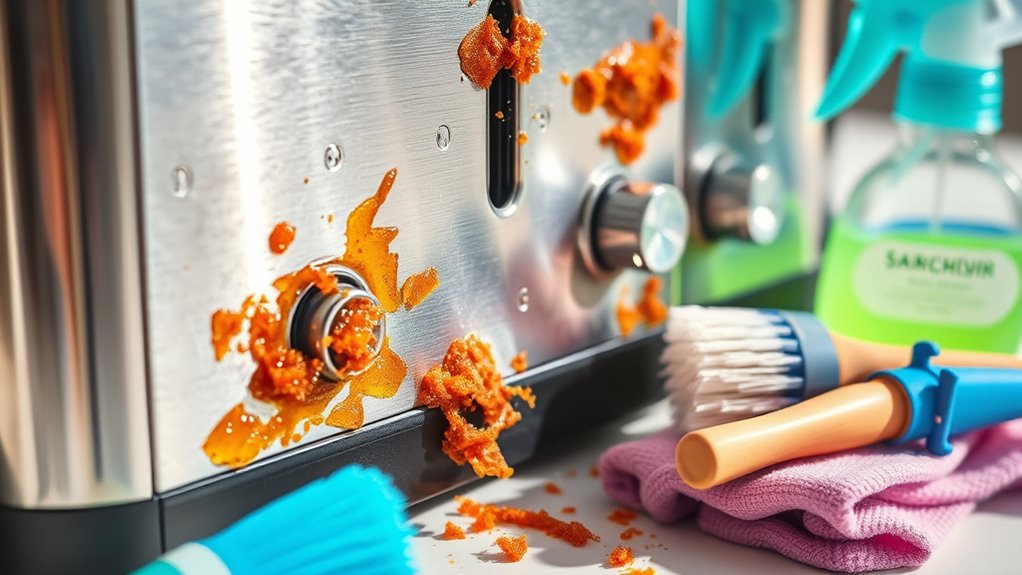
Before you start cleaning, gather your best supplies and tools to make the job easier and more effective. Using the right cleaning methods and tools helps remove sugar and fat buildup efficiently and protects your appliances during maintenance. Prepare a microfiber cloth for gentle wiping, a soft brush or sponge for stubborn spots, and a non-abrasive cleaner suitable for your appliance surfaces. Keep a spray bottle with a mixture of vinegar and water for natural cleaning, or use a mild commercial degreaser if needed. Having everything within reach minimizes interruptions and ensures thorough cleaning. Proper supplies make it easier to tackle residue without damaging your appliances, keeping them in good shape and extending their lifespan through effective maintenance. Incorporating cleaning techniques that are gentle yet effective can also assist in ensuring a thorough and efficient cleaning process, especially when paying attention to safe cleaning practices that prevent damage. Additionally, understanding residue removal methods can enhance your ability to effectively eliminate stubborn buildup without harming your appliances, reducing the risk of future damage or corrosion.
Prepare Your Appliances for Effective Cleaning
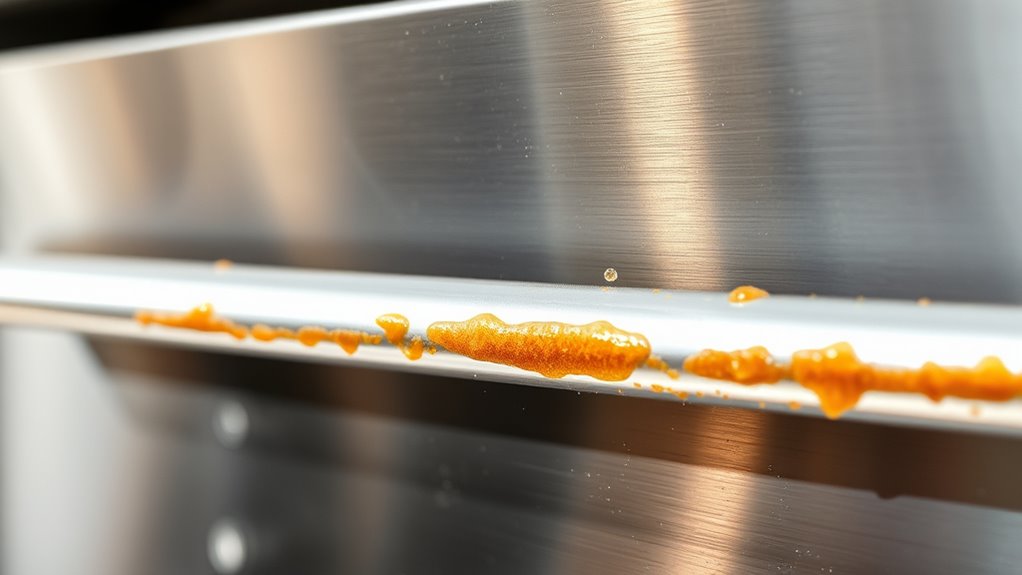
To guarantee your cleaning efforts are successful, you need to properly prepare your appliances first. Start by unplugging or turning off the device to ensure safety. Check the appliance materials—some surfaces, like stainless steel or glass, require gentle cleaners, while others may handle more aggressive solutions. Remove any removable parts, such as trays or filters, and clean them separately if needed. Reviewing your appliance’s cleaning schedule helps you identify how often to clean and what products to use. This helps prevent buildup and makes cleaning easier. Wiping down surfaces with a damp cloth removes loose debris and prepares the area for a more thorough cleaning. Additionally, understanding the materials of your appliances can help you select the most appropriate cleaning methods to avoid damage. Proper preparation ensures you target sugar and fat deposits effectively without damaging your appliances. Being aware of free floating residues can also help you choose cleaning techniques that avoid dislodging or spreading stubborn deposits. Moreover, recognizing the significance of residue adhesion can guide you in selecting the best cleaning agents to break down stubborn buildup effectively. Taking these steps can also prevent further damage to your appliances over time.
Step-by-Step: Removing Sugar and Fat Deposits
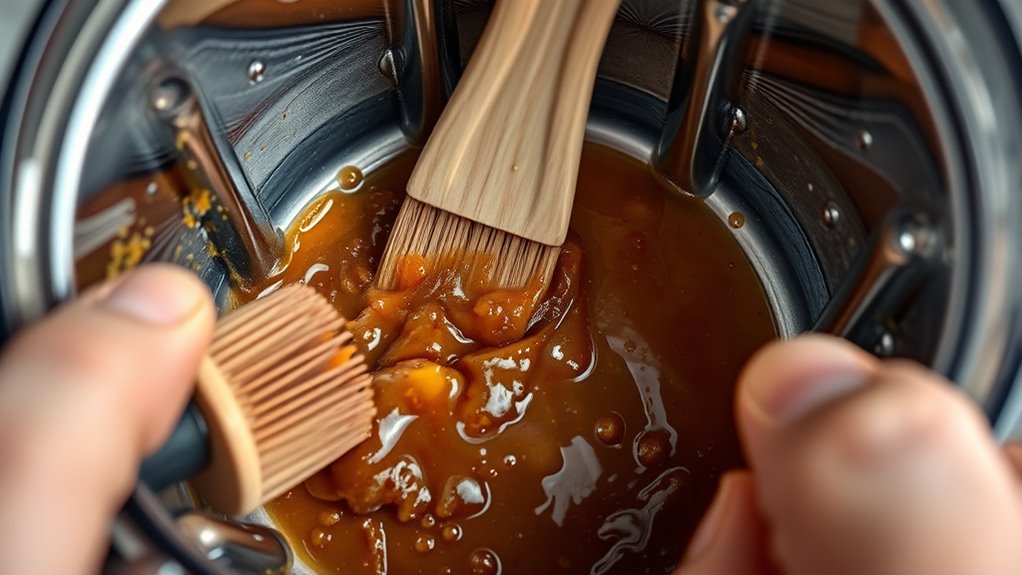
To effectively remove sugar and fat deposits, you need the right cleaning solutions and techniques. Start by preparing a mixture suited to your appliance’s needs, ensuring it can break down stubborn residues. Then, use effective scrubbing methods to lift and eliminate the build-up without damaging surfaces.
Preparing Cleaning Solutions
Preparing effective cleaning solutions is essential for breaking down stubborn sugar and fat deposits on appliances. You want to select solutions that are safe for your appliance’s materials to guarantee appliance safety. For instance, a mixture of warm water and mild dish soap works well for most surfaces. For tougher buildup, consider using a baking soda paste or vinegar solution, but always test in a small, inconspicuous area first. Keep your cleaning schedules in mind to prevent future buildup, making maintenance easier. Using the right solutions not only protects your appliance but also ensures thorough cleaning. Avoid harsh chemicals that could damage surfaces or pose health risks. Proper preparation of your cleaning solutions sets the foundation for effective removal and safe appliance use.
Effective Scrubbing Techniques
Once you’ve applied your chosen cleaning solution, the next step is effective scrubbing to lift and remove stubborn sugar and fat deposits. Use firm, circular scrubbing techniques to target affected areas, ensuring you break down stubborn stains. Keep a scrub brush or non-abrasive pad handy to reach into crevices and corners. Remember, consistent pressure helps with stain removal, but avoid excessive force that could damage surfaces. For best results, alternate between different scrubbing tools to tackle various textures. Rinse frequently to check your progress and prevent spreading residues. Proper scrubbing ensures the buildup loosens effectively, making subsequent cleaning easier. Focus on thorough coverage, especially around edges and seams, to achieve a spotless finish. Your effort will restore your appliances’ shine and function.
Choose the Right Natural and Commercial Cleaners
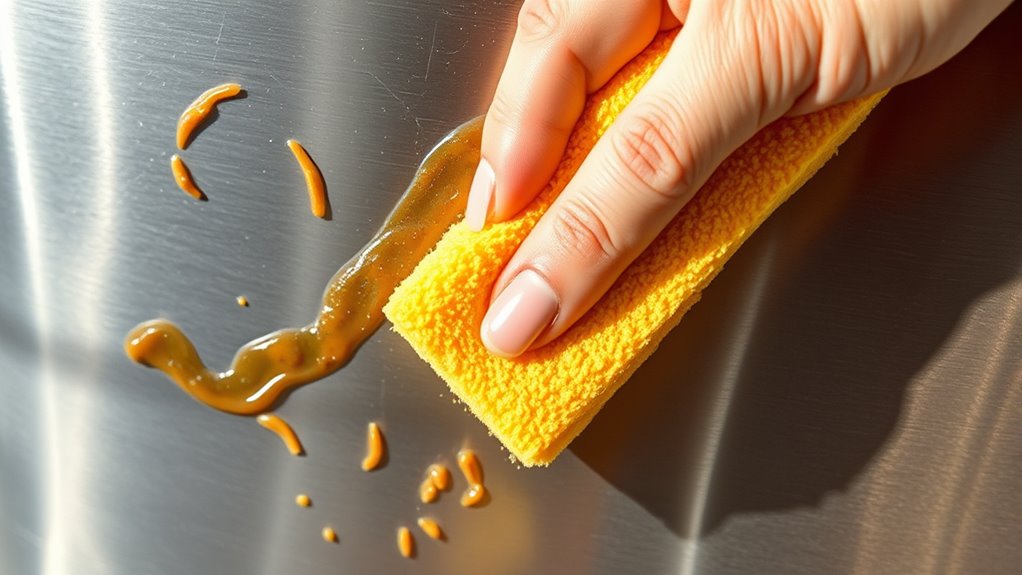
Choosing the right cleaners is essential for effectively removing sugar and fat build-up without damaging your appliances. Natural remedies like vinegar, baking soda, and lemon juice are gentle yet effective options that won’t harm surfaces. They work by breaking down residues and odors naturally. On the other hand, commercial products are specifically formulated to tackle stubborn grime and grease quickly. When selecting a cleaner, consider your appliance’s material and the severity of the build-up. Always read labels carefully to ensure compatibility. For delicate surfaces, opt for milder natural remedies, while tougher stains may require a commercial cleaner. Combining the right product with proper application ensures thorough cleaning and helps maintain your appliances’ longevity. Choosing wisely keeps your appliances clean and functioning at their best.
How to Prevent Sugar and Fat Buildup in the Future
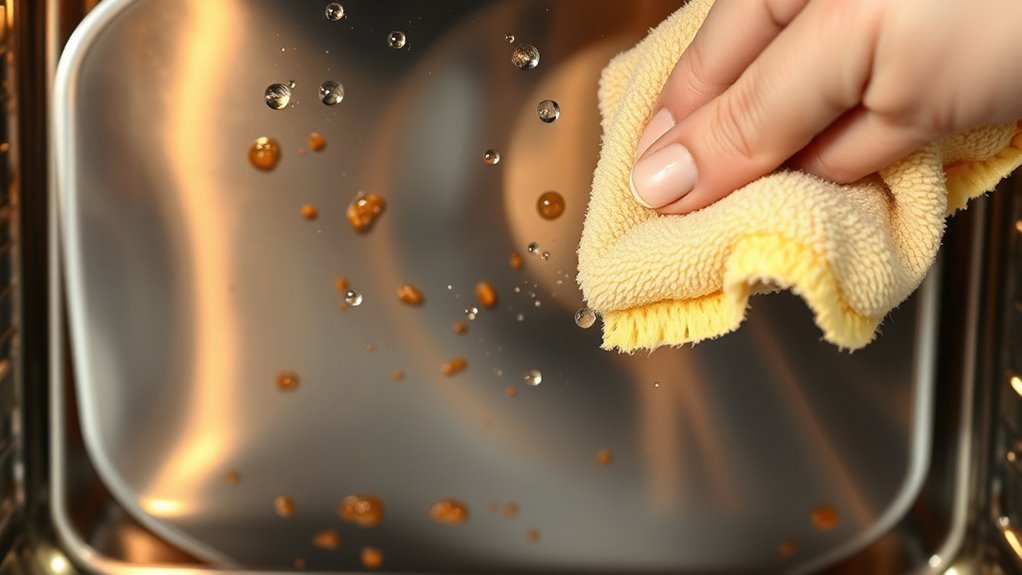
Proper cleaning routines can markedly reduce the chances of sugar and fat build-up returning in your appliances. To prevent future issues, focus on consistent preventative measures and proper appliance maintenance. Regularly wipe down surfaces after use to stop residues from hardening. Use a gentle cleaner suited for your appliance’s materials to avoid damage. Keep appliances dry and store food properly to minimize spills and splatters. Check seals and vents periodically to ensure ideal function and prevent grime buildup. Avoid leaving sugary or fatty foods inside for extended periods. Establish a cleaning schedule that fits your usage patterns, and stick to it. These proactive steps help maintain appliance efficiency and keep them cleaner longer.
Tips for Regular Maintenance and Deep Cleaning
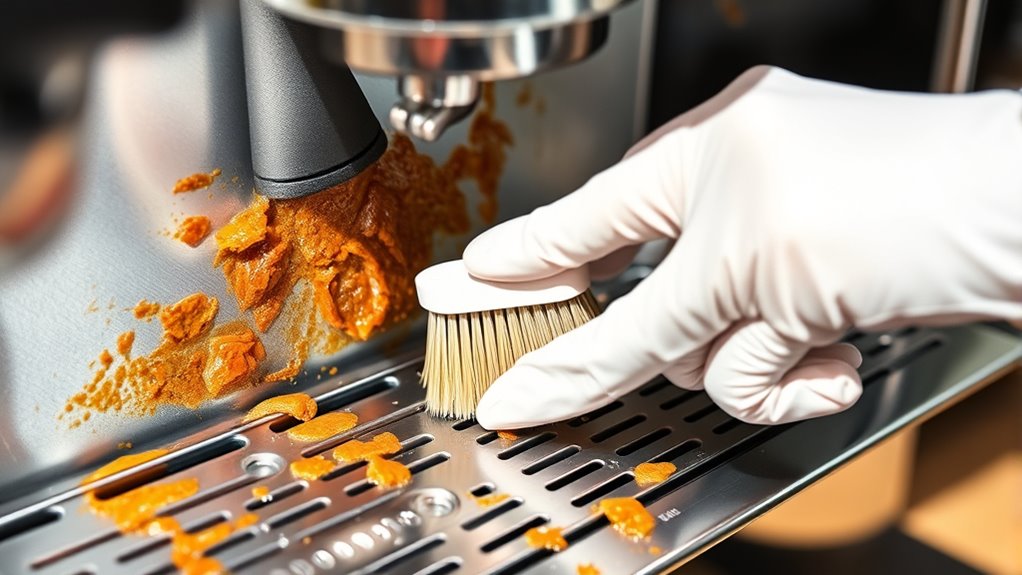
To keep your appliances free of sugar and fat buildup, establishing a regular maintenance routine is essential. Schedule weekly quick cleans to prevent residue from accumulating, which helps maintain ideal appliance performance. Deep cleaning should be done monthly, using appropriate cleaners to remove stubborn deposits. Regular upkeep extends your appliance’s lifespan by reducing wear and tear caused by buildup. It also boosts energy efficiency, as appliances work more smoothly without obstruction. Wipe down surfaces, clean filters, and check for any signs of buildup frequently. By staying consistent with these maintenance tasks, you’ll prevent future problems and keep your appliances running efficiently. Simple routines save you time and money, ensuring your appliances stay in top shape and energy-efficient for years to come.
When to Call a Professional for Appliance Cleaning
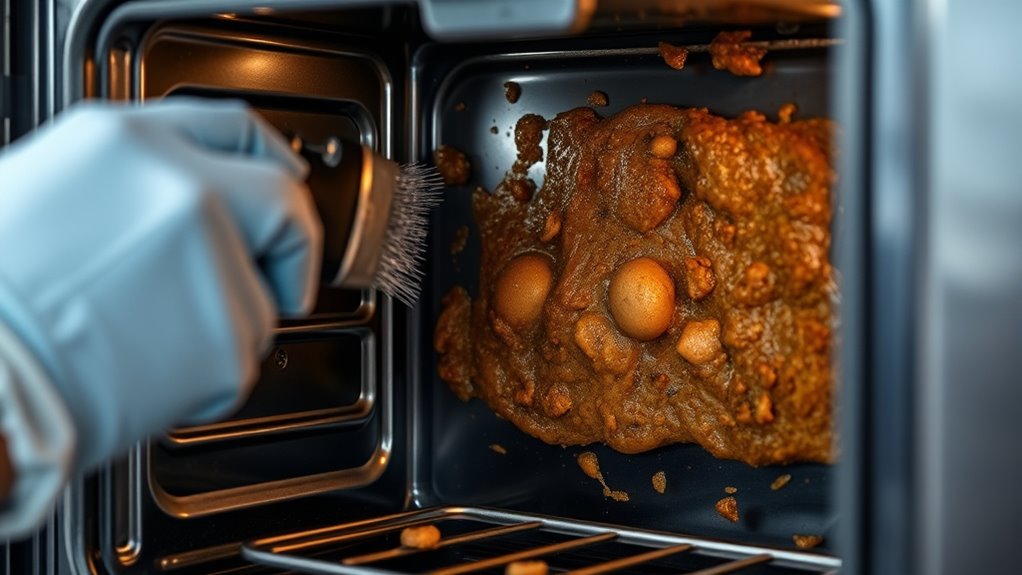
While regular cleaning helps keep your appliances running smoothly, there are times when professional help becomes necessary. If stubborn sugar or fat build-up persists despite your efforts, it’s time to call in experts. Seek professional help when you notice:
- Severe grease or sugar accumulation that won’t respond to DIY methods
- Persistent odors or smoke during appliance use
- Visible mold or water damage from appliance leaks
- Unusual noises or malfunctioning components
- Emergency cleaning needs to prevent appliance failure or safety hazards
Professional cleaning guarantees deep sanitation and maintenance, preventing long-term damage. Don’t delay emergency cleaning if your appliance shows signs of serious clogging or malfunction—timely intervention can save you money and keep your appliances safe and efficient.
Frequently Asked Questions
Can Homemade Solutions Effectively Remove Stubborn Sugar and Fat Residues?
Yes, homemade solutions can effectively remove stubborn sugar and fat residues. Natural remedies like vinegar, baking soda, and lemon are powerful and eco-friendly solutions that break down stubborn buildup. You just need to mix them properly and apply them to the affected areas. With regular use, these eco-friendly solutions help keep your appliances clean without harsh chemicals, making your cleaning routine safer for your family and the environment.
Are There Specific Cleaning Methods for Different Appliance Types?
Yes, you should use appliance-specific techniques and surface-sensitive methods to clean different appliances. For example, use a gentle scrub for glass surfaces and avoid harsh chemicals on stainless steel. For your oven, a baking soda paste works well, while a vinegar solution is ideal for microwaves. Always check manufacturer instructions to guarantee you’re using the right approach, preventing damage and ensuring effective cleaning.
How Often Should I Clean Appliances to Prevent Buildup?
You might think your appliances stay spotless on their own, but actually, regular cleaning is key. Follow the recommended frequency recommendations—every few weeks for kitchen appliances and monthly for others—to prevent stubborn buildup. Stick to a maintenance schedule, and you’ll save time, effort, and possibly a few repair bills. It’s a small investment of your time that keeps everything running smoothly and looking great.
What Are the Safest Commercial Cleaners for Sensitive Appliance Surfaces?
You should choose eco-friendly options like enzyme-based cleaners for sensitive appliance surfaces. These cleaners are safe, effective, and gentle, reducing the risk of damage. Always read labels to verify compatibility with your appliance. Spray or apply the cleaner, then gently wipe with a soft cloth. Avoid harsh chemicals, and consider natural options like vinegar or baking soda for regular maintenance. This approach keeps your appliances clean without compromising their surfaces.
How Do I Dispose of Cleaning Waste Safely and Responsibly?
Imagine your cleaning waste as tiny, rebellious soldiers—do you just toss them into the trash or send them off to a glamorous eco-friendly disposal party? You should follow hazardous waste guidelines, ensuring chemicals don’t sneak into the environment. Always label waste, use designated containers, and take it to authorized recycling or disposal centers. That way, you keep your cleaning crusade eco-friendly, responsible, and free from mischievous environmental consequences.
Conclusion
Think of your appliances as a garden—you need to tend to it regularly to keep it thriving. By staying vigilant with routine cleaning and addressing buildup early, you prevent messes from taking root. With consistent care, your appliances will shine like a well-tended bloom, working smoothly and efficiently. Remember, a little effort today keeps the chaos at bay tomorrow. Keep nurturing your appliances, and they’ll serve you beautifully for years to come.