TL;DR

Get baking supplies delivered free with Prime
- Fast, free delivery on millions of items
- Prime Video, Amazon Music and more included
- Member-only deals all year
Officials have identified 27 Salmonella Telelkebir illnesses across 12 states in a cluster linked to oysters harvested from Virginia’s Little Wicomico River. Little Wicomico Oyster Company recalled oysters harvested Sept. 18 through Oct. 8, 2026, and Virginia temporarily closed the river to shellfish harvesting.
Public health officials have identified 27 Salmonella Telelkebir illnesses across 12 states in a cluster linked to oysters harvested from Virginia’s Little Wicomico River, according to Food Safety News, citing state and federal agencies. Little Wicomico Oyster Company has recalled oysters harvested from September 18 through October 8, 2026, and Virginia temporarily closed the affected river area to shellfish harvesting.
The Pennsylvania Department of Agriculture identified the illnesses as associated with oysters harvested from the Little Wicomico River and Little Wicomico River, Lower, by Little Wicomico Oyster Company, listed under shellfish-harvesting license VA-1421-SP. The reported count was 27 patients as of October 19. The source says patients were spread across 12 states, but does not provide the states’ case counts or say how many illnesses were confirmed through laboratory testing.
The company recalled oysters harvested during the specified period and contacted its customers. It has stopped harvesting from the affected area and is cooperating with public health officials, according to the report. The Virginia Department of Health temporarily closed the Little Wicomico River to shellfish harvesting, effective October 9, 2026.
The U.S. Food and Drug Administration and Centers for Disease Control and Prevention are investigating with relevant state authorities. FDA said it was initially notified by CDC and is assisting state officials as needed. The agencies advise restaurants and retailers not to sell or serve the recalled oysters, and consumers not to eat them. Food businesses should dispose of the product or contact their distributor to arrange destruction.
Recall Reaches Restaurants and Retailers
The reported distribution spans 17 states and the District of Columbia: California, Colorado, Connecticut, Florida, Georgia, Illinois, Maryland, Missouri, North Carolina, New Jersey, Nevada, New York, Pennsylvania, Texas and Virginia, as well as Washington, D.C. The product may have been distributed further, according to the FDA information summarized in the report. That means the harvest location alone does not identify every place where recalled oysters may have reached consumers.
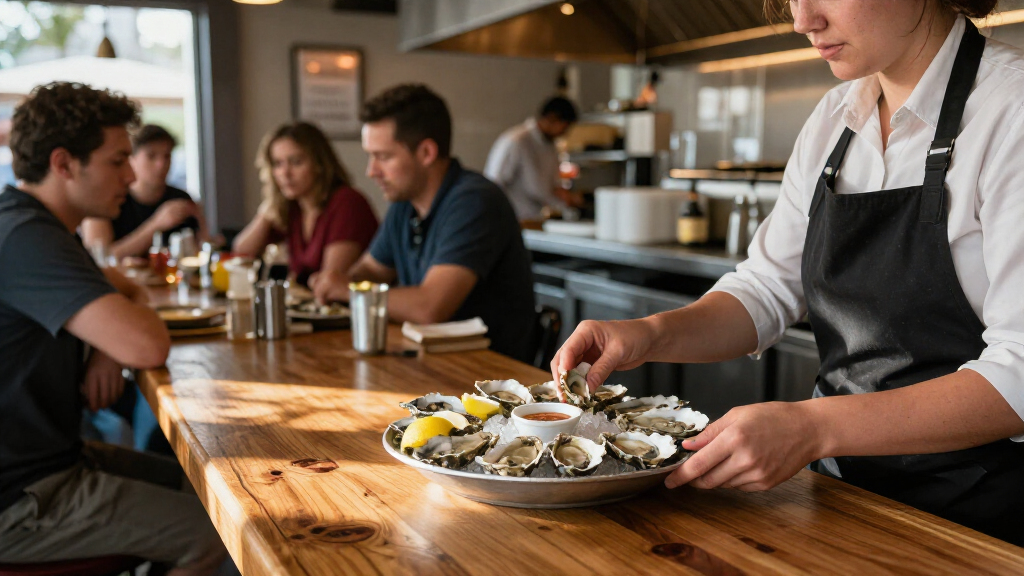
Oysters can be served raw or lightly cooked, so a recall can affect diners who may not know the seafood’s harvest source. The advisory applies to the specified company and harvest dates; it does not say that all oysters from Virginia or all oysters sold during that period are implicated. Restaurants, retailers and consumers should check supplier and product details rather than assume that an oyster is safe based on appearance. Salmonella-contaminated food may look, smell and taste normal.
The outbreak also matters because salmonellosis can be more serious for young children, older adults, pregnant people and those with weakened immune systems. The report says some patients in this outbreak required hospitalization, though it does not specify how many. Timely medical advice can help people with symptoms receive appropriate testing and care.
refrigerator seafood storage containers
As an affiliate, we earn on qualifying purchases.
As an affiliate, we earn on qualifying purchases.
Harvest Dates and Closure Timeline
The recall covers oysters harvested from the Little Wicomico River during a defined window: September 18 to October 8, 2026. Virginia’s temporary closure took effect on October 9, the day after the end of that harvest window. The closure applies to shellfish harvesting in the affected river area; the available report does not give a reopening date.
The case cluster involves the specific Salmonella type Salmonella Telelkebir. Pennsylvania officials linked the illnesses to oysters from the named growing area and company, while CDC, FDA and state agencies are investigating the cluster. These details distinguish the outbreak notice from a general warning about seafood: the current advisory identifies a product, harvest dates and harvest location.
Salmonella symptoms can include diarrhea, abdominal cramps and fever, typically beginning 12 to 72 hours after eating contaminated food, according to the source material. Healthy adults often recover within four to seven days, but severe diarrhea can require hospitalization. People who ate the recalled oysters and become ill are advised to seek medical attention and tell their clinician about the possible exposure, since specific testing may be needed.
“The company has stopped harvesting from the affected area and is cooperating with public health officials.”
— Little Wicomico Oyster Company
As an affiliate, we earn on qualifying purchases.
Case Details Still Developing
The available report does not identify how many of the 27 patients were hospitalized, when each became ill, or whether any deaths have been reported. It also does not provide a state-by-state breakdown, the number of people exposed, or the total quantity of oysters recalled. The case total is dated October 19, 2026, and may change as the investigation continues.
Officials have linked the cluster to oysters harvested in the named area by the company, but the source material does not explain the precise contamination route. It also does not say whether investigators have isolated Salmonella from product or environmental samples, or whether additional products or harvest dates could be added to the recall. The advisory’s warning that oysters may have been further distributed means the full reach of the product is not yet clear.
As an affiliate, we earn on qualifying purchases.
Agencies Continue Tracing Oysters
CDC, FDA and state authorities are continuing to investigate the illnesses and the oyster distribution chain. The company has stopped harvesting in the affected area, while Virginia’s temporary closure remains in effect under the information provided. Officials have not announced when harvesting might resume.
Restaurants and retailers should check inventory and supplier records for the company, harvest area and dates, then discard the recalled oysters or coordinate destruction through their distributor. Consumers should not eat oysters matching the recall details. Anyone who ate them and develops symptoms should contact a health professional and mention the possible Salmonella exposure. Further updates could clarify the case count, the product’s distribution and the investigation’s findings.
As an affiliate, we earn on qualifying purchases.
Key Questions
Which oysters are included in the recall?
The recall covers Little Wicomico Oyster Company oysters harvested from the Little Wicomico River from September 18 through October 8, 2026. The company is identified by license number VA-1421-SP.
Where were the recalled oysters distributed?
The FDA information cited in the report lists California, Colorado, Connecticut, Florida, Georgia, Illinois, Maryland, Missouri, North Carolina, New Jersey, Nevada, New York, Pennsylvania, Texas, Virginia and Washington, D.C. The oysters may have been distributed further.
What should restaurants and consumers do?
Restaurants and retailers should not serve or sell oysters matching the recall details; they should discard them or contact their distributor to arrange destruction. Consumers should not eat them. Oysters that look or smell normal can still carry Salmonella.
What symptoms should people watch for?
Symptoms can include diarrhea, abdominal cramps and fever, often beginning 12 to 72 hours after exposure. Anyone who ate the recalled oysters and becomes ill should seek medical advice and report the possible exposure. Severe illness is more likely among young children, older adults, pregnant people and those with weakened immune systems.
Is the Little Wicomico River open to shellfish harvesting?
Virginia temporarily closed the river to shellfish harvesting effective October 9, 2026. The source material does not provide a reopening date or say that the closure has been lifted.
Source: rss
Halloween Picks
halloween
As an affiliate, we earn on qualifying purchases.