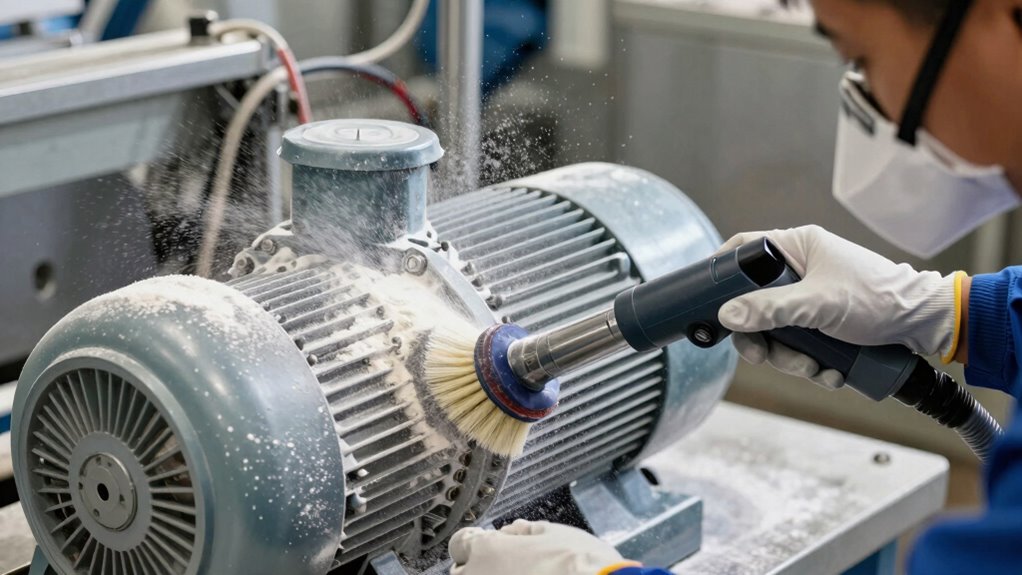

To clean flour dust safely around motors, you should first turn off and disconnect the equipment, then improve ventilation and seal off the area to contain dust. Use a vacuum with a HEPA filter or damp cloths to avoid dispersing particles, and always wear PPE like masks, goggles, and gloves. Regularly inspect and maintain your equipment to prevent buildup, and follow proper safety protocols—continue to explore more effective dust management tips for a safer workspace.

Get baking supplies delivered free with Prime
- Fast, free delivery on millions of items
- Prime Video, Amazon Music and more included
- Member-only deals all year
Key Takeaways
- Use sealed vacuum systems or damp cloths instead of dry sweeping to prevent dust dispersion.
- Ensure proper ventilation and airflow management to contain airborne flour dust during cleaning.
- Wear appropriate PPE, including respirator masks, goggles, and gloves, to protect against inhalation and contact risks.
- Regularly inspect and clean motor vents, filters, and surfaces to prevent dust buildup and reduce fire hazards.
- Avoid using compressed air; instead, employ fire-resistant cleaning tools and maintain static grounding to prevent sparks.
HEPA filter vacuum cleaner for dust removal
As an affiliate, we earn on qualifying purchases.
As an affiliate, we earn on qualifying purchases.
Recognize the Risks of Flour Dust in Your Workspace
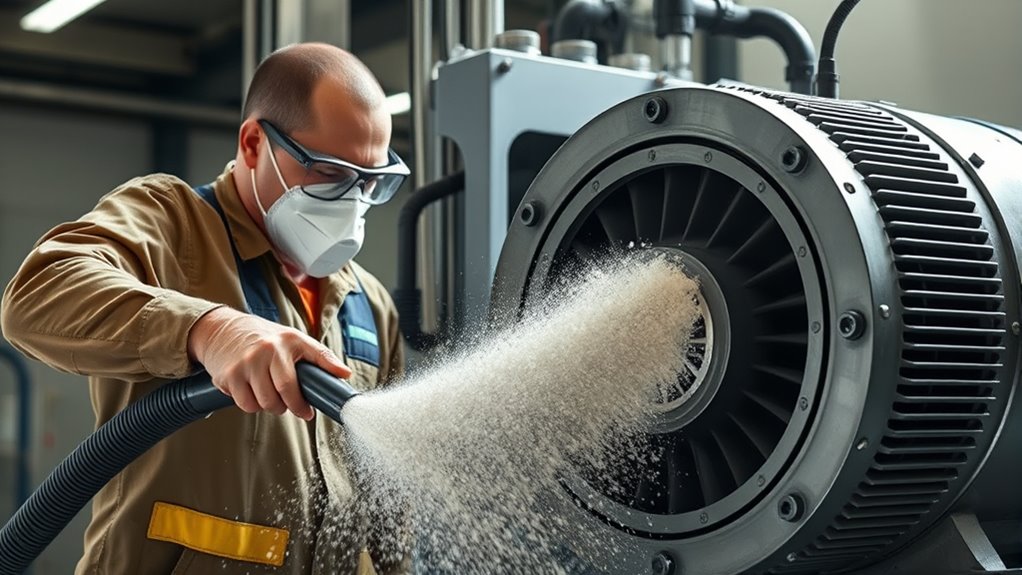
Flour dust in your workspace can pose serious health and safety risks if left unmanaged. One major concern is flammable hazards; fine flour particles can easily ignite if exposed to sparks or static electricity, leading to fires or explosions. Additionally, inhaling flour dust presents respiratory risks, especially with prolonged exposure. You may experience coughing, wheezing, or more severe respiratory issues over time. Recognizing these dangers is vital for maintaining a safe environment around motors and processing areas. Keep in mind that even small amounts of dust can accumulate quickly, increasing the risk of ignition and health problems. Proper dust management is essential to minimize these risks and ensure a safer workspace. Incorporating fire-resistant materials in your workspace can further reduce the risk of fire spreading in case of dust ignition. Regular cleaning and dust control measures can significantly decrease the amount of airborne flour particles, reducing both fire and health hazards. Implementing effective ventilation systems can also help evacuate airborne dust and improve overall safety conditions. Furthermore, understanding the hazards of dust accumulation enables better planning and preventive measures to protect both workers and equipment.
portable air purifier with HEPA filter
As an affiliate, we earn on qualifying purchases.
As an affiliate, we earn on qualifying purchases.
Get Your Area Ready for Safe Dust Removal
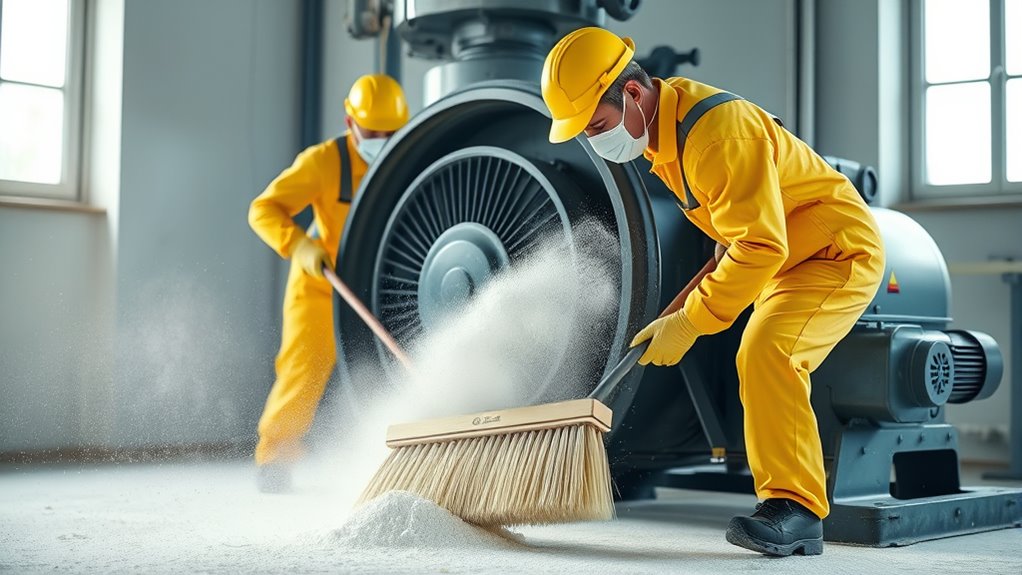
Before you begin removing flour dust, it’s essential to prepare your workspace to guarantee safety. Start with work surface preparation by clearing clutter and sealing off nearby areas to contain dust. This minimizes spread and exposure. Next, focus on ventilation improvements; ensure your workspace has proper airflow by opening windows or using exhaust fans. Good ventilation helps disperse airborne flour dust, reducing inhalation risks. Consider installing portable air purifiers with HEPA filters to further improve air quality. Remove any unnecessary items that could trap dust, and cover or turn off nearby equipment to prevent dust from settling elsewhere. Properly preparing your work surface and enhancing ventilation create a safer environment, making dust removal more effective and reducing the risk of dust-related hazards around motors. Additionally, understanding the importance of filtration can significantly reduce airborne particles, improving overall dust management. Incorporating dust containment measures can further enhance safety by minimizing dust escape during cleanup. Ensuring proper airflow dynamics can also help prevent dust from settling in hard-to-reach areas. Incorporating ventilation strategies tailored to your workspace can optimize dust dispersal and safety.
respirator mask for flour dust protection
As an affiliate, we earn on qualifying purchases.
As an affiliate, we earn on qualifying purchases.
Wear the Right PPE to Protect Yourself
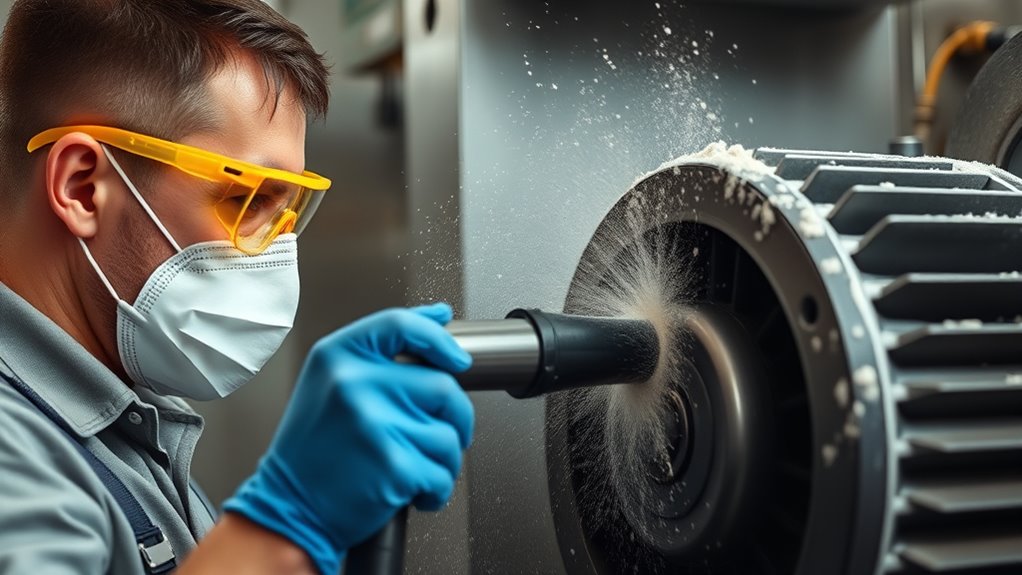
Protecting yourself during flour dust removal starts with wearing the right personal protective equipment (PPE). Your safety gear shields you from inhaling fine particles and prevents skin contact. Choose equipment suited for dust and potential contaminants. Here’s a basic guide:
| PPE Type | Purpose |
|---|---|
| Respirator Mask | Filters airborne flour dust |
| Safety Goggles | Protects eyes from dust and debris |
| Gloves | Shields skin from irritants |
| Coveralls | Prevents dust from settling on clothing |
| Ear Protection | Reduces noise exposure during cleaning |
Using proper safety gear minimizes health risks and enhances your safety during flour dust removal, ensuring you stay protected throughout the process. Proper piercing care and hygiene are also important to prevent irritation or infection if you have any skin exposure. Being aware of toilet maintenance and repairs can help you address any issues that arise during cleaning routines involving dust exposure. Additionally, understanding dust control measures can further improve your safety by reducing airborne particles in your workspace. Implementing ventilation techniques can significantly decrease dust concentration, creating a safer environment. Incorporating AI-powered safety monitoring can help identify potential hazards in real-time, further enhancing your safety protocols.
As an affiliate, we earn on qualifying purchases.
Use Effective Techniques to Clean Flour Dust Safely
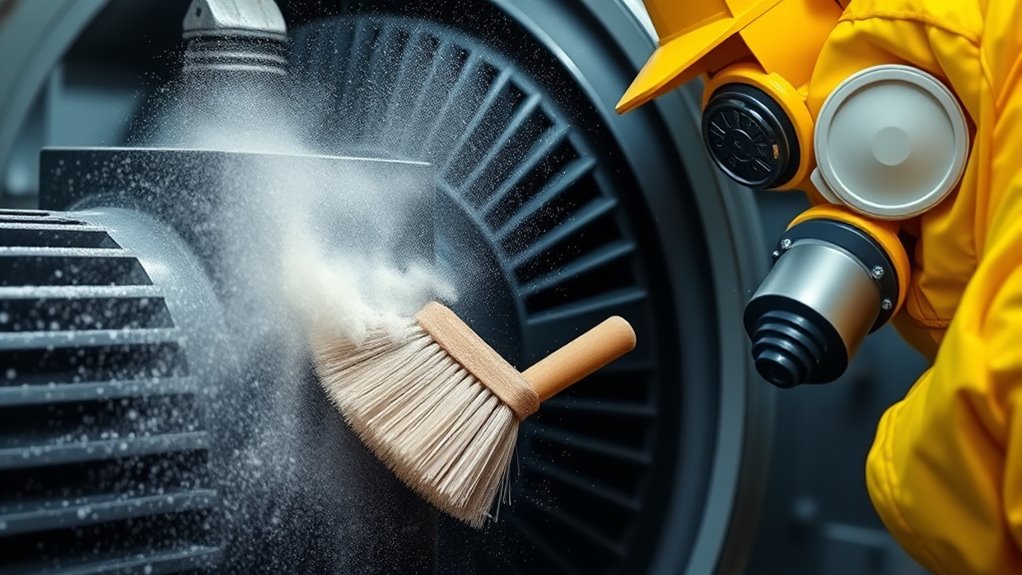
To clean flour dust safely, it’s essential to use techniques that minimize airborne particles and prevent contamination. Start by implementing dust containment measures, such as using sealed vacuum systems designed for dust removal, rather than dry sweeping or compressed air. These methods keep dust from spreading into the air and settling on other surfaces. Establish a strict cleaning schedule to ensure dust doesn’t accumulate over time. Regularly wipe down equipment and surrounding areas with damp cloths or specialized cleaning tools that trap dust rather than dispersing it. Continuous support throughout the project lifecycle ensures consistent safety practices. Always clean from higher surfaces downward to prevent recontamination. Consistent application of these techniques reduces the risk of flour dust becoming airborne, protecting both your equipment and workers from potential hazards. For optimal safety, consider air quality management strategies to further reduce airborne particles during cleaning. Incorporating proper ventilation systems can also significantly improve overall dust control in the workspace. Additionally, understanding the electric power generation principles behind equipment can help select appropriate tools that generate less dust during operation, further enhancing safety measures. Using proper cleaning tools designed specifically for dust removal can further improve safety and efficiency during cleanup.
Keep Your Equipment Safe With Regular Maintenance
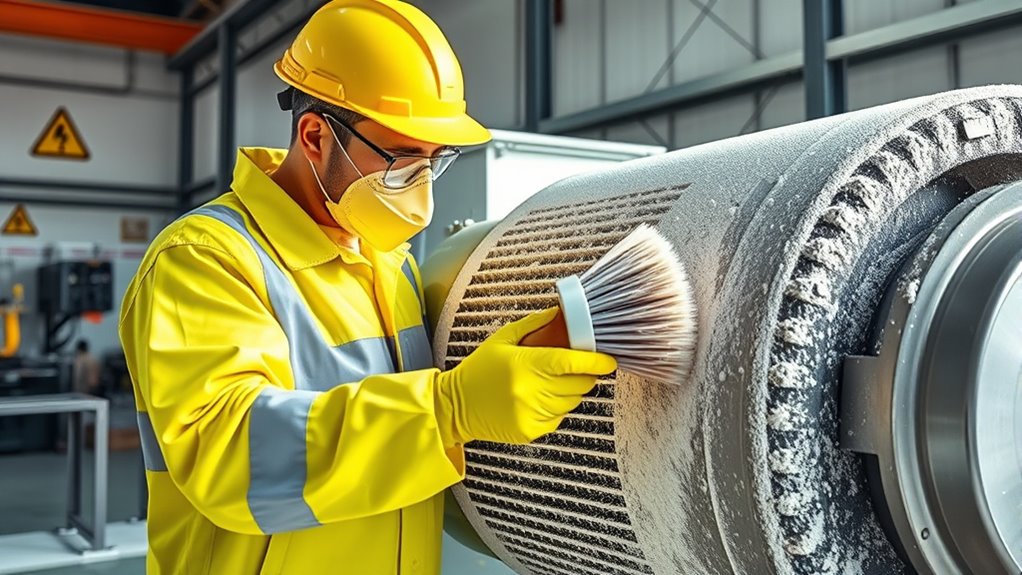
Regular maintenance is essential for keeping your equipment safe and functioning efficiently. Regularly inspecting your machinery helps catch issues like dust accumulation early, preventing potential hazards. By scheduling consistent checks, you ensure dust build-up doesn’t interfere with motor operation or cause overheating. Here are three key steps to maintain your equipment:
- Perform thorough equipment inspections to identify signs of dust accumulation or wear.
- Clean dust from vents, filters, and motor surfaces to prevent blockages.
- Lubricate moving parts to reduce friction and avoid dust-related damage.
- Maintain proper shop layout and organization to facilitate easier cleaning and reduce dust buildup. Implementing organized dust control measures can further minimize airborne particles that settle on machinery surfaces, and choosing appropriate air filtration systems can improve overall dust management. Additionally, educating staff about dust prevention practices can help maintain a cleaner and safer workspace. Incorporating regular cleaning schedules ensures ongoing removal of dust before it accumulates to hazardous levels.
Consistent maintenance not only minimizes fire risks but also prolongs your equipment’s lifespan. Staying proactive with inspections and cleaning helps you avoid costly repairs and keeps your workplace safe.
Train Your Team on Flour Dust Safety Protocols
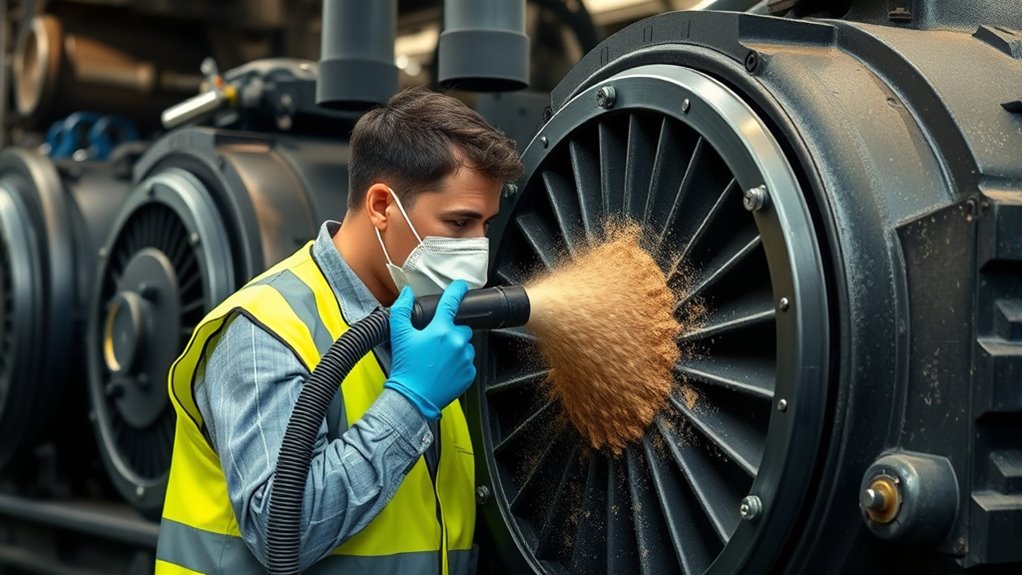
Training your team on flour dust safety protocols is crucial for preventing accidents and maintaining a safe workplace. Proper handling of combustible dust is critical, as dust accumulation can ignite if mishandled. You should educate your team on recognizing dust buildup, avoiding static electricity, and using proper cleaning methods that minimize dust dispersion. Emphasize fire prevention strategies, such as grounding equipment and controlling ignition sources. Regular training ensures everyone understands the hazards associated with flour dust and their role in safety procedures. When your team knows how to handle combustible dust safely, you reduce the risk of fires and explosions around motors. Consistent reinforcement of these protocols creates a safety-conscious environment that protects workers and equipment alike. Understanding the importance of dust management strategies can further enhance safety practices and reduce hazards.
Frequently Asked Questions
What Are the Long-Term Health Effects of Flour Dust Exposure?
Exposure to flour dust over time can lead to serious health issues. You might develop respiratory diseases like asthma or chronic inflammation in your lungs. Long-term inhalation increases the risk of occupational asthma, which causes breathing difficulties. Consistent exposure can also cause allergic reactions and lung scarring. To protect your health, always wear proper masks and work in well-ventilated areas, reducing the risk of these long-term effects.
How Often Should I Inspect My Equipment for Flour Dust Buildup?
Think of your equipment like a garden; regular inspection is key to healthy growth. You should check for flour dust buildup at least weekly, especially in high-use areas. This inspection frequency helps catch dust accumulation early, preventing potential hazards. Incorporate routine equipment maintenance into your schedule to keep machinery running smoothly and safely. Staying vigilant ensures dust doesn’t become a silent threat, safeguarding both your equipment and your health.
Are There Specific Ventilation Systems Recommended for Flour Dust Areas?
You should install specialized industrial filtration systems designed for flour dust to effectively capture particles. Ventilation systems must prioritize airflow optimization to guarantee dust is quickly removed from the air, reducing explosion risks and health hazards. Look for systems with high-efficiency filters and proper airflow design, and regularly maintain them to keep your workspace safe. Proper ventilation is vital for controlling flour dust in your environment.
Can I Use Household Cleaning Tools to Remove Flour Dust Safely?
Think of household cleaning tools as a gentle brush, not a bulldozer, when it comes to flour dust. While they can help with dust removal, you need to be cautious. Use a damp cloth or a vacuum with a HEPA filter to safely remove flour dust, avoiding stirring it into the air. Never use compressed air or dry sweeping, as these can spread dust and pose a hazard to motors and your health.
What Emergency Procedures Should Be in Place for Flour Dust-Related Incidents?
You should have emergency procedures that focus on fire prevention and spill containment. If a flour dust fire occurs, activate your fire alarm and use a Class B fire extinguisher, avoiding water, which can worsen dust fires. Contain spills immediately to prevent dust from spreading, and evacuate if smoke or fumes are present. Regular training ensures everyone knows how to respond quickly and safely to minimize hazards.
Conclusion
By following these safety steps, you’ll gently clear away the delicate whispers of flour dust, ensuring your workspace remains a peaceful haven. With careful attention and the right precautions, you create an environment where safety blossoms like a well-tended garden. Keep your team’s well-being at the heart of every action, and watch as your workspace remains a sanctuary of cleanliness and safety—where every breath is as fresh as the morning dew.
Evergreen bestsellers Picks
bestsellers
As an affiliate, we earn on qualifying purchases.