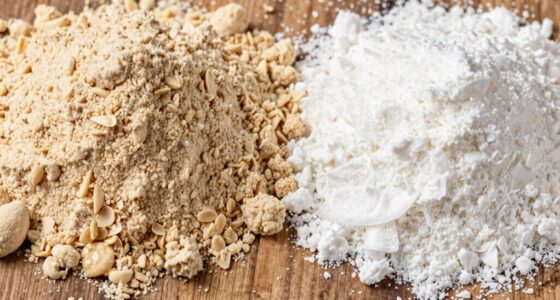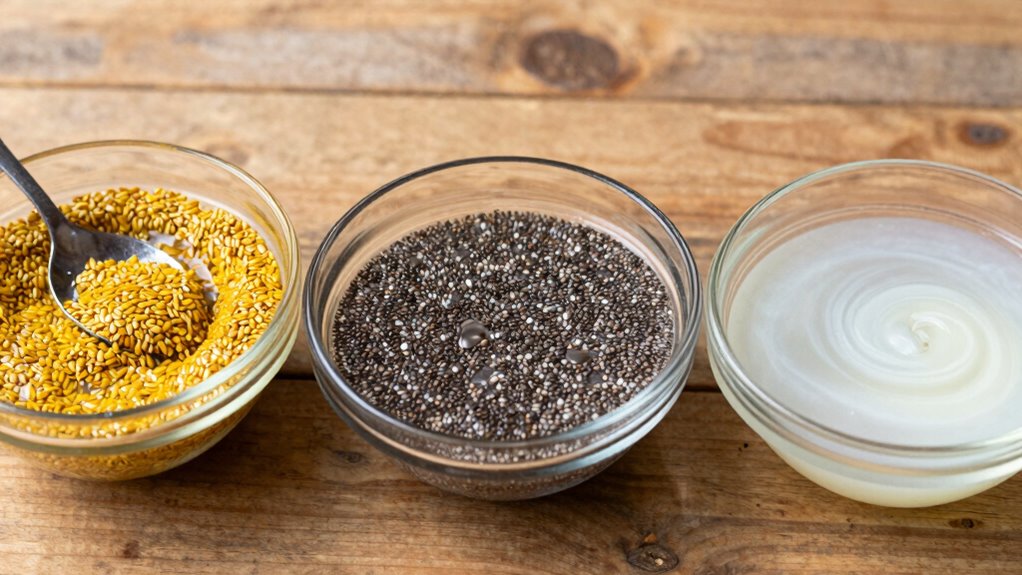

When choosing vegan egg replacers, flax and chia seeds act as effective binders when ground and mixed with water, offering nutty flavors and extra nutrients like omega-3s and fiber. Chia tends to form a thicker gel, great for puddings and smoothies, while flax creates a slightly earthier taste suited for baking. Aquafaba, the liquid from cooked beans, provides a light, airy foam perfect for meringues and mousses. If you keep exploring, you’ll discover how each can best enhance your recipes.
Key Takeaways
- Flaxseeds and chia seeds are both nutritious, plant-based binders rich in omega-3s, fiber, and protein, with chia containing more calcium.
- Ground flaxseeds create a gel suitable for baking, while chia seeds form a thicker gel ideal for smoothies and puddings.
- Aquafaba, the liquid from cooked beans, provides light, airy volume and structure, especially in meringues and mousses.
- Flax has a nutty flavor and higher lignans; chia adds crunch and more calcium, whereas aquafaba contributes minimal flavor and nutrition.
- The choice depends on desired texture, flavor, and nutritional benefits—flax and chia for binding and nutrients, aquafaba for aeration and structure.
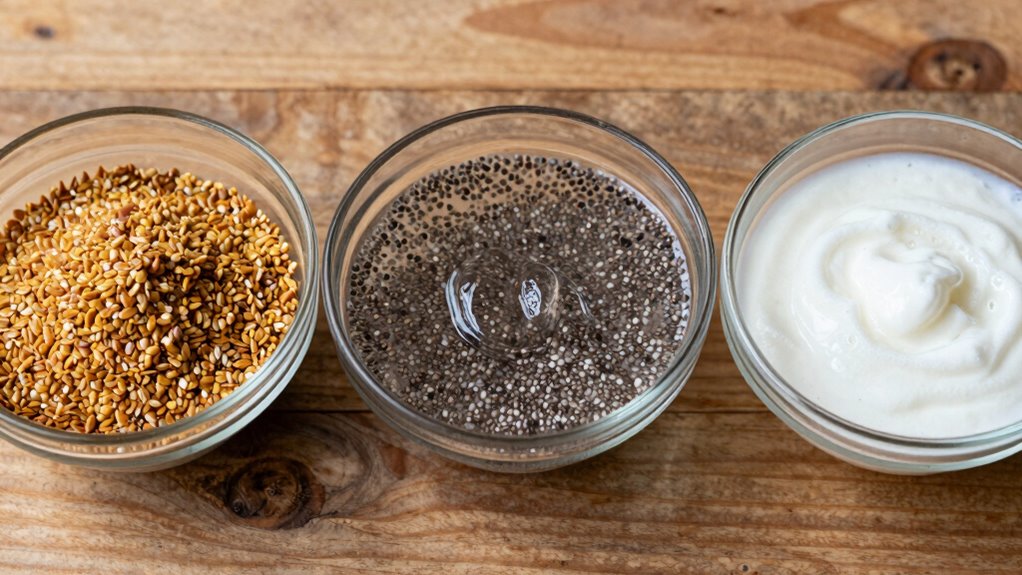
Are you looking for effective ways to replace eggs in your vegan recipes? If so, you’re likely exploring options like flaxseeds, chia seeds, or aquafaba. Each of these egg replacers has distinct qualities that can influence your dish’s texture, flavor, and nutritional profile. Understanding their nutritional comparisons and culinary applications can help you choose the best fit for your recipe. Flaxseeds and chia seeds are both excellent sources of omega-3 fatty acids, fiber, and plant-based protein, making them nutritious options. However, flaxseeds tend to be higher in lignans, which have antioxidant properties, while chia seeds deliver a slightly higher amount of fiber per serving. Nutritionally, they’re quite comparable, but chia seeds often contain more calcium and antioxidants, which can be beneficial if you’re aiming to boost mineral intake in your diet.
Flax and chia seeds are nutritious egg replacers rich in omega-3s, fiber, and antioxidants, with subtle flavor differences.
In the kitchen, flax and chia seeds are versatile but excel in different contexts. Flaxseeds are typically ground into a meal to activate their binding properties, making them suitable for baking cookies, muffins, and pancakes. When mixed with water, they create a gel-like consistency that mimics the binding and moistening effects of eggs. Chia seeds, on the other hand, absorb liquid quickly and form a gel that’s slightly thicker and more gelatinous than flax. This makes chia an ideal egg substitute in recipes like smoothies, puddings, or overnight oats. In baking, chia works well for recipes requiring a more substantial binding agent, such as bread or muffins. Both seeds impart a mild nutty flavor, but flax has a slightly earthier taste, while chia adds a subtle crunch if not ground.
Aquafaba, the liquid from cooked chickpeas or other legumes, is quite different from flax and chia. It’s mostly water with some protein and starch, giving it a light, airy quality perfect for whipped meringues or mousses. Nutritionally, aquafaba is low in calories and protein, but it’s valued mainly for its functional properties rather than nutrient content. Culinary applications for aquafaba are diverse—it can replace egg whites in recipes like macarons, vegan mayonnaise, or cocktails. Unlike ground flax or chia, aquafaba doesn’t contribute much flavor or nutrition but excels in creating volume and structure.
Ultimately, your choice depends on what you need from your egg replacer. If you want a nutritious, fiber-rich option for baking, ground flax or chia seeds are excellent. If you’re after a light, airy component for desserts or meringues, aquafaba is the way to go. Each has unique strengths, so experimenting with them can help you discover which works best for your specific recipes.

Pure Original Ingredients Flaxseed Meal Vegan Egg Replacement, Nutritional (1 Pound)
Pure Original Ingredients Flaxseed Meal in a resealable bag
As an affiliate, we earn on qualifying purchases.
As an affiliate, we earn on qualifying purchases.
Frequently Asked Questions
Can Vegan Egg Replacers Affect Baking Times?
Yes, vegan egg replacers can affect baking times. When you use flax, chia, or aquafaba, you might need to make baking time adjustments because they can change the batter’s moisture and structure. Keep recipe timing considerations in mind, as some baked goods may take slightly longer or shorter to cook through. Monitoring your baked items closely guarantees you achieve the perfect texture, regardless of the egg replacer used.
Are There Flavor Differences Between Flax, Chia, and Aquafaba?
Think of flax, chia, and aquafaba as three different artists painting your baked goods’ flavor profiles. Flax has a mild, nutty taste, chia offers a subtle earthiness, and aquafaba is nearly flavorless, blending seamlessly. Taste differences are minimal, but these slight nuances can influence your final product’s aroma. You’ll find aquafaba the most neutral, while flax and chia add gentle, distinctive hints to your recipes.
How Do Storage Needs Vary for Each Replacer?
You should store flax and chia seeds in an airtight container in a cool, dark place to maintain freshness and extend shelf life. Ground versions should be refrigerated to prevent spoilage. Aquafaba, stored in an airtight container in the fridge, lasts about a week. Proper storage conditions are essential for all three, as they affect shelf life and prevent mold or rancidity, ensuring your vegan egg replacers stay effective and safe to use.
Can These Replacers Be Used in Savory Dishes?
Yes, you can use flax, chia, and aquafaba in savory applications. Flax and chia work well as binders in veggie burgers or savory muffins, adding a subtle flavor that blends easily. Aquafaba can mimic egg whites in dishes like vegan meringues or creamy sauces. Just consider flavor compatibility; flax and chia have mild nutty tastes, while aquafaba’s neutral profile makes it versatile for savory recipes.
Are There Allergy Considerations for Each Type?
You should consider allergy sensitivities and cross-reactivity concerns when choosing vegan egg replacers. Flax and chia seeds can trigger sensitivities if you have nut or seed allergies, so check labels carefully. Aquafaba, made from chickpeas, may cause reactions in those with legume sensitivities. Always consult with your healthcare provider if you’re unsure, as cross reactivity varies between individuals and can sometimes cause unexpected allergic responses.

Navitas Organics Chia Seeds – For Chia Pudding, Smoothies, Baking, Salads & More – Omega 3, Fiber, Minerals – USDA Organic, Non GMO, Kosher, Gluten Free, Keto (16oz. Bag, 15 Servings)
SALVIA HISPANICA: Chia seeds are harvested from a variety of mint native to South and Central America, where…
As an affiliate, we earn on qualifying purchases.
As an affiliate, we earn on qualifying purchases.
Conclusion
Curious if any vegan egg replacer truly mimics eggs perfectly? While flax, chia, and aquafaba each have unique strengths, no substitute can perfectly replicate that classic egg texture and flavor. Some believe aquafaba is the closest, thanks to its whipped consistency, but recent research suggests flax and chia can come close in binding and moisture. Experimenting with these options might surprise you—perhaps the secret isn’t in mimicking eggs but in embracing new flavors and textures.

Aquafaba Powder (12oz) – Aquafaba For Cocktail Foamer and Meringues | Vegan Egg Replacer for Baking | 120 Egg Equivalent | Plant-Based, Gluten-Free, Vegan Meringue Powder | Shelf Stable Egg Substitute
Replaces 120 Eggs – One 12oz bag replaces up to 120 eggs. Perfect for both home or food…
As an affiliate, we earn on qualifying purchases.
As an affiliate, we earn on qualifying purchases.

Just Egg, Plant-Based, 16 Fl Oz
5 grams of protein per serving
As an affiliate, we earn on qualifying purchases.
As an affiliate, we earn on qualifying purchases.