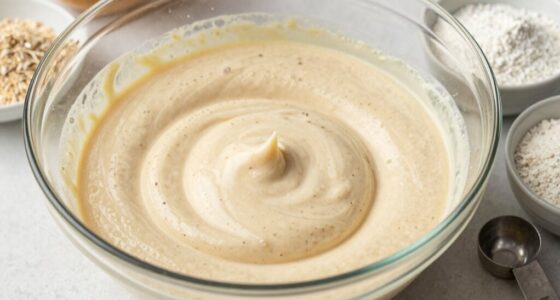
To prevent vegan buttercream from separating, make sure you choose plant-based fats designed for baking and add them gradually at room temperature. Mix thoroughly but avoid overmixing, which can cause instability. Incorporate liquids slowly to maintain a smooth texture and consider using stabilizers like cornstarch. Keep an eye on ingredient temperatures and chill if needed. Following these steps closely can help you create a flawless, stable frosting every time. Keep going to learn more tips for perfecting your buttercream.
Key Takeaways
- Use room temperature, stable fats like vegan margarine or shortening, gradually incorporated for proper emulsification.
- Beat fats thoroughly before adding powdered sugar and add sugar gradually to prevent separation.
- Incorporate liquids slowly in small amounts, mixing well after each addition to maintain a smooth, stable texture.
- Avoid overmixing to prevent graininess and separation; follow recipe instructions carefully.
- If frosting separates, chill briefly and re-whip to re-emulsify and restore stability.

Have you ever wondered if you can enjoy rich, creamy frosting without using dairy? The good news is, you absolutely can, but achieving that perfect, stable vegan buttercream requires some attention to detail. One of the most common issues bakers face is separation, where the frosting becomes greasy or starts to break apart. To prevent this, understanding stabilizing techniques is essential. These methods help maintain the smooth, fluffy texture you desire, preventing the mixture from splitting or curdling.
First, ensure you’re using the right fats—plant-based butter or margarine specifically designed for baking works best. When you incorporate these fats, do so gradually and at the right temperature. If the fats are too warm or too cold, they can cause the mixture to seize or separate. Using room temperature fats allows for better emulsification. When mixing, start with a stable base, like vegan margarine or shortening, and beat it thoroughly before adding powdered sugar gradually. This helps create a stable emulsion, reducing the chance of separation.
Use room temperature vegan fats and add gradually for a stable, creamy frosting.
Another key stabilizing technique involves adding liquids carefully. If your frosting is too runny, it might be because the liquids, such as plant-based milk or vanilla, are not integrated properly. Incorporate small amounts at a time, mixing thoroughly before adding more. This slow addition prevents the mixture from becoming too thin, which can lead to separation. Additionally, using cornstarch or arrowroot powder can help thicken the frosting and stabilize the emulsion, especially if you’re making a more whipped or fluffy buttercream.
Avoid common mistakes that can sabotage your efforts. For example, overmixing the frosting can introduce excess air and cause it to become grainy or unstable. Conversely, under-mixing can leave ingredients unincorporated, leading to separation. Another mistake is adding ingredients all at once or rushing the process, which can break the emulsion. Always follow your recipe’s instructions carefully, and if your frosting starts to look greasy or separated, stop and troubleshoot immediately. Sometimes, chilling the frosting briefly can help it regain stability, or you might need to re-emulsify by whipping it again briefly.

Miss Jones Baking Organic Buttercream Frosting, Perfect for Icing and Decorating, Vegan-Friendly: Vanilla (Pack of 1)
Contains: 1 Container of Organic Frosting
As an affiliate, we earn on qualifying purchases.
As an affiliate, we earn on qualifying purchases.
Frequently Asked Questions
Can I Use Store-Bought Vegan Butter for Buttercream?
Yes, you can use store-bought vegan butter for buttercream. It’s a convenient butter substitution that works well in most recipes. Just make sure to soften the vegan butter before mixing to achieve a smooth, creamy consistency. Using store-bought vegan butter helps prevent separation, ensuring your buttercream stays stable and easy to work with. It’s a quick, reliable option that delivers great flavor and texture in your frosting.
What Is the Best Vegan Substitute for Traditional Butter?
Imagine a smooth, creamy swirl of frosting—your perfect finish. For a vegan substitute, you’ll want to choose vegan margarine or coconut oil. Vegan margarine mimics butter’s texture and flavor, making it ideal for baking and frosting. Coconut oil, on the other hand, adds richness and a subtle tropical note, but can harden in cooler weather. Both options provide great alternatives, helping you achieve that ideal, fluffy consistency.
How Long Can Vegan Buttercream Be Stored Safely?
You can store vegan buttercream safely for up to 3-4 days in the refrigerator. To maximize freshness, use airtight containers and guarantee your fridge is set to the right temperature. When storing, avoid exposing it to direct air or heat, which can cause separation. For longer storage, consider freezing it for up to a month, but always follow proper refrigeration tips and thaw it in the fridge before use.
Does Adding Salt Affect Buttercream Stability?
Salt stirs up subtle salt interaction, which can influence your buttercream’s stability. Small amounts of salt not only enhance flavor, but they also help balance sweetness and improve texture. However, too much salt can cause the buttercream to break or separate. Use sparingly and stir slowly to guarantee your buttercream stays smooth and stable. A pinch of salt can be your secret weapon for better flavor and consistency.
Can I Freeze Vegan Buttercream Without Separation Issues?
Yes, you can freeze vegan buttercream without separation issues. To do so, use proper freezing techniques like storing it in an airtight container and smoothing the surface to prevent moisture buildup. When you’re ready to use it, thaw it in the fridge overnight, then re-whip to restore its consistency. These separation prevention tips help maintain its texture, ensuring your vegan buttercream stays smooth and delicious after freezing.

Gold Seal Margarine Two Golden Quarters, 227 g (3 Boxes) | Plant-Based Butter Alternative | Non-Dairy Spread for Cooking & Baking
Plant-based butter alternative suitable for everyday use Non-dairy margarine ideal for cooking, baking, and spreading Smooth, creamy texture…
As an affiliate, we earn on qualifying purchases.
As an affiliate, we earn on qualifying purchases.
Conclusion
With a gentle touch and patience, you can master vegan buttercream that stays smooth and delightful. Think of it as tending to a delicate garden—each step nurturing its harmony. When you prevent separation, you’re ensuring every bite feels like a tender embrace, rich and flawless. So, keep practicing, and soon your frosting will dance effortlessly on your cakes, creating sweet memories without a hitch. Your sweet creations will thank you for your thoughtful care.

Oasis Supply, High Ratio Flex Icing Shortening, Zero Trans Fat, Premium Solid Shortening, Golden Style (2.5 LBS.)
ZERO TRANS FAT: Premium solid shortening specifically developed for hi-ratio cakes with zero grams trans fat using innovative…
As an affiliate, we earn on qualifying purchases.
As an affiliate, we earn on qualifying purchases.

Anthony's Organic Corn Starch, Gluten-free, Vegan and Non-GMO
USDA Certified Organic Corn Starch
As an affiliate, we earn on qualifying purchases.
As an affiliate, we earn on qualifying purchases.