
If your gluten-free baked goods turn out dense, crumbly, or flat, it’s often because gluten’s structural role is missing. Using the right flour blends, incorporating effective binders like xanthan gum, and adjusting liquid ratios can make a big difference. Overmixing or incorrect oven temps also hurt texture. By understanding these basics, you can improve your results. Explore further to discover how to create lighter, more resilient baked treats every time.
Key Takeaways
- Lack of gluten means missing the protein network that provides structure and elasticity in baked goods.
- Using incorrect or unbalanced flour blends can result in dense, crumbly textures.
- Insufficient or improper use of binding agents like xanthan gum or eggs weakens the dough’s cohesion.
- Overmixing or incorrect oven temperatures can cause poor rise and dry or dense results.
- Proper liquid ratios and moisture control are essential to achieve the desired texture in gluten-free baking.
Why Does Gluten Matter in Baking and How Does It Affect Texture?

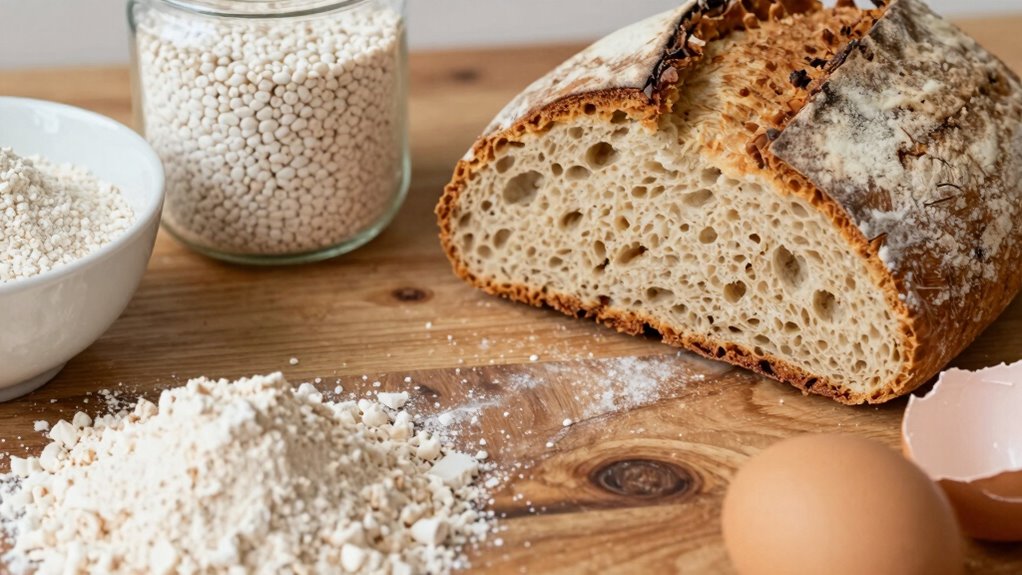
Gluten plays a crucial role in baking because it gives dough its structure and elasticity. Understanding gluten’s role helps you see why it’s essential for the perfect bake. When you mix flour with water, gluten proteins develop, creating a network that traps air bubbles. This network provides dough with its stretchiness and resilience—what we call dough elasticity. Without gluten, your baked goods would lack firmness and wouldn’t rise properly, resulting in a crumbly or dense texture. Gluten’s ability to stretch and hold gas explains why bread, for example, becomes airy and chewy. In gluten-containing recipes, this elasticity is key to achieving the desired rise and texture. Recognizing gluten’s role helps you appreciate its importance in creating baked goods with the right structure and mouthfeel. Gluten development is a crucial step in many baking processes to ensure the right texture and rise, highlighting the significance of proper dough formation for successful baking. Proper gluten structure also influences the overall crumb and chewiness of baked items.
What Are the Most Common Reasons Gluten-Free Baked Goods Fail?
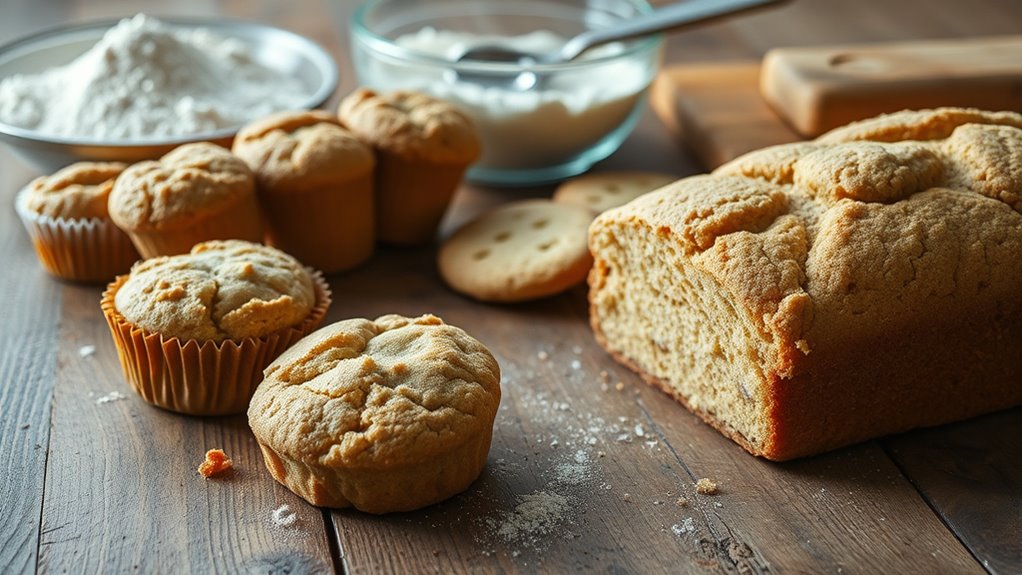
One of the main reasons gluten-free baked goods often fall short is that bakers don’t compensate for the lack of gluten’s structure-building properties. Many gluten free misconceptions lead to using too little or the wrong flour, resulting in dense or crumbly textures. Understanding baking science is essential; without gluten, baked goods lack elasticity and cohesion. Common mistakes include overmixing batters, which can deflate the batter, or not adding enough binding agents like xanthan gum or eggs. Additionally, incorrect oven temperatures or insufficient baking time can cause poor rise and texture. When you ignore these factors, your baked goods may turn out flat, dry, or crumbly. Recognizing these pitfalls helps you troubleshoot and improve your gluten-free baking results. Proper piercing care and hygiene can also prevent unexpected issues that affect texture, especially if contamination or infection occurs during baking or handling.
How Do Proper Flour Blends and Substitutes Impact Your Results?
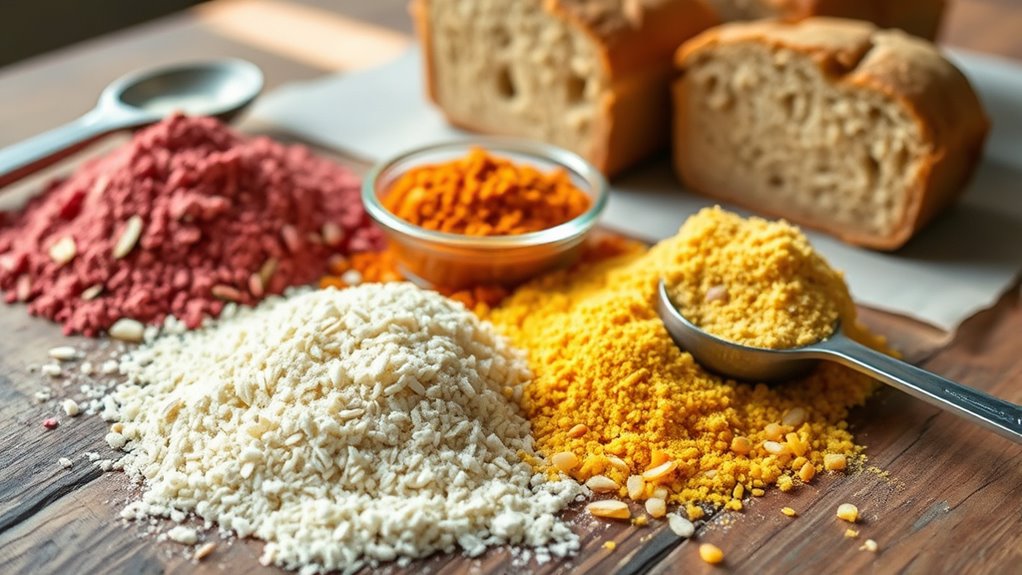
Your choice of flour blend greatly influences the texture and structure of your baked goods. Substituting different flours requires understanding their unique properties to achieve the desired results. When you select and mix flours properly, your baked items will turn out with better consistency and mouthfeel. Additionally, understanding flour properties helps you adapt recipes more confidently and avoid common pitfalls. Recognizing how gluten development affects your baked goods allows for better control over the final texture. Proper handling and mixing techniques also play a crucial role in ensuring your baked goods have the ideal dough elasticity and crumb structure.
Flour Blend Composition
Choosing the right flour blend can make or break your gluten-free baked goods. The composition of your blend directly influences the grain structure, affecting how the final product holds together and feels in your mouth. A well-balanced mix includes flours like rice, tapioca, and potato, which contribute different textures and strengths. Properly combining these flours also impacts flavor profiles, ensuring your baked goods taste appealing rather than bland or off-putting. Too much of a single flour can create a dense or crumbly texture, while the right blend yields a light, airy crumb. Understanding the importance of flour ratios and types allows you to customize your blend for optimal results. Additionally, texture development is influenced by the specific flours used, impacting mouthfeel and overall sensory experience. Incorporating proper mixing techniques can further enhance the uniformity and consistency of your gluten-free batter or dough. Recognizing the role of gluten-free flour blends in achieving the desired structure can help prevent common issues like sticking or poor rise. Furthermore, understanding the cultural influences behind traditional baking ingredients can inspire more authentic flavors and textures in your gluten-free recipes. By understanding the importance of flour ratios and types, you can tailor your blend to achieve ideal structure and flavor, setting the foundation for successful gluten-free baking.
Substituting Flours Effectively
Selecting the right flour substitutes is key to maintaining the structure and texture of your baked goods. When choosing grain alternatives, consider how each variety contributes to the overall consistency and flavor. Using the proper blend can prevent crumbly or dense results, ensuring your baked items hold together well. Substitutes like almond or coconut flour can boost flavor enhancements, adding richness and depth. It’s important to adjust ratios carefully, as different flours absorb liquids differently. Properly integrating these substitutes allows you to customize recipes without sacrificing texture. By experimenting with grain alternatives and understanding their impacts, you’ll achieve better results and more satisfying baked goods every time. Effective substitution isn’t just about replacing flour—it’s about balancing ingredients to optimize both structure and flavor.
Impact on Texture
Proper flour blends and substitutes play a crucial role in shaping the texture of your baked goods. They directly influence texture consistency and mouthfeel properties, making each bite enjoyable or disappointing. Using the right combination results in a well-structured crumb and balanced chewiness, while poor blends can lead to dense or crumbly results. Here’s a quick comparison:
| Flour Type | Texture Consistency | Mouthfeel Properties |
|---|---|---|
| Almond Flour | Moist, tender | Rich, slightly greasy |
| Tapioca Starch | Light, chewy | Slightly stretchy, elastic |
| Buckwheat Flour | Dense, hearty | Grainy, robust |
Choosing the right blend helps you control these factors, ensuring consistent, satisfying results every time. Additionally, understanding the Free Floating nature of ingredient interactions can help you better predict how different substitutions will behave during baking.
What Techniques Can Help Improve Texture in Gluten-Free Baking?
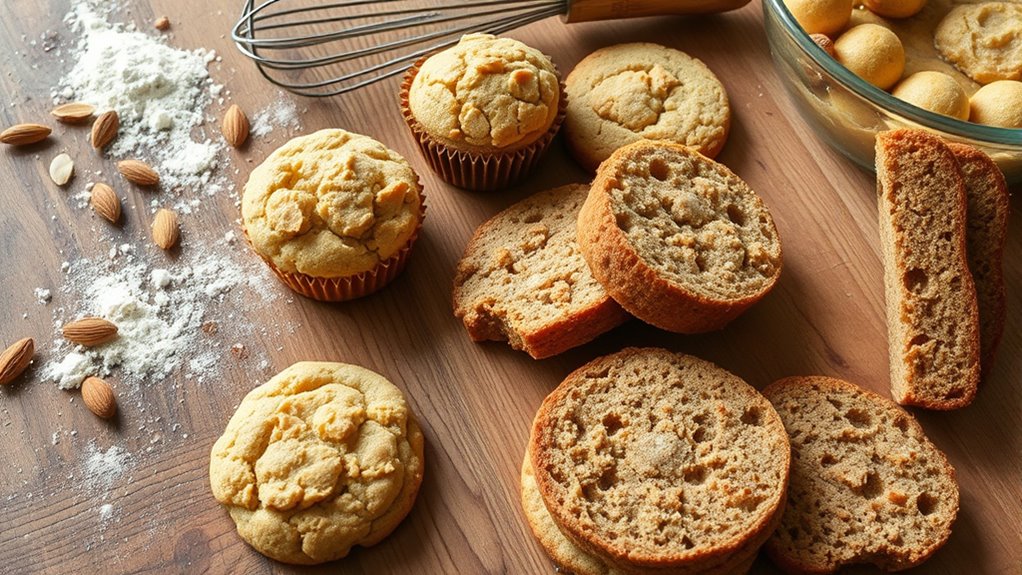
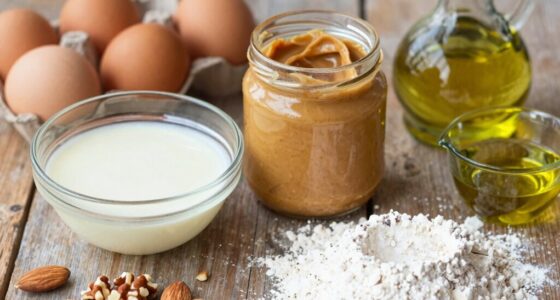
To improve texture in gluten-free baking, you should start by using the right flour blends tailored for your recipe. Incorporating binders like xanthan gum or guar gum helps create structure, while adjusting liquid ratios guarantees the batter isn’t too dry or too wet. Applying these techniques can lead to better results and a more satisfying final product. Additionally, employing modern kitchen technology such as precision temperature controls and automated mixing tools can further enhance consistency and texture in your baked goods. Being aware of maintenance costs and the importance of reliable equipment can also ensure your baking process remains smooth and efficient. For example, understanding the role of youngster choice in various contexts can help you troubleshoot issues and refine your technique for better gluten-free baked goods. Incorporating innovative baking tools can make a significant difference in achieving the desired texture.
Use Proper Flour Blends
Using the right flour blends is vital for achieving better texture in gluten-free baking. Combining rice flour, tapioca starch, and potato starch creates a balanced mix that promotes better gluten development, even without wheat. Proper flour storage is also indispensable; keep your flour in airtight containers in a cool, dark place to prevent moisture and spoilage, which can affect both texture and flavor. When you select the right blend, you help guarantee even distribution of proteins and starches, leading to a lighter, more cohesive crumb. Experimenting with different ratios allows you to find the ideal mix for your recipes. Using proper flour blends not only improves the overall structure but also enhances moisture retention, making your baked goods chewier and more satisfying. Shelf stability is another key factor, as fresh flour maintains optimal consistency and performance in your recipes. Additionally, understanding flour blending techniques can further optimize your results by ensuring consistent textures across batches.
Incorporate Binders Effectively
In gluten-free baking, incorporating binders effectively is essential for improving texture and structure. Binding agents like xanthan gum, guar gum, or psyllium husk help hold ingredients together, preventing crumbliness. To maximize their benefits, add binders gradually and evenly distribute them throughout your dry ingredients. This ensures consistent moisture retention and improves overall cohesiveness. Additionally, using the right amount of binder is key—too little results in crumbly baked goods, while too much can create a gummy texture. Mix binders thoroughly into your flour blend before adding liquids. Proper incorporation helps trap moisture, keeping your baked goods moist and tender. Incorporating precise measurements of binders can make a significant difference in achieving the desired texture. Understanding airflow around the unit can also help maintain optimal baking conditions for better results. With careful use of binding agents, you’ll notice a significant improvement in the texture and structure of your gluten-free baked treats.
Adjust Liquid Ratios
Adjusting liquid ratios is a key step in improving the texture of gluten-free baked goods. Too much moisture can make items soggy, while too little leads to dryness and crumbliness. To get it right, experiment with different liquid amounts and observe how your dough or batter responds. Proper moisture control guarantees better structure and tenderness. Remember, gluten-free flours vary in absorption, so adjusting liquids accordingly is essential. Here’s a quick guide:
| Flour Type | Recommended Liquid Ratio | Texture Outcome |
|---|---|---|
| Almond Flour | Slightly less water | Moist, tender crumb |
| Coconut Flour | More liquid needed | Soft, dense texture |
| Rice Flour | Moderate amount | Light, airy baked goods |
| Tapioca Starch | Minimal liquid | Chewy, elastic texture |
Use this table as a starting point to fine-tune your moisture control.
What Are Top Tips for Baking Successful Gluten-Free Treats?
Baking successful gluten-free treats often requires a few key strategies to guarantee your baked goods turn out just right. First, focus on enhancing gluten free flavor by using quality ingredients like natural sweeteners and flavorful extracts. Proper baking equipment, such as silicone mats and accurate measuring tools, ensures even baking and consistent results. Be mindful of your ingredient ratios; too much or too little liquid can affect texture. Incorporate binding agents like xanthan gum or psyllium husk to improve structure. Don’t forget to preheat your oven thoroughly and avoid overmixing, which can make treats dense. Using baking techniques and how they influence gluten-free textures is essential for success. Additionally, understanding how kitchen tools affect mixing and baking can help you achieve better results. Paying attention to ingredient ratios can significantly impact the final texture of your baked goods. These tips help you create delicious, successful gluten-free baked goods every time. Keep notes on your adjustments so you can perfect your recipes over time.
When Should You Use Commercial Mixes or Make Your Own?
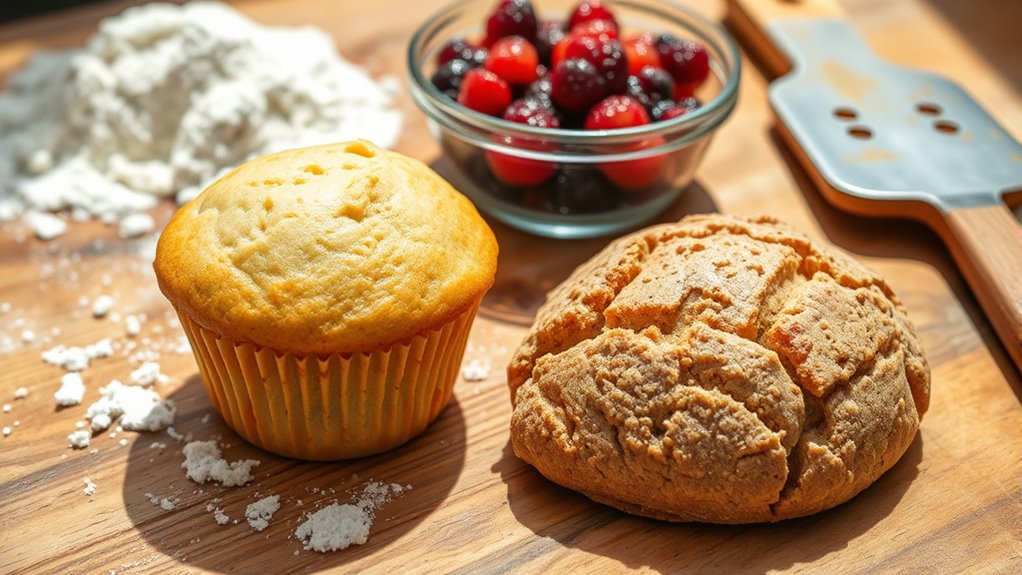
Deciding whether to use a commercial gluten-free baking mix or make your own depends on your specific needs and goals. Commercial mixes offer convenience, consistency, and time-saving benefits, making them ideal when you’re in a hurry or want reliable results. They often contain pre-measured ingredients and specialized binders to improve texture. On the other hand, homemade options give you control over ingredients, allowing you to customize flavors and avoid additives. If you enjoy experimenting or have specific dietary preferences, making your own blend can lead to better texture and taste. Consider your skill level, schedule, and desired outcome when choosing between these options. For quick, consistent results, commercial mixes are practical; for tailored, potentially healthier treats, homemade options are the way to go.
Frequently Asked Questions
Can I Substitute Gluten-Free Flour in All Traditional Recipes?
You can substitute gluten-free flour in most traditional recipes, but you’ll need to do some recipe adaptation. Gluten substitution isn’t always straightforward, as it affects texture and structure. Use a blend of gluten-free flours and add binding agents like xanthan gum or guar gum. Experiment and adjust liquid ratios as needed. With patience, you’ll master gluten-free baking and enjoy your favorite treats without gluten!
How Do I Prevent My Baked Goods From Becoming Too Crumbly?
Your baked goods don’t have to crumble like dust—here’s how to improve texture and control crumbs. Use a mix of gluten-free flours to balance moisture, and incorporate binding agents like xanthan gum or psyllium husk. Avoid overmixing, which can weaken structure. Adding moisture through eggs or dairy helps, while proper cooling locks in the right crumb. These tips will give your treats the perfect, cohesive texture you crave.
Which Binders Are Best for Improving Texture in Gluten-Free Baking?
You should try using gums like xanthan or guar, along with starches such as tapioca or potato starch, to improve your gluten-free baked goods’ texture. Egg replacers like flaxseed or applesauce also help bind ingredients and add moisture. Combining these binders creates a better structure and prevents crumbliness, giving your baked items a more satisfying, cohesive texture. Experiment with different amounts to find what works best for your recipes.
How Does Altitude Affect Gluten-Free Baking Outcomes?
Mountain baking can be tricky because higher altitude and lower air pressure cause your gluten-free baked goods to rise too quickly or collapse. To adjust, you should decrease leavening agents and increase liquids to compensate for rapid expansion. Keep in mind that experimenting with recipes is key, as altitude affects gluten-free dough’s structure and moisture retention, helping you achieve better results despite the challenges of high-altitude baking.
Are There Specific Storage Tips for Maintaining Gluten-Free Baked Goods?
Think of your baked goods as delicate treasures that need careful guarding. To keep them fresh, store gluten-free baked goods in airtight containers or resealable bags, avoiding excess air and moisture. For longer freshness, consider freezing them and thawing as needed. Proper storage tips like these preserve their texture and flavor, ensuring your treats stay delicious and satisfying, just like a precious keepsake meant to be enjoyed over time.
Conclusion
While gluten-free baking can sometimes feel like steering a delicate dance, every misstep offers a chance to learn and refine your craft. With patience and the right techniques, you’ll find your treats becoming more consistently delightful. Remember, even the most seasoned bakers face moments of uncertainty — it’s all part of the journey. Keep experimenting, trust your instincts, and soon you’ll create baked goods that not only satisfy but also inspire confidence in your baking adventure.