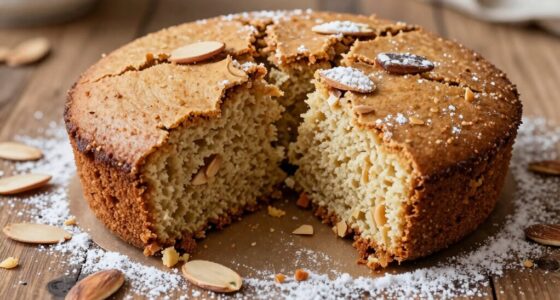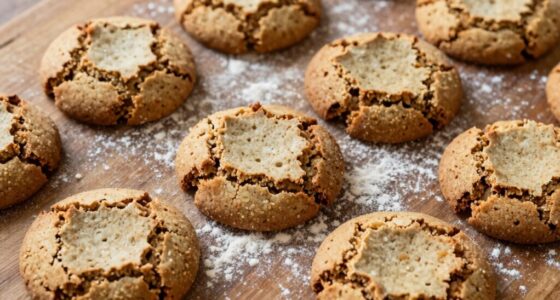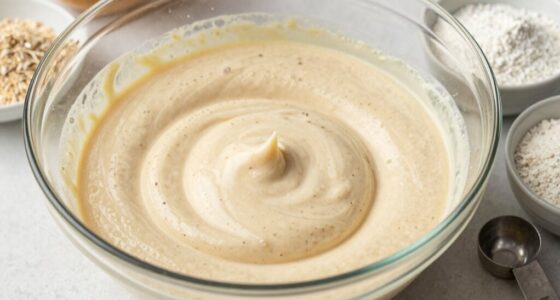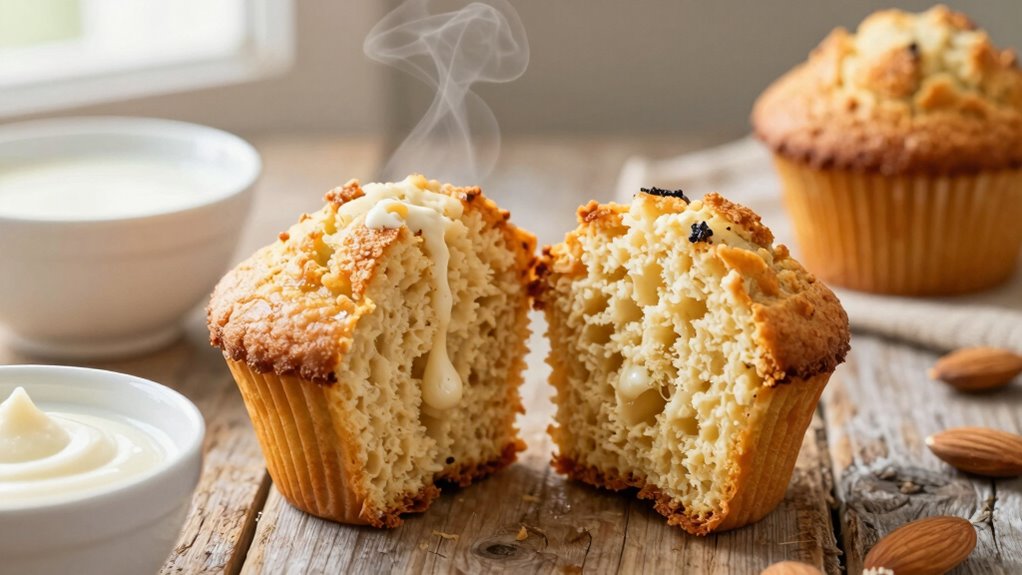
When you bake with dairy-free milks, some may split or curdle because of differences in their fat, protein, and additive content. Thinner milks like almond or rice are prone to breaking down under high heat, while creamier options like coconut or cashew resist it better. Factors like sudden temperature changes, added acids, or low fat levels also increase curdling risk. To master the process, you’ll want to understand how each type reacts in the oven—there’s more to discover here.
Key Takeaways
- Thinner plant-based milks like almond and rice are more prone to splitting due to their watery consistency.
- High heat or sudden temperature changes cause proteins and fats in dairy-free milks to coagulate and curdle.
- Added acids, such as lemon or vinegar, increase acidity, leading to curdling during baking.
- Milks with lower fat content or stabilizers may lack the stability needed under oven heat, increasing splitting risk.
- Incorporating stabilizers like flour or cornstarch and maintaining steady oven temperatures help prevent curdling.

If you’re looking to bake without dairy, dairy-free milks are a versatile and delicious substitute that can help you achieve the same rich textures and flavors. However, one common challenge bakers face is that some dairy-free milks tend to split or curdle in the oven, affecting the final appearance and texture of baked goods. Understanding why this happens starts with recognizing the differences in milk texture and flavor variations among plant-based options. Unlike cow’s milk, which has a consistent composition, dairy-free milks vary widely in their ingredients, fat content, and acidity.
Dairy-free milks vary widely in texture and flavor, affecting their baking stability and final baked goods.
For example, almond milk and rice milk have a thinner, more watery milk texture, which makes them more prone to splitting when exposed to high heat. Their low fat content means they lack the stability that dairy milk naturally offers during baking. On the other hand, coconut milk or cashew milk tend to have a creamier, richer texture, which helps them withstand the oven’s heat better and reduces the likelihood of splitting. The flavor variations among dairy-free milks also influence how they behave in baked goods. Some, like soy milk, have a neutral flavor that blends seamlessly, while others like almond or coconut can add distinctive tastes that might alter the final product’s flavor profile.
Temperature plays a vital role in whether a dairy-free milk will split. When exposed to high heat or sudden temperature changes, the proteins and fats in certain plant-based milks can coagulate or separate, resulting in curdling or splitting. This is especially true if the milk contains added stabilizers or thickeners that react differently under heat. Additionally, acidity levels differ among dairy-free milks; some are more acidic due to added ingredients like lemon or vinegar, which can cause the milk to curdle when heated alongside acidic components in recipes.
To minimize splitting, you can start by choosing dairy-free milks with higher fat content or those specifically formulated for baking. Stirring the milk well before adding it to your batter guarantees even distribution of fats and stabilizers. Incorporating the milk gradually and maintaining consistent oven temperatures can also help prevent sudden curdling. Some bakers find that adding a small amount of flour or cornstarch to the milk before mixing into the batter provides extra stability, as these thickeners can help hold the milk’s structure during baking.
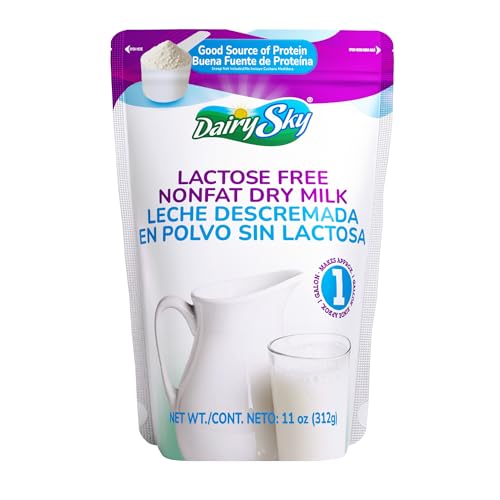
DairySky Lactose Free Milk Powder 11 Oz – Non GMO Fat Free Powdered Milk for Baking & Coffee, Kosher with Protein & Calcium, Great Substitute for Liquid Milk, RBST Hormone – Free – 1 Pack
DAIRY FLAVOR WITHOUT THE LACTOSE – The natural sugars in our lactose free powdered milk are broken down,…
As an affiliate, we earn on qualifying purchases.
As an affiliate, we earn on qualifying purchases.
Frequently Asked Questions
Can I Substitute Dairy-Free Milk in Recipes That Require Whipping?
You can substitute dairy-free milk in recipes that require whipping, but keep in mind that their whipping properties vary. For best foam stability, choose thick, high-fat options like coconut milk or specially formulated barista blends. Lower-fat or thinner plant-based milks may not whip as well and could result in less stable foam. To improve results, chill the milk and use a clean, cold bowl and beaters.
Which Dairy-Free Milk Bland or Sweeten Affects Baking Results the Most?
You’ll find that sweetened dairy-free milks can dramatically alter your baking, sometimes making your treats overly sweet or dense, while bland options may dull flavors and reduce richness. The sweeten effects are often more noticeable, impacting the overall taste, texture, and color. Bland milks tend to have a milder impact, letting other ingredients shine. Choose based on your desired flavor profile, but be aware of how sweetness can take over your baked goods.
Are There Specific Brands of Dairy-Free Milk Better for Baking?
You should look for brands known for better brand compatibility and flavor stability when baking. Some brands, like Califia Farms or Silk, tend to perform more reliably because their dairy-free milks are formulated to withstand heat without splitting or curdling. Always check reviews and ingredient lists to guarantee the product’s stability in baking. Using these recommended brands can help ensure your baked goods turn out smooth and delicious.
How Do I Prevent Dairy-Free Milk From Splitting During Baking?
Think of your batter as a delicate dance, and dairy-free milk as a partner who needs the right cue. To prevent splitting, master emulsification techniques by whisking your milk with other ingredients thoroughly. Keep ingredient temperatures steady—room temperature milk blends more smoothly, avoiding shock that causes separation. When you treat your ingredients like dance partners, they’ll move in harmony, ensuring your baked goods stay cohesive and beautifully baked.
Does the Fat Content of Dairy-Free Milk Influence Cake Texture?
Yes, the fat content of dairy-free milk influences cake texture. Higher fat levels aid in emulsification, creating a smoother, moister crumb. When you choose a milk with enough fat, it helps distribute fats evenly, preventing the cake from becoming dry or crumbly. Conversely, low-fat or skim options might lead to a lighter texture but can reduce richness. So, selecting the right fat content enhances both moisture and overall cake quality.

Ripple Unsweetened Original Plant Based Milk | 8g of Quality Sourced Pea Protein, Calcium Rich | Shelf Stable | Vegan, Non GMO | Dairy, Soy, Nut, & Gluten Free | 32 Fl Oz Cartons (Pack of 6)
OUR WORLD FAMOUS PLANT-BASED MILK: The product that made us who we are, now available as SHELF STABLE!…
As an affiliate, we earn on qualifying purchases.
As an affiliate, we earn on qualifying purchases.
Conclusion
Now that you know why some dairy-free milks split in the oven, you’re better equipped to choose the right one for your baking. Remember, every ingredient has its quirks, so don’t be discouraged if things go awry. Sometimes, you’ve got to roll with the punches and learn as you go. With patience and a keen eye, you’ll turn your baked goods into delicious successes—after all, every cloud has a silver lining.

B000SRKCGM
As an affiliate, we earn on qualifying purchases.
As an affiliate, we earn on qualifying purchases.

NOW Foods, Organic Coconut Milk Powder, Dairy Free/ Vegan, Just Add Water, 12-Ounce
RICH, CREAMY TASTE: Comes directly from fresh, organic coconuts and is spray dried and then mixed with organic…
As an affiliate, we earn on qualifying purchases.
As an affiliate, we earn on qualifying purchases.