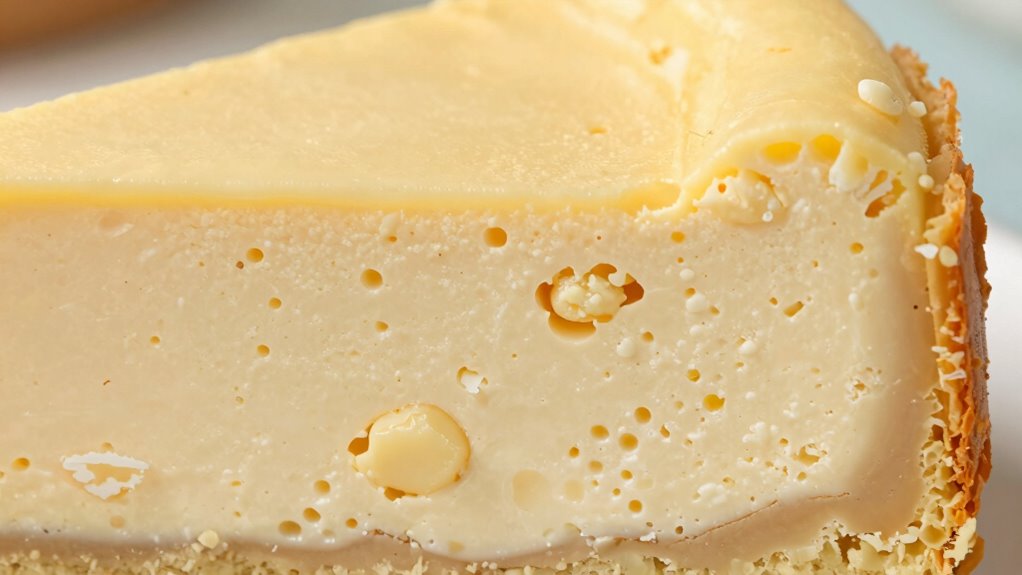
When your cheesecake turns grainy, it’s often due to protein coagulation. As you bake, heat causes proteins in dairy and eggs to unfold and bond, transforming the smooth mixture into a firmer, sometimes grainy texture. Overmixing or high temperatures accelerate this process, leading to uneven protein bonding and a gritty feel. To avoid this, managing your ingredients and oven temp carefully is essential—more tips to keep your cheesecake perfectly smooth await you.

Get baking supplies delivered free with Prime
- Fast, free delivery on millions of items
- Prime Video, Amazon Music and more included
- Member-only deals all year
Key Takeaways
- Protein coagulation in cheesecake occurs when heat causes dairy and egg proteins to unfold and form new bonds.
- Excessive or uneven heat accelerates protein denaturation, leading to a grainy, uneven texture.
- Overmixing introduces air and causes premature protein coagulation, resulting in a coarse crumb or graininess.
- Inadequate cooling or overbaking prevents proper protein setting, causing the cheesecake to develop a grainy consistency.
- Proper temperature control and gentle mixing help maintain smooth protein networks, preventing graininess.
As an affiliate, we earn on qualifying purchases.
What Makes Cheesecake Have a Perfectly Smooth Texture?
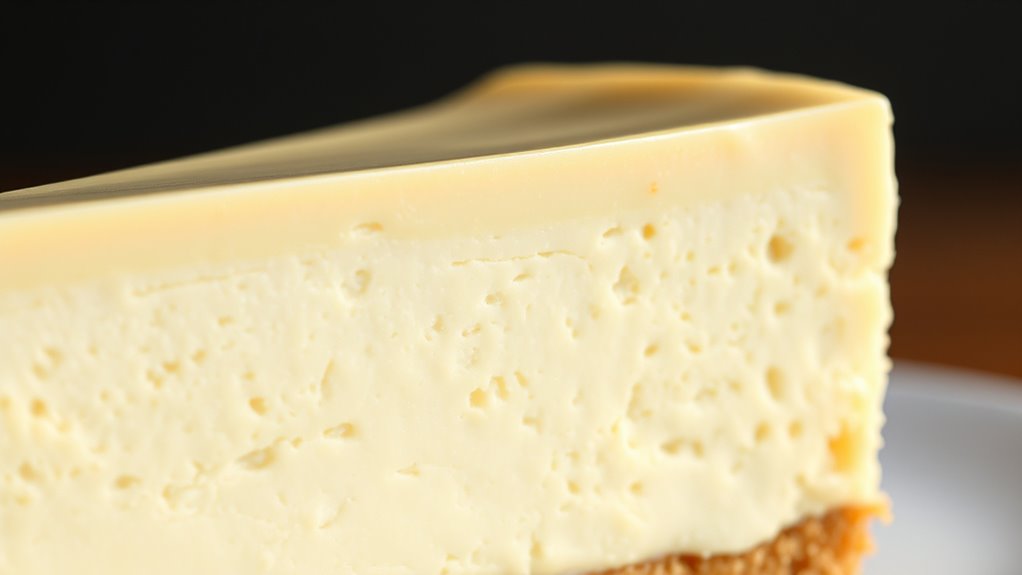
Achieving a perfectly smooth cheesecake texture depends largely on the ingredients and mixing techniques you use. Start with a well-prepared cheesecake crust that isn’t too thick or crumbly, as it can interfere with the overall smoothness. When mixing your filling, use gentle, steady motions to avoid incorporating excess air, which can cause a grainy texture. Make sure all ingredients, especially cream cheese and eggs, are at room temperature to blend seamlessly. Balancing flavors also plays a role; overly rich or acidic ingredients can affect the creaminess. Incorporate these carefully into your mixture, ensuring a smooth, uniform consistency. Proper technique and ingredient temperature are essential for a velvety finish that’s free of lumps or graininess, creating a dessert that’s both delicious and irresistibly smooth. Additionally, understanding protein coagulation can help you better control the texture, preventing it from becoming grainy. For example, controlling the temperature during baking influences protein behavior and can help maintain a silky, smooth surface. Being mindful of ingredient interactions can also prevent undesirable textures in your cheesecake. Paying attention to fabric composition and how different ingredients react can further improve your results. Moreover, employing proper mixing techniques helps ensure even distribution of ingredients and prevents the formation of lumps.
As an affiliate, we earn on qualifying purchases.
How Do Proteins in Dairy and Eggs Affect Cheesecake Creaminess?
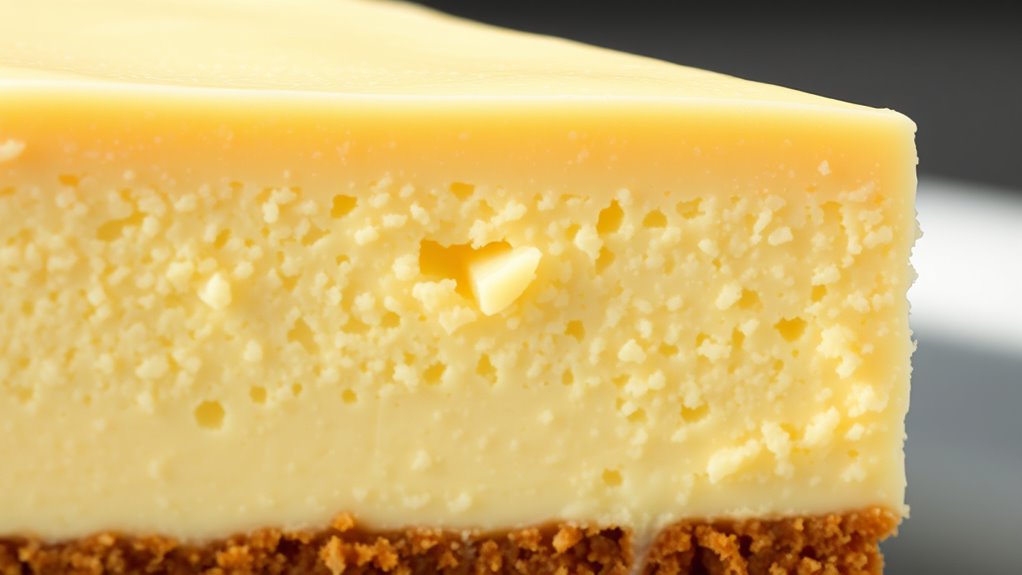
Proteins in dairy and eggs play a key role in shaping cheesecake’s creaminess by altering their structure during mixing and baking. When heated, these proteins coagulate, influencing the smoothness and texture of the final product. Balancing dairy and egg proteins properly ensures your cheesecake remains creamy without becoming grainy. Incorporating an understanding of protein coagulation science can help bakers fine-tune their recipes for optimal texture. Recognizing how heat-induced protein changes affect the mixture can further assist in preventing graininess and achieving a consistently smooth cheesecake. Additionally, controlling temperature during baking is essential to manage how proteins coagulate and maintain desired creaminess. Being aware of protein denaturation allows bakers to better predict how ingredients will behave under heat, leading to more consistent results.
Protein Structure Changes
When proteins in dairy and eggs are heated or mixed into the cheesecake batter, their structures undergo significant changes that directly influence the dessert’s creaminess. These changes involve protein folding and the breaking or forming of amino acid bonds, which alter how proteins interact. As proteins unfold, their surfaces become more exposed, allowing new bonds to form, creating a network that affects texture. If this process occurs too rapidly or extensively, proteins can coagulate prematurely, leading to a grainy texture. To visualize, consider the table below:
| Protein State | Effect on Texture | Key Process | Resulting Change |
|---|---|---|---|
| Native | Smooth, creamy | Folding | Maintains creaminess |
| Unfolded | Thickens, curdles | Denaturation | Risks graininess |
| Aggregated | Grainy, firm | Coagulation | Loss of smoothness |
| Over-aggregated | Rubbery | Excess bonds | Unpleasant texture |
Coagulation During Baking
During baking, proteins in dairy and eggs undergo coagulation, a process where they form new bonds that transform their structures from unfolded to aggregated states. This change impacts the cheesecake’s texture, making it firmer and less creamy. Adequate coagulation ensures the cake holds together without becoming grainy. You can enhance this process with gelatin stabilization, which helps control firmness and prevents over-coagulation. Additionally, eggs contribute to flavor enhancement, enriching the overall taste. Be mindful of baking temperature and time, as excessive heat accelerates coagulation and can lead to a grainy texture. Balancing these factors results in a smooth, creamy cheesecake with ideal flavor and stability. Proper temperature control and ingredient selection are essential to prevent protein denaturation and maintain a desirable texture.
Dairy and Egg Balance
The balance of dairy and eggs plays a crucial role in achieving the desired creaminess in cheesecake. Dairy interactions influence how proteins fold and bind, affecting texture. Egg composition varies; egg whites provide structure, while yolks add richness and smoothness. Too many eggs can cause excessive coagulation, making the filling grainy. Conversely, insufficient eggs can lead to a runny texture. Striking the right dairy-to-egg ratio ensures proteins work harmoniously, creating a silky, uniform custard. Here’s a quick comparison:
| Ingredient | Role in Creaminess | Protein Behavior |
|---|---|---|
| Milk/Cream | Adds moisture, richness | Promotes smooth dairy interactions |
| Egg Yolks | Enriches texture, stability | Contributes to protein coagulation |
| Egg Whites | Provides structure | Risk of over-coagulation, causing graininess |
| Cheese | Adds flavor, moisture | Affects protein network formation |
| Sugar | Sweetness, affects texture | Stabilizes proteins slightly |
Understanding how protein coagulation occurs helps in fine-tuning the ingredient ratios for the perfect cheesecake texture. Additionally, controlling the temperature during mixing and baking can also influence protein behavior, leading to a creamier consistency. Proper temperature control prevents over-coagulation and ensures a smooth, velvety filling. Incorporating techniques like gentle mixing can further minimize undesirable protein clumping and enhance overall creaminess. Being mindful of ingredient quality can also make a significant difference in achieving the desired texture.
As an affiliate, we earn on qualifying purchases.
Why Does Protein Coagulation Change Cheesecake’s Consistency?
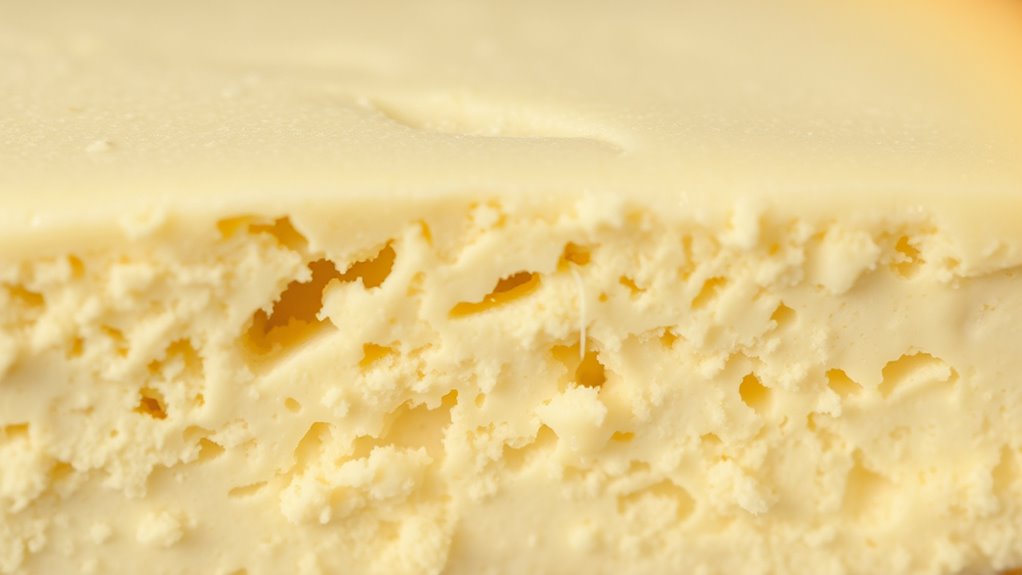
When proteins in your cheesecake heat up, their structures change, causing them to coagulate. This heat-induced process transforms a smooth mixture into a firmer, sometimes grainy texture. Understanding how protein structure alteration affects consistency helps you avoid unwanted graininess in your cheesecake. Additionally, smart contracts can be utilized to automate baking timers and temperature controls, ensuring precise cooking conditions that prevent over-coagulation. Proper temperature management is essential to maintaining the ideal creamy texture and preventing the proteins from over-coagulating. Recognizing the importance of consistent heat application can further help in achieving a smooth, velvety cheesecake. Managing heat distribution evenly throughout the baking process can also prevent localized over-coagulation and graininess.
Protein Structure Alteration
Protein coagulation occurs when heat causes the proteins in the cheesecake mixture to unfold and bond together. This process alters the original protein structure, affecting texture. When proteins unfold, their natural folding is disrupted, leading to new bonds that create a firmer but sometimes grainy texture. Enzyme activity also plays a role, as enzymes that normally help maintain protein stability become less effective with heat, accelerating coagulation. As proteins change shape, they trap air and moisture differently, directly impacting creaminess. Understanding these structural changes helps you grasp why overcooking results in a grainy, rubbery cheesecake. Protein structure plays a crucial role in determining the final texture of your dessert. Additionally, heat-induced protein changes can cause the formation of clumps that contribute to the grainy consistency.
Heat-Induced Coagulation
Heat causes proteins in cheesecake to denature and coagulate, directly changing its texture. When you bake or overheat your cheesecake, the proteins tighten and form a network that affects both the cheesecake flavor and overall consistency. This coagulation can lead to a grainy or rubbery mouthfeel if not *guaranteed* properly. Additionally, excessive heat can cause the crust texture to become overly tough or crumbly, disrupting the balance between the crust and filling. Understanding this process helps you avoid overbaking, which intensifies protein coagulation and results in a dense, grainy dessert. Maintaining a gentle, even heat ensures the proteins coagulate just enough to set the cheesecake smoothly, preserving its creamy texture and harmonious flavor.
As an affiliate, we earn on qualifying purchases.
What Common Factors Cause Graininess in Cheesecake?
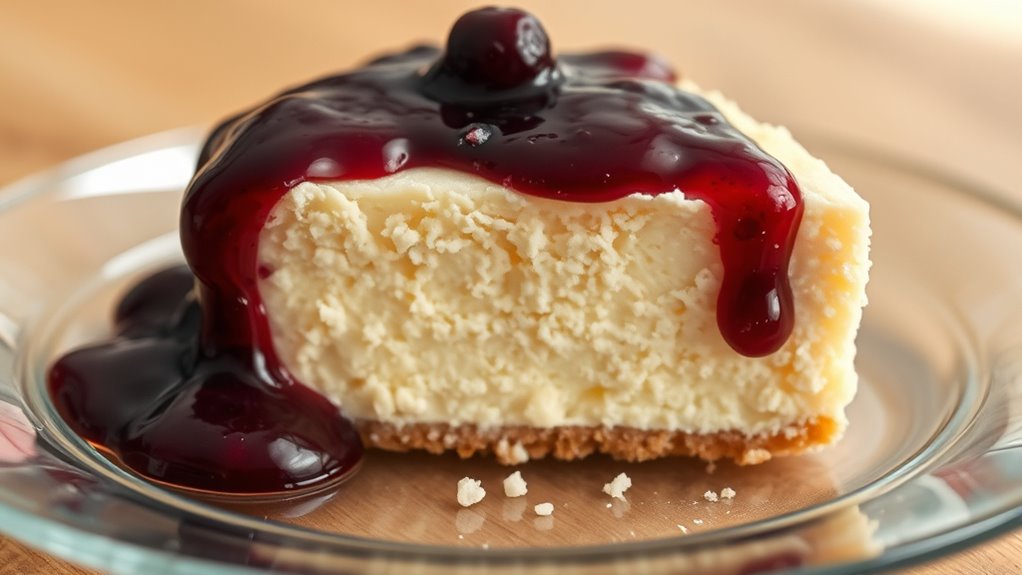
Graininess in cheesecake often results from ingredients or preparation methods that don’t blend smoothly. When your ingredients aren’t handled carefully, the cheesecake can develop a gritty texture that affects the overall flavor. Common factors include using ingredients at the wrong temperature, rushing the mixing process, or poor quality cream cheese. Additionally, improper baking techniques can cause uneven protein coagulation, leading to graininess. To maintain your desired cheesecake flavor and smooth texture, focus on gentle mixing and precise timing. Proper handling of ingredients can help prevent these issues by ensuring a more uniform mixture, and paying attention to ingredient temperatures is crucial for achieving a silky consistency.
How Does Overmixing or Overbeating Lead to a Grainy Texture?
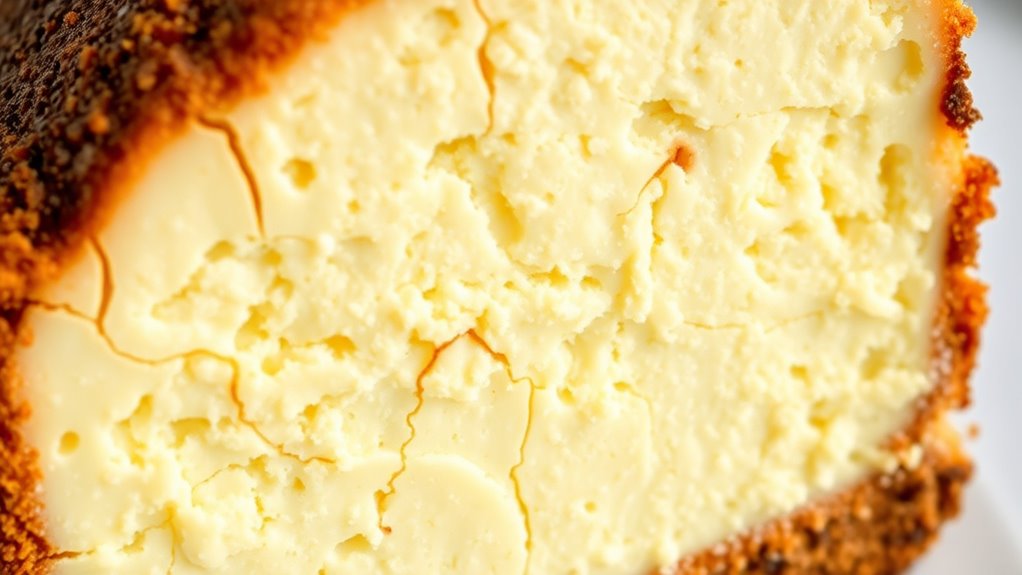
Overmixing or overbeating your cheesecake batter can cause it to develop a gritty texture, as it forces air into the mixture and breaks down the fats and proteins. When you mix too aggressively or at a high mixing speed, you introduce excess air that creates bubbles, leading to a coarse crumb. Additionally, overbeating can cause proteins to coagulate prematurely, resulting in a grainy mouthfeel. The quality of your ingredients also plays a role; low-quality eggs or dairy may contain proteins that react more readily to overmixing, worsening the texture. To avoid this, mix just until ingredients are combined and use a low to medium speed. This gentle approach helps maintain a smooth, creamy batter and prevents the formation of a grainy, undesirable texture.
In What Ways Does Baking Temperature Impact Protein Behavior?
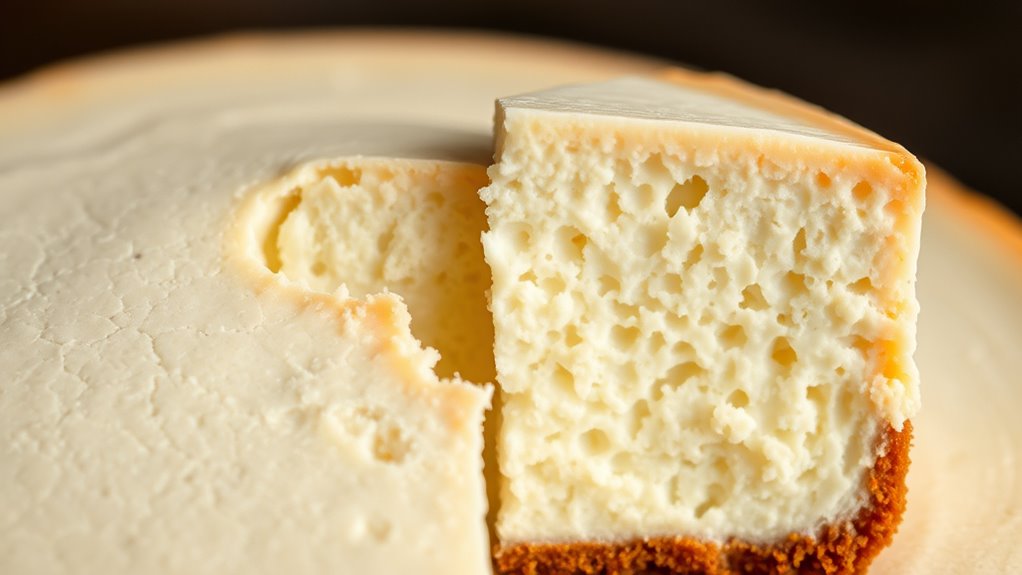
When you bake a cheesecake, the temperature you choose determines when proteins denature and coagulate. If the oven gets too hot, proteins reach their denaturation threshold quickly, causing uneven textures. Understanding these thermal coagulation dynamics helps you control the final consistency and avoid that grainy feel.
Protein Denaturation Thresholds
Baking temperature plays a crucial role in determining how proteins in cheesecake batter behave, especially when it comes to denaturation. Proteins have specific thresholds at which they unfold, affecting the texture and stability of your cheesecake. If you go above this threshold, proteins lose their natural shape, disrupting proper protein folding. This can lead to a grainy texture because over-denatured proteins coagulate too tightly. Enzyme activity also drops sharply once the temperature exceeds certain limits, preventing unwanted reactions that could affect batter consistency.
- Protein denaturation begins around 140°F (60°C)
- Critical temperature for enzyme activity loss
- Overheating causes irreversible protein unfolding
- Proper temperature maintains ideal protein folding
- Excess heat results in grainy, rubbery texture
Thermal Coagulation Dynamics
As the temperature rises during baking, protein molecules in the cheesecake batter undergo rapid changes that directly influence its final texture. Heat dynamics cause these proteins to form a protein network, which determines whether the cheesecake remains smooth or becomes grainy. At moderate temperatures, proteins coagulate gently, creating a fine, cohesive structure. However, if the temperature climbs too quickly or too high, the proteins coagulate unevenly, forming larger clumps and a grainy texture. This process, known as thermal coagulation dynamics, reflects how heat causes proteins to denature and bond. Controlling the baking temperature guarantees a gradual heat transfer, promoting a uniform protein network formation and avoiding undesirable graininess. Understanding these heat-driven protein behaviors helps you achieve the smooth, creamy consistency that makes a perfect cheesecake.
Why Is Gentle Mixing Key to a Velvety Cheesecake?
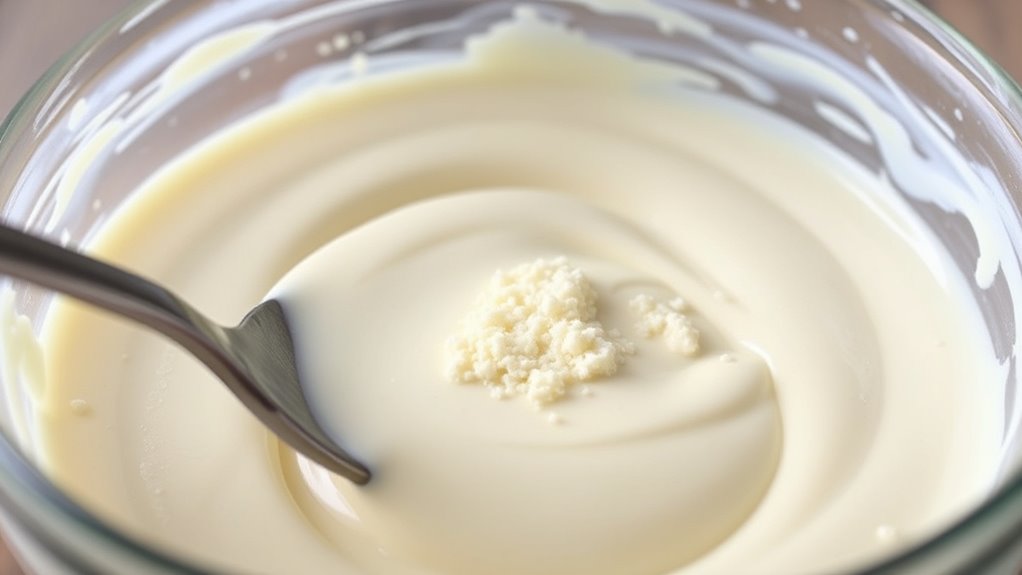
Gentle mixing is essential for achieving a smooth, velvety cheesecake because it prevents the batter from becoming dense or grainy. When you mix gently, you allow the ingredients to incorporate smoothly without overworking the batter, which can cause proteins to coagulate prematurely. Proper ingredient integration ensures a uniform texture and avoids air bubbles or lumps that lead to graininess. By mixing softly, you preserve the delicate structure needed for a silky finish.
Gentle mixing prevents graininess and preserves the cheesecake’s silky, velvety texture.
To improve your mixing technique:
- Use a light hand to prevent over-agitation
- Incorporate ingredients gradually for even blending
- Avoid vigorous stirring that develops gluten or proteins
- Mix just until ingredients are combined
- Pay attention to batter consistency for ideal velvety results
Which Ingredients Can Make Your Cheesecake Grittier?
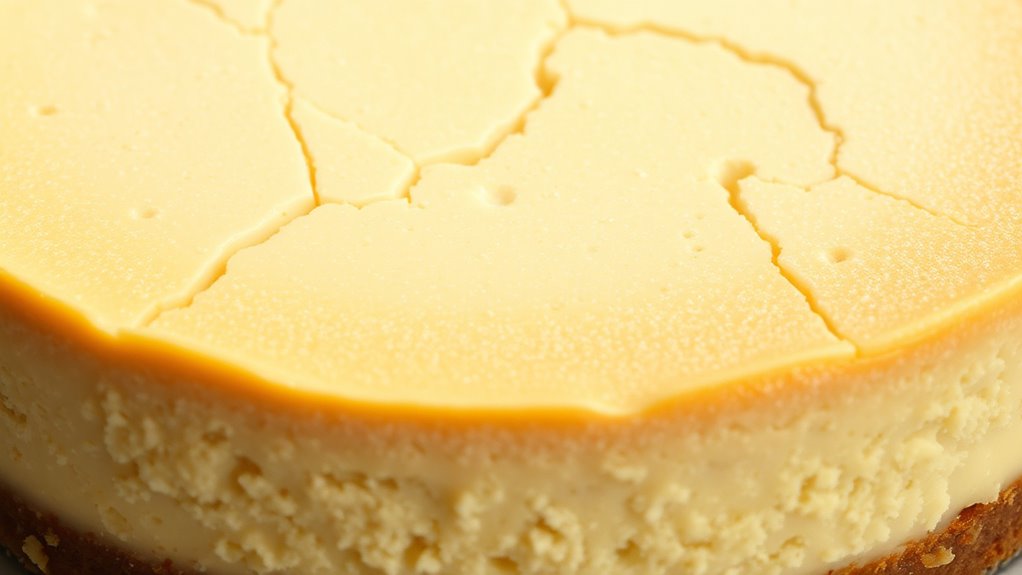
Certain ingredients in your cheesecake can lead to a grainy texture if you’re not careful with ingredient selection. For instance, using low-quality or improperly processed cream cheese can introduce unwanted granularity. Overmixed eggs or excessive flour can also cause protein coagulation, resulting in a gritty feel. Additionally, substituting ingredients like cornstarch instead of a stabilizer might create a rougher mouthfeel. Be cautious with dairy products; if they’re not smooth or are cold when added, they can contribute to a grainy texture. Nuts or crunchy toppings added directly into the batter without proper grinding can also make your cheesecake feel gritty. To avoid this, choose high-quality, well-processed ingredients and focus on gentle mixing to maintain a silky-smooth consistency.
How Can You Ensure a Silky, Smooth Cheesecake Every Time?
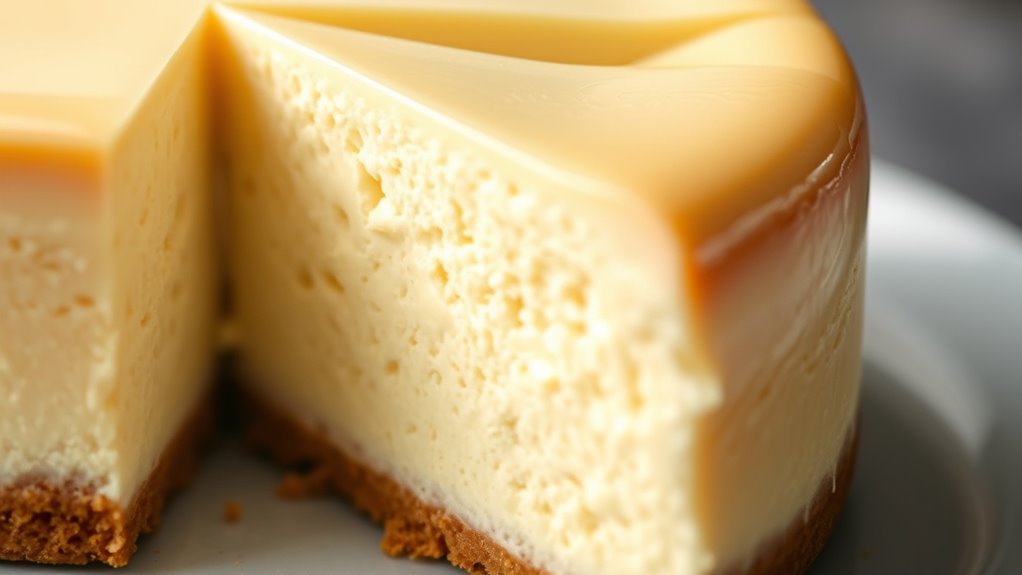
Want to achieve a silky, smooth cheesecake every time? Focus on proper ingredient pairing, gentle mixing, and accurate baking. Use softened cream cheese and avoid overmixing to prevent protein coagulation that causes graininess. Incorporate heavy cream or sour cream for added smoothness and a richer texture. Be mindful of your oven temperature—baking at a low, consistent heat helps prevent curdling. For presentation tips, serve chilled and use a sharp knife to get clean slices, highlighting its silky interior. To enhance visual appeal, garnish with fresh fruit or a glossy fruit glaze. Remember, a careful balance of ingredients and gentle handling is key to a velvety cheesecake. Follow these tips, and you’ll impress every time with a perfect, smooth dessert.
What Are the Best Fixes for Grainy Cheesecake After Baking?
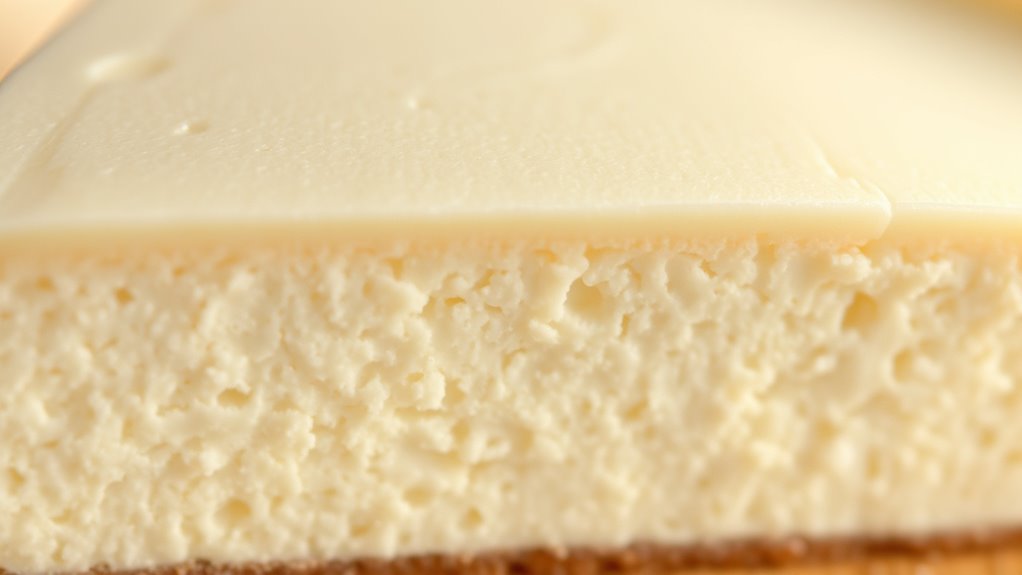
Even when you follow all the tips for a silky cheesecake, occasional graininess can still occur after baking. To fix this, try gently reheating the cheesecake in a water bath at 200°F for about 10 minutes; this can soften the protein coagulation and improve the cheese flavor. If the crust texture feels off, carefully slice the cheesecake and replace or re-bake the affected sections. You can also blend a small portion of the cheesecake until smooth, then fold it back into the main body to restore creaminess. Use the table below to identify the issue and solution:
| Issue | Fix |
|---|---|
| Grainy texture | Reheat gently or blend for smoothing |
| Poor cheese flavor | Add a quick touch of warm milk or cream |
| Crust texture issues | Re-bake briefly or replace crust sections |
Frequently Asked Questions
Can Using Low-Quality Dairy or Eggs Cause Graininess?
Using low-quality dairy or eggs can definitely cause your cheesecake to turn grainy. Poor dairy quality often means inconsistent protein content, which can lead to uneven coagulation. Likewise, if your eggs aren’t fresh, their proteins aren’t as stable, increasing the risk of graininess. To avoid this, choose high-quality dairy and fresh eggs, ensuring your cheesecake has a smooth, creamy texture without unwanted graininess.
How Does the Age of Ingredients Affect Cheesecake Texture?
If your ingredients aren’t fresh, the cheesecake’s texture can suffer. Using ingredients with longer storage duration or that are past their prime may lead to a grainy or uneven finish. Always check ingredient freshness, especially dairy and eggs, to guarantee smooth, creamy results. Fresh ingredients blend better and help maintain the desired silky consistency, preventing the graininess that can come from old or improperly stored items.
Does Altitude Influence Protein Coagulation in Baking?
Altitude effects your baking, and yes, it influences protein coagulation. When you bake at high altitudes, lower atmospheric pressure causes gases to expand more, affecting how proteins coagulate and set. You might notice a softer, less firm cheesecake because the reduced pressure alters how the proteins unfold and bond. To counteract this, you can adjust your recipe by increasing liquids or lowering baking temperature, ensuring your cheesecake turns out perfect.
Are There Specific Brands That Produce Less Grainy Cheesecake?
Yes, you can find less grainy cheesecakes from artisanal brands that use premium ingredients. These brands often focus on high-quality cream cheese, eggs, and sugar, which help create a smoother texture. Look for artisanal bakeries or specialty stores known for their craftsmanship. By choosing these brands, you’ll enjoy a creamier, more consistent cheesecake with less graininess, thanks to their careful selection of ingredients and attention to detail.
Can Freezing and Thawing Affect the Cheesecake’s Smoothness?
Freezing and thawing can impact your cheesecake’s smoothness, often causing it to become grainier or develop a watery texture. The freezing impact causes ice crystals to form, which can disrupt the delicate structure, and the thawing effects might lead to moisture separation. To minimize these issues, wrap your cheesecake tightly and thaw it slowly in the fridge. This helps preserve its creamy texture and reduces graininess.
Conclusion
To achieve a perfectly smooth cheesecake, avoid overmixing, handle ingredients gently, and choose quality dairy and eggs. Keep an eye on temperature, mix just enough, and bake with care. By preventing protein coagulation, controlling your technique, and selecting the right ingredients, you’ll enjoy a silky, velvety texture every time. Remember, patience and precision are your best friends in creating a cheesecake that’s smooth, creamy, and irresistible.
Halloween Picks
halloween
As an affiliate, we earn on qualifying purchases.