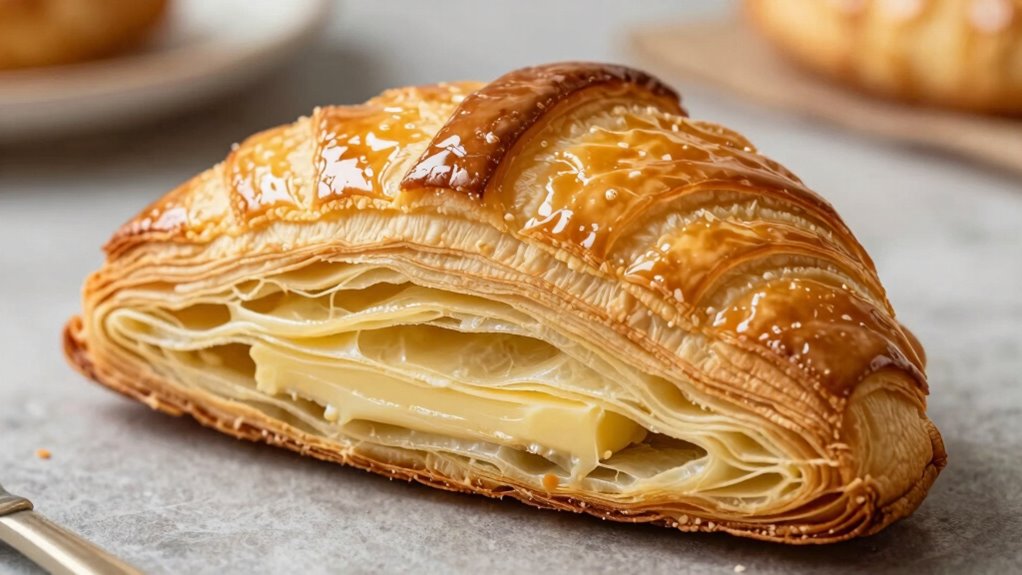

In laminated dough, ‘turns’ are folding techniques that create multiple thin layers by folding and rolling the dough with butter inside. Each turn multiplies the layers, affecting flakiness and texture. You typically perform simple folds or multiple turns, like double or triple, to develop even, crisp layers. Mastering this process involves precise folding, temperature control, and gentle handling. Continue exploring to understand how turns truly shape perfect laminated pastries.
Key Takeaways
- Turns are folding techniques that create multiple thin dough layers, essential for flakiness and puffiness.
- The number of turns (single, double, triple) directly affects the dough’s layer count and final texture.
- Properly managing turns involves folding, resting, and precise rolling to develop gluten and distribute butter evenly.
- More turns produce thinner, more uniform layers, resulting in a crisp, flaky pastry; fewer turns create thicker, softer layers.
- Maintaining dough temperature and gentle handling during turns are crucial for optimal lamination and layer development.
What Is Laminated Dough and Why Does It Matter?

What exactly is laminated dough, and why is it so essential in baking? Laminated dough is a pastry dough characterized by multiple thin layers achieved through folding and rolling. Its success depends on dough elasticity, which allows you to stretch and fold without tearing, creating distinct layers. Proper butter distribution is vital; evenly spread butter forms a barrier that separates the dough layers and creates the flaky texture you aim for. When you handle laminated dough correctly, you shape it into beautifully layered pastries like croissants and puff pastry. Its delicate structure relies on precise folding techniques and maintaining the right dough consistency. Mastering laminated dough opens the door to a variety of flaky, tender baked goods that impress both visually and texturally. Additionally, understanding the importance of layer formation helps bakers achieve the perfect lamination process for consistent results. Achieving consistent layers also depends on controlling factors like temperature and resting times, which are crucial for successful lamination. Proper dough handling techniques are essential to prevent tearing and ensure even layers throughout the dough. Developing skill in lamination techniques further enhances the quality and uniformity of the final product. By paying close attention to these critical factors, bakers can consistently produce beautifully laminated pastries with optimal texture.
What Role Does Butter Play in Laminated Dough?

Have you ever wondered why butter is so vital in laminated dough? The right butter creates flaky, tender layers, but its role goes beyond that. Here are four key points:
- Butter quality influences flavor and how well it laminates—the higher the quality, the better the layers.
- Butter temperature is essential; too cold, and it won’t spread evenly, too warm, and it’ll lose its structure.
- Properly tempered butter ensures even layering during folds, preventing tears.
- The butter’s fat content affects puffiness; higher fat butter produces more distinct, flaky layers.
Achieving optimal results also involves understanding local automation techniques to control temperature and folding processes, ensuring consistency in your laminated dough. Choosing high-quality butter and maintaining the right temperature helps you achieve crisp, airy laminated dough every time.
What Are Turns, and How Do They Work?
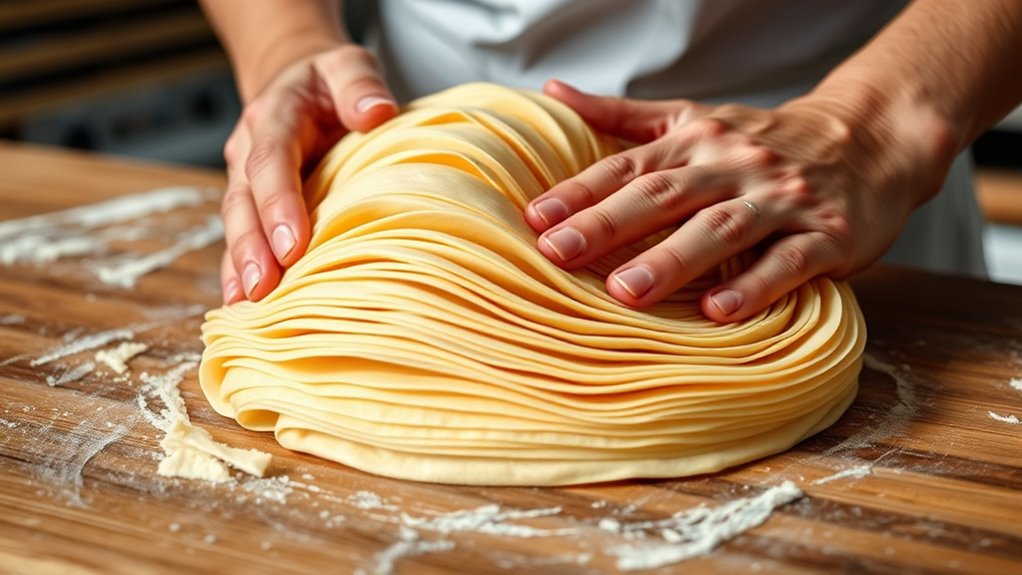
Turns are the folding techniques that create multiple dough layers, and understanding how they work is key to perfect laminated dough. Depending on your recipe, you’ll need a specific number of turns to achieve the desired flakiness and structure. Each turn builds more layers, impacting the dough’s texture and how it bakes into a crispy, flaky pastry. The number of turns also influences the layering process, which is essential for achieving optimal puff and crunch.
Folding Techniques Explained
Folding techniques are essential to creating the flaky layers in laminated dough, and understanding how turns work is key to mastering this process. Properly executed folds involve maintaining the right butter consistency and dough temperature. If the butter is too soft, it may leak; too firm, and it won’t spread evenly. To help you succeed, consider these key points:
- Keep your butter chilled but pliable for smooth layering.
- Ensure your dough stays at a consistent temperature to prevent tearing.
- Use gentle, even pressure when folding to avoid breaking the dough.
- Rotate and align the dough precisely during each fold for uniform lamination.
- Monitoring butter temperature throughout the process can prevent common issues and ensure optimal layering. Consistently checking dough temperature helps maintain the ideal environment for perfect lamination.
Mastering these techniques guarantees even layers and perfect flaky texture every time.
Number of Turns Needed
Understanding the number of turns needed is essential for achieving the perfect laminated dough. The number of turns determines how well the butter is spread and how the dough’s layers develop. Too few turns can result in uneven butter distribution, leading to inconsistent layers, while too many can make the dough overly elastic and difficult to work with. Typically, most recipes call for three to four turns, but this varies depending on dough elasticity and butter temperature. Each turn helps create thin, even layers, ensuring the butter remains encapsulated within the dough. Pay attention to how your dough responds; if it’s too stiff, reduce the number of turns. If it’s overly elastic and springy, give it a few more turns to improve layering and texture.
Impact on Dough Layers
When you perform turns during laminated dough preparation, you create multiple thin layers of dough and butter that are essential for achieving a flaky, tender texture. Proper turns evenly distribute butter, ensuring consistent butter layers throughout the dough. This process also enhances dough elasticity, allowing you to roll and fold without tearing.
Here are four key impacts of turns on your dough:
- Even butter distribution for uniform layers.
- Increased dough strength and elasticity.
- More refined, flaky layers after baking.
- Better control over dough thickness and texture.
Each turn builds on the previous one, creating a delicate balance between butter and dough. This layering technique is what gives laminated dough its signature crispness and tender crumb.
What Are the Different Types of Turns in Laminated Dough?
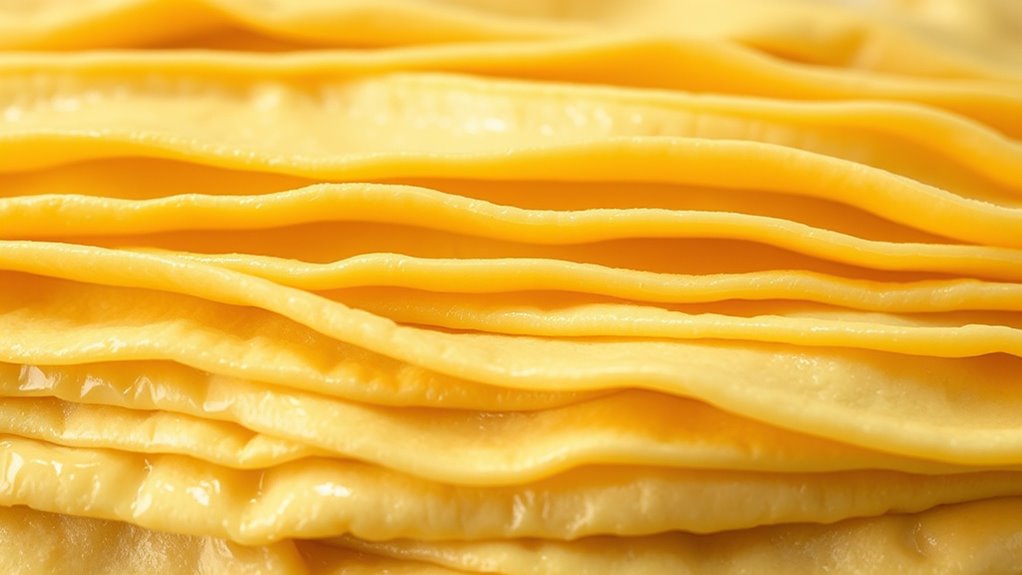
There are several types of turns in laminated dough that affect its flakiness and structure. You might use a single turn process for simplicity or multiple fold techniques for more layers. You can also vary the number of turns based on the desired final texture, which influences the dough’s final appearance and performance. The frequency and number of turns directly influence the dough’s final texture and strength. Proper laminating technique is essential for achieving the right balance between tenderness and crispness in your baked goods. Additionally, understanding how layering techniques impact dough behavior helps in customizing recipes for specific baked items. Mastering the lamination process ensures consistent results and optimal dough quality.
Single Turn Process
Have you ever wondered how laminated dough achieves its flaky layers? The single turn process is a simple yet vital step. Here’s what you need to know:
- Butter consistency: Use cold, firm butter to prevent it from melting into the dough, ensuring distinct layers.
- Dough elasticity: Proper dough elasticity allows you to roll it out smoothly without tearing or sticking.
- Folding technique: Fold the dough in half once, pressing to seal the edges, creating two layers.
- Resting time: Chill the dough briefly between turns to maintain butter firmness and dough elasticity.
This process results in a single turn, producing layered, flaky pastry with minimal complexity.
Multiple Fold Techniques
Understanding the different types of turns in laminated dough helps you build the perfect flaky layers. Multiple fold techniques, like double or triple turns, involve folding the dough over itself to create layers. To achieve ideal results, you need dough elasticity that allows smooth folds without tearing, and consistent butter that remains pliable but firm. Proper butter consistency ensures it spreads evenly and stays intact during folds. When performing multiple turns, you might do a single fold or a series of short folds, depending on the recipe. Each type of turn influences the dough’s layering and flakiness. Maintaining the right dough elasticity and butter consistency is essential to prevent overworking the dough or uneven layering, which can compromise the final texture.
Turn Frequency and Impact
The frequency of turns you perform during laminated dough shaping directly affects its final texture and flakiness. More turns create thinner, more uniform layers, enhancing layer consistency and dough elasticity. Fewer turns result in thicker layers, producing a softer, less flaky pastry. Understanding the different types of turns helps you control these outcomes:
- Single Turn – minimal layers, ideal for softer pastries.
- Double Turn – moderate layers, suitable for croissants.
- Triple Turn – thin, crisp layers, perfect for puff pastry.
- Continuous Turns – frequent, creating ultra-flaky, delicate layers.
Adjusting turn frequency influences how well your dough develops, ensuring consistent layer formation and ideal flakiness. Mastering these variations empowers you to produce perfectly layered laminated dough every time, and paying attention to proper technique layer formation can make all the difference in achieving bakery-quality results. Additionally, understanding how laminated dough responds to different turning techniques allows bakers to customize texture profiles for specific baked goods. Proper dough handling is essential for maintaining the integrity of the layers during each turn, reducing the risk of tearing or uneven layers. Recognizing the impact of turn frequency can also help in troubleshooting common issues like uneven layers or blowouts during baking.
How Do You Perform Turns Step-by-Step?
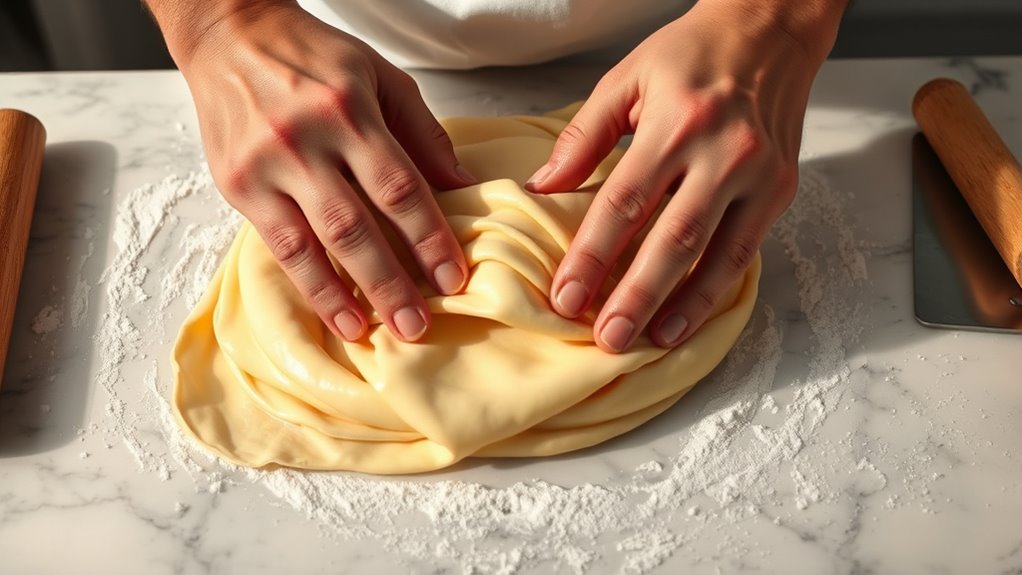
Performing turns is an essential step in lamination that involves folding the dough to create multiple layers. To start, lightly flour your work surface and gently roll the dough into a rectangle, keeping dough elasticity in mind—don’t overwork it. Confirm the butter is at the right consistency, firm but pliable, so it doesn’t tear or smear unevenly. Place the butter block on one half of the dough, then fold the other half over, sealing the butter inside. Rotate the dough 90 degrees, and repeat the folding process, pressing out any air pockets. Keep the dough cold and handle it gently to maintain even layers. This step is crucial for developing the dough’s structure and achieving flaky layers later on. Precision and automation are increasingly incorporated into modern baking techniques to ensure consistent results in laminated dough, especially for achieving uniform layering and texture, mirroring the importance of process control in maintaining quality. Incorporating temperature management helps prevent butter from melting during the folding process, ensuring clean and distinct layers. Additionally, maintaining a consistent dough temperature throughout the process is vital for optimal lamination.
How Do Turns Influence Texture, Flakiness, and Layers?

When you make turns during lamination, you actively influence the dough’s texture, flakiness, and layered structure. Each turn encourages gluten development, giving the dough strength to hold layers without tearing. It also helps distribute fat evenly, creating crisp, flaky layers. Additionally, turns enhance flavor as they promote fermentation and fermentation byproducts, enriching taste. Here are four ways turns impact your dough:
- Increase flakiness by layering butter between gluten strands.
- Strengthen gluten network for better structure and elasticity.
- Promote even distribution of fat and dough ingredients.
- Enhance flavor through extended fermentation and mixing.
What Common Mistakes Should You Avoid When Making Turns?
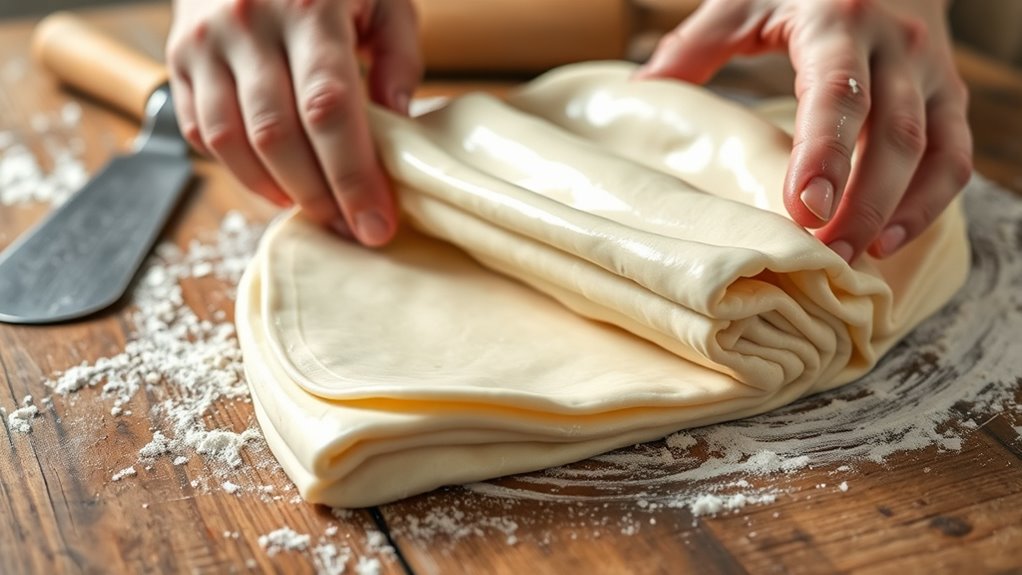
Making turns correctly is essential for achieving the perfect laminated dough, but common mistakes can compromise the final product. One key error is overworking the dough, which can affect pastry consistency and lead to tough, dense layers. Avoid rushing through the turns, as this can cause uneven layering and reduce flakiness. Be cautious with ingredient substitutions; using different fats or flours may alter the dough’s elasticity and how it responds during turns. Another mistake is not chilling the dough enough between turns, making it sticky and difficult to handle. Properly rested dough maintains structure and ensures even layers. Finally, neglecting to roll out the dough evenly can cause uneven thickness, resulting in inconsistent layers and compromised pastry quality.
How Can You Master Turns With These Tips and Tricks?

Mastering turns in laminated dough comes down to attention to detail and practice. To improve, focus on maintaining dough elasticity, which ensures smooth, even layers. Properly chilling the dough between turns helps preserve its structure and prevents butter from melting. Here are some tips to elevate your technique:
Focus on maintaining dough elasticity and proper chilling for perfect laminated layers.
- Keep the dough cold to enhance dough elasticity and ease handling.
- Roll evenly to avoid uneven layers and promote consistent flavor development.
- Use gentle, confident movements to prevent tearing or flattening the dough.
- Rest the dough between turns to relax gluten and strengthen layers.
Frequently Asked Questions
How Does Dough Temperature Affect the Quality of Turns?
Your dough temperature directly impacts the turn quality because if it’s too warm, the butter melts, causing layers to merge and lose flakiness. Cold dough stays firm, making turns easier and cleaner, resulting in better lamination. Keep your dough at the right temperature—around 60-65°F—to guarantee smooth, precise turns. This balance helps preserve the integrity of the layers, leading to flaky, airy baked goods.
Can Laminated Dough Be Made Without Butter?
You can make laminated dough without butter, but it won’t have the same flaky texture. Some bakers use butter alternatives like margarine or oils, which may affect gluten development and dough elasticity. Keep in mind, butter’s unique properties help create those distinctive layers. Without it, the dough might not turn as crisp or rise as well, so expect a different, less traditional result.
How Do You Troubleshoot Dough Tearing During Turns?
If your dough tears during turns, it’s likely due to insufficient dough elasticity or weak gluten development. To fix this, gently knead in a little water if it’s too dry, then give the dough time to rest, allowing gluten to develop properly. Resting helps create a more elastic dough that can handle the turns without tearing. Make sure to handle the dough gently and avoid overworking it to preserve its elasticity.
What Are the Signs of Over- or Under-Performing Turns?
You’ll notice over-performing turns when the butter becomes too firm or the dough loses elasticity, causing cracks or tearing. Under-performing turns, on the other hand, result in dough that feels overly soft or sticky, with insufficient lamination layers. The key signs include uneven layers, difficulty rolling, or butter leakage. Proper butter consistency and dough elasticity are vital—aim for a smooth, pliable dough that holds its shape without tearing.
How Does Fermentation Time Impact Layering and Flakiness?
Fermentation time markedly impacts layering and flakiness. Longer fermentation allows the dough to develop more gluten strength, which helps trap butter better, resulting in crispier layers. If fermentation is too short, butter may not evenly integrate, leading to less flaky layers. Ensuring the butter consistency is just right and timing fermentation correctly helps you achieve ideal layering and a light, flaky texture in your laminated dough.
Conclusion
Mastering turns is essential for perfect laminated dough, as they create the flaky layers you crave. Some believe more turns always mean better layers, but overdoing it can lead to tough dough. The truth is, moderation and technique matter most. By understanding how turns shape texture and practicing carefully, you’ll achieve consistent, delicious results. So, don’t just follow recipes—trust your skills and adjust as needed to develop that perfect, airy pastry every time.