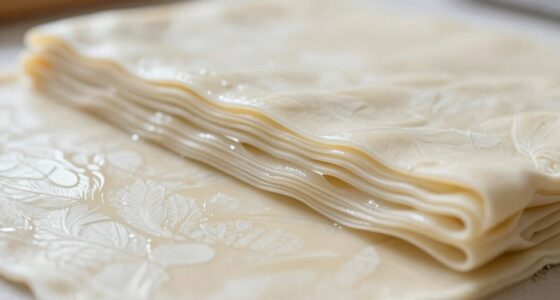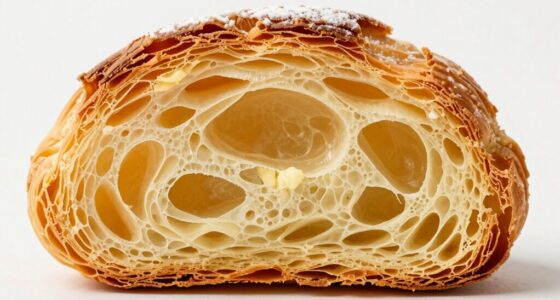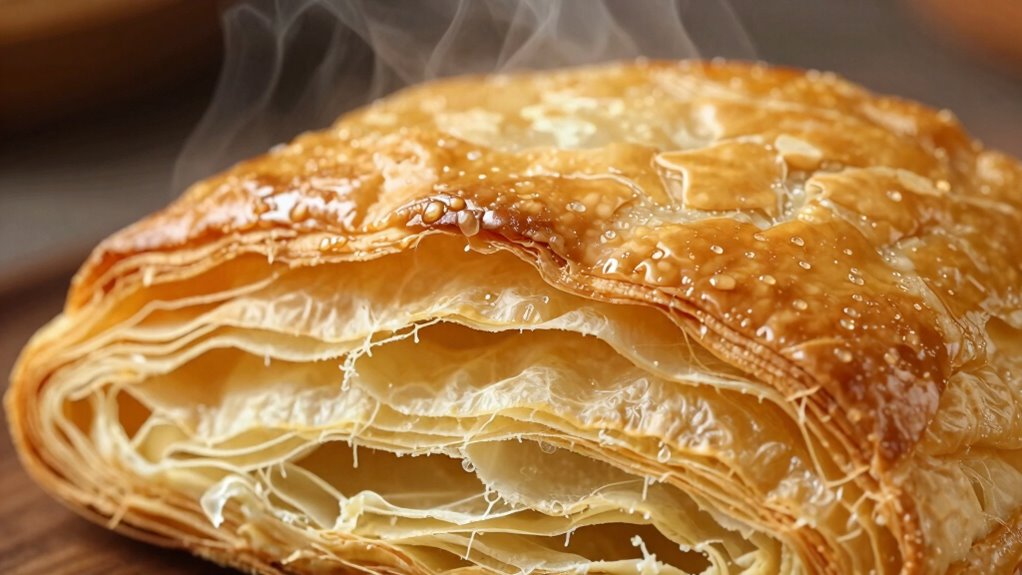

To get flaky layers, you need to carefully control your oven temperature and dough hydration. An oven that’s too hot can burn delicate pastry, while a cool oven may prevent proper puffiness. Off-calibrated ovens or temperature fluctuations can ruin the texture and appearance. Additionally, the right hydration helps generate steam for puffing and crispness. Balancing these elements takes precision. Stay with us as we explore how mastering this temperature battle leads to perfect, flaky pastries.

Get baking supplies delivered free with Prime
- Fast, free delivery on millions of items
- Prime Video, Amazon Music and more included
- Member-only deals all year
Key Takeaways
- Proper oven calibration ensures consistent heat, crucial for developing flaky, puffed pastry layers.
- Stable oven temperature prevents uneven baking, which can compromise flaky texture.
- Accurate dough hydration promotes steam formation, enhancing puffiness and crispness during baking.
- Temperature fluctuations can burn delicate layers or prevent proper puffing, affecting pastry quality.
- Maintaining a controlled baking environment is essential for achieving reliably flaky, tender pastries.
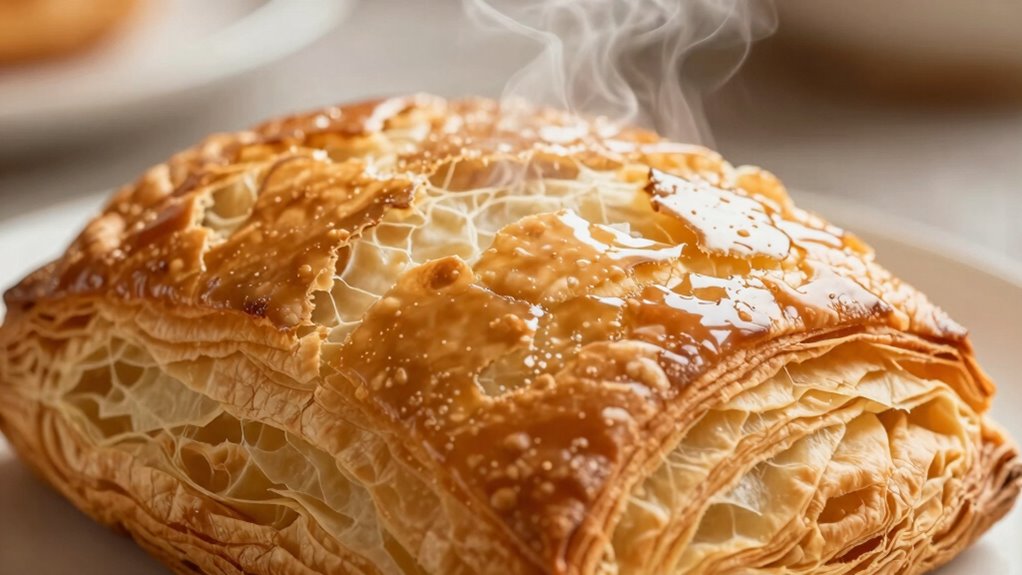
Behind every flaky layer of your favorite pastry lies a fierce temperature battle. Achieving that perfect, crisp texture isn’t just about following a recipe; it’s about mastering the subtle dance between oven calibration and dough hydration. If your oven isn’t properly calibrated, the temperatures you rely on might be off, causing your pastry to underbake or burn before the layers can develop their full flakiness. An oven that runs hot can quickly turn your delicate dough into a burnt mess, while one that runs cool prevents proper puffing and crisping. To get consistent results, you need to guarantee your oven hits the right temperature, which often means investing in an oven thermometer and adjusting the calibration accordingly. This step makes a huge difference in controlling how heat interacts with your dough, ultimately influencing how your pastry puffs and layers. Ensuring your oven is properly calibrated helps maintain the ideal baking environment for flaky layers to develop. Dough hydration plays an equally critical role in the temperature battle. The amount of water in your dough affects how it responds to heat during baking. If your dough is too dry, it won’t puff up properly, resulting in dense, less flaky layers. Conversely, overly hydrated dough can become sticky and difficult to handle, leading to uneven baking and insufficient layering. Finding the right balance means measuring your water carefully and understanding how it interacts with your flour and fat. Proper hydration allows steam to develop within the layers, creating the puff and crispness you desire. Additionally, understanding how temperature fluctuations can impact baking consistency is vital for achieving perfect flaky layers. Maintaining a stable baking environment is essential for consistent results, especially when working with delicate pastries. When you pay close attention to both oven calibration and dough hydration, you’re effectively controlling the environment your pastry bakes in, which directly influences how the layers form and crisp. A stable oven temperature also minimizes the risk of uneven baking, which can compromise the texture and appearance of your pastry. Controlling oven temperature is a key factor in this process, as even minor fluctuations can affect the final texture. Ultimately, understanding and managing these factors enables you to produce flaky, tender pastries every time, turning what might seem like a heated battle into a triumph of culinary precision.
As an affiliate, we earn on qualifying purchases.
Frequently Asked Questions
How Does Humidity Affect Flaky Layer Formation?
Humidity impact plays a key role in flaky formation because high humidity makes the dough absorb more moisture, leading to softer, less flaky layers. Conversely, low humidity helps the dough stay dry, promoting better layering and crispiness. When you bake in dry conditions, your pastry forms distinct, flaky layers more easily. So, controlling humidity during preparation directly influences how flaky your baked goods turn out, ensuring the perfect texture.
Can Different Oven Types Influence Temperature Control?
Did you know that some oven types, like convection ovens, can be up to 25% more energy-efficient than traditional models? Different oven types definitely influence temperature control; you need to consider oven calibration to ensure accurate heat. Gas and electric ovens also vary in temperature stability, which affects flaky layer formation. By choosing the right oven and maintaining proper calibration, you can achieve consistent, perfect flaky layers every time.
What Role Does Ingredient Quality Play in Flaky Layers?
Ingredient quality greatly impacts your flaky layers. Fresh ingredients, especially ingredient freshness, guarantee better texture and rise. High-quality butter, with its ideal fat content, creates tender, flaky layers by laminating properly during baking. When you use fresh ingredients and superior butter, your pastry will develop those crisp, delicate layers that melt in your mouth. Skimping on quality can result in dense or greasy layers, undermining your baking efforts.
How Do Altitude Changes Impact Baking Temperatures?
Altitude changes can turn your baking into a wild adventure, making your oven feel like a spaceship! You’ll need to make altitude adjustments, like increasing oven temperature or reducing leavening, to keep your baked goods perfect. Always check your oven calibration because even small misreads can cause big problems. Embrace these tweaks—they’re your secret weapon to conquering the altitude challenge and baking flaky layers that defy gravity!
Are There Specific Temperature Ranges for Different Pastry Types?
Yes, different pastry types require specific temperature ranges to guarantee flavor consistency and texture preservation. For example, puff pastry bakes best between 400-425°F for flaky layers, while shortcrust needs around 350-375°F for a tender crumb. Keeping these ranges helps you achieve the desired crispiness, golden color, and flavor, preventing issues like sogginess or over-baking. Adjusting temperatures based on pastry type ensures perfect results every time.
As an affiliate, we earn on qualifying purchases.
Conclusion
Understanding the temperature battle behind flaky layers helps you appreciate the delicate science in every pastry. Imagine baking a croissant and realizing that a slight oven temperature tweak results in perfectly flaky, golden layers. It’s like mastering a secret recipe—small changes lead to big, delicious rewards. So, next time you enjoy a flaky treat, remember the unseen battle of heat that made it possible, and savor each bite with newfound respect for the craft.
As an affiliate, we earn on qualifying purchases.
As an affiliate, we earn on qualifying purchases.
Halloween Picks
halloween
As an affiliate, we earn on qualifying purchases.