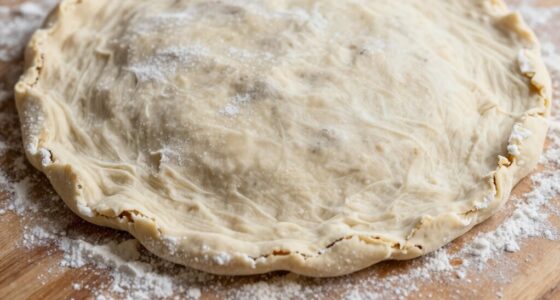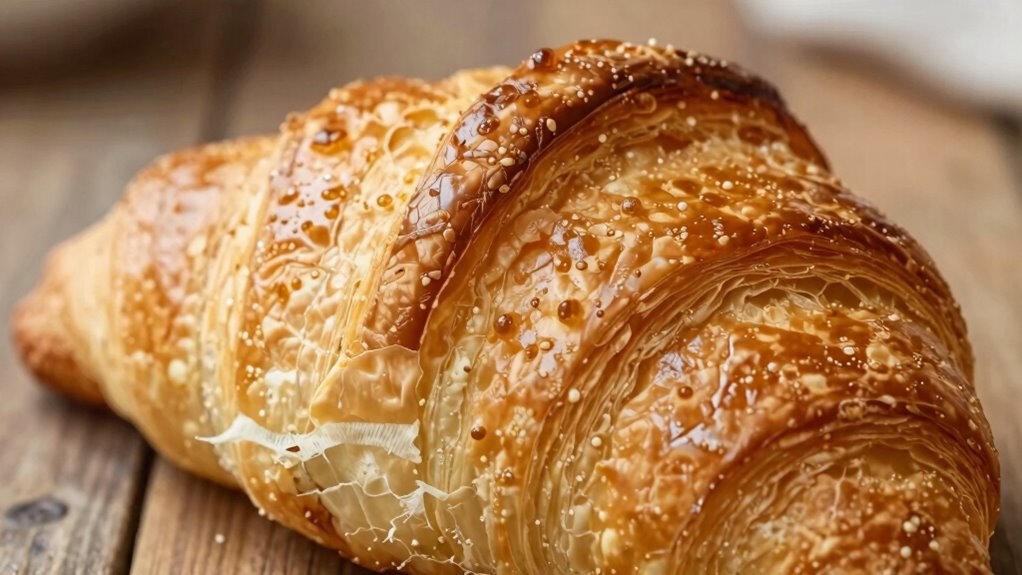

Laminated dough gets tough when you handle it at the wrong times, especially if it’s too warm or cold. When it warms up, the fat layers soften, making the dough sticky and harder to work with, while cold dough can tear easily. Rushing or not chilling the dough between folds disrupts the butter layering and gluten structure, leading to a tougher final product. Pay attention to temperature and timing, and you’ll improve your results—stay with us to learn more.

Get baking supplies delivered free with Prime
- Fast, free delivery on millions of items
- Prime Video, Amazon Music and more included
- Member-only deals all year
Key Takeaways
- Insufficient chilling causes the butter layers to soften, leading to toughness and difficulty in maintaining flaky layers.
- Overworking or rushing the process weakens gluten structure, resulting in a tough, less tender dough.
- Inconsistent dough temperature during lamination can cause uneven layering and toughness.
- Using low-quality ingredients reduces dough elasticity, increasing risk of tearing and toughness.
- Failing to properly handle and refrigerate dough between folds allows butter to soften excessively, making layers tough.
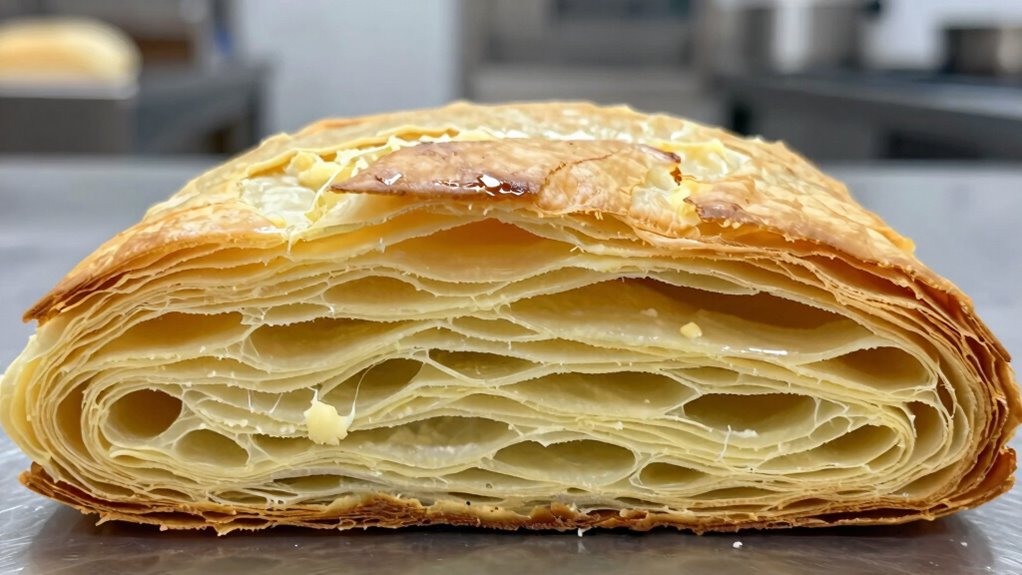
Laminated dough can be tricky to master, and even experienced bakers encounter common problems that affect the final product. One of the most frustrating issues is when the dough gets tough or difficult to work with at unexpected moments. This often happens because of factors like dough temperature and ingredient quality, which you might overlook but have a huge impact on the lamination process.
Your dough’s temperature is critical. If it’s too warm, the fat layers can soften or melt, making the dough sticky and hard to handle. Conversely, if it’s too cold, the dough becomes stiff and resistant to rolling out, which can cause tearing or uneven layers. To avoid these problems, you need to monitor the dough temperature carefully. Use a thermometer to confirm it stays within the ideal range, usually around 75-80°F (24-27°C). During rolling and folding, if the dough starts to warm up, chill it briefly to bring the temperature back down. Consistently working in a cool environment also helps maintain the right dough temperature, preventing it from becoming too warm or too cold at critical moments. Proper temperature control is essential for achieving the perfect lamination. Additionally, understanding how ambient conditions influence dough temperature can help you better anticipate and prevent issues, especially in environments with fluctuating temperatures. Knowing how to adapt to these conditions can help maintain consistent results.
Monitor dough temperature closely—aim for 75-80°F (24-27°C)—to ensure perfect lamination and flaky layers.
Ingredient quality plays a crucial role in the success of laminated dough. High-quality flour provides better gluten development, which affects the dough’s elasticity and strength. Low-quality flour can produce a weaker dough that’s prone to tearing or becoming tough when you try to layer the butter. Similarly, the type and freshness of butter matter. Using stale or low-fat butter can result in poor lamination, causing the dough to become tough or greasy at the wrong moments. Always opt for fresh, high-fat butter and good-quality flour to ensure the dough remains pliable and layers evenly during rolling. Ingredient quality directly impacts the dough’s ability to develop the necessary structure for lamination. It’s also helpful to understand dough elasticity, which is influenced by both ingredients and technique, to better control the process.
Another common mistake is rushing the process. If you try to work with the dough before it’s properly chilled, the layers can stick together or tear, making the final product tough and uneven. Patience is key—refrigerate the dough after each fold and before rolling out again. This helps maintain the proper dough temperature and keeps the butter firm enough to create those delicate, flaky layers. Proper chilling techniques can significantly improve the overall quality of your laminated dough. Incorporating these techniques can also help prevent dough toughness caused by improper handling or timing.
digital kitchen thermometer for baking
As an affiliate, we earn on qualifying purchases.
As an affiliate, we earn on qualifying purchases.
Frequently Asked Questions
How Does Humidity Affect Laminated Dough Quality?
Humidity affects laminated dough quality by impacting humidity control and dough elasticity. When humidity is high, excess moisture can make the dough sticky, challenging to work with, and reduce its elasticity, leading to tougher layers. Conversely, low humidity dries out the dough, making it brittle and difficult to laminate smoothly. Preserving proper humidity levels guarantees your dough stays elastic and manageable, resulting in perfect, flaky layers each time.
Can Using a Different Type of Fat Change Dough Toughness?
Yes, using a different type of fat can change dough toughness. Fat composition influences how the dough layers and handles, impacting its texture. For example, butter provides flavor and a tender, flaky texture, while shortening offers more stability and may make the dough less tough. By selecting fats with suitable composition, you can enhance the dough’s texture and prevent it from becoming tough at critical moments during baking.
What Role Does Oven Temperature Play in Dough Texture?
Did you know that oven calibration errors can affect baked goods by up to 15%? When baking laminated dough, oven temperature plays an essential role in achieving the right texture. If your oven isn’t properly calibrated, uneven heat can cause toughness or underbaked layers. Precise oven temperature guarantees proper baking timing, allowing the dough to rise correctly and develop a flaky, tender texture rather than becoming tough or dense.
Is It Better to Refrigerate or Leave Dough at Room Temperature?
It’s better to refrigerate laminated dough to control fermentation timing and enhance flavor development. Keeping it chilled slows yeast activity, giving you more control over fermentation, which improves dough strength and layers. Leaving dough at room temperature speeds up fermentation but risks overproofing, leading to toughness. Refrigeration also makes handling easier, helping you achieve the perfect flaky texture without compromising flavor or dough elasticity.
How Do Different Flour Types Impact Lamination Results?
Using the right flour is essential; it can make or break your laminated dough. Higher protein flours, like bread flour, develop more gluten, giving strength and elasticity, but too much can make the dough tough. Lower protein flours, like cake flour, produce a tender, flaky texture but lack structure. The key is balancing gluten development through your choice of flour, ensuring stretchiness without toughness. Think of it as the backbone of perfect lamination.
As an affiliate, we earn on qualifying purchases.
Conclusion
So, next time your laminated dough turns tough, remember it’s not just a fluke—it’s a puzzle waiting to be solved. Like a dance partner, it responds best when you understand its rhythm and needs. Patience, proper temperature, and gentle handling are your secret moves. Keep practicing, and you’ll discover the magic of perfect, flaky layers every time. After all, isn’t baking just a beautiful game of patience and precision? Embrace the challenge, and let your pastry shine.
As an affiliate, we earn on qualifying purchases.
As an affiliate, we earn on qualifying purchases.
Fall Picks
fall essentials
As an affiliate, we earn on qualifying purchases.