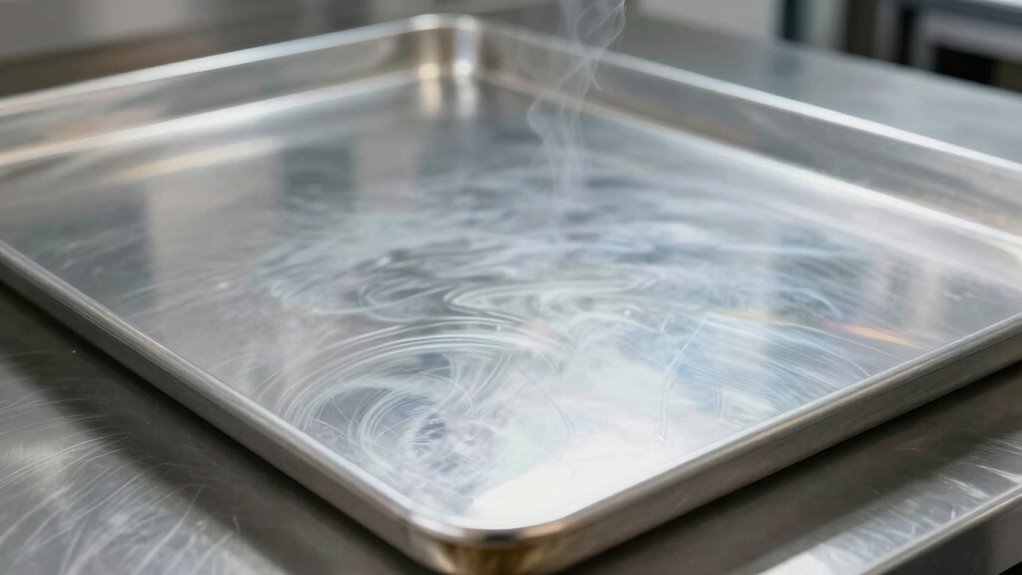

Large baking surfaces improve heat recovery because they increase the oven’s thermal mass, which helps absorb and store more heat. This added mass maintains a steady temperature even when you open the door or make multiple batches. With better insulation, heat loss is minimized, allowing the thermal mass to rapidly release stored heat. This combination ensures your oven recovers faster, stabilizes temperature, and boosts baking consistency — keep exploring to find out how this impacts your baking process.

Get baking supplies delivered free with Prime
- Fast, free delivery on millions of items
- Prime Video, Amazon Music and more included
- Member-only deals all year
Key Takeaways
- Larger surfaces increase thermal mass, allowing more heat absorption and storage for quicker recovery after baking batches.
- They help maintain stable oven temperatures by releasing stored heat evenly during recovery periods.
- Bigger baking areas require sufficient insulation to prevent heat loss and optimize heat retention.
- Increased thermal mass from large surfaces enhances heat transfer efficiency, reducing recovery time after door openings.
- Proper material selection and insulation work together to maximize heat retention and improve overall heat recovery efficiency.
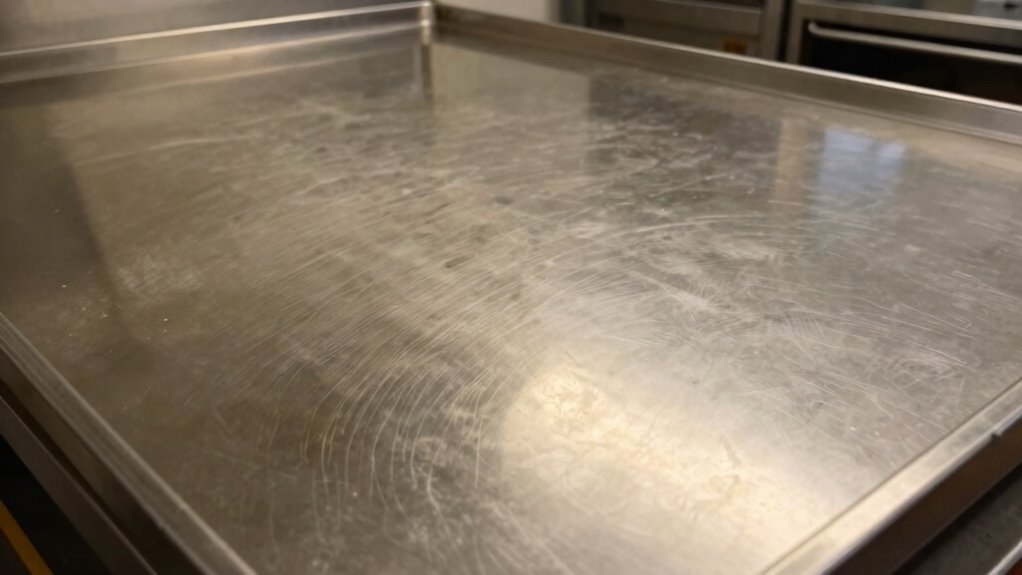
Have you ever wondered how professional bakeries manage to produce large quantities of baked goods efficiently? A key factor lies in their ability to maintain consistent heat and quickly recover it after opening the oven door. Large baking surfaces play a significant role in this process, and understanding how they influence heat recovery can make a big difference in your baking setup.
Large baking surfaces help maintain and quickly recover oven heat, boosting efficiency and consistency.
When you increase the size of your baking surface, you’re effectively adding more thermal mass. Thermal mass refers to the material’s ability to absorb, store, and release heat. A larger surface made of dense materials like stone or brick holds more heat, which helps stabilize the oven’s temperature during baking. This stability is crucial because frequent baking or opening the oven door causes temperature drops. The larger thermal mass acts as a heat reservoir, quickly releasing stored heat back into the oven chamber, preventing temperature fluctuations.
Oven insulation is another critical element in this equation. Well-insulated ovens minimize heat loss, allowing the thermal mass to work more effectively. When the insulation is exceptional, less heat escapes, and the oven can reach higher temperatures faster. After each batch, the stored heat in the thermal mass is released, aiding in rapid heat recovery and maintaining consistent baking conditions. Without proper insulation, even a large thermal mass can be less effective, as heat leaks out through gaps or thin walls, making it harder to recover the desired temperature swiftly.
In large baking surfaces, the interplay between thermal mass and oven insulation becomes essential. The greater the surface area, the more heat it can store, but only if the insulation prevents unnecessary heat loss. Properly balancing thermal mass and insulation ensures your oven can recover heat more quickly after every batch, reducing waiting times between bakes and increasing output efficiency. Additionally, the material properties of the thermal mass influence how efficiently heat is stored and released, which is crucial for optimal performance. Understanding these heat transfer principles can help you select the right setup for your specific baking needs. This setup is especially beneficial if you’re baking multiple items back-to-back, as it minimizes temperature dips and ensures consistent results.
Ultimately, the size of your baking surface influences how well your oven retains and recovers heat. A larger surface with substantial thermal mass, coupled with good insulation, allows for faster heat recovery, smoother baking processes, and better energy efficiency. By focusing on these factors, you can optimize your baking environment, produce more high-quality baked goods, and streamline your workflow with less downtime. Additionally, understanding the role of thermal mass can help you select the right materials and setup for your specific baking needs.
Products Worth Considering

Le Creuset Signature Enameled Cast Iron Round Dutch Oven, 5.5 qt, Deep Teal

Le Creuset Enameled Cast Iron Round Dutch Oven, 5.5 Qt, Flame

Le Creuset Enamemed Cast Iron Oval Dutch Oven, 5 qt., White/Crucible
As an affiliate, we earn on qualifying purchases.
Frequently Asked Questions
How Does Oven Insulation Impact Heat Recovery on Large Surfaces?
Oven insulation impacts heat recovery on large surfaces by improving insulation effectiveness and reducing heat loss. When insulation has low thermal conductivity, it traps heat better, helping the oven maintain consistent temperatures. This means your oven recovers heat more quickly after opening, especially on large surfaces where heat disperses faster. Better insulation guarantees less energy escapes, allowing for faster heat recovery and more efficient baking overall.
Do Different Baking Surface Materials Affect Heat Transfer Efficiency?
Yes, different baking surface materials affect heat transfer efficiency. You’ll notice that materials with high baking surface conductivity, like metal, transfer heat more quickly and evenly, improving baking performance. Meanwhile, surface material durability guarantees your baking surface withstands high temperatures without warping or damage. Choosing a material with good conductivity and durability helps optimize heat transfer, leading to consistent results and longer-lasting baking surfaces.
How Does Ambient Room Temperature Influence Heat Recovery?
Think of your oven as a storyteller, where ambient influence sets the scene. When room temperature is warm, heat recovers faster, like a sprinter bouncing back after a race. Cooler rooms slow this process, like a fog lingering over a landscape. Room temperature directly impacts heat recovery, affecting baking times and results. So, maintaining the ambient influence steady ensures your oven performs reliably, delivering perfect baked goods every time.
Can Airflow Patterns Alter Heat Retention on Large Baking Trays?
Yes, airflow patterns can alter heat retention on large baking trays. When airflow circulation is uneven, surface convection varies across the tray, causing some areas to lose heat faster. Proper airflow promotes consistent heat distribution, helping the tray retain heat longer. Conversely, disturbed or poorly directed airflow can create cold spots, reducing overall heat recovery. Managing airflow guarantees even baking and better heat retention on large surfaces.
What Role Does Oven Door Insulation Play in Heat Recovery?
Oven door insulation, especially the quality of oven door seals and insulation thickness, plays a vital role in heat recovery. When your oven door seals are intact, they prevent heat from escaping, allowing the oven to maintain consistent temperature. Thicker insulation enhances this effect by reducing heat loss through the door. Together, these features help your oven recover heat faster after opening, improving efficiency and cooking performance.
Conclusion
Understanding how large baking surfaces affect heat recovery helps you optimize your oven’s performance. When you use bigger surfaces, it takes longer for the oven to bounce back to the right temperature, which can lead to uneven baking. Did you know that ovens with larger surfaces can take up to 20% longer to recover heat after opening? Keeping this in mind guarantees you plan your baking sessions better, so your treats come out perfectly every time.