Your oven rack position really affects how your food turns out. For baking cakes or bread, keep the rack in the middle for even heat. When roasting veggies or meats, aim for the middle or top rack to get good browning. If you’re broiling, place the pan about 3-6 inches from the heat source. Adjust your rack based on food size and thickness. Keep exploring to learn the best placements for different dishes.
Key Takeaways
- The middle rack is ideal for most baking and roasting to ensure even heat distribution.
- Use the top rack for broiling or quick browning, keeping foods close to the heating element.
- Place large or thick foods on the lower or middle rack for thorough heat penetration.
- Keep delicate or thin items higher up to prevent overcooking or burning.
- Avoid overcrowding and blocking vents to ensure proper heat circulation and safety.
oven rack position guide
As an affiliate, we earn on qualifying purchases.
As an affiliate, we earn on qualifying purchases.
What Are the Oven Rack Positions and Where Should They Go?
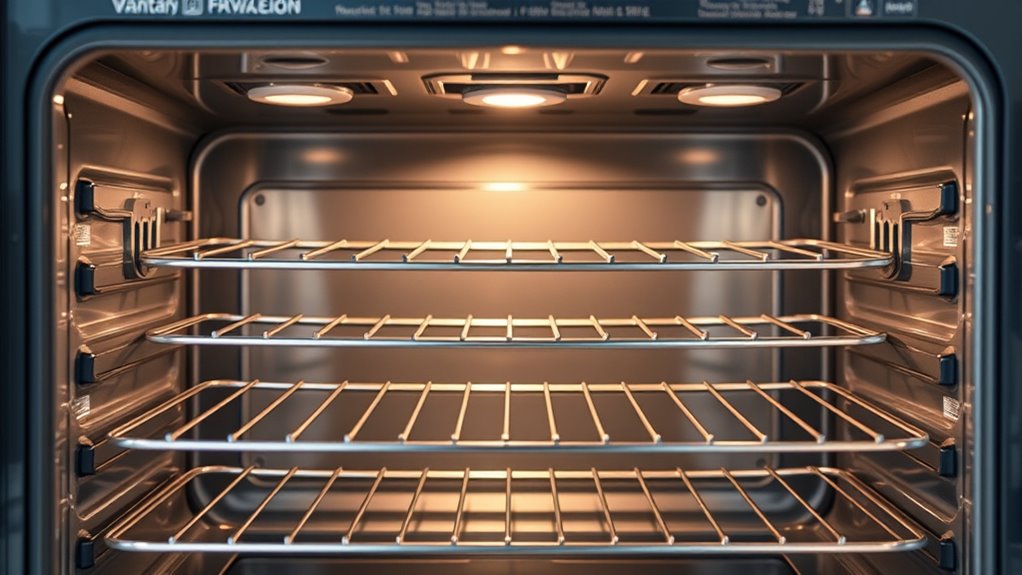
Understanding oven rack positions is essential for cooking or baking your dishes perfectly. The three main rack levels are high, middle, and low. The middle rack is ideal for most baking and roasting, providing even heat distribution. The top rack is best for broiling or browning foods quickly, but avoid placing delicate baked goods too close to the heat source. The bottom rack works well for roasting vegetables or pizzas where you want direct heat. Always prioritize oven safety by keeping racks clean to prevent food buildup and potential fire hazards. Before adjusting racks, turn off the oven and let it cool if needed. Proper rack placement ensures your dishes cook evenly and reduces the risk of accidents or uneven results. Additionally, understanding heat distribution can help optimize your cooking performance. Being aware of oven heat zones can further enhance your ability to select the right rack position for specific dishes. Knowing the proper placement of racks also helps in achieving desired textures and finishes in your meals, especially when considering the effects of air circulation within the oven.
adjustable oven rack
As an affiliate, we earn on qualifying purchases.
As an affiliate, we earn on qualifying purchases.
How Does Rack Placement Change Baking and Roasting Results?
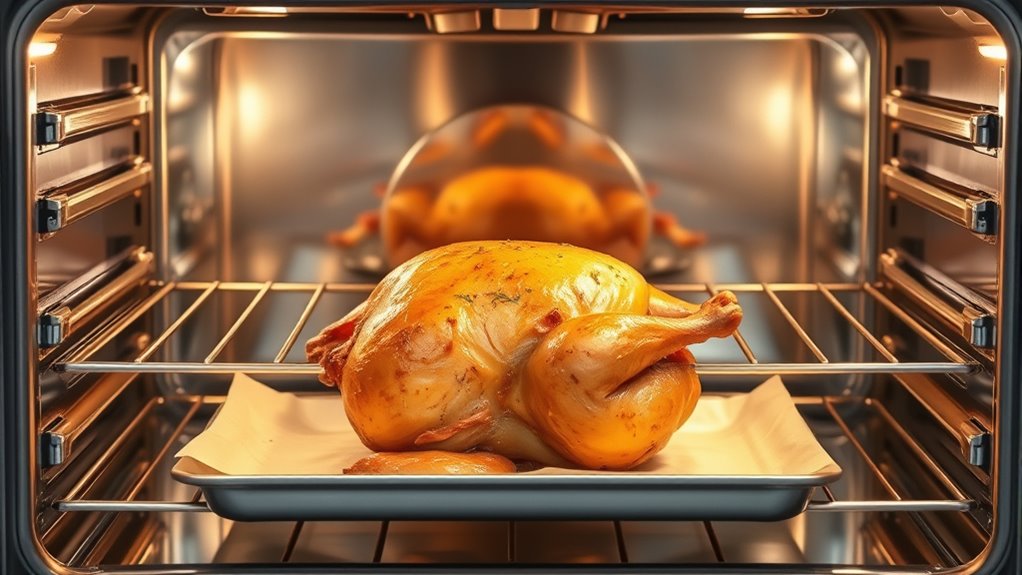
Where you place your rack in the oven considerably influences how evenly your baked goods or roasted foods cook. If you position the rack too high or too low, hot spots or cold zones can develop, affecting oven safety and result quality. For example, placing a pan too close to the broiler can cause burning or uneven browning, while too low might result in undercooked centers. Proper rack placement ensures consistent heat exposure, improving baking and roasting outcomes. Additionally, maintaining your racks regularly keeps them free of grease and debris, which can affect heat transfer and oven safety. Correct rack positioning promotes even cooking, prevents accidents, and helps you achieve the best possible results every time.
baking and roasting oven rack
As an affiliate, we earn on qualifying purchases.
As an affiliate, we earn on qualifying purchases.
Where’s the Best Place to Rack for Baking Cakes and Breads?

For baking cakes and breads, positioning your rack in the middle of the oven generally yields the best results. This placement ensures even heat distribution, helping your baked goods rise uniformly and develop a consistent crumb. Keeping the rack at this level also promotes oven safety by reducing the risk of spills or overflows hitting the heating element. Remember to always clean your rack thoroughly after each use to prevent residue buildup that can affect baking performance and hygiene. Proper rack cleaning maintains a safe baking environment and prevents cross-contamination of flavors. Avoid placing the rack too close to the top or bottom, as uneven heating can cause uneven baking or burning. Overall, the middle rack offers ideal balance for achieving perfectly baked cakes and breads.
broiler pan with rack
As an affiliate, we earn on qualifying purchases.
As an affiliate, we earn on qualifying purchases.
How to Position Your Rack for Perfect Roasting of Veggies and Meats
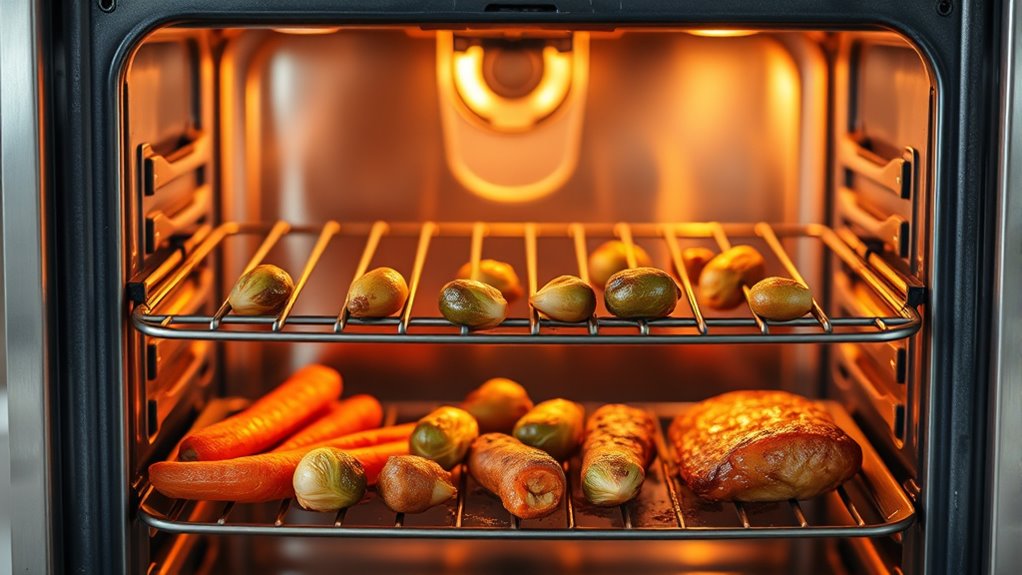
To roast veggies and meats perfectly, you need to adjust your oven rack to the right position. Placing the rack at the middle or top ensures even heat distribution and ideal cooking results. Experimenting with different rack heights helps you achieve the best browning and tenderness. Additionally, understanding the rack position can significantly impact the performance of your oven, much like choosing the right electric bike model can affect speed and power. For optimal results, consider how piercing care and hygiene influence the evenness of heat and overall cooking quality. Being aware of celebrity lifestyle insights can also inspire your kitchen setup and cooking routines. Incorporating sound healing science principles into your kitchen environment—such as using calming background music—may also enhance your cooking experience and relaxation. Recognizing kitchen ergonomics can further improve your comfort and efficiency while roasting.
Adjust Oven Racks
Adjusting your oven rack is essential for achieving perfectly roasted vegetables and meats. Proper pan placement depends on making the right rack adjustments so heat reaches your food evenly. If you want a crispy exterior, position the rack closer to the heating element. For more even cooking and gentle roasting, place the rack in the middle. When roasting larger cuts or multiple items, you might need to shift the rack higher or lower to avoid overcrowding. Always consider the type of dish and the desired outcome. Making thoughtful rack adjustments ensures your pan placement optimizes heat exposure, resulting in evenly cooked, beautifully roasted dishes. Remember, small changes in rack position can considerably impact your cooking results. Understanding oven heat distribution can help you make better rack placement choices for consistent results.
Position for Even Heat
Positioning your oven rack correctly is key to guaranteeing even heat distribution when roasting vegetables and meats. Placing the rack in the middle or slightly lower helps prevent hot spots, promoting uniform cooking. This setup enhances oven safety by reducing the risk of uneven cooking that could lead to burnt or undercooked food. Remember to clean your rack regularly to remove grease and debris, which can affect heat circulation and cause uneven roasting. A clean rack also minimizes smoke and potential fire hazards. Always check your oven’s heat distribution and adjust the rack position accordingly for consistent results. Proper rack placement, combined with regular rack cleaning, ensures your roasting sessions are both safe and successful, giving you perfectly cooked, delicious dishes every time. Being aware of oven performance can also help you optimize your rack positioning for even results. Additionally, understanding heat flow within your oven can help you make more precise adjustments for optimal cooking. Monitoring thermal behavior can further improve your ability to achieve consistent roasting outcomes. Furthermore, paying attention to air circulation in your oven can enhance heat distribution and improve roasting quality. To further optimize your roasting, consider how hot spots can be minimized by strategic rack placement, ensuring every part of your food receives even heat.
Use Top or Middle
Placing your oven rack in the top or middle position is ideal for achieving perfectly roasted vegetables and meats. The rack height determines how close your food is to the heat source, so choosing the right level guarantees even browning and thorough cooking. For roasting vegetables that need crispness, position the rack closer to the top. When roasting larger cuts of meat or multiple dishes, the middle rack provides balanced heat distribution. Proper pan placement on the rack is vital; avoid overcrowding to allow air circulation. Adjusting rack height allows you to control the heat exposure, preventing burning or undercooking. Using the right rack position can also influence the cooking time and texture of your dishes. To further enhance your roasting results, understanding the oven’s heat distribution can help you make more precise adjustments. Additionally, connected home technology can help you track and optimize your oven’s performance for consistent results. For best results, consider the types of dishes you’re preparing, as different recipes may require different rack placements. Being aware of oven calibration can also ensure that your oven heats accurately, leading to better cooking outcomes.
Where’s the Best Rack for Broiling Quickly and Evenly?
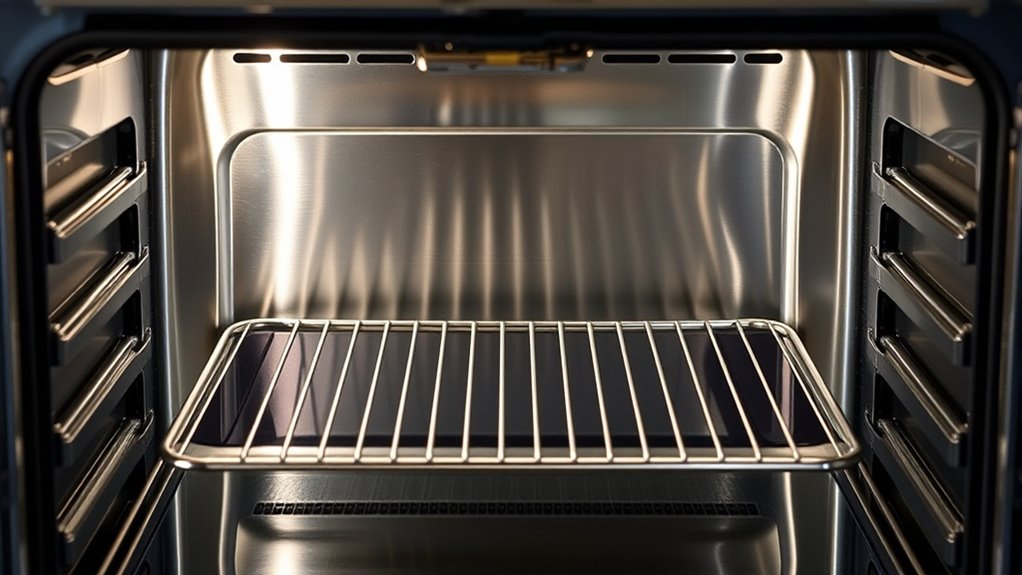
The best rack for broiling quickly and evenly is typically one positioned about three to six inches from the heating element. This proximity allows heat to reach your food efficiently, ensuring a crisp exterior without overcooking the inside. To get the most even results, keep the oven temperature in check—broiling usually requires high heat, around 500°F, but monitor it to prevent burning. Your choice of cookware material also matters; metal pans like stainless steel or cast iron conduct heat well, promoting even browning. Avoid glass or ceramic trays for broiling, as they don’t heat as quickly or evenly. Positioning your rack correctly helps you control the heat exposure, ensuring your dish browns perfectly and cooks uniformly.
How to Adjust Your Rack for Different Pan Sizes and Food Thickness

Adjusting your oven rack based on pan size and food thickness guarantees even cooking and browning. For larger pans, position the rack lower to prevent over-browning of the edges while still cooking the center evenly. Smaller pans, like muffin tins or roasting dishes, should be placed higher for better heat exposure. When cooking thick foods, such as roasts or layered casseroles, set the rack a bit lower to allow heat to penetrate thoroughly. Conversely, for delicate or thin items like cookies or fish fillets, place the rack higher to avoid overcooking. Always consider the pan size and food thickness when adjusting the rack, ensuring heat distributes evenly for consistent results. Proper placement improves cooking quality and prevents common issues like uneven browning or undercooked centers. Additionally, understanding how heat distribution works within your oven can help you optimize rack placement for even cooking every time. Being aware of oven calibration can also ensure your oven heats accurately, further enhancing your cooking results. Recognizing how air circulation influences heat transfer can help you make smarter adjustments for optimal cooking outcomes.
Common Rack Placement Mistakes You Want to Avoid
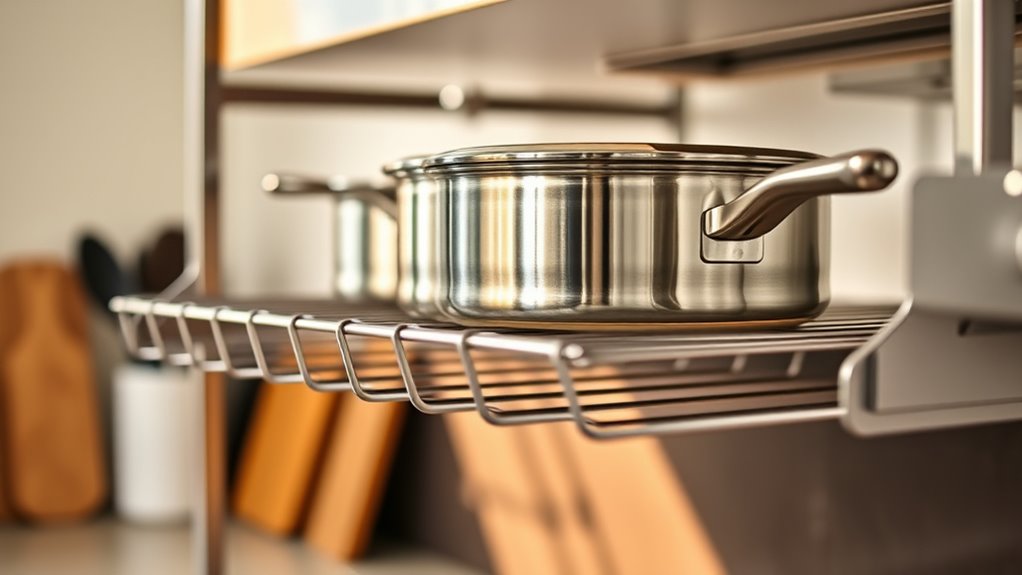
One common mistake is overloading the upper rack, which blocks heat flow and leads to uneven cooking. Ignoring proper heat circulation can cause some items to burn while others remain undercooked. Additionally, placing fragile items in the wrong spots risks damage; knowing where to position delicate dishes is key to avoiding breakage.
Overloading Upper Racks
Overloading upper racks might seem like a quick way to maximize storage, but it often leads to safety risks and damage to your dishes. When you cram too many items, especially heavy pots or pans, it can cause dishes to shift or fall during the wash cycle, risking breakage. This also affects oven safety if items block heating elements or vents. Overloading makes cleaning tips more challenging, as water and detergent may not reach all surfaces properly. To avoid issues, distribute weight evenly and don’t stack items too high. Proper loading guarantees dishes are thoroughly cleaned and reduces the risk of accidents. Remember, a well-organized rack not only protects your cookware but also keeps your kitchen safe and your dishwasher functioning efficiently.
Ignoring Heat Circulation
Ignoring heat circulation is a common rack placement mistake that can substantially reduce your dishwasher’s cleaning efficiency. When items block airflow, heat circulation is hindered, preventing hot water and steam from reaching all surfaces effectively. This impacts cleaning and drying performance. To optimize airflow and heat distribution, position items with space between them and avoid overcrowding. Use the following table for guidance:
| Proper Placement Tips | Airflow Optimization Strategies |
|---|---|
| Leave gaps between dishes | Ensure no items block vents or spray arms |
| Avoid stacking items tightly | Place tall items away from the center |
| Position larger items on the sides | Keep vents clear for heat circulation |
| Place items with open surfaces | Maintain even spacing for consistent heat flow |
| Do not block spray arms | Ensure water and heat can circulate freely |
Proper rack placement enhances heat circulation, delivering cleaner, drier dishes.
Misplacing Fragile Items
Proper rack placement isn’t just about optimizing heat flow—it also involves carefully positioning fragile items to prevent damage. If you place delicate dishes or glassware in unstable spots, they’re more likely to break during the cycle. To guarantee rack stability and protect fragile items, avoid these common mistakes:
- Placing fragile items on the top rack where they might shift or fall
- Stacking delicate glasses or dishes without secure support
- Overloading shelves, which can cause items to bump or topple
Tips to Experiment and Find Your Perfect Rack Position
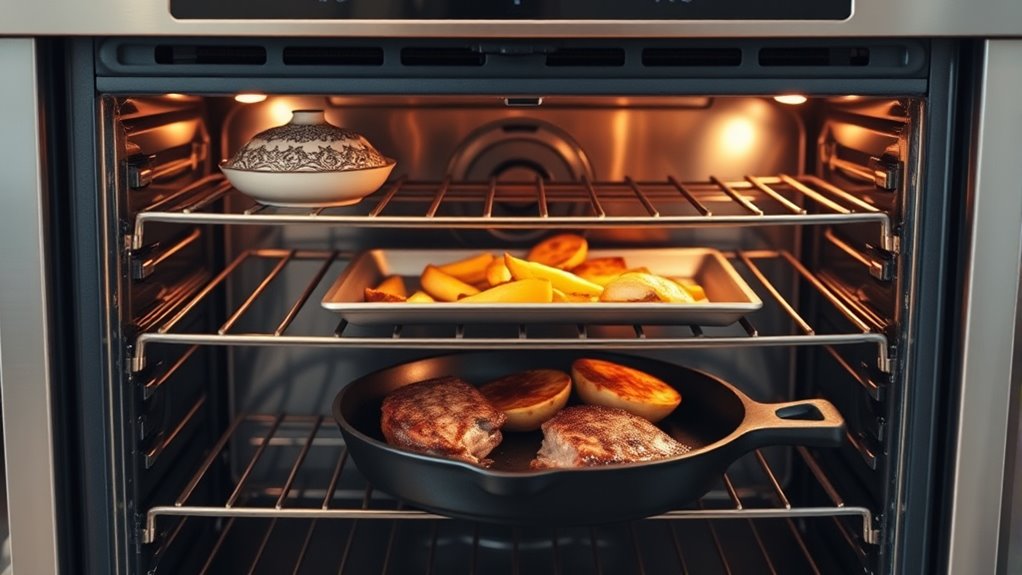
Finding your ideal rack position often requires some trial and error, so don’t be afraid to experiment. Start by adjusting the rack to different levels to see how heat circulates around your food. Remember, oven safety is key—always use oven mitts and avoid sudden movements. Pay attention to the rack material; some racks retain heat longer or conduct it differently, affecting cooking times and results. For example, chrome racks may be less durable but offer good heat transfer, while wire racks provide better airflow. Test with small batches first to gauge how each position impacts your cooking. Keep notes on your findings, so you can replicate your perfect setup in future meals. Experimenting will help you discover the best rack position for every dish.
Frequently Asked Questions
Can Rack Positions Affect Energy Efficiency During Baking?
Yes, rack positions can influence energy efficiency during baking. When you place your pan correctly, it guarantees better heat distribution and minimizes heat loss, especially if your oven insulation isn’t perfect. A properly positioned rack helps your oven maintain consistent temperatures, saving energy and reducing baking time. Avoid overcrowding or placing pans too close to the oven walls, as this can disrupt heat flow and decrease overall efficiency.
How Do Different Oven Types Influence Rack Placement Choices?
You might think oven type doesn’t matter, but it actually influences rack placement more than you’d guess. For example, a well-insulated oven keeps heat steady, so you can place racks higher or lower without risking uneven baking. Consider rack material too—metal racks conduct heat differently. So, whether you have a convection oven or traditional one, adjusting rack position based on insulation and material guarantees even cooking and perfect results.
Are There Safety Concerns With Certain Rack Heights?
Yes, there are safety concerns with certain rack heights. You should always prioritize oven safety by ensuring your racks are stable and securely positioned. Avoid placing heavy pans on unstable racks or at heights that might cause tipping or falling. Always check that racks are properly seated and level before cooking. Proper rack placement minimizes risks, keeps your cookware stable, and prevents accidents during oven use.
Should Rack Position Change for Convection Versus Standard Ovens?
Back in the day, you’d just throw your pan in and hope for the best, but now you know better. For convection ovens, you should adjust the rack position to optimize air circulation, which helps with even oven cleaning and maintains rack durability. In standard ovens, a lower rack works well for larger dishes. Always consider the oven type to make sure your pans last longer and cook evenly.
How Does Rack Placement Impact Cleaning and Maintenance?
You should consider how rack placement affects cleaning and maintenance by ensuring oven safety and rack stability. Properly positioned racks make it easier to access and clean the oven interior, reducing buildup and potential fire hazards. Stable racks prevent accidental spills or dislodging during cleaning, which keeps your oven functioning safely. Regular maintenance becomes simpler when racks are securely placed, helping you maintain a safe, clean, and efficient oven environment.
Conclusion
Think of your oven as a stage, and your rack positions as the spotlight. When you place your pans wisely, you’ll see your baking and roasting performances shine. Don’t be afraid to experiment and find what works best for you—each dish deserves its perfect seat. With a little practice, you’ll master the art of rack placement, turning your oven into a culinary orchestra where every dish hits the high note.