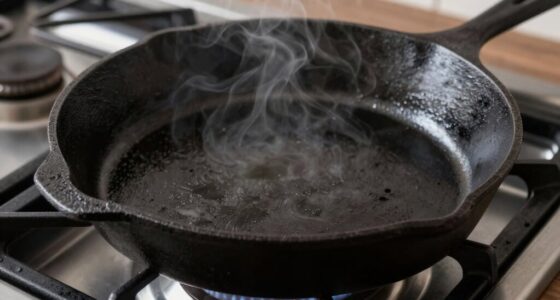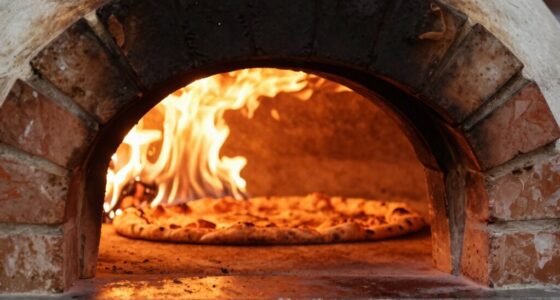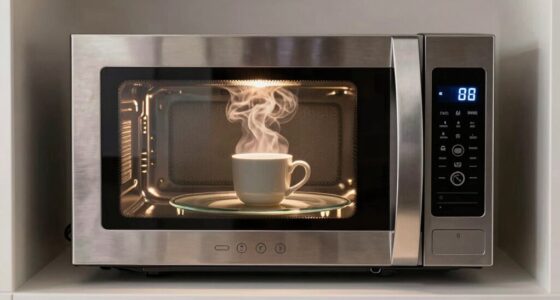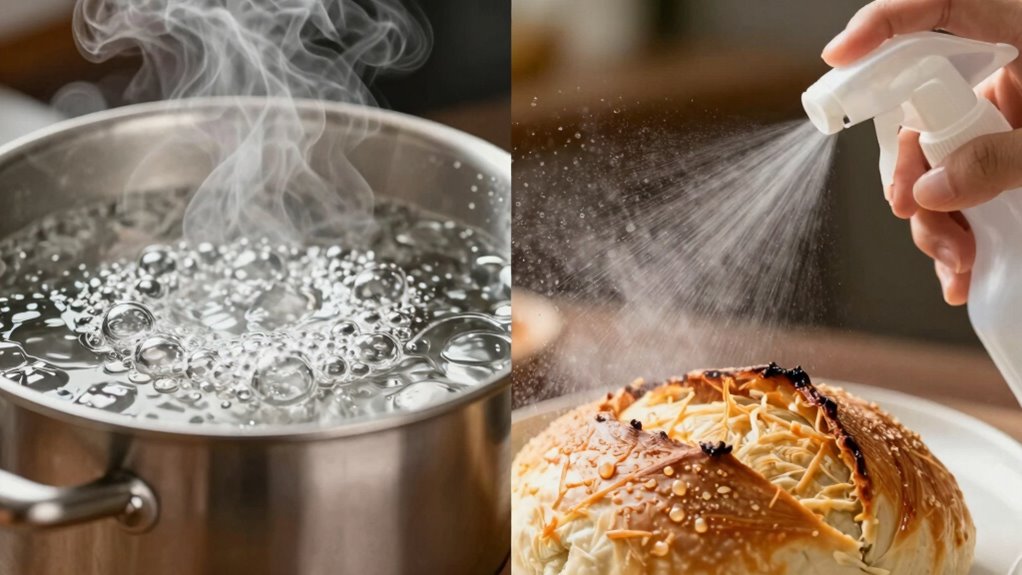
Steam pans create consistent humidity throughout the oven, making them ideal for baking bread, roasts, and delicate items. Spritzing targets moisture directly onto surfaces, helping achieve crispy crusts and shiny finishes. Both methods have unique advantages: steam pans guarantee even internal moisture, while spritzing offers precise surface control. Choosing the best depends on your baking goal. Keep exploring to discover how combining both techniques can enhance your oven performance even further.

Get baking supplies delivered free with Prime
- Fast, free delivery on millions of items
- Prime Video, Amazon Music and more included
- Member-only deals all year
Key Takeaways
- Steam pans create consistent, environment-wide humidity, ideal for baking bread and delicate items.
- Spritzing offers targeted moisture control for crust development and surface shine.
- Steam pans promote internal moisture, while spritzing enhances surface texture and appearance.
- Combining both methods allows for versatile moisture management in complex baking projects.
- Choice depends on desired crust, crust shine, and internal moisture needs for optimal results.
When it comes to maintaining moisture and flavor in your cooking, you have two popular options: steam pans and spritzing. Both methods aim to enhance baking techniques by improving moisture retention, but they do so in different ways. Understanding how each method works helps you decide which is best for your specific needs.
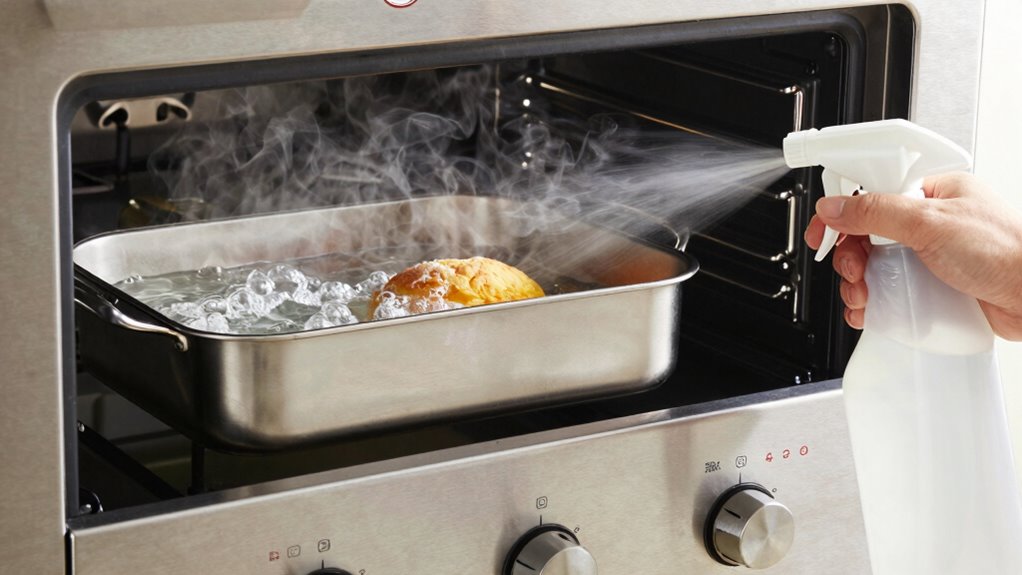
Steam pans involve adding water to a pan beneath your baking dish or within a dedicated steamer setup. When heated, the water creates steam that surrounds your food or baked goods, delivering consistent moisture during the cooking process. This technique is especially effective when baking bread, roasting meats, or preparing delicate items like custards, where moisture retention is key to achieving the right texture and flavor. The steam acts as a gentle heat source, preventing the surface from drying out and helping your baked goods develop a tender crumb with a glossy finish. Using a steam pan can also help in regulating oven humidity, which is crucial for certain baking results.
Spritzing, on the other hand, involves using a spray bottle to apply a fine mist of water directly onto the surface of your food or baked goods during cooking. This approach is commonly used in baking techniques that require a crispy crust or a shiny glaze, such as bread, pizza, or roasted vegetables. By periodically spritzing, you introduce moisture in controlled bursts, which can help create a desirable crust without overly steaming the entire dish. Spritzing can also help prevent food from drying out in the oven, especially when you’re baking for an extended period or at high temperatures.
While both methods improve moisture retention, they serve slightly different purposes. Steam pans provide a consistent environment of moist heat, ideal for recipes that demand even moisture throughout. Spritzing offers a more targeted approach, allowing you to control the surface moisture without *considerably* altering the internal environment. This makes spritzing particularly useful when you want a crisp exterior or shiny finish, while steam pans excel at keeping the entire dish moist and tender.
Choosing between the two depends on your baking techniques and the results you desire. If you’re baking bread or moist cakes, steam pans will give you better moisture retention and a uniform texture. When you’re aiming for a crispy crust or shiny surface, spritzing provides precise control over surface moisture. Both methods can also be combined for complex baking projects, giving you versatility and control over your oven environment. Ultimately, understanding these differences enables you to optimize your baking process and produce consistently delicious results.
Products Worth Considering

Le Creuset Signature Enameled Cast Iron Round Dutch Oven, 5.5 qt, Deep Teal

Ninja Artisan 5-in-1 Portable Electric Pizza Oven, Blue & Gold

Le Creuset Enameled Cast Iron Round Dutch Oven, 5.5 Qt, Flame
As an affiliate, we earn on qualifying purchases.
Frequently Asked Questions
Can Using Steam Pans Affect Baking Times?
Using steam pans can affect baking times by increasing steam efficiency, which tends to extend the baking process. The added moisture helps create a better crust and softer interior, but it may require you to adjust your timing. Keep an eye on your baked goods, as the steam pan’s efficiency means they could take slightly longer to reach perfect doneness. Experimenting will help you find the ideal baking time for your setup.
Is Spritzing Necessary for All Types of Baked Goods?
Spritzing isn’t necessary for all baked goods, but it can help with moisture retention and crust formation, especially for bread and pastries. If you want a crisp crust or softer crumb, spritzing adds moisture during baking. However, for cookies or cakes, it’s usually unnecessary. Consider the type of baked good and desired texture; spritzing is a helpful tool but not always essential.
Which Method Conserves More Oven Energy?
Spritzing is more energy-efficient because it uses less water and heat, reducing overall energy consumption. Studies show that conserving energy in baking can cut environmental impact by up to 30%. You’ll save power and reduce your carbon footprint by spritzing instead of filling a steam pan. This method heats up faster and maintains moisture without wasting energy, making it the smarter choice for eco-conscious baking.
Are There Safety Concerns With Spray Spritzers?
There are safety concerns with spray spritzers, especially regarding food safety. If you use a spray sanitizer, make certain it’s food-grade and properly labeled to avoid contamination. Always follow manufacturer instructions and avoid inhaling fumes. Keep the sprayer clean to prevent bacteria buildup, and store it away from food areas. Proper handling minimizes health risks, ensuring your cooking environment remains safe and hygienic.
Do Different Oven Models Favor One Method Over the Other?
Your oven model influences which method works best. Some ovens have better compatibility with steam pans, offering consistent steam penetration for even cooking. Others may respond better to spritzing, especially if they have a steam injection feature. Check your oven’s manual to understand its capabilities. Generally, if your oven supports steam injection, spritzing can be effective. Otherwise, using steam pans guarantees reliable steam penetration and better results.
Conclusion
In the end, whether you choose steam pans or spritzing depends on your needs, but remember, “a little goes a long way.” Steam pans offer consistent moisture, perfect for even cooking, while spritzing gives you quick, targeted moisture. Try both to see what suits your style best. Whichever method you pick, mastering oven moisture keeps your dishes flavorful and tender—because sometimes, it’s the little things that make all the difference.