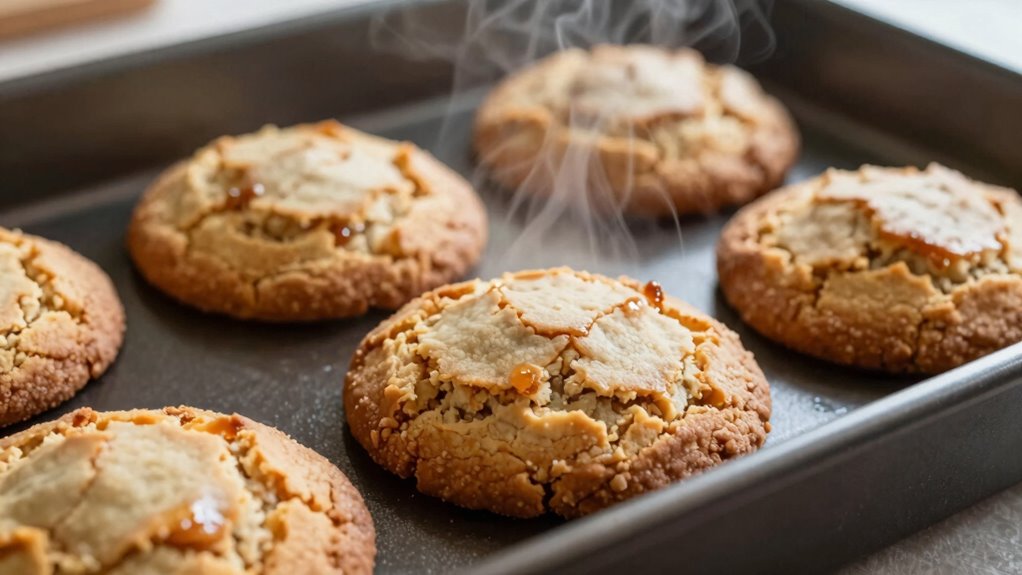

Residual heat causes your cookies to keep baking even after you remove them from the pan because heat continues to transfer from the hot cookie to the cooler surroundings through conduction, convection, and radiation. This lingering warmth gradually dissipates over time, leading to overcooking if you don’t act quickly. To prevent this, using wire racks or cooling promptly helps manage residual heat. If you want to understand how to perfect your cookie timing, keep exploring these cooling techniques.
Key Takeaways
- Residual heat remains in the cookies and pan after removal, continuing to cook the cookies slightly.
- Heat transfer via conduction from the hot pan keeps cookies warm and can cause ongoing cooking.
- The cookies’ temperature slowly declines due to convection and radiation, extending their cooking time.
- Removing cookies from the pan too early allows residual heat to finish cooking them, risking underbaking.
- Using cooling racks or letting cookies rest reduces residual heat and prevents overcooking.

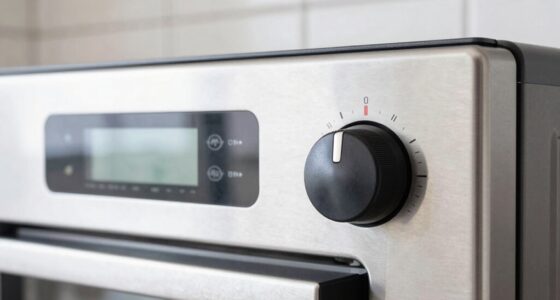
Have you ever wondered what happens to a hot object after you turn off a stove or a fire? When you remove a tray of freshly baked cookies from the oven, the residual heat doesn’t instantly vanish. Instead, it continues to cook the cookies even after you’ve turned off the oven. This lingering warmth is a perfect example of residual heat, which is the energy stored in an object due to its temperature. Your oven temperature plays an essential role here. When the oven is set, it heats up to a specific temperature that transfers heat into your cookies, causing them to bake. Once the heat source is off, the oven’s walls and the air inside still hold a lot of energy, which slowly disperses over time.
Understanding the cooling methods involved helps you better grasp why your cookies keep cooking. The primary method is heat transfer through conduction, where heat moves from the hot cookie to cooler surrounding air and surfaces. Convection also plays a part as the air around the hot object absorbs heat and circulates, carrying residual warmth away. Radiant heat, although less dominant in a typical oven, can still contribute to ongoing heat transfer. As these processes occur, the temperature of the cookies gradually drops, but not immediately. That’s why you might notice cookies continue to brown or firm up even after being removed from the oven.
It’s essential to recognize that residual heat can affect your cooking timing. For instance, if you’re baking delicate cookies or pastries, removing them at the perfect moment is key. If you wait too long, residual heat might overbake them, resulting in a crunchier texture or darker color than intended. Conversely, removing them too early might lead to undercooked centers. To manage this, you can use cooling methods—like placing your baked goods on a wire rack—to allow heat to dissipate more evenly and quickly. Opening the oven door slightly can also help release excess heat, preventing continued cooking. Knowing how to manage heat dissipation can make a significant difference in your baking results.
In some cases, residual heat can be beneficial. For example, in roasting vegetables or slow-cooking stews, the retained warmth keeps the food cooking gently even after the heat source is turned off. But for baking cookies, it’s all about timing and understanding how oven temperature and cooling methods influence residual heat. Knowing that residual heat persists after turning off your oven helps you make better decisions, ensuring your baked goods reach just the right doneness without overdoing it. So next time you pull out those cookies, remember that the heat isn’t gone yet—it’s still doing its work behind the scenes.
Frequently Asked Questions
How Can I Prevent Cookies From Overcooking After Removal?
To prevent cookies from overcooking after removal, use cooling techniques like transferring them to a wire rack immediately. This helps dissipate residual heat quickly. Also, adjust your baking timing so cookies come out slightly underdone, as residual heat will finish the cooking. Keep a close eye on the clock, and don’t forget to remove cookies just before they appear fully baked for ideal results.
Does Residual Heat Affect Different Types of Cookies Equally?
Did you know that residual heat affects different cookies unevenly? For example, chewy cookies retain heat longer, influencing their texture, while crispy ones cool quickly. This means residual heat can alter baking time and cookie texture depending on the type. So, you should adjust your baking process accordingly—taking into account how each cookie responds to lingering warmth—to prevent overcooking and achieve perfect results.
Can Using a Cooling Rack Stop Residual Heat From Cooking Cookies Further?
Using a cooling rack can help stop residual heat from cooking your cookies further by promoting heat transfer away from them. When you place cookies on a cooling rack, air circulates around them, dissipating heat more effectively than a flat surface. This rapid heat transfer prevents the cookies from overcooking and keeps their texture just right. So, definitely use a cooling rack to avoid those extra seconds of residual heat.
How Long Does Residual Heat Typically Last on a Hot Pan?
Residual heat on your pan typically lasts from 5 to 15 minutes, depending on the pan’s material and thickness. As the pan cools, heat retention slowly diminishes, but it can still transfer enough warmth to continue cooking your cookies. To prevent overcooking, remove your pan from heat promptly and let it cool naturally or use a cooling rack to speed the process. Stay attentive to avoid unnecessary heat lingering.
Are There Specific Materials That Retain Less Residual Heat?
Certain materials, like stainless steel and aluminum, retain less residual heat because of their insulation properties and high heat conductivity. You’ll find they cool down faster, preventing overcooking. Cast iron, on the other hand, has excellent heat retention, making it stay hot longer. So, if you want quicker cooling, opt for cookware with lower heat retention, and keep an eye on how quickly the material conducts heat away from your food.
Conclusion
Remember, residual heat is like a silent chef, quietly finishing your cookies while you think they’re done. It’s the reason your treats keep cooking even off the stove, just as a lingering memory stays long after the moment passes. So, next time you pull your baked goodies from the pan, pause for a moment. Embrace the contrast—what’s finished isn’t truly gone, and sometimes, letting it sit just a little longer makes all the difference.