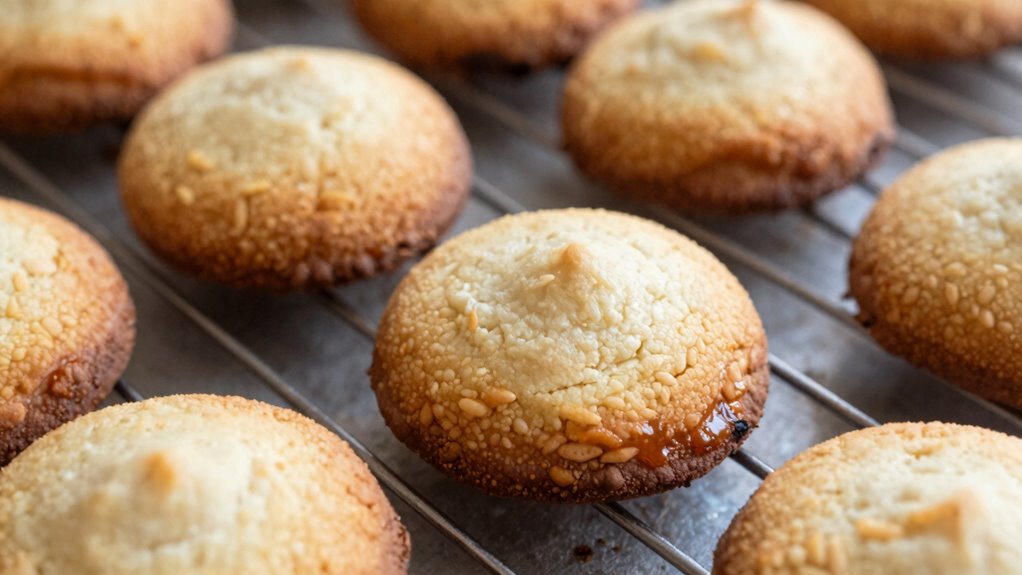

If your cookies brown too fast on the bottom, your oven might be running hotter than the setting indicates, or your baking sheet could be too dark or warped, causing uneven heat. Placing the rack too low can also lead to quicker browning. Using a reliable oven thermometer and switching to a light-colored, flat baking sheet can help prevent this issue. Keep exploring ways to perfect your baking, and you’ll soon get consistently even cookies.
Key Takeaways
- The oven may be running hotter than the set temperature, causing rapid bottom browning.
- Dark or non-stick baking sheets absorb more heat, leading to faster browning of cookie bottoms.
- Placing the rack too close to the bottom heating element accelerates browning on the cookie bottoms.
- Using warped or uneven baking sheets creates hot spots that unevenly brown cookie bottoms.
- Not monitoring cookies closely can result in over-baking or burning bottoms before the tops are done.
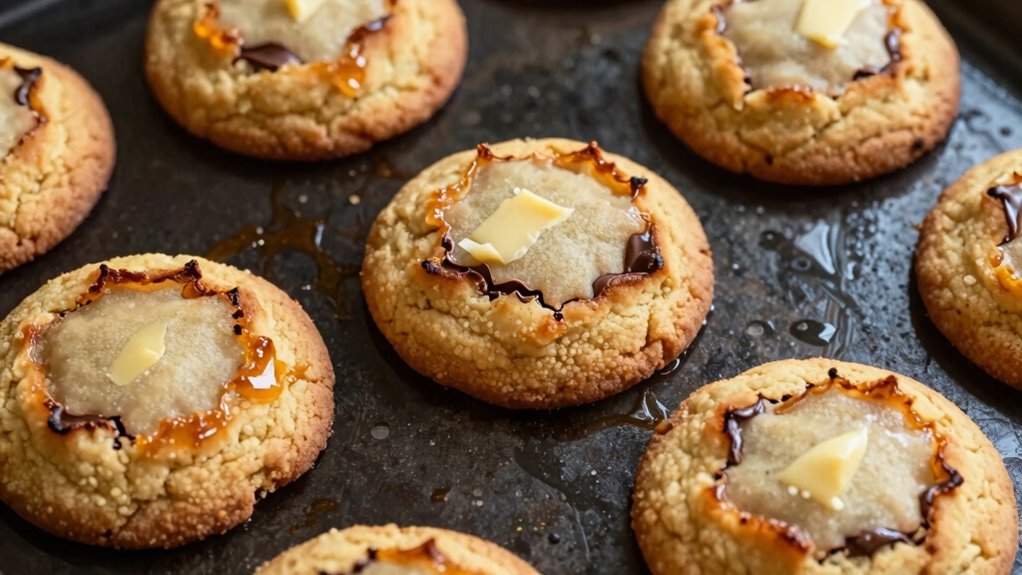
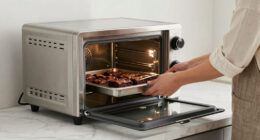
If your cookies are browning too fast, it can be frustrating to get that perfect, golden-brown finish. One of the main culprits is often the oven temperature. If the oven runs hot or if you set it too high, the bottoms of your cookies will start to brown quickly before the tops have a chance to bake through. Always use an oven thermometer to verify the actual temperature inside your oven; many home ovens tend to be inaccurate and can run hotter than the dial indicates. Lowering the temperature by 10 to 15 degrees might make a significant difference, allowing the cookies to bake more evenly and preventing the bottoms from burning.
To prevent cookies from browning too quickly, lower oven temperature slightly and use an oven thermometer for accuracy.
Another factor that influences how quickly your cookies brown is the baking sheet material. Not all baking sheets conduct heat the same way. For example, dark, non-stick baking sheets tend to absorb more heat and can cause the bottoms of cookies to brown faster. Conversely, lighter-colored or shiny aluminum baking sheets reflect heat, helping to distribute it more evenly. If you’re using a dark sheet, consider switching to a lighter one or placing a sheet of parchment paper underneath your cookies. Parchment acts as a barrier, reducing direct contact with the hot surface and slowing down browning. Additionally, some baking sheets have uneven or warped bottoms, which can lead to hot spots and uneven baking. Ensure your baking sheet is flat and of good quality to promote uniform heat distribution.
You might also want to think about the position of your rack in the oven. Positioning your baking sheet too close to the bottom heating element can cause rapid browning on the bottom. Moving the rack to a higher position, typically in the middle of the oven, allows for more even heat circulation around your cookies. Remember, every oven is different, so it might take some experimentation to find the perfect setup.
Lastly, keep an eye on your cookies as they bake. Since oven temperatures can fluctuate and baking sheet materials vary, it’s easy for bottoms to brown prematurely. Checking your cookies a few minutes before the recipe’s recommended bake time can help you remove them at just the right moment. Using these adjustments—monitoring oven temperature, choosing the right baking sheet material, and proper placement—can help you achieve cookies that are perfectly golden on top and evenly baked on the bottom.
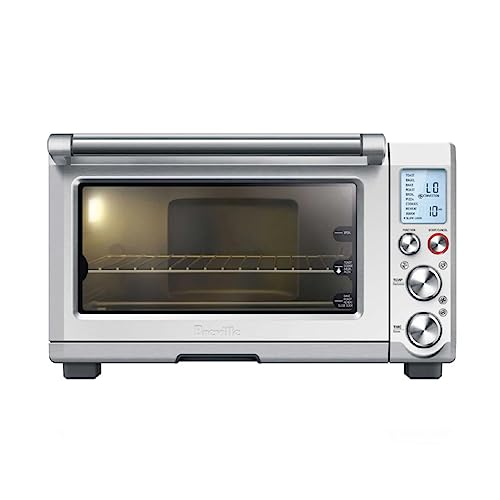
Breville BOV845BSS Smart Oven Pro Countertop Oven, Brushed Stainless Steel
The Breville Smart Convection Oven Pro with Element iQ System is a high performance countertop oven; Home cooks...
As an affiliate, we earn on qualifying purchases.
Frequently Asked Questions
Can Using Dark-Colored Baking Sheets Cause Cookies to Brown Too Quickly?
Yes, using dark-colored baking sheets can cause cookies to brown too quickly because their material absorbs heat better. This accelerates browning, especially if your oven temperature calibration is off. To prevent over-browning, lower the oven temperature by about 25°F and consider switching to lighter-colored sheets for more even baking. Always check your oven’s calibration regularly to make certain consistent results.
Does Preheating the Oven Affect the Bottom Browning of Cookies?
Preheating your oven is like setting a steady heartbeat; it guarantees even heat distribution. When you preheat properly, the oven temperature stabilizes, helping you control baking duration and preventing the bottom from browning too quickly. Without preheating, hot spots may develop, causing uneven browning. Always preheat fully before baking cookies, so they cook evenly and you avoid overbaking or burning the bottoms.
How Does Altitude Influence Cookie Browning on the Bottom?
Altitude effects can cause cookies to brown on the bottom faster because lower air pressure impacts baking. You should increase your baking temperature slightly to prevent over-browning, but be cautious not to burn the exterior. Adjusting baking time and using an oven thermometer helps guarantee even baking. Keep an eye on your cookies, and consider using a baking stone or thicker sheet to distribute heat more evenly at high altitudes.
Are There Specific Ingredients That Contribute to Faster Bottom Browning?
Sure, your secret ingredient for bottom-browning fame? Butter and sugar, of course! These ingredients influence baking temperature, turning your cookies into crispy critters before you can say “sweet.” Higher sugar content accelerates browning, and if you crank up that oven temperature, you’re practically inviting your cookies to toast themselves. So, if you want evenly baked treats, watch your ingredients and temperature—otherwise, you’re crafting culinary chaos.
Can Cookie Thickness Impact How Quickly the Bottoms Brown?
Yes, cookie thickness impacts how quickly the bottoms brown. Thinner cookies tend to brown faster because heat penetrates them more quickly, especially if your oven temperature is high. If you want to prevent rapid browning, try making your cookies thicker and lower the oven temperature slightly. This allows even heat distribution, giving you more control over browning and ensuring your cookies bake evenly without burning on the bottom.

BLACK+DECKER TO3250XSBD 8-Slice Extra Wide Convection Countertop Toaster Oven, Includes Bake Pan, Broil Rack & Toasting Rack, Stainless Steel/Black
Fits Most Oven Pans - Use the pans you already have! This spacious oven fits most standard 9”x13”...
As an affiliate, we earn on qualifying purchases.
Conclusion
So, next time your cookies turn into charred masterpieces before you even get a chance to taste them, remember—blame your oven’s secret love affair with the bottom. Maybe it’s just jealous of the top’s golden glow. Or perhaps you’re secretly a baking rebel ignoring the recommended temps. Either way, consider yourself warned: your cookies might be auditioning for a role in “Fast and the Burnt.” Happy baking, or should I say, “burning”?

Emeril Lagasse Extra Large French Door Air Fryer Toaster Oven Combo, 24 Cooking Functions and Digital Controls, 7 Accessories Included, Stainless Steel Finish, 26QT Capacity
A VERSATILE AIR FRYER AND MULTI-COOKER COMBO: Elevates practically any meal, from air frying quick after-school snacks to...
As an affiliate, we earn on qualifying purchases.

BLACK+DECKER Crisp 'N Bake Air Fry Countertop Convection Toaster Oven, Medium Capacity, 4-Slice, 5-in-1, Fits 9” Pizza, 30-Min Timer, Bake, Broil, Air Fry, Toast, Keep Warm, Stainless Steel
5-IN–1 MULTIFUNCTIONAL COOKING- Enjoy versatile cooking with Air Fry, Bake, Broil, Toast, and Keep Warm settings. Perfect for...
As an affiliate, we earn on qualifying purchases.