Using a water bath during baking helps your cheesecake cook evenly by providing gentle, consistent heat. It prevents rapid temperature changes that can cause cracks, sags, or uneven textures. Water’s high heat capacity distributes heat more smoothly, keeping the surface moist and preventing drying out. This scientific method stabilizes the baking environment, promoting a smooth, dense result. Stick with it, and you’ll discover how this simple step makes a noticeable difference in your cheesecake’s quality.
Key Takeaways
- A water bath provides gentle, even heat, preventing uneven baking and ensuring a smooth, consistent cheesecake texture.
- It stabilizes oven temperature, reducing rapid shifts that cause cracks and surface imperfections.
- The moisture from the water prevents surface drying, leading to a velvety, crack-free finish.
- Water’s high heat capacity distributes heat uniformly, allowing proteins and fats to set slowly and smoothly.
- Using a water bath mimics natural ambient conditions, scientifically optimizing baking results for a professional-quality cheesecake.
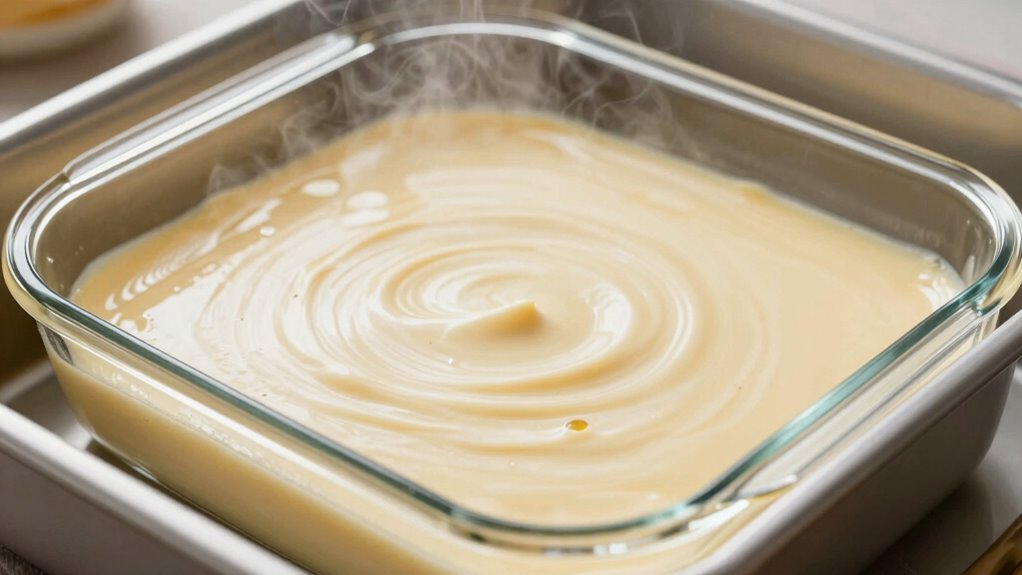
Ever wondered why some cheesecakes turn out perfectly smooth and creamy while others crack or sag? The secret lies in understanding the science behind baking temperature and how it influences cheesecake texture. When you bake a cheesecake without a water bath, the oven’s direct heat can cause uneven cooking. The outer edges might bake faster than the center, leading to a firm exterior and a runny or undercooked middle. As it cools, the sudden temperature change can cause tension within the batter, resulting in cracks or sagging. To prevent this, many bakers turn to a water bath, which provides gentle, even heat that closely mimics the oven’s ambient temperature.
Using a water bath helps regulate the baking temperature, ensuring the heat penetrates the cheesecake evenly. This controlled environment minimizes the risk of rapid temperature fluctuations that cause cracks and textural inconsistencies. When you bake your cheesecake in a water bath, the water’s heat transfer is more gradual and uniform, which translates into a smoother, silkier cheesecake texture. The gentle heat allows the proteins and fats in the batter to set slowly, preventing the formation of large air pockets or cracks. It also reduces the likelihood of the cheesecake puffing up too much or collapsing in the center, both common issues caused by uneven heat distribution.
A water bath ensures even heat, preventing cracks and creating a silky, smooth cheesecake texture.
The science behind the water bath’s effectiveness hinges on heat conduction. Water has a higher specific heat capacity than air, meaning it can absorb and distribute heat more efficiently. As you place your cheesecake in a water bath, the water absorbs excess heat from the oven and maintains a consistent temperature around the pan. This stability keeps the baking temperature steady, letting the cheesecake develop its desired creamy, dense texture without sudden shifts that can cause surface cracks or a sagging center.
Furthermore, the water bath creates a humid environment, which helps prevent the cheesecake’s surface from drying out or cracking prematurely. This moisture retention is essential for achieving that velvety, smooth surface that makes a cheesecake visually appealing and pleasurable to eat. So, rather than viewing a water bath as just a traditional trick, see it as a scientific tool that optimizes baking temperature and preserves the ideal cheesecake texture. It’s about controlling heat and moisture to ensure your cheesecake emerges from the oven with a flawless, luxurious consistency every time.
Frequently Asked Questions
Can I Skip the Water Bath and Still Get a Perfect Cheesecake?
You can skip the water bath, but it might impact your cheesecake’s texture and baking consistency. Without it, your cheesecake could crack or become unevenly baked, resulting in a less smooth, creamy finish. The water bath helps regulate temperature and prevents sudden heat shocks, so if you skip it, be extra careful with your oven temperature and baking time. For the best results, using a water bath is highly recommended.
How Does Water Temperature Affect Cheesecake Baking?
Did you know that uneven baking temperature affects 85% of cheesecake cracks? When you adjust the water temperature, you improve heat distribution, resulting in a smoother, more even bake. Hotter water creates gentle, consistent heat that prevents sudden temperature spikes, reducing cracks and overbaking. Using a water bath guarantees the baking temperature stays stable, giving your cheesecake the perfect texture and appearance by promoting even heat distribution.
Is a Water Bath Necessary for All Types of Cheesecakes?
No, a water bath isn’t necessary for all cheesecakes. If you want a smooth, creamy texture and want to prevent cracks, using a water bath is highly recommended. It provides even heat, reducing the risk of overbaking and uneven cooking. However, for denser or firmer cheesecakes, you can skip it. Ultimately, your choice depends on the cheesecake texture you desire and the recipe’s requirements.
What Alternative Methods Prevent Cracking Without a Water Bath?
Think of cracking as a villain lurking in your kitchen. To stop it, you can avoid a water bath by adjusting your baking equipment and ingredient modifications. Use a springform pan with a loose band to help control heat, and bake at a lower temperature. Adding a little cornstarch or sour cream to your batter also stabilizes it. These tricks keep your cheesecake smooth without the water bath’s fuss.
How Do I Prevent My Cheesecake From Becoming Soggy in the Water Bath?
To prevent your cheesecake from becoming soggy in the water bath, use a baking vessel with a tight-fitting lid or wrap the outside tightly with aluminum foil to control moisture. Place a paper towel between the crust and the water to absorb excess moisture. These steps help maintain proper moisture control, ensuring your cheesecake stays firm and doesn’t absorb too much humidity during baking.
Conclusion
A water bath wields wisdom, ensuring your cheesecake remains smooth, silken, and stunning. By balancing heat and preventing cracks, it proves to be a simple, yet essential step. So, soak up this secret to superb desserts, and savor the sweet success. Remember, a little water work works wonders—making your masterpiece moist, magnificent, and memorable. Master the method, and watch your cheesecake transform into a true triumph!