
One common mistake is not zeroing out the scale before measuring, which skews your results. Weighing on an unstable surface can also lead to inaccurate readings, so make sure your scale sits on a flat, sturdy spot. Additionally, scooping ingredients directly without leveling or proper technique can result in over- or under-measuring. If you want to master these details and improve your accuracy, keep going for more tips.
Key Takeaways
- Forgetting to tare the scale before adding ingredients results in inaccurate measurements.
- Weighing on an uneven or unstable surface causes inconsistent and unreliable readings.
- Scooping ingredients directly without leveling leads to over- or under-measuring.
- Not calibrating or checking the scale regularly can introduce errors in weight accuracy.
- Measuring on cluttered or unstable surfaces affects precision and can skew results.
Have you ever wondered why your recipes turn out perfectly each time? The secret often lies in how you weigh your ingredients. Achieving precision accuracy in measuring is vital for consistent results, especially when baking or following delicate recipes. Many cooks overlook the importance of proper weighing techniques and fall into common mistakes that can throw off the entire outcome. Understanding where these errors happen can help you improve your process and guarantee your dishes are always just right.
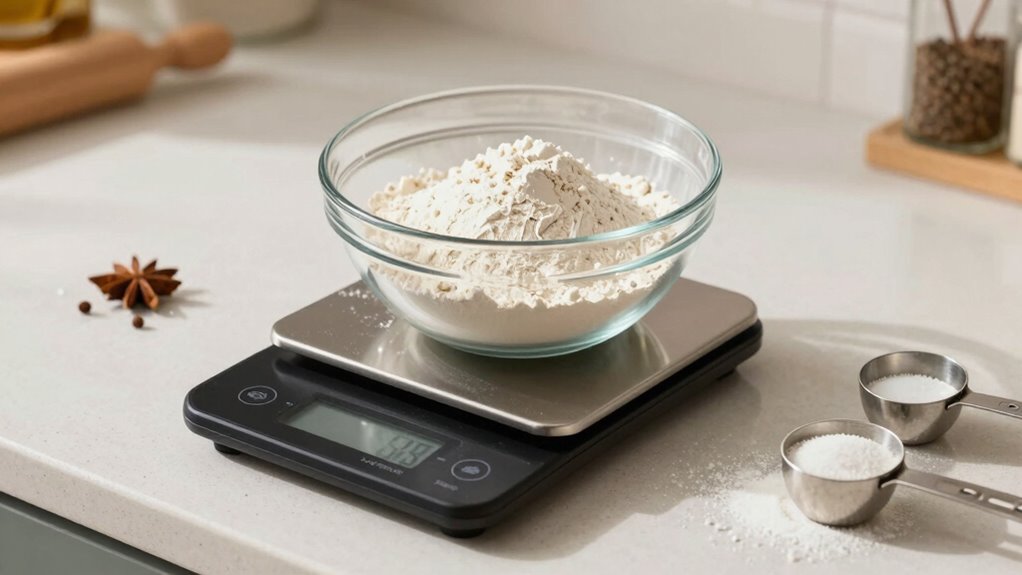
One of the biggest common mistakes is not zeroing out your scale before adding ingredients. If you forget to tare your scale, you end up measuring on top of bowls or containers, which skews the weight and compromises precision accuracy. This small oversight can lead to inaccurate measurements, especially when dealing with small quantities where every gram counts. Always reset your scale to zero after placing your container, so you’re measuring only the ingredient itself. This simple step guarantees more reliable measurements every time.
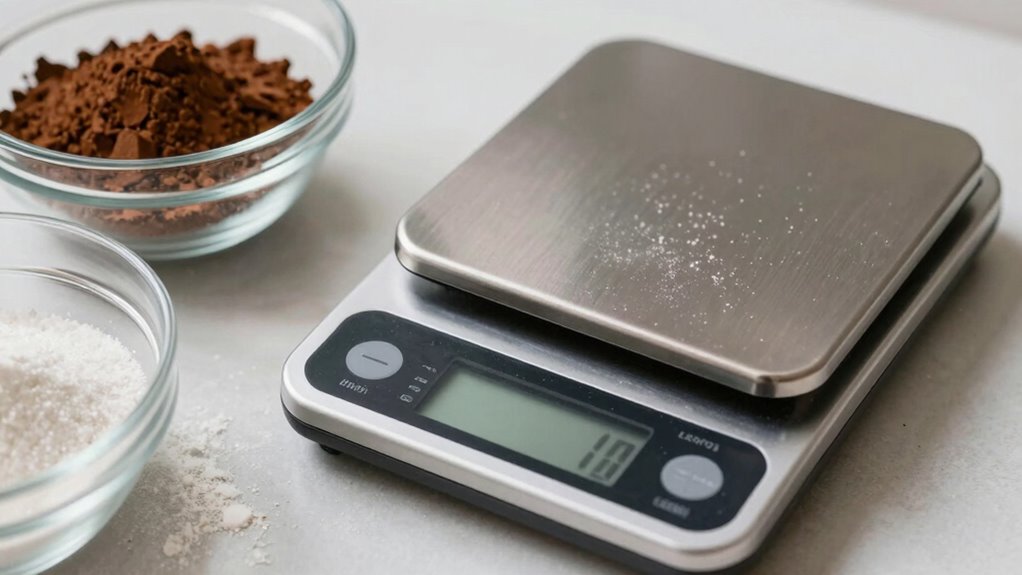
Another mistake people often make is using an imprecise or unstable surface for weighing. If your scale isn’t on a flat, sturdy surface, you risk inaccurate readings due to imbalance. Invest in a good-quality digital scale that provides clear, consistent readings. Avoid weighing ingredients on uneven countertops or unstable tables, as even slight tilts can affect the measurement. Being mindful of your setup ensures you’re obtaining the most precise accuracy possible, which is especially important for recipes requiring exact proportions.
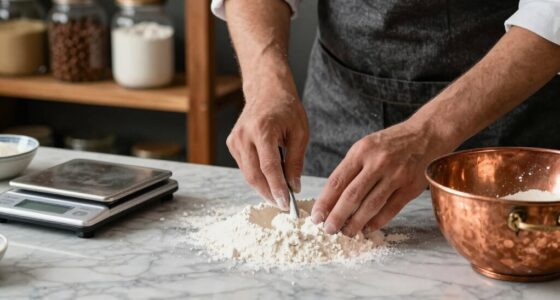
Many folks also overlook the importance of properly measuring ingredients, especially powders like flour or sugar. Using the wrong technique—such as scooping directly from the container without leveling or tapping off excess—can lead to over or under-measuring. For flour, in particular, scooping can pack it down, resulting in more than the recipe calls for. Instead, use a spoon to lightly fill your measuring cup or scale, then level it off with a straight edge. This approach maintains consistency and helps you avoid common mistakes that can affect texture and flavor. Additionally, being aware of measurement precision can greatly improve your baking success.
Finally, don’t forget that temperature and humidity can influence your measurements, especially with sensitive ingredients. While weighing is generally quite accurate, heavy moisture or humidity in the air can slightly alter weights. Store your ingredients properly and weigh them in a consistent environment to maintain precision accuracy. Small adjustments like these might seem minor, but they make all the difference in achieving perfect results every time.
Frequently Asked Questions
What Are the Most Common Tools for Weighing Ingredients Accurately?
You should use digital scales and measuring cups to weigh ingredients accurately. Digital scales give you precise, digital readings, making it easy to measure small quantities or ingredients by weight. Measuring cups are great for larger, volume-based measurements, but they’re less accurate for small amounts. Combining both tools guarantees your recipes turn out perfect every time, helping you avoid common mistakes and achieve consistent results.
How Does Humidity Affect the Weight of Dry Ingredients?
Humidity effects can increase the weight of dry ingredients by up to 10%, because moisture absorption alters ingredient density. When humidity rises, you might notice your flour or spices weighing more, leading to inaccurate measurements. To avoid this, keep your dry ingredients in airtight containers and weigh them quickly. This way, you maintain consistent results, regardless of humidity fluctuations, ensuring your recipes turn out perfectly every time.
Should I Weigh Ingredients Before or After Measuring in a Cup?
You should weigh ingredients after measuring in a cup to guarantee measurement consistency. While measuring cups give a quick estimate, weighing accounts for ingredient density variations and provides precise results. By doing so, you eliminate discrepancies caused by ingredient packing or moisture content, ensuring your recipes turn out just right. Always double-check your measurements and consider weighing to maintain accuracy, especially with ingredients like flour or sugar that can vary in density.
What Are the Best Practices for Calibrating a Kitchen Scale?
You should calibrate your kitchen scale regularly, ideally once a month or whenever you notice inconsistent readings. To do this, place your scale on a flat, stable surface and make certain it’s turned off before resetting to zero. Keep scale placement in mind—avoid drafts, vibrations, or uneven surfaces. Frequent calibration ensures accuracy, so you get precise measurements every time, making your cooking and baking more reliable.
How Do I Convert Weights Between Different Measurement Systems?
To convert weights between different measurement systems, you just need to use a reliable unit conversion chart or calculator. Guarantee measurement accuracy by double-checking your conversions, especially when switching between systems like ounces and grams. Keep in mind that precise conversions help maintain recipe consistency. Always use the same measurement standards for best results, and consider calibrating your scale regularly to avoid discrepancies.
Conclusion
Now that you know the common mistakes, you can weigh your ingredients like a pro. Think of it as fine-tuning a musical instrument—you want everything perfectly in sync. When you measure accurately, your recipes turn out just right, every time. Don’t let small errors throw off your baking or cooking. With practice, weighing becomes second nature, and your dishes will come out as flawless as a crystal-clear reflection in a calm pond.