Understanding sheet pan sizes helps you pick the right tray for your cooking needs. Quarter sheet pans are small, perfect for snacks or delicate tasks, while half sheets are versatile for roasting and baking larger batches. Full sheet pans are ideal for big meals or commercial use. Material and thickness also affect performance. Stick around if you want to learn how to measure, choose, and care for your sheet pans effectively.
Key Takeaways
- Quarter, half, and full sheet pans differ mainly in size, with quarter being the smallest, half medium, and full the largest for various kitchen needs.
- Standard dimensions typically range from about 9×13 inches for quarter, 18×13 inches for half, to 26×18 inches for full sheets.
- Material options like aluminum and steel affect heat conduction, durability, and suitability for specific baking or roasting tasks.
- Proper selection of sheet pan size depends on the recipe, batch size, and available storage space to ensure optimal cooking results.
- Regular maintenance, including gentle cleaning and proper storage, extends the lifespan and performance of all sheet pan sizes.

USA Pan Nonstick Quarter Sheet Pan, Set of 2
Classic Quarter Sheet Pans for baking cookies, reheating leftovers, roasting side dish veggies, smaller households; commercial quality
As an affiliate, we earn on qualifying purchases.
As an affiliate, we earn on qualifying purchases.
What Are Standard Sheet Pan Sizes and Dimensions
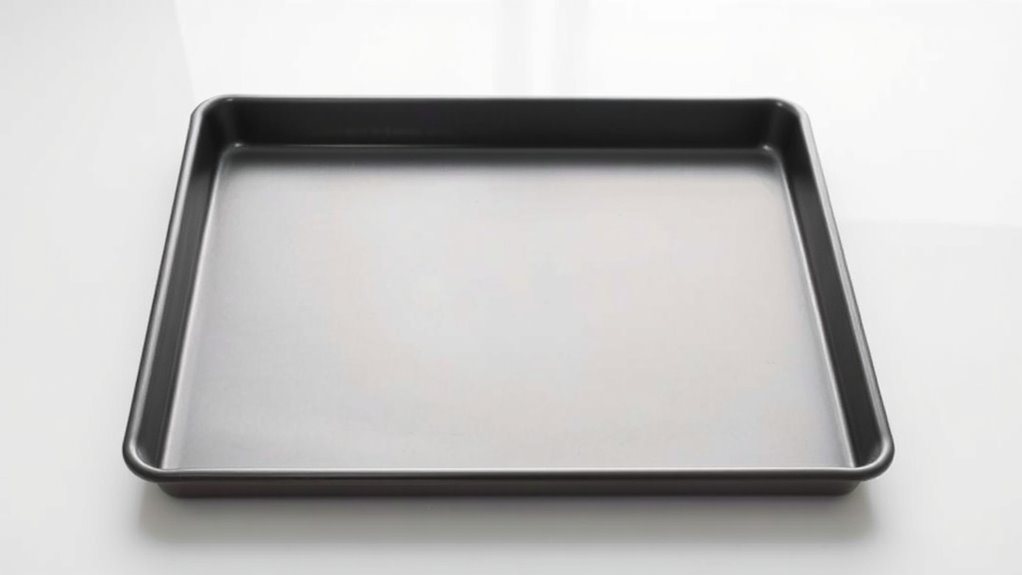
Understanding standard sheet pan sizes is essential for choosing the right pan for your kitchen tasks. Cookie sheets and roasting trays are common types, often measuring around 18 by 13 inches. These sizes fit well into most home ovens and are versatile for baking cookies, roasting vegetables, or preparing sheet pan dinners. Standard sheet pans typically come in a few key dimensions: quarter, half, and full sheet sizes. A full sheet pan usually measures about 26 by 18 inches, while half and quarter sheets are smaller, making them easier to handle and store. Knowing these dimensions helps you select the right cookie sheets or roasting trays for your needs, ensuring even cooking and consistent results in your kitchen. Additionally, the size variations allow for better customization depending on the specific cooking or baking task. Being familiar with standard dimensions also helps in understanding how these pans fit into different oven sizes and manufacturing standards, which can vary based on regional preferences.

Commercial Quality Baking Sheet Pan Set, Natural Aluminum Cookie Sheet, Umite Chef Warp Resistant Baker's Half Sheet Pan, Large Thick Cookie Tray Pans for Baking, Roasting(2 Pack, 18X13In)
PURE UNCOATED ALUMINUM & SUPERIOR HEAT CONDUCTION: Crafted from 100% bare aluminum with NO chemical coatings – guarantees…
As an affiliate, we earn on qualifying purchases.
As an affiliate, we earn on qualifying purchases.
How Quarter, Half, and Full Sheet Pans Differ in Size and Use

Quarter, half, and full sheet pans vary considerably in size and are suited for different kitchen tasks. A quarter sheet pan is compact, perfect for small batch baking, snacks, or roasting vegetables. It fits well with sheet pan accessories like racks or dividers, and often features non stick coatings for easy cleanup. Additionally, quarter sheet pans are ideal for precise portion control, which is useful for meal prep or catering. Half sheet pans are more versatile, ideal for larger batches, sheet pan dinners, and quick roasting. They support various sheet pan accessories, like silicone mats, to enhance cooking. Full sheet pans are the largest, used in commercial kitchens or for large-scale baking. Their size allows for multiple trays or racks, making them suitable for catering or large events. The choice depends on your needs, available space, and whether you prefer non stick coatings for easier handling. Additionally, selecting the right ventilation considerations can improve your baking environment and safety.

BIEAMA 6 Pack Full Size Baking Sheet Pan Aluminum Commercial Pan for Oven Freezer Bakery Hotel Restaurant 26" × 18"
Durable Baking Pan – 18" × 26" aluminum alloy baking pan, moderate weight, sturdy when holding hands, not…
As an affiliate, we earn on qualifying purchases.
As an affiliate, we earn on qualifying purchases.
How Material and Thickness Impact Sheet Pan Size and Performance

The material your sheet pan is made from affects how it conducts heat and handles your cooking tasks. Thicker pans usually distribute heat more evenly, preventing hot spots and burning. Understanding how material and thickness influence performance can help you choose the right pan for your needs. Additionally, selecting appropriate jewelry materials such as titanium or surgical steel for any modifications or accessories can improve durability and safety during use. Proper maintenance, including regular cleaning and avoiding harsh chemicals, can prolong the lifespan of your pan and ensure consistent results. Being aware of the vetted doomsday robots can also be crucial for preparedness in extreme scenarios, ensuring you have reliable tools to rely on. Recognizing the thermal conductivity of different materials can further guide you in selecting pans suited to specific cooking techniques.
Material Composition Effects
Material composition and thickness play essential roles in determining a sheet pan’s size and performance. The material’s durability affects how well the pan withstands daily use without warping or degrading, which is critical for maintaining proper size and shape. Aluminum pans are lightweight, conduct heat evenly, and resist rust, making them popular choices. Steel pans, especially stainless steel, offer greater strength and longevity, though they may be heavier. Coating options also influence performance; non-stick coatings provide easy food release but can wear over time, while uncoated pans are often more durable. Thicker materials generally improve heat retention and durability but may add weight. Understanding these factors helps you select a sheet pan that balances size, longevity, and performance to meet your specific baking needs. Additionally, European manufacturing standards ensure the quality and safety of the materials used, contributing to reliable and sustainable kitchen tools. Recognizing the impact of material quality can help you make more informed choices for your baking arsenal, especially when considering material safety and long-term use.
Thickness and Heat Conductivity
Since thickness directly influences a sheet pan’s heat retention and distribution, choosing the right material and gauge is essential for ideal performance. Thicker pans conduct heat more evenly, reducing hot spots, while thinner pans heat quickly but may warp or cool unevenly. The gauge measures thickness: lower gauges mean thicker pans. For oven safety and durability, a balance between thickness and material matters. Non stick coatings can impact heat transfer, so thicker pans with high-quality coatings perform better. The table below highlights key differences:
| Material | Thickness (Gauge) | Heat Conductivity |
|---|---|---|
| Aluminum | 14-16 | Excellent |
| Steel | 12-14 | Moderate |
| Carbon Steel | 12-14 | Good |
| Nonstick | Varies | Varies |
| Heavy-duty | 10-12 | Superior |
Choosing wisely guarantees safe, even baking results. Additionally, understanding heat conductivity in relation to material can help select the optimal sheet pan for specific cooking needs. Proper material selection ensures the pan performs well across various recipes and oven conditions. Being aware of gauge measurements can further assist in making the best choice for your baking projects. For example, thicker pans often have better heat retention, which can improve baking consistency and quality. Recognizing material properties can also guide you in selecting pans that last longer and perform better over time.

Silicone Baking Mat, 3 Pack Reusable Baking Sheet, Non-Stick & Food Safe Silicone Mats for Baking for Making Cookies Macaroons Bread, Baking Supplies & Accessories
[Heat-Resistant] Silicone baking mats withstand up to 500°F. Use with a tray, not directly on oven rack.
As an affiliate, we earn on qualifying purchases.
As an affiliate, we earn on qualifying purchases.
Common Uses for Each Sheet Pan Size in Cooking and Baking
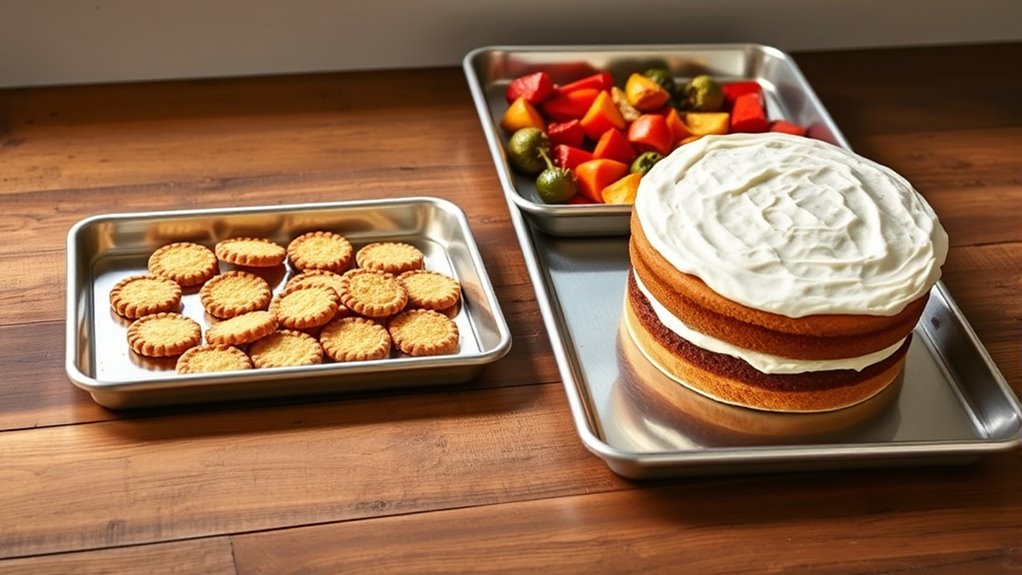
Different sheet pan sizes are perfect for various meal prep and baking tasks. You’ll find that half and quarter sheets excel for roasting vegetables or making smaller batches, while full sheets are ideal for large-scale baking or sheet pan dinners. Knowing their common uses helps you choose the right size to streamline your cooking and baking routines. Additionally, selecting the appropriate nanotechnology applications can enhance food safety and preservation in commercial kitchens. Mastering the size differences of sheet pans allows for more efficient kitchen organization and better results in your culinary endeavors. Proper kitchen storage techniques also ensure your pans remain in good condition and are easily accessible when needed.
Versatile Meal Prep Sizes
Choosing the right sheet pan size can make meal prep more efficient and enjoyable. For versatile meal prep, a half sheet pan is your go-to, functioning as a cookie sheet or baking tray for roasting vegetables, chicken, or fish in a single layer. It offers enough space for family-sized portions without overcrowding, ensuring even cooking. A quarter sheet pan is perfect for smaller tasks, like prepping snacks, toasting nuts, or making mini casseroles. It’s also handy for portion control. Full sheet pans are ideal for larger batches, such as batch cooking for the week or preparing ingredients for multiple meals. Their expansive surface makes it easy to organize ingredients, keeping your meal prep streamlined and manageable. Each size adapts to different meal prep needs, saving time and effort. Additionally, connected cooking technology can enhance your efficiency by allowing you to monitor and control your oven and appliances remotely during meal prep. Understanding sheet pan sizing can help you select the most appropriate size for your specific cooking tasks, streamlining your kitchen workflow and improving safety. Being aware of the standard dimensions can also assist in choosing the right cookware for your oven and storage space.
Baking and Roasting Applications
Each sheet pan size has specific baking and roasting applications that maximize efficiency in your kitchen. A quarter sheet is perfect for small batches like single servings or delicate tasks like cake decorating. A half sheet works well for roasting vegetables, cookies, or preparing meal components in bulk. The full sheet is ideal for large-scale baking, sheet pan dinners, or organizing ingredients for storage solutions. Use quarter sheets for precise tasks, half sheets for versatile cooking, and full sheets for big projects.
| Size | Best Uses | Ideal Tasks |
|---|---|---|
| Quarter | Cake decorating, small batches | Small desserts, garnishes |
| Half | Roasting, meal prep | Cookies, vegetables, storage |
| Full | Large baking, meal prep | Sheet pan dinners, large batches |
How to Choose the Right Sheet Pan Size for Your Recipes
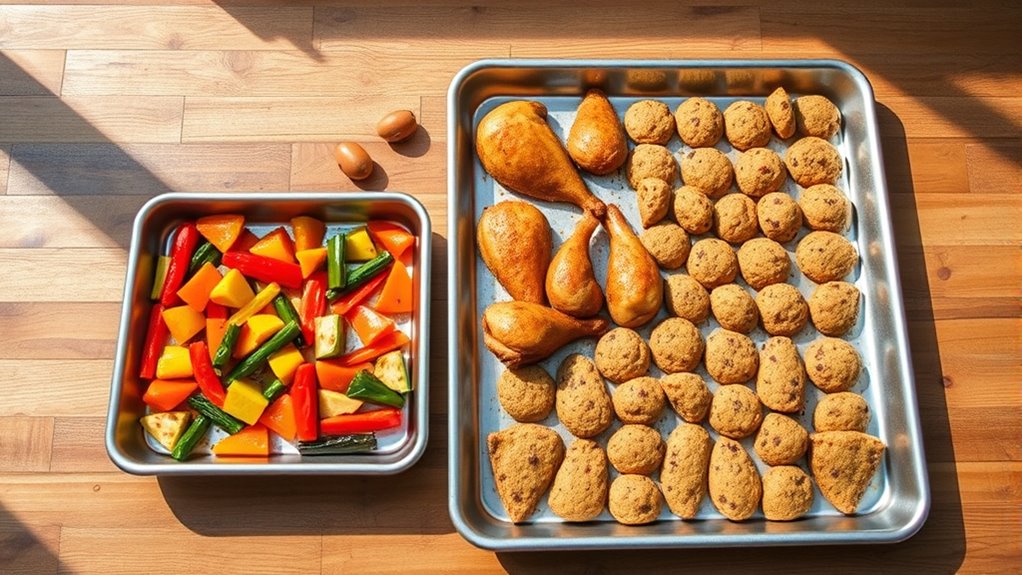
Selecting the right sheet pan size is essential for ensuring your recipes turn out perfectly. Consider the amount of food you’re preparing; a quarter sheet is ideal for smaller batches or side dishes, while a full sheet suits large roasts or multiple trays. Think about your kitchen space and storage options as well. When choosing, look at sheet pan accessories like raised racks or liners that can enhance functionality. Also, explore alternative materials such as silicone or aluminized steel, which can influence heat conduction and durability. Matching the pan size to your recipe prevents overcrowding or undercooking. By evaluating your cooking needs and available accessories, you can select a sheet pan size that streamlines your workflow and guarantees consistent, delicious results.
How to Measure and Compare Sheet Pans for the Perfect Fit

To guarantee your sheet pan fits your recipes perfectly, learning how to measure and compare different sizes accurately is key. Start by measuring the length and width of your current pans with a ruler or tape measure. Compare these dimensions to standard sheet pan sizes, considering options like quarter, half, or full sheets. When shopping for sheet pan accessories or customized sheet pan sizes, verify measurements match your storage and oven space. Pay attention to these four aspects:
- Overall length and width
- Wall height and depth
- Compatibility with existing racks or accessories
- Margin for expansion or snug fit
Accurate measurements help you select the right size, prevent overcrowding, and make customizing sheet pan sizes easier for your cooking needs.
Tips for Proper Storage and Maintenance of Your Sheet Pans
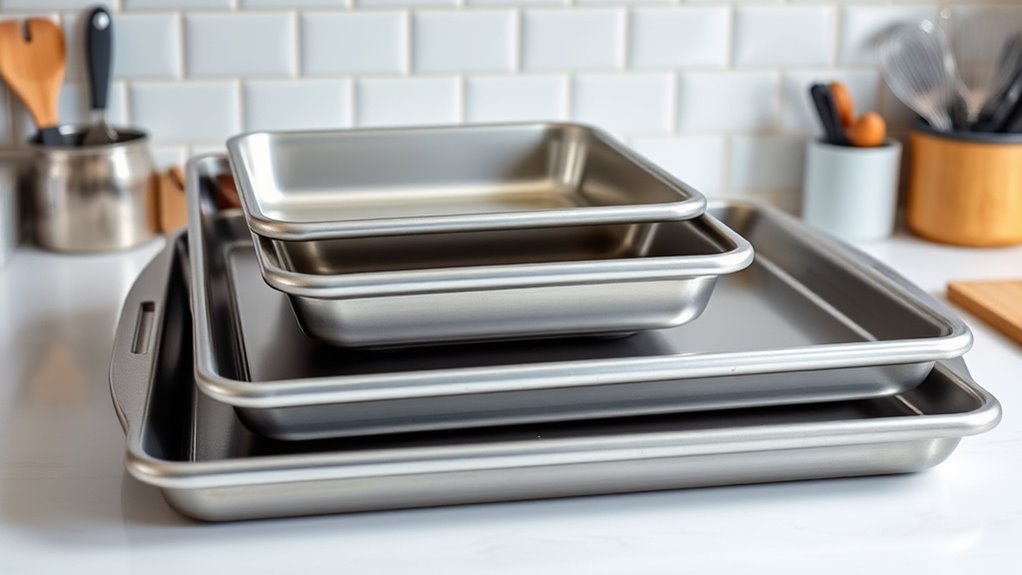
Proper storage and maintenance of your sheet pans guarantee they stay in top condition and last longer. To keep them in excellent shape, use effective cleaning techniques like soaking stubborn stains and avoiding abrasive scrubbers that could scratch the surface. Dry your pans thoroughly after washing to prevent rust. For storage solutions, stack pans neatly with soft cloth or paper towels between them to prevent scratches and warping. Consider using a dedicated rack or drawer organizer to keep them accessible and avoid overcrowding. Regularly inspect for signs of damage, such as warping or corrosion, and address issues promptly. Proper upkeep not only extends the lifespan of your sheet pans but also ensures they perform at their best every time you cook.
Frequently Asked Questions
Can Sheet Pan Sizes Vary Between Manufacturers?
Yes, sheet pan sizes can vary between manufacturers due to manufacturer variations. You might notice differences in dimensions even if they’re labeled as quarter, half, or full pans. This can affect size consistency, especially if you’re used to a specific brand’s measurements. Always double-check the actual measurements before purchasing or using a sheet pan to guarantee it fits your needs and maintains consistency in your kitchen.
Are There Eco-Friendly or Non-Toxic Sheet Pan Options?
Yes, you can find eco-friendly or non-toxic sheet pan options. Imagine cooking with peace of mind—these pans are crafted from eco-friendly materials like recycled aluminum or stainless steel, and feature non-toxic coatings free from harmful chemicals. As you choose, you’ll discover options that prioritize health and sustainability, making your kitchen not only safer but also better for the planet. Isn’t it time to upgrade to a greener, safer choice?
How Do I Convert Recipes for Different Sheet Pan Sizes?
To convert recipes for different sheet pan sizes, you need to do some recipe scaling and pan dimension conversion. First, measure your original pan’s dimensions and calculate its area. Then, determine the area of the new pan size. Adjust your ingredient quantities proportionally based on the area ratio. This guarantees even cooking and consistent results, no matter which pan size you choose.
What Are the Best Cleaning Methods for Different Sheet Pan Materials?
You should clean your sheet pans based on their material. For non-stick coatings, use warm water and a soft sponge to avoid damage, and avoid abrasive cleaners. For stainless steel pans, soak them in warm, soapy water to loosen debris, then scrub with a non-abrasive pad. Always dry thoroughly to prevent rust or damage, ensuring your sheet pans stay in top condition for future use.
Do Professional Kitchens Prefer Specific Sheet Pan Sizes?
In professional kitchens, sheet pans are the backbone of efficiency, and you’ll find they prefer standard size standards like half or full sheets for maximum productivity. Commercial kitchens typically opt for larger, heavy-duty pans to handle high-volume cooking, while residential kitchens lean toward smaller sizes. You’ll notice that choosing the right size is essential—bigger isn’t always better, but in a busy kitchen, it’s often the secret to staying ahead of the game.
Conclusion
Choosing the right sheet pan size is like finding the perfect dance partner—each one has its own rhythm and purpose. Whether you’re baking cookies on a quarter pan or roasting vegetables on a full one, understanding their differences helps your kitchen choreography run smoothly. With the right size in your arsenal, your culinary creations will glide effortlessly from oven to table, turning every meal into a well-orchestrated masterpiece.