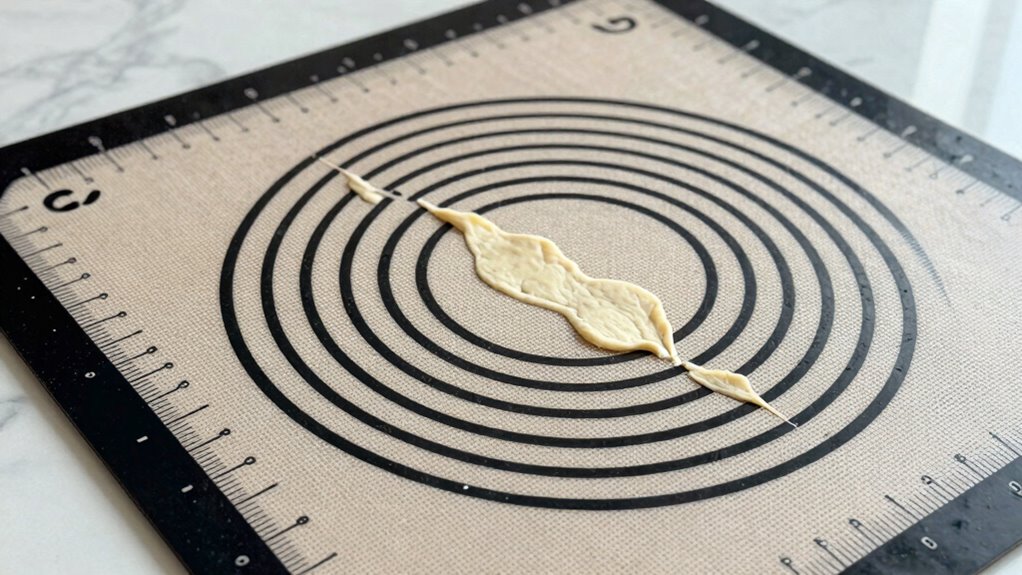

To use pastry mat measurement lines correctly, align your dough with the guides before rolling to guarantee the right size and thickness. Apply gentle, steady pressure, turning the dough often for evenness. Check the measurement lines frequently to avoid over- or under-rolling. Keep the mat clean and well-maintained for accuracy. For tips on mastering these steps and avoiding common mistakes, follow along to improve your baking results.
Key Takeaways
- Align dough with measurement lines before rolling to ensure accurate thickness and size.
- Use gentle, even pressure when rolling, turning the dough frequently for uniformity.
- Stop rolling once the dough matches the desired measurement line for precise thickness.
- Keep measurement lines clean and visible; avoid smudging or fading for consistent use.
- Regularly check dough thickness during rolling and maintain the mat’s cleanliness for accuracy.
Why Measurement Lines Help You Roll Perfect Pastry Every Time
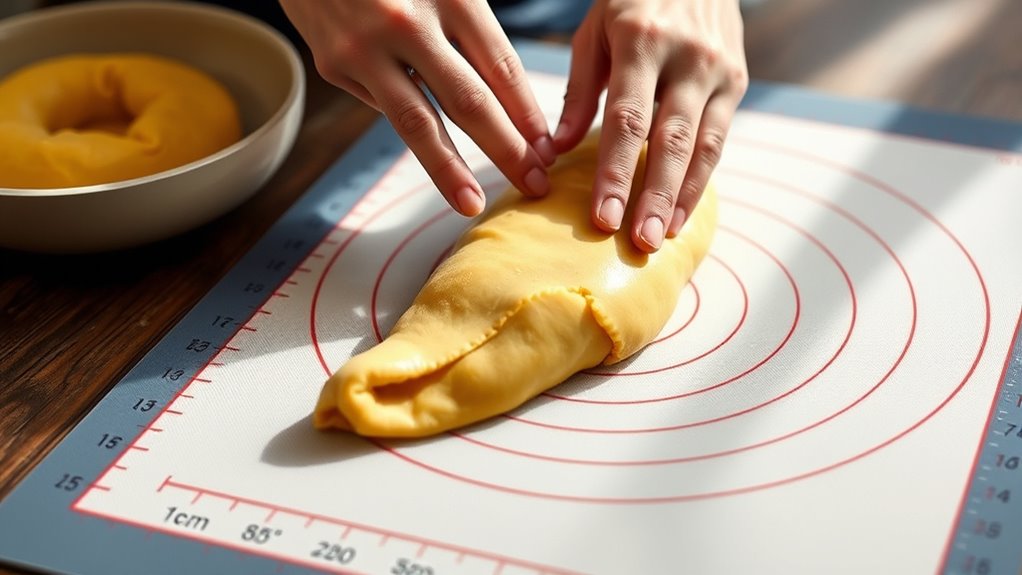
Using measurement lines on your pastry mat makes certain you roll dough to the exact size needed every time. This helps you achieve consistent dough consistency, which is essential for even baking. When your dough is uniformly rolled, it’s easier to work with and results in a better final product. The measurement guides also improve your rolling technique by providing clear visual cues, so you don’t have to guess or rely solely on feel. This reduces the risk of uneven thickness or overworking the dough. Proper technique is crucial for creating consistent results and mastering your baking skills. Additionally, understanding measurement accuracy can help you troubleshoot common issues like uneven baking or dough distortion, leading to more professional-looking pastries. As a result, your pastry will have a professional look and perfect texture. Additionally, precision in measurements contributes to achieving uniform baking results, making your baking more successful. With practice, you’ll find it easier to control the dough’s dimensions, making your baking more precise and enjoyable.
How to Choose the Best Pastry Mat With Measurement Guides
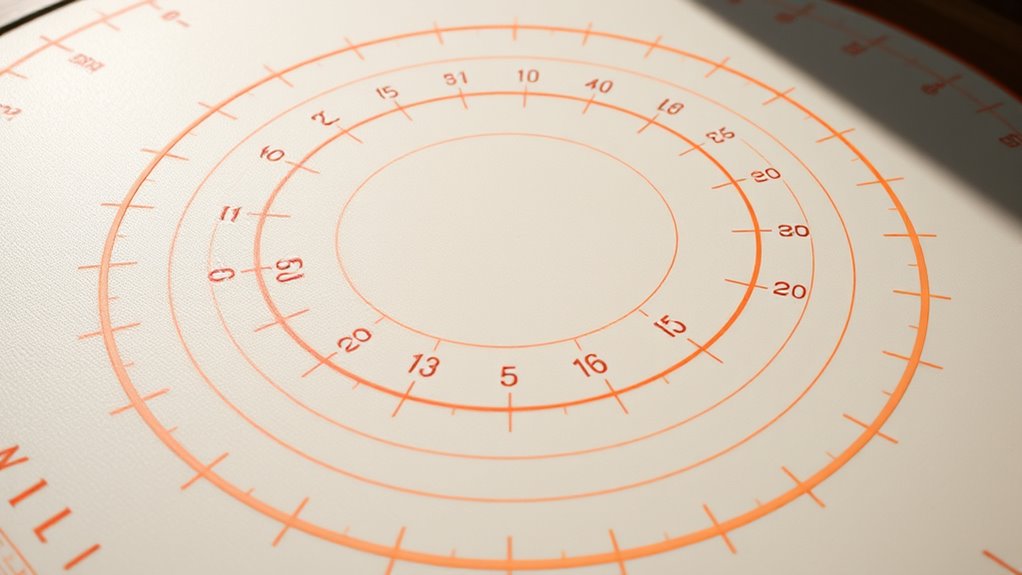
When selecting a pastry mat with measurement guides, consider how durable and comfortable the material feels under your hands. Make sure the measurement lines are clear and easy to read, especially when working quickly. Also, check if the mat’s size and shape fit your workspace and the types of baked goods you make most often. Paying attention to surface materials can help ensure your mat maintains its quality and performance over time. Additionally, understanding the contrast ratio of the mat’s surface can influence how well you can see the measurement lines during use. Choosing a surface with the right visual clarity can improve accuracy and efficiency in your baking process. Moreover, selecting a mat with quality control features can help prevent inconsistencies in the measurement lines and surface durability. Incorporating material testing into your selection process can further ensure the longevity and reliability of your pastry mat.
Material Durability and Feel
Choosing a pastry mat with durable material guarantees it will withstand daily use without warping or tearing. You want a surface with excellent texture quality that feels sturdy yet flexible, making rolling and handling easier. High-quality materials, like silicone or reinforced fabric, offer better material longevity, ensuring your mat remains intact over time. A good feel under your hands can improve your baking experience, providing the right grip and slip resistance. Avoid mats that feel flimsy or thin, which can compromise your work and cause frustration. When selecting, check for a smooth, consistent surface that resists stains and odors. Prioritizing durability and a pleasant tactile experience helps you invest in a pastry mat that performs reliably and lasts for many baking sessions. Additionally, understanding the security measures involved in payment processing can ensure safe transactions when purchasing baking supplies online. Moreover, inspecting the material composition can help you determine the best options for long-term use and easy cleaning, especially considering the importance of material durability in maintaining the overall quality of your baking tools. Regularly reviewing product reviews can also guide you toward the most reliable and durable pastry mats available in the market.
Measurement Line Visibility
Are the measurement lines on the pastry mat easy to read and accurately guide your dough? Look for clear visual clarity, which guarantees you can quickly see measurements without squinting or misreading. High line contrast between the measurement guides and the mat’s background makes a significant difference—they should stand out sharply so you can distinguish them at a glance. Avoid mats with faded or faint lines; these reduce precision and can lead to uneven doughs. A well-designed mat features bold, crisp lines that stay visible even when you’re working with flour or other ingredients on top. Remember, the goal is seamless guidance, so choosing a mat with excellent measurement line visibility helps you achieve perfect results every time. Additionally, considering pastry mat durability ensures your measurement guides remain clear over time despite frequent use. Incorporating a visual contrast element into the design further enhances readability, especially in busy or poorly lit kitchens. Also, selecting a mat with high-quality printing can prevent the measurement lines from fading or smudging after multiple uses.
Size and Shape Compatibility
Selecting the right pastry mat involves ensuring it fits your workspace and the size of your dough. When choosing, consider pastry mat sizing to match your typical projects, whether small cookies or large pies. Shape compatibility also matters—look for a mat that accommodates the shapes you most often work with. Some mats come in round, rectangular, or custom shapes, so pick one that suits your baking style. Ensuring the mat’s size aligns with your counter space prevents overcrowding or awkward placement. A well-matched shape helps with even rolling and easier transfer of dough. By selecting a pastry mat that fits your needs in both sizing and shape, you streamline your baking process and improve accuracy with measurement guides.
Getting Your Dough Ready Before Using the Measurement Lines
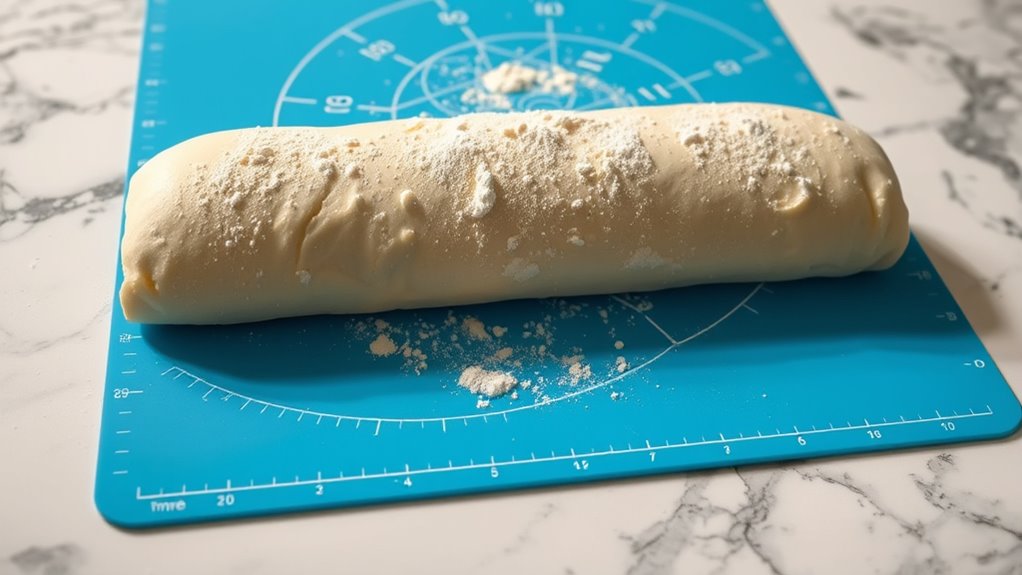
Before using the measurement lines, make sure your dough is properly prepared. Chill it to prevent sticking and make rolling easier. Lightly flour your surface and roll the dough to an even thickness for accurate measurement and perfect results. Incorporating adaptive techniques like temperature control can further improve consistency during preparation. Additionally, ensuring your dough is at the optimal temperature helps achieve uniform thickness across the entire piece, which is essential for baking precision. Monitoring auditory feedback during preparation can help maintain the desired dough texture and temperature. Utilizing specialized survival gear such as temperature sensors can assist in maintaining ideal conditions during the process.
Chill Dough Properly
Chilling your dough properly guarantees it’s firm enough to handle and cut accurately along your measurement lines. Proper dough chilling ensures the pastry temperature stays consistent, preventing stickiness and distortion during cutting. To achieve this, wrap your dough tightly and refrigerate for at least 30 minutes.
Consider these tips:
- Use a cool environment to maintain ideal dough chilling
- Avoid overworking the dough to prevent warming
- Let the dough rest until it becomes firm and pliable, not sticky
Maintaining the right pastry temperature during chilling makes handling easier and improves the final result. Proper dough chilling helps you accurately follow measurement lines and ensures clean, precise cuts.
Flour Surface Lightly
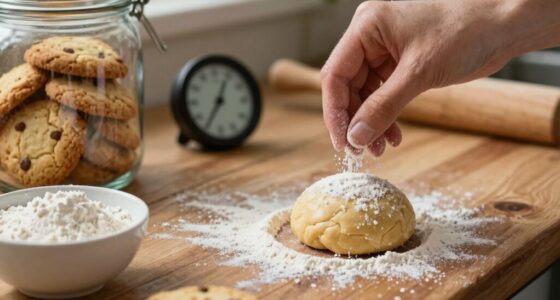
To make certain your dough doesn’t stick and is easy to work with, lightly dust your work surface with flour before rolling it out. This flour surface creates a barrier, preventing the dough from adhering and tearing. Use a gentle dusting technique to evenly spread a thin layer of flour over the surface, avoiding excess that could alter your dough’s texture. A light dusting ensures your dough remains manageable and maintains the right consistency. Keep a small sifter or fine-mesh sieve handy to control the amount of flour you apply. Remember, too much flour can make the dough dry or tough, so be precise with your dusting technique. Incorporating proper technique can further enhance your baking precision by providing consistent measurements and tracking your progress. Additionally, understanding measurement lines helps ensure your dough is rolled out to the correct thickness for perfect baked goods. Maintaining a clean baking surface is essential to prevent sticking issues and preserve the quality of your work.
Roll to Even Thickness
Ensuring your dough has an even thickness is essential for consistent baking results. To achieve this, focus on your rolling technique and dough consistency. Use gentle, even pressure as you roll, avoiding pressing too hard in one spot. Keep turning the dough periodically to maintain a uniform shape.
- Maintain steady pressure for smooth, consistent thickness
- Use the pastry mat’s measurement lines as a guide
- Check the dough’s thickness regularly to guarantee evenness
How to Use Measurement Lines Correctly When Rolling Out Dough
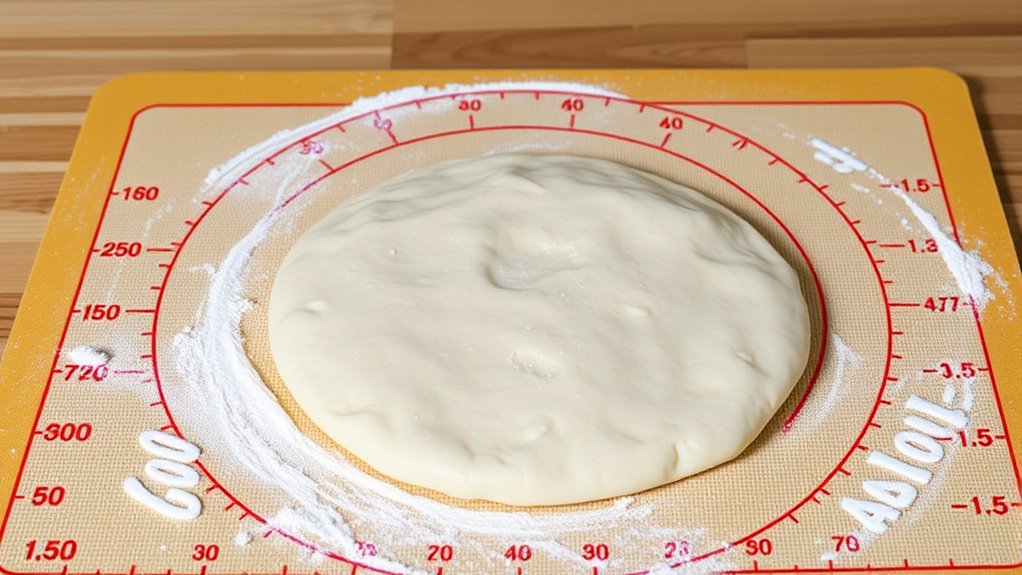
Using the measurement lines on your pastry mat correctly is vital for getting an even, consistent thickness when rolling out dough. To do this, align your dough with the measurement lines and apply even pressure, maintaining a steady rolling technique. This helps guarantee uniform dough consistency, which is essential for baking success. Use the lines as guides to prevent over- or under-rolling. For example, the table below illustrates how to select the right measurement based on your dough’s desired thickness:
| Thickness | Measurement Line | Suitable Use |
|---|---|---|
| Thin | 1/8 inch | Pastry sheets, tarts |
| Medium | 1/4 inch | Pie crusts, cookies |
| Thick | 1/2 inch | Puff pastry, doughnuts |
Following these tips, you’ll achieve professional results with proper measurement line use.
Mistakes to Avoid With Your Pastry Mat Measurement Lines
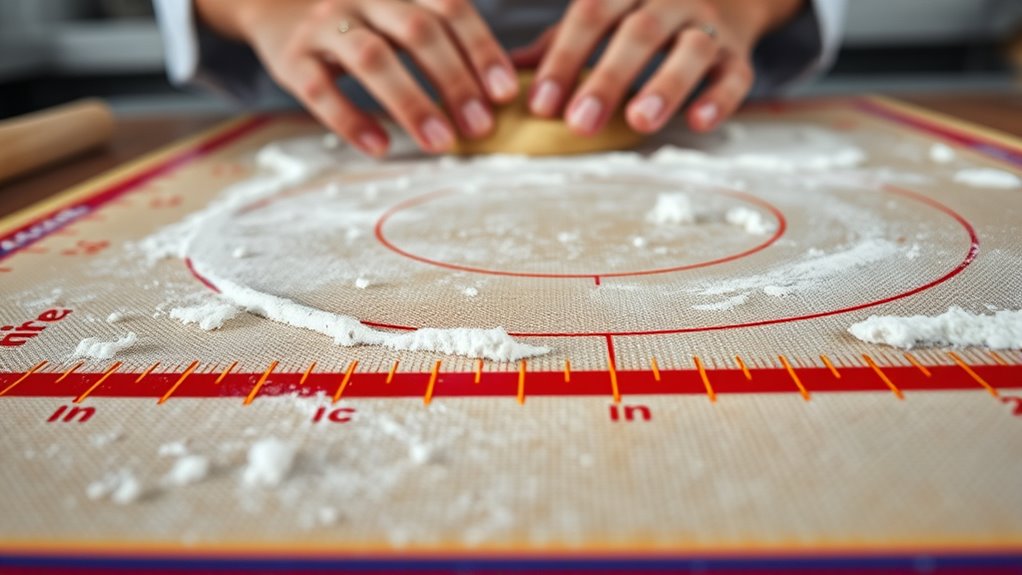
One common mistake is misaligning the dough with the measurement lines, which can lead to uneven thickness and compromised measurement precision. User errors often occur when you don’t double-check the placement before rolling or fail to keep the mat steady. To avoid this, be mindful of these pitfalls:
- Ignoring the importance of aligning the dough perfectly with the measurement lines
- Moving the dough during rolling, causing inaccurate sizing
- Relying solely on visual cues instead of confirming measurements with the lines
These errors can cause inconsistent results and affect your recipe’s accuracy. Always ensure your dough stays aligned and steady, and verify measurements frequently. Being attentive to these details minimizes user errors and helps you achieve precise, professional-looking baked goods.
Tips to Keep Your Pastry Mat Accurate and Lasting
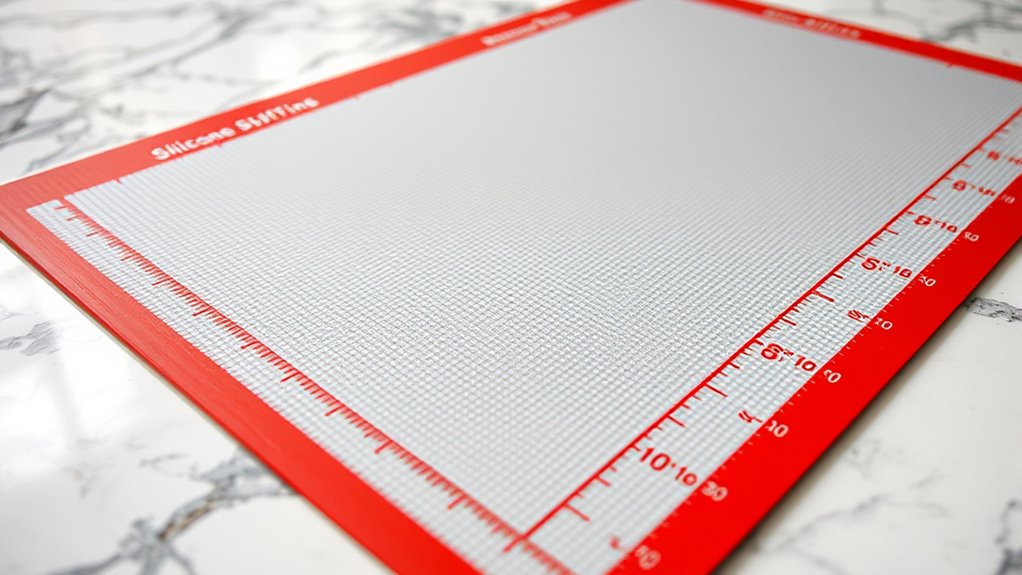
To keep your pastry mat accurate and lasting, it’s essential to prioritize proper cleaning and storage. After each use, wash the mat with warm, soapy water to remove flour and dough residues, then dry it thoroughly. Store it flat or rolled gently to prevent warping or cracking. Using artificial intelligence-powered baking techniques can help you calibrate your measurements precisely and maintain consistency over time. Regularly check the measurement lines for wear or fading, and re-label if needed. Avoid harsh scrubbers or abrasive cleaners that could damage the surface. Proper care guarantees your pastry mat remains accurate for all your baking projects, making it easier to achieve flawless results every time. With these tips, your mat will stay durable and dependable for years.
Frequently Asked Questions
Can Measurement Lines Be Used for All Types of Pastry Dough?
Yes, measurement lines can be used for all types of pastry dough, but their versatility varies. For delicate doughs like puff pastry or pie crusts, measurement lines help guarantee consistent thickness and size. However, for more fragile or sticky doughs, you might find them less precise. Always consider the dough type and texture, but overall, measurement lines are a handy tool for maintaining uniformity across various pastry dough types.
Are There Specific Cleaning Instructions to Maintain Measurement Line Accuracy?
Did you know that proper care can extend your pastry mat’s lifespan by up to 30%? To maintain measurement line accuracy, you should regularly clean your mat with gentle cleaning solutions and avoid harsh abrasives. Follow maintenance tips like wiping it down after each use and storing it flat. This keeps the lines clear and precise, ensuring your measurements stay reliable for every baking session.
How Do I Calibrate My Pastry Mat’s Measurement Lines?
To calibrate your pastry mat’s measurement lines, first verify their accuracy with a ruler or tape measure. Use calibration techniques like marking a known measurement and checking if the lines match. If they’re off, gently adjust the lines or create a new set with a permanent marker. Regularly calibrate to maintain measurement accuracy, ensuring your baking measurements stay precise and consistent every time.
Can Measurement Lines Help With Shaping Pastries Besides Rolling?
Yes, measurement lines on your pastry mat can help with shaping pastries beyond rolling. They assist with consistent portion control, ensuring uniform sizes for pastries and decorations. You can use the lines as guides for even spacing when decorating, layering, or assembling, making your work more precise. This helps you achieve professional-looking results and keeps your pastries balanced and attractive, all while streamlining your baking process.
What Materials Are Best for Durable, Long-Lasting Pastry Mats?
You should choose silicone or high-quality rubber for durable, long-lasting pastry mats. These materials excel in material durability and resist wear and tear over time, ensuring your mat’s longevity. Silicone, in particular, is heat-resistant and easy to clean, making it a popular choice for professional bakers and home cooks alike. Investing in a sturdy, well-made mat guarantees reliable performance and extended use, saving you money and hassle in the long run.
Conclusion
With your pastry mat’s measurement lines, you can roll out perfect dough every time. Just remember to choose the right mat, prepare your dough properly, and use the lines carefully—like a seasoned baker of yore. Avoid common mistakes, keep your mat clean, and it’ll serve you well for many baking adventures ahead. Soon, you’ll be turning out bakery-quality pastries, as if you had a fairy godmother in the kitchen guiding your hand.