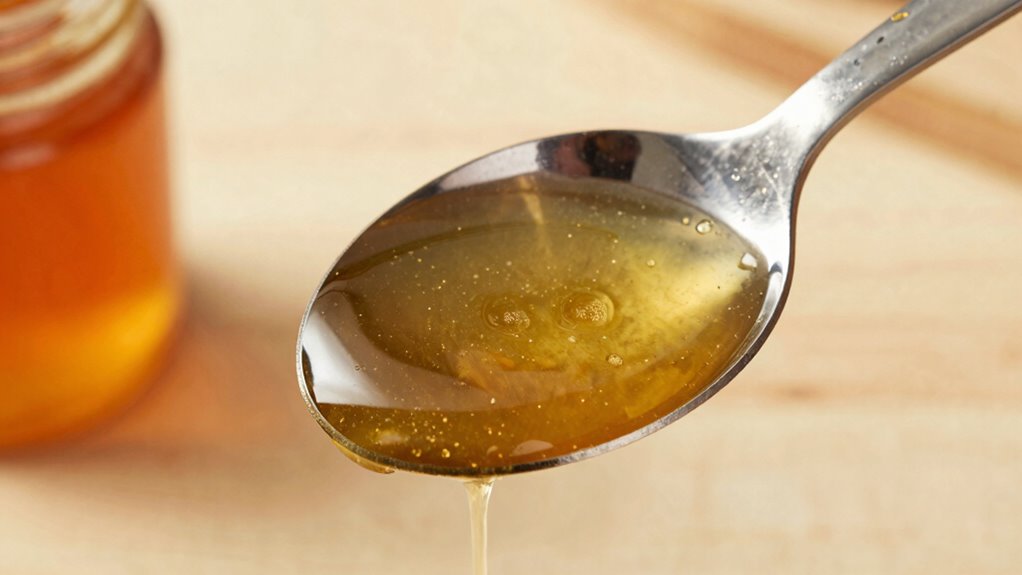
To measure sticky ingredients without losing any, lightly oil your measuring cups or spoons to prevent sticking. Fill them carefully to the required level, then use the back of a flat knife or spatula to level off the top, ensuring accuracy. If the ingredient sticks, reheating or stirring it can help restore smoothness for better measurement. Keep practicing these tips, and you’ll master precise measurements every time for perfect results. Continue exploring for more useful techniques.
Key Takeaways
- Lightly coat measuring tools with oil or non-stick spray before measuring sticky ingredients.
- Use silicone spatulas to scrape and transfer sticky ingredients completely from containers.
- Fill measuring cups or spoons to the desired level and level off with a flat tool for accuracy.
- Reheat or stir hardened sticky ingredients like chocolate to restore smoothness before measuring.
- Store sticky ingredients in clear, airtight containers for easy visibility and precise portioning.
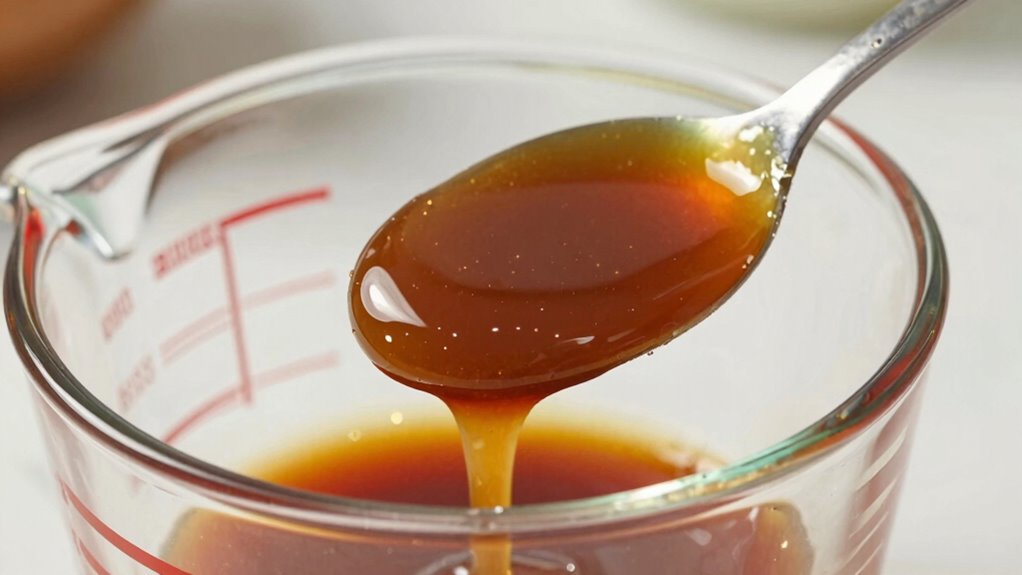
Measuring sticky ingredients like honey, syrup, or melted chocolate can be tricky, but with the right techniques, you can do it accurately and mess-free. These ingredients tend to cling to measuring tools, making it difficult to get an exact amount without wasting or creating a sticky mess. To avoid this, start by lightly coating your measuring cups or spoons with a bit of oil or non-stick spray. This simple trick helps the sticky substance slide right off, ensuring you get a precise measurement without excess residue. When measuring, fill the cup or spoon to the required level, then use the back of a flat knife or a spatula to level it off neatly. This step guarantees accuracy, especially important if your recipe requires precise ingredient ratios. Additionally, using silicone spatulas can help scrape every bit of sticky ingredient from the container, reducing waste and improving measurement precision. If you’re out of your usual ingredient, such as honey or syrup, and need to make ingredient substitutions, knowing how to measure accurately becomes even more *essential*. For example, if your recipe calls for honey but you only have agave syrup, remember that both are sweeteners with similar consistencies, so you can generally substitute them one-to-one. However, if you’re swapping melted chocolate for a different sticky ingredient, consider adjusting the quantity based on the desired sweetness or texture. When making ingredient substitutions, always measure carefully and note how each change might affect the final outcome. This way, your baked goods or dishes turn out just as intended, even if you’re improvising with what’s in your pantry. Proper storage tips also play a big role in maintaining the quality of sticky ingredients and making them easier to measure later. Keep honey, syrup, and melted chocolate in airtight containers at room temperature or in a cool, dry place. Proper storage prevents spoilage and keeps the ingredients at the right consistency for easy measuring. If your melted chocolate hardens or becomes grainy, gently reheat it over a double boiler or in short bursts in the microwave, stirring frequently. This restores its smoothness, so it measures more accurately and mixes well into recipes. Additionally, storing sticky ingredients in clear containers allows you to see how much you have left, helping you plan your baking sessions better. Being aware of free floating techniques can also help in understanding how these ingredients behave during preparation. Mastering how to measure sticky ingredients without losing half involves a combination of the right tools, techniques, and storage practices. By using lightly oiled measuring cups, understanding ingredient substitutions, and storing your ingredients properly, you’ll minimize waste and achieve consistent, delicious results every time.
non-stick measuring cups
As an affiliate, we earn on qualifying purchases.
As an affiliate, we earn on qualifying purchases.
Frequently Asked Questions
Can I Substitute Sticky Ingredients With Dry Ones?
Yes, you can substitute sticky ingredients with dry ones using alternative measurement methods. For example, if a recipe calls for honey or syrup, you can replace them with dry sugar or powdered alternatives, adjusting quantities accordingly. Sticky ingredient substitutes may require you to modify liquids or add binders to achieve the desired consistency. Always consider the flavor and texture differences when using dry substitutes instead of sticky ingredients.
What Tools Are Best for Measuring Sticky Substances?
You need tools that handle sticky ingredients like a pro magician. Use a silicone spatula or a rubber scraper for precise measuring techniques, ensuring you don’t lose a drop. Measuring cups with a pour spout also work wonders for ingredient consistency. For liquids, a glass measuring jug with clear markings is perfect. These tools help you maintain accuracy and keep your ingredients right where they belong, no mess, no fuss.
How Do I Clean Sticky Measuring Tools Effectively?
To clean sticky measuring tools effectively, start by rinsing them with warm water to loosen residue. Use a gentle brush or sponge with dish soap to remove stubborn spots, ensuring measuring accuracy and ingredient consistency. Rinse thoroughly and dry immediately to prevent stickiness from returning. Proper cleaning maintains your tools’ precision, so your measurements stay accurate and consistent every time you cook or bake.
Are There Quick Tricks to Prevent Sticking During Measurement?
To prevent sticking during measurement, quickly dust your measuring tools with flour, which creates a barrier and helps release sticky ingredients. Alternatively, spray them lightly with a non-stick spray for an easy solution. This simple trick saves time, keeps your measurements accurate, and makes cleanup a breeze. Remember to reapply flour or spray if you switch between different sticky ingredients to maintain smooth, precise measurements every time.
Does Temperature Affect the Measurement Accuracy of Sticky Ingredients?
Temperature fluctuations can definitely affect the measurement accuracy of sticky ingredients. When ingredients get warmer, they become more fluid, making them harder to measure precisely, while cooler temps can make them firmer and easier to handle. To maintain consistent ingredient consistency, measure sticky ingredients at a stable, room temperature. This prevents inaccuracies caused by temperature changes and helps you get the most precise measurements every time.

ChefAide 5 Pieces Silicone Spatula Set, Food Grade Rubber Spatula, Upgrade Strong Handle with Ergonomic Grip, Heat Resistant Up to 600°F for Nonstick Cookware, Cooking
Premium 100% Food Grade Silicone: The silicone spatula set is made of healthy and friendly material, resistant to…
As an affiliate, we earn on qualifying purchases.
As an affiliate, we earn on qualifying purchases.
Conclusion
Remember, measuring sticky ingredients is like holding onto a delicate thread—careful yet confident. With the right techniques, you’ll master the art of capturing their essence without losing a single drop. Think of your measuring tools as trusted companions guiding you through a dance, each step precise and intentional. When you embrace patience and a steady hand, you’ll turn chaos into harmony, ensuring every ingredient’s story is told perfectly in your final masterpiece.
oil spray for measuring utensils
As an affiliate, we earn on qualifying purchases.
As an affiliate, we earn on qualifying purchases.
reheatable melted chocolate
As an affiliate, we earn on qualifying purchases.
As an affiliate, we earn on qualifying purchases.