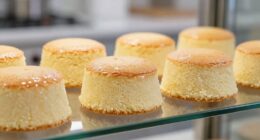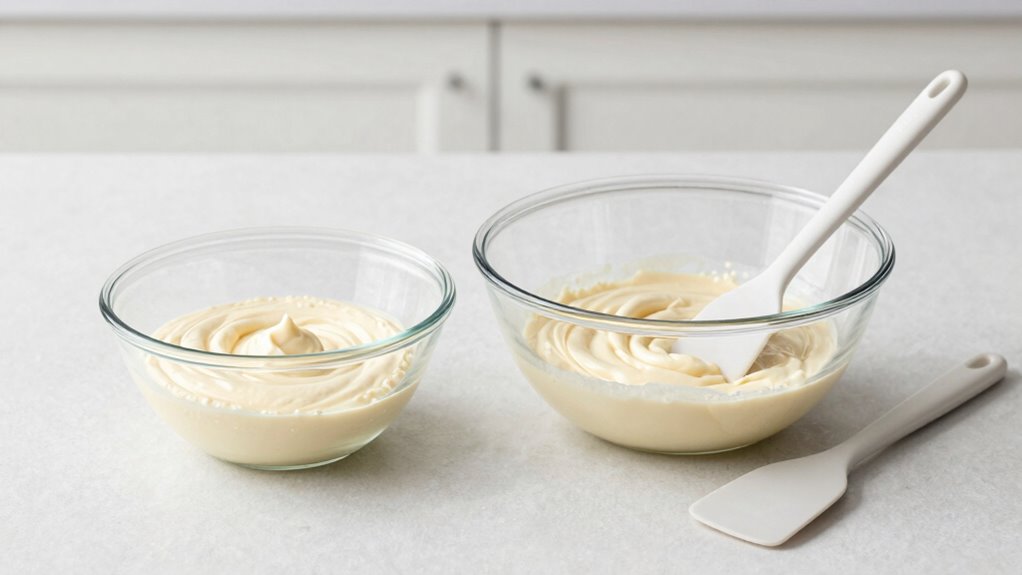

When doubling a recipe, it’s important to mix gently to avoid overworking the batter and losing tenderness. Use a spatula or wooden spoon, and fold ingredients just until combined, stopping as soon as no streaks remain. Adjust leavening and liquids carefully, and consider dividing the batter into multiple pans for even baking. Pay attention to batter consistency and baking times, and if you keep these tips in mind, you’ll preserve perfect texture and flavor every time.
Key Takeaways
- Use a spatula or wooden spoon to gently fold doubled ingredients until just combined.
- Measure all ingredients carefully, adjusting leavening agents and liquids slightly if doubling.
- Mix until no visible streaks of flour remain, avoiding stiff or sticky batter.
- Divide batter into multiple pans if necessary to ensure even baking and prevent overloading.
- Monitor baking times closely and check for doneness earlier to prevent overbaking.

Have you ever needed to make more of a recipe but didn’t want to start from scratch? Doubling a recipe sounds straightforward, but it can be tricky if you’re not careful. One common mistake is overmixing the batter or dough, which can lead to tough baked goods or uneven textures. To prevent this, it’s important to employ techniques to avoid overmixing. When you double a recipe, stick to gentle mixing methods. Use a spatula or wooden spoon instead of an electric mixer for delicate batters, and fold the ingredients just until they’re combined. This minimizes gluten development and preserves a light, tender result. Also, pay attention to the consistency of your batter; if it becomes too stiff or sticky, you might be overmixing. Stop mixing as soon as you see no visible streaks of flour or dry ingredients.
Adjusting ingredient ratios is equally vital when doubling recipes. Sometimes, doubling all ingredients blindly can mess with the balance of flavors and textures. For example, doubling a leavening agent like baking powder or baking soda can cause your baked goods to rise too quickly or have an off taste. Instead, consider adjusting these ingredients slightly—sometimes a little less than double is better to maintain the proper leavening. Similarly, if your original recipe uses a specific amount of liquids, like milk or oil, doubling these can affect the batter’s consistency. You might need to add a touch more or less to keep the mixture smooth and workable. Measure ingredients carefully, and don’t assume doubling always means exactly twice the amount. Sometimes, small adjustments improve the final product, especially with spices or flavorings, which can become overwhelming if doubled blindly.
When you’re doubling a recipe, it’s also helpful to note the size of your baking pans or utensils. Larger quantities may require adjustments in baking time and temperature. Keep a close eye on your baked goods and check for doneness earlier than the original recipe suggests. If you’re working with delicate baked items like muffins or cakes, consider dividing the batter into multiple pans rather than trying to bake it all at once in a larger pan. This ensures even baking and prevents undercooked centers or overbaked edges.

ChefAide 5 Pieces Silicone Spatula Set, Food Grade Rubber Spatula, Upgrade Strong Handle with Ergonomic Grip, Heat Resistant Up to 600°F for Nonstick Cookware, Cooking
Premium 100% Food Grade Silicone: The silicone spatula set is made of healthy and friendly material, resistant to…
As an affiliate, we earn on qualifying purchases.
As an affiliate, we earn on qualifying purchases.
Frequently Asked Questions
Can I Double a Recipe Without Changing Cooking Time?
You can double a recipe without modifying the cooking time by carefully adjusting your recipe scaling and maintaining proper ingredient ratios. When you double ingredients, evenly distribute them to ensure consistent cooking. Keep an eye on your dish as it cooks, because larger quantities might require a few extra minutes. Always check for doneness rather than relying solely on time, and stir gently to prevent overmixing.
How Do I Adjust Baking Temperatures When Doubling a Recipe?
When doubling a recipe, you generally don’t need to change the oven temperature. Focus on adjusting the baking time instead. Use proper oven temperature adjustments based on your recipe, and verify even mixing techniques to prevent overmixing. If you’re baking a larger batch, consider using an oven thermometer to maintain consistent heat. This way, your baked goods will cook evenly without altering the temperature, ensuring perfect results every time.
Is It Necessary to Use Larger Baking Pans?
You don’t necessarily need larger baking pans when doubling a recipe, but using one that’s too small can cause uneven baking. To guarantee even cooking, choose a baking pan that fits comfortably in your oven size, leaving space around the edges. If your pans are small, consider dividing the batter into multiple pans or using a larger pan to prevent overflow and ensure proper heat circulation.
Will Doubling Alter the Recipe’s Texture or Flavor?
Doubling a recipe can slightly change its texture and flavor if you don’t carefully scale your ingredients. To guarantee flavor preservation and consistent texture, measure ingredients accurately and follow proper recipe scaling techniques. Be mindful of baking times and pan sizes, as larger portions may require adjustments. This way, you maintain the dish’s original quality, ensuring the doubled recipe turns out just as delicious as the original.
How Do I Ensure Even Mixing When Doubling?
Your mixing techniques can make or break your doubled recipe! To guarantee even mixing, use a gentle folding method and mix in stages, adjusting ingredient ratios carefully. This prevents overmixing and keeps textures perfect. Start by combining smaller portions to maintain control, then gradually blend everything together. Trust your senses—if it looks uniform and well-incorporated, you’ve nailed it! Even mixing is the secret to flawless doubled dishes.
wooden mixing spoon
As an affiliate, we earn on qualifying purchases.
As an affiliate, we earn on qualifying purchases.
Conclusion
Doubling a recipe is simple, but some believe it can lead to overmixing and ruined results. The truth? As long as you follow proper mixing techniques and don’t overdo it, your dish will turn out just as delicious. Trust the process and pay attention to texture rather than rushing. With a little care, you can double recipes confidently and enjoy perfectly baked, flavorful results every time—no overmixing required!
measuring cups and spoons set
As an affiliate, we earn on qualifying purchases.
As an affiliate, we earn on qualifying purchases.
baking pans for double recipes
As an affiliate, we earn on qualifying purchases.
As an affiliate, we earn on qualifying purchases.