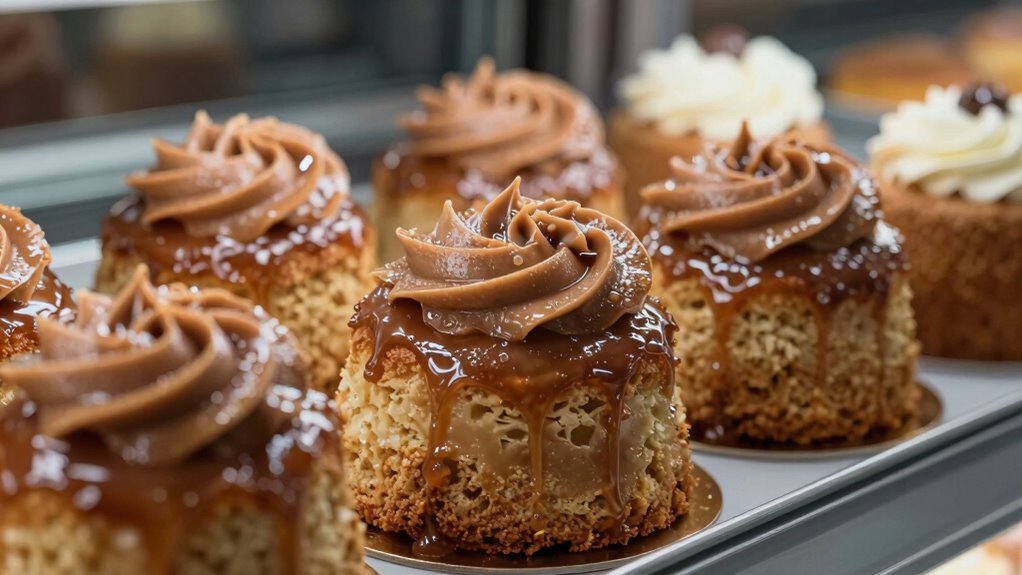

When you chill cakes in display cases, sweating happens because of moisture from the air condensing on the cool surface. This often occurs due to fluctuations in temperature and high humidity levels, especially if the cake isn’t fully cooled beforehand. Proper humidity and temperature control can prevent this. If you want to understand how to keep your cakes looking perfect and avoid moisture issues, stay with us for more insights.

Get baking supplies delivered free with Prime
- Fast, free delivery on millions of items
- Prime Video, Amazon Music and more included
- Member-only deals all year
Key Takeaways
- Cakes sweat due to condensation when moist air contacts their cooler surface in fluctuating humidity environments.
- Placing warm cakes directly into display cases causes moisture to escape and condense on the surface.
- Poor temperature regulation in display cases leads to temperature fluctuations, promoting condensation and sweating.
- Inadequate cooling before refrigeration allows residual moisture to cause surface condensation after chilling.
- High humidity levels in display cases increase moisture buildup, resulting in cake sweating and a glossy appearance.
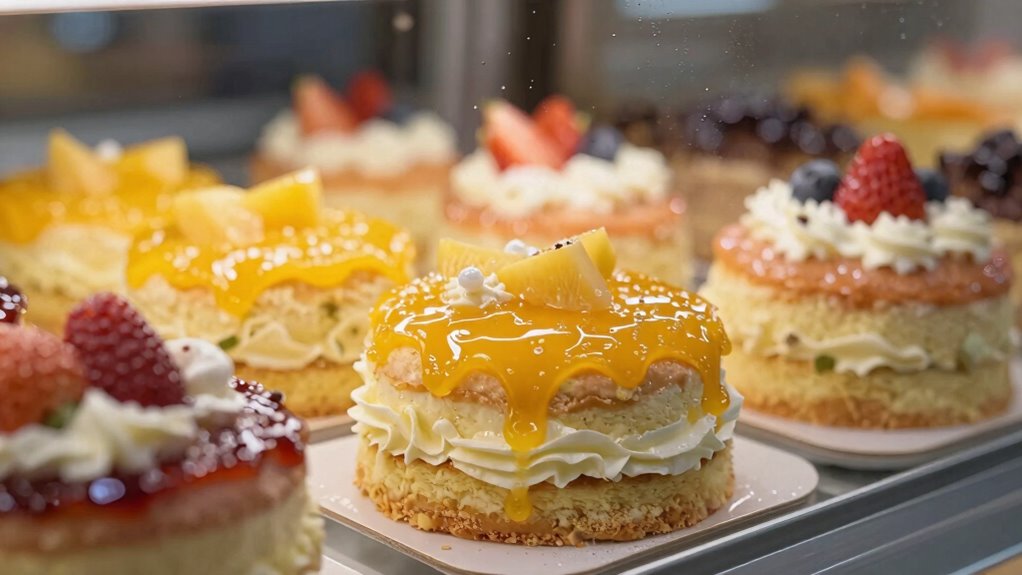
Have you ever noticed that cakes often develop a shiny, damp surface after being chilled in display cases? This phenomenon happens because of the way moisture interacts with the cake’s surface when exposed to the environment inside the case. Understanding why this sweating occurs is key to better cake preservation, especially if you want your baked goods to stay fresh and appealing for longer.
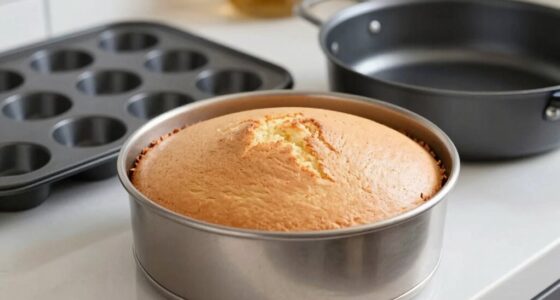
When cakes are stored in refrigerated display cases, they’re exposed to fluctuating humidity levels. If the environment has high humidity, moisture from the air condenses on the cooler surface of the cake, creating that glossy, damp appearance. This isn’t necessarily a sign of spoilage, but it can affect the cake’s texture and presentation. Moisture buildup can make the cake feel sticky and can even lead to a soggy crumb if it persists. That’s why humidity control is crucial in display settings. Maintaining optimal humidity levels helps prevent excessive condensation, ensuring the cake remains visually appealing and texturally sound.
Proper cake preservation involves managing this balance carefully. If the environment is too dry, the cake’s surface can dry out and become crusty. Conversely, if it’s too humid, condensation forms easily. To minimize sweating, many bakeries and display case operators use humidity controls, which regulate moisture levels inside the case. This not only preserves the cake’s appearance but also extends its freshness by preventing rapid moisture loss or absorption. When humidity is kept within an ideal range, the cake’s surface remains stable, and the risk of condensation is greatly reduced. Additionally, understanding the moisture transfer process helps bakers develop better storage methods to keep baked goods in optimal condition. Proper temperature regulation is also essential, as temperature fluctuations can contribute to condensation and sweating. Implementing these practices can significantly improve the overall shelf life of baked goods and reduce waste.
Additionally, how you handle the cake before placing it in the case makes a difference. Allowing the cake to cool completely before refrigeration is essential. If you put a warm cake directly into a display case, the heat causes moisture to escape and condense on the surface, resulting in that shiny, damp layer. Using proper cooling techniques can help prevent this issue and maintain the cake’s texture and appearance. Wrapping the cake loosely or covering it with a breathable material can also help regulate moisture transfer. These small steps, combined with effective humidity control, significantly improve cake preservation and minimize sweating. Proper storage practices are vital for maintaining quality and presentation over time, especially in busy bakery environments where display appeal is crucial.
In essence, understanding the relationship between temperature, humidity, and moisture transfer helps you keep cakes looking fresh and appetizing. By controlling humidity and ensuring proper cooling, you can prevent excessive sweating and maintain the cake’s quality. So, next time you see a cake glistening after being chilled, you’ll know it’s a common response to moisture and temperature dynamics—one that can be managed with the right storage practices.
cake display case humidity controller
As an affiliate, we earn on qualifying purchases.
As an affiliate, we earn on qualifying purchases.
Frequently Asked Questions
Can Sweating Affect the Taste of the Cake?
Yes, sweating can affect the taste of your cake. When moisture forms on the surface, it can alter the cake’s texture, making it soggy or sticky, which diminishes its overall appeal. This excess moisture can also lead to flavor degradation, as the cake may absorb unwanted flavors from its environment or develop a stale taste. To keep your cake tasting fresh, store it properly and avoid excessive chilling that causes sweating.
How Long Does It Take for Cakes to Stop Sweating?
It usually takes about 30 minutes to an hour for cakes to stop sweating after being placed in a display case. To maintain cake freshness and reduce sweating, guarantee the display case design allows proper ventilation and humidity control. During this time, the moisture on the cake’s surface evaporates, helping it dry out. Keep an eye on the environment, and your cake will stabilize faster, preserving its appearance and taste.
Is Sweating More Common With Certain Types of Cakes?
Yes, sweating is more common with certain types of cakes, especially those with high moisture content or smooth, glossy surfaces. You might notice more condensation buildup on fruit-topped or cream-filled cakes, as moisture migration occurs when cold cakes are exposed to humid air. These cakes tend to attract more condensation, making them sweat more after chilling, compared to drier, less perishable varieties.
Does the Humidity Level Inside the Display Case Influence Sweating?
Humidity levels definitely dictate whether cakes sweat in display cases. When humidity control falters, moisture escapes, causing condensation and cake sweating. Higher humidity invites excess moisture, while lower humidity helps prevent condensation. By maintaining ideal humidity levels, you can prevent cake sweating, ensuring your confections stay fresh and appealing. Proper humidity management is key to condensation prevention, keeping cakes crisp, clean, and moisture-free in display cases.
Can Proper Packaging Prevent Cakes From Sweating?
Yes, proper packaging can prevent cakes from sweating. Using high-quality packaging materials that create a tight seal helps control moisture exposure. Additionally, maintaining proper temperature control during storage and display reduces condensation. When you combine effective packaging with consistent temperature management, it minimizes the chances of sweating, keeping your cakes fresh and appealing. Always make certain your packaging is suitable for the cake type and storage environment for best results.
As an affiliate, we earn on qualifying purchases.
Conclusion
So, next time your cake starts to sweat after chilling, think of it as a silent warning sign, much like a mirror fogging up on a cold day. Just like that mirror, your cake’s surface is balancing the heat and moisture it absorbed from the fridge. Understanding this dance helps you create a perfect display, avoiding the unwanted drizzle. Remember, patience and proper handling can turn a sweating cake into a sweet masterpiece.
As an affiliate, we earn on qualifying purchases.
As an affiliate, we earn on qualifying purchases.
Fall Picks
fall essentials
As an affiliate, we earn on qualifying purchases.