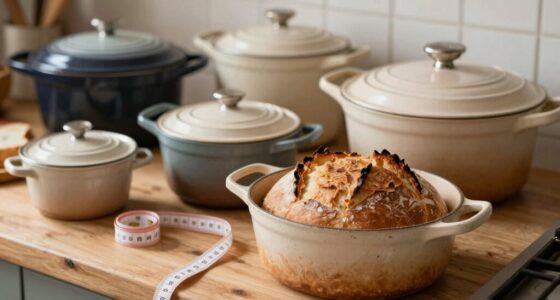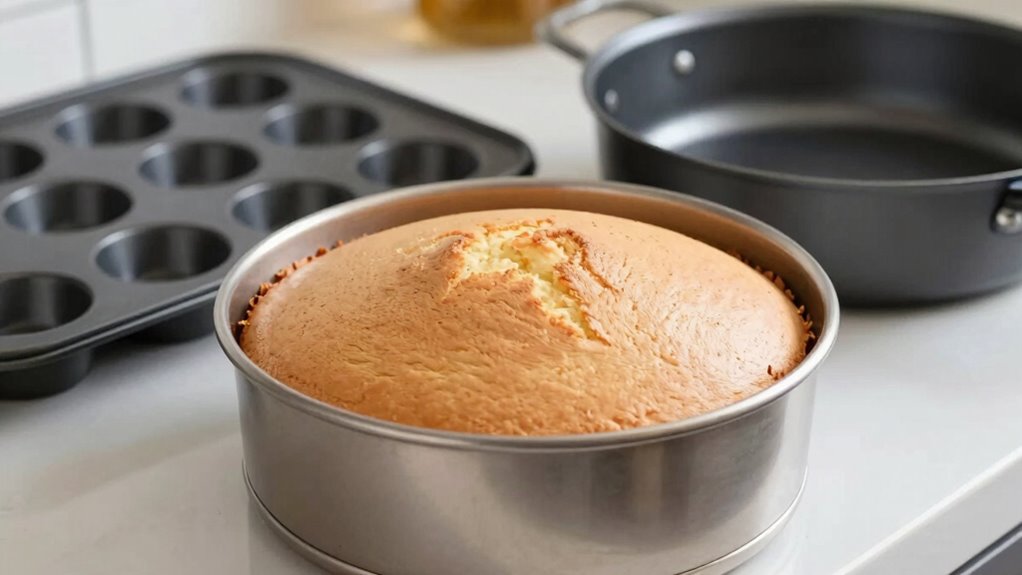
When adjusting baking times for different pan materials, remember that metal pans heat faster and distribute heat evenly, so you may need to lower the oven temperature slightly or check for doneness sooner. Glass and ceramic pans conduct heat more slowly, often requiring a higher temperature or longer baking time. As a rule of thumb, try reducing or increasing baking time by about 10-15% when switching materials, but keeping an eye on your baked goods guarantees the best results. If you’d like to learn more, keep exploring these helpful tips.
Key Takeaways
- Metal pans heat quickly; reduce baking temperature by 25°F or decrease baking time slightly.
- Glass and ceramic pans heat slowly; increase oven temperature by 25°F or extend baking time.
- When switching pan materials, monitor doneness closely using visual cues or toothpick tests.
- Adjust baking times based on material heat conduction properties for even baking results.
- Small temperature adjustments (around 25°F) can significantly affect baking time depending on pan material.

Baking times often need adjustment to guarantee your treats turn out just right. One of the main factors influencing baking results is the oven temperature. When switching to different pan materials, it’s vital to consider how these materials conduct heat, as they can affect how quickly your baked goods cook. For example, metal pans tend to heat up faster and distribute heat more evenly than glass or ceramic pans. This means that if you’re using a metal pan, you might need to lower the oven temperature slightly or reduce the baking time to prevent overbaking. Conversely, glass and ceramic pans heat more slowly and retain heat longer. In these cases, you might need to increase the oven temperature a few degrees or extend the baking time to achieve the desired doneness. Heat conduction properties of the pan material play a crucial role in these adjustments. Pan size also plays a significant role in baking time adjustments. When you switch to a larger pan, your batter or dough spreads out more thinly, which generally means your baked goods will need less time in the oven. Smaller pans concentrate the batter into a thicker layer, requiring a longer baking time. For instance, if a recipe calls for a 9-inch round pan but you’re using a 10-inch pan, expect the baking time to decrease slightly. Conversely, if you use a smaller pan, your items will need additional time to cook through. Keep in mind that changing pan sizes doesn’t just affect baking time; it can also influence how evenly your treats bake. Always check for doneness with a toothpick or cake tester rather than relying solely on the timer, especially when making pan size adjustments. When you combine the factors of oven temperature and pan size, it’s clear that these adjustments are interconnected. If you’re using a different pan material or size than the recipe specifies, start by making small changes—lower the oven temperature by 25°F or increase baking time by a few minutes. Watch your baked goods closely during the last few minutes of baking; they may need more or less time than the original recipe calls for. Remember, every oven and pan material behaves slightly differently, so don’t be afraid to experiment a bit. Adjusting baking times based on oven temperature and pan size ensures that your treats come out perfectly moist, evenly baked, and delicious every time.
Top picks for "time adjustment different"
Open Amazon search results for this keyword.
As an affiliate, we earn on qualifying purchases.
Frequently Asked Questions
How Do I Know if My Pan Is Made of Metal or Non-Stick Material?
You can identify your pan by examining its appearance and texture. Metal pans usually have a shiny or matte finish and feel sturdy, while non-stick pans often have a smooth, coated surface that may feel slightly slick. Check for markings or labels on the bottom—metal pans often have stamped or engraved info, whereas non-stick pans may have a non-reflective coating. Knowing these material characteristics helps you determine the right baking adjustments.
Do Different Pan Shapes Affect Baking Time Adjustments?
Think of your pan shape as a ship steering the baking seas. Different shapes, like a loaf pan versus a round or square one, affect how heat distributes across the baking surface. You might need to adjust baking time because a deeper or wider shape changes how quickly your baked goods cook. Keep an eye on your bake, and don’t hesitate to tweak your time based on the pan’s shape for perfect results.
Can I Use the Same Recipe for Glass and Metal Pans?
You can use the same recipe for glass and metal pans, but you’ll need to adapt the recipe slightly. Glass pans tend to heat more evenly and retain heat longer, so you should reduce the baking temperature by about 25°F and check for doneness earlier. Metal pans heat quickly and may require a slightly longer baking time. Always monitor your baked goods and adjust the baking time accordingly for best results.
How Do I Adjust Baking Time for Silicone Bakeware?
Did you know silicone bakeware heats 20% more evenly than metal pans? To adjust baking time, keep the oven temperature the same but check your baked goods 5-10 minutes earlier than the recipe suggests. Silicone tends to require slightly shorter baking durations, so monitor for doneness. Trust your senses—look for golden edges and a clean toothpick—rather than relying solely on the timer.
Are There Specific Temperature Guidelines for Various Pan Materials?
Yes, there are temperature guidelines tailored to different pan materials. For example, you should set your oven temperature slightly lower when using glass or ceramic pans because they retain heat more efficiently, which can cause overbaking. Metal pans, on the other hand, conduct heat quickly, so you might need to adjust the oven temperature or baking time accordingly. Always consider your specific pan material’s heat properties to guarantee your baked goods turn out perfect.
Conclusion
So, next time you switch pan materials, remember that baking times might not be as straightforward as you think. Ironically, the easiest part—just baking—becomes a bit of a science experiment. But don’t worry, a little trial and error will turn you into a pro. After all, who knew that your trusty metal pan could turn your perfect cake into a surprise? Happy baking, and may your timing be just right—eventually.