
At high altitudes, small adjustments in ingredients, oven temps, and timing can make a big difference in your baked goods. You’ll want to slightly increase your flour, reduce liquids, and lower leavening agents like baking powder to prevent over-expansion and collapse. Adjust oven temperatures upward and shorten baking times to avoid dryness. Using the right pans and managing humidity also helps improve results. Keep experimenting with these tweaks, and you’ll master successful baking at elevation.
Key Takeaways
- Increase flour and reduce liquids to improve dough structure and prevent over-expansion at high altitude.
- Adjust leavening agents by decreasing baking powder and increasing yeast for controlled rising.
- Raise oven temperature by 15-25°F and shorten baking times to counteract faster baking and prevent dryness.
- Use light-colored, metal pans and ensure oven calibration for even heat distribution and proper rise.
- Mix ingredients gently and fold carefully to maintain batter aeration and avoid collapsing baked goods.
How High Altitudes Change Your Baking Results
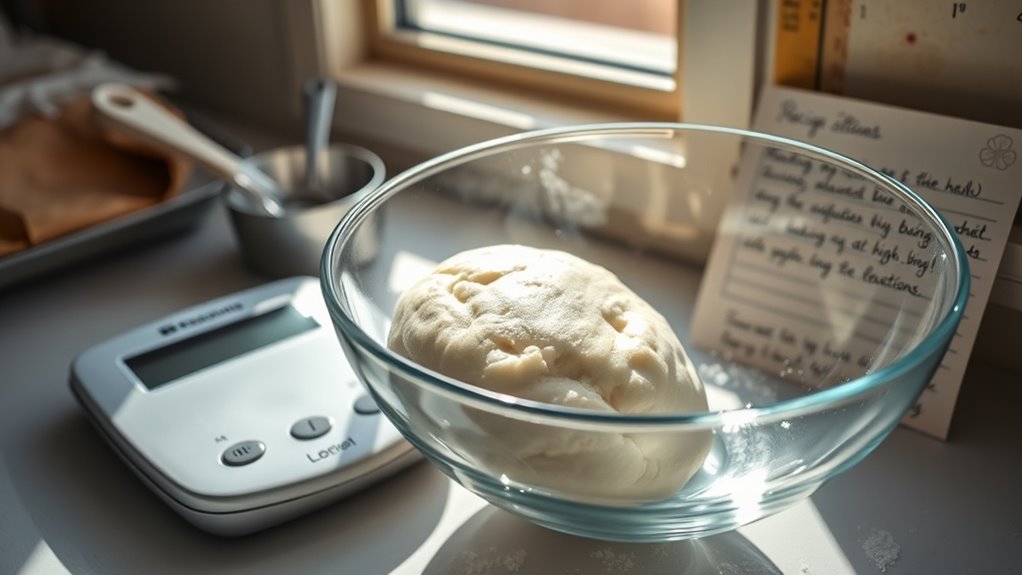
When you bake at high altitudes, the thinner air affects how your baked goods rise and set. The altitude effects cause leavening gases to expand more quickly, which can lead to over-expanded, collapsed, or uneven structures. You might notice your cakes or bread rise rapidly but then fall before baking is complete. Baking challenges also include faster moisture loss, resulting in drier textures. Additionally, the lower air pressure impacts gluten development, making dough less elastic. These changes mean your recipes won’t behave the same as they do at lower elevations. To succeed, you need to understand these altitude effects and adjust your techniques accordingly. Without these adjustments, you risk ending up with baked goods that are dense, flat, or crumbly.
Adjust Flour and Liquids to Strengthen Your Baked Goods
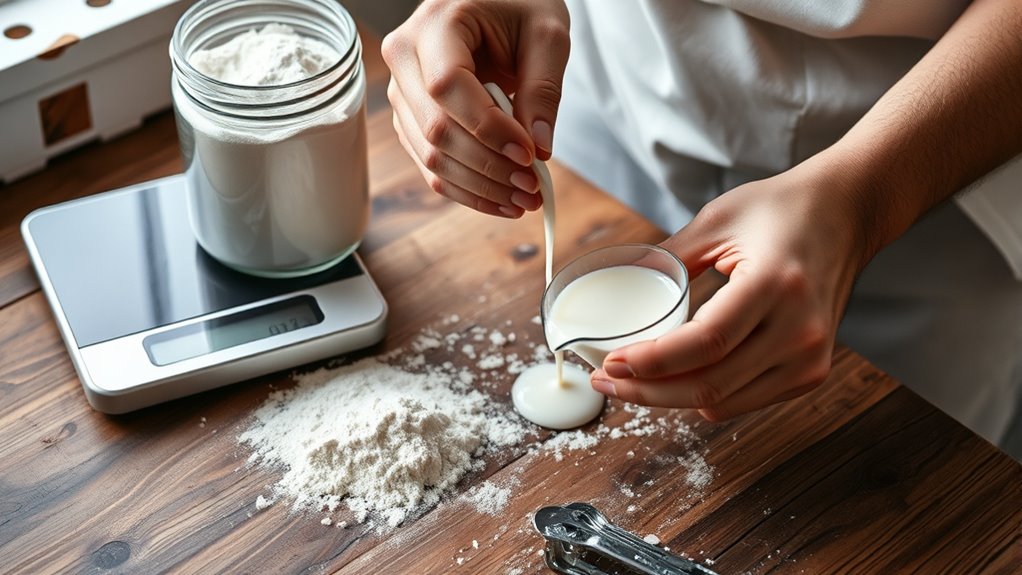
At high altitudes, adjusting your flour and liquids can make a big difference in your baked goods’ strength. You might need to increase the flour slightly to improve structure or reduce liquids to prevent over-expansion. Making these tweaks helps your baked treats turn out just right despite the altitude. For those interested in baking techniques, understanding how altitude affects ingredient behavior can further enhance your results. Additionally, experimenting with creative storytelling can inspire new recipes that resonate with your audience and elevate your baking brand. Being aware of ingredient adjustments specific to altitude can help you fine-tune your recipes for consistent success. Moreover, paying attention to home baking technology can introduce new tools and methods to improve your baking precision. Incorporating European cloud servers into your baking business’s online presence can also support sustainable growth and secure data management.
Adjust Flour Quantity
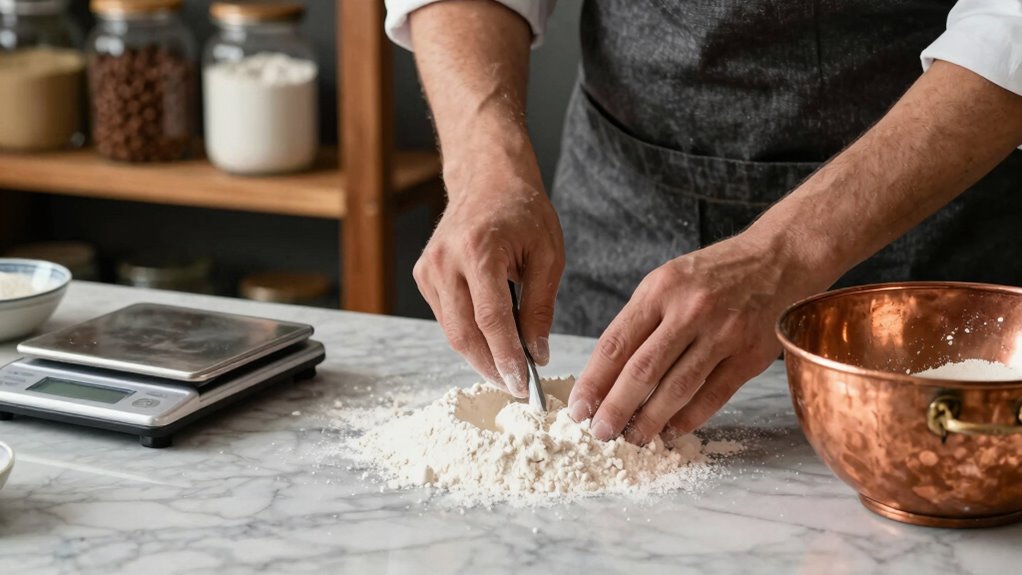
Adjusting the flour quantity is essential for achieving the right dough strength, especially at high altitudes where the air is drier and evaporation is faster. Proper flour measurement is key, as over- or under-measuring can alter the dough’s consistency. When ingredient scaling, start by slightly reducing the flour—about 1 to 2 tablespoons per cup—if your dough feels too sticky or weak. Conversely, if it’s too dry and crumbly, add a small amount more. Keep in mind that high-altitude baking often requires these small adjustments to maintain balance. Consistent flour measurement ensures you’re scaling ingredients accurately, helping your baked goods rise properly and develop the right texture. Fine-tuning flour quantity allows you to adapt recipes for desirable results at altitude. Accurate measurement techniques are crucial for consistent baking results.
Modify Liquids Properly
Balancing liquids is key to strengthening your baked goods at high altitudes, especially after fine-tuning the flour quantity. Proper liquid measurement guarantees the batter or dough isn’t too dry or too runny, both of which affect structure and rise. When adjusting, consider liquid substitution options like milk or water to fine-tune moisture levels. Using the right application techniques can also improve the final texture of your baked items. For example, understanding liquid-to-flour ratio helps maintain consistent results across different recipes. Additionally, employing seasonal checklists can help you track your adjustments and prevent common altitude baking issues. To further refine your results, experimenting with ingredient substitutions can offer additional stability and flavor enhancement. Incorporating altitude-specific adjustments is also beneficial for achieving optimal results in your baked goods.
- Use slightly less liquid initially, then add more as needed to reach the right consistency
- Replace part of the liquid with thicker dairy or fruit purées for added strength
- Experiment with small liquid adjustments to find the perfect balance for your recipe
These tweaks help create a more stable structure and prevent common altitude baking issues. Remember, small modifications make a big difference in achieving your desired baked texture.
Modify Baking Powder and Yeast for Better Rise
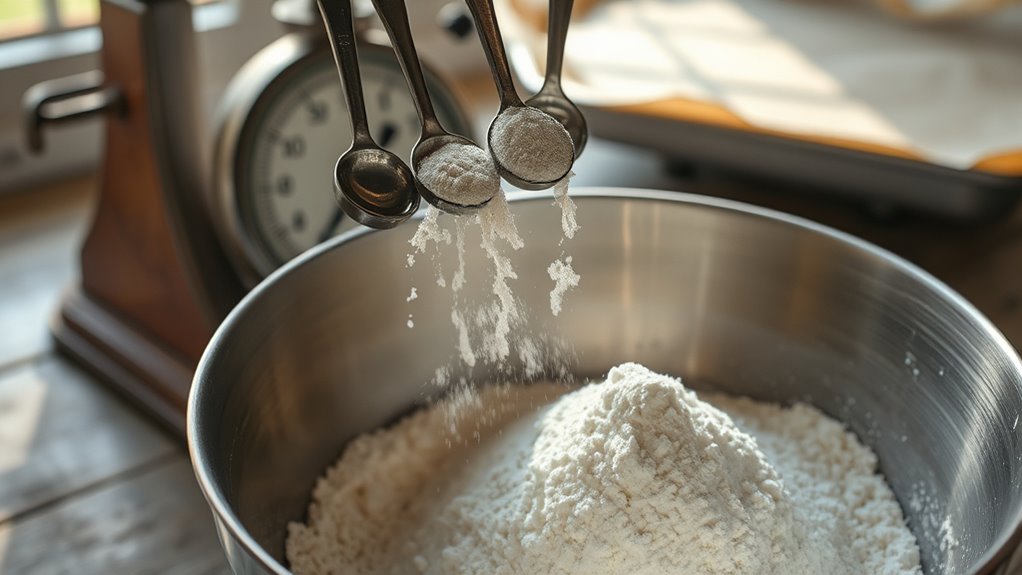
At higher altitudes, you need to adjust your baking powder and yeast to get the best rise. Controlling how quickly your dough or batter rises helps prevent collapse or uneven texture. By tweaking these leavening agents, you can achieve a light, fluffy result every time. Using the correct leavening agents ensures proper healing and reduces the risk of infection, which is crucial when making adjustments in baking environments. Understanding the effects of altitude on baking helps you make more precise modifications for optimal results. Incorporating traditional practices can also support more consistent outcomes by aligning with natural rising processes.
Adjust Leavening Agents
When baking at high altitudes, you need to modify leavening agents like baking powder and yeast to guarantee your baked goods rise properly. Proper leavening adjustments help maintain rising control and prevent over-expansion or collapsing. To do this effectively, consider these tips:
- Reduce the amount of baking powder to prevent excessive rising
- Slightly increase yeast to compensate for thinner air
- Experiment with the timing and amount of leavening to find the perfect balance
Control Rising Speed
Controlling the rising speed of your baked goods is essential for achieving the desired texture and structure at high altitudes. To do this, focus on managing your proofing environment; a warmer or more humid space can cause dough to rise too quickly, so adjust temperature and humidity accordingly. Additionally, guarantee your oven is properly calibrated, as inaccurate temperatures can affect how fast your bread or cakes rise. By fine-tuning these factors, you can slow or speed up the rise, giving you better control over the final product. Properly managing proofing environment and oven calibration can significantly influence your baking results. Using accurate oven temperature measurements helps ensure consistent rising times, especially in high-altitude baking. With careful attention to your proofing environment and oven calibration, you’ll get a consistent, well-risen bake every time.
Tweak Sugar and Fats to Improve Texture at Altitude

Have you noticed that baked goods sometimes turn out dry or dense at high altitudes? Adjusting sugar and fats can make a big difference in texture. To improve moisture and tenderness, consider:
Adjusting sugar and fats at high altitude helps keep baked goods moist and tender.
- Sugar adjustments: Slightly reducing sugar helps retain moisture and prevents overly dense results.
- Fat modifications: Increasing fat, like butter or oil, adds richness and keeps baked goods tender, counteracting dryness.
- Balance: Combining minor sugar reductions with added fats enhances the overall texture without compromising flavor or structure.
- Understanding altitude-specific challenges can help you tailor your baking techniques more effectively. These tweaks help counteract the drier air and quicker moisture loss at altitude. Remember, small changes can have a big impact on the final product, making your baked goods lighter, moister, and more enjoyable.
Set Oven Temperatures and Times Correctly for High Altitudes
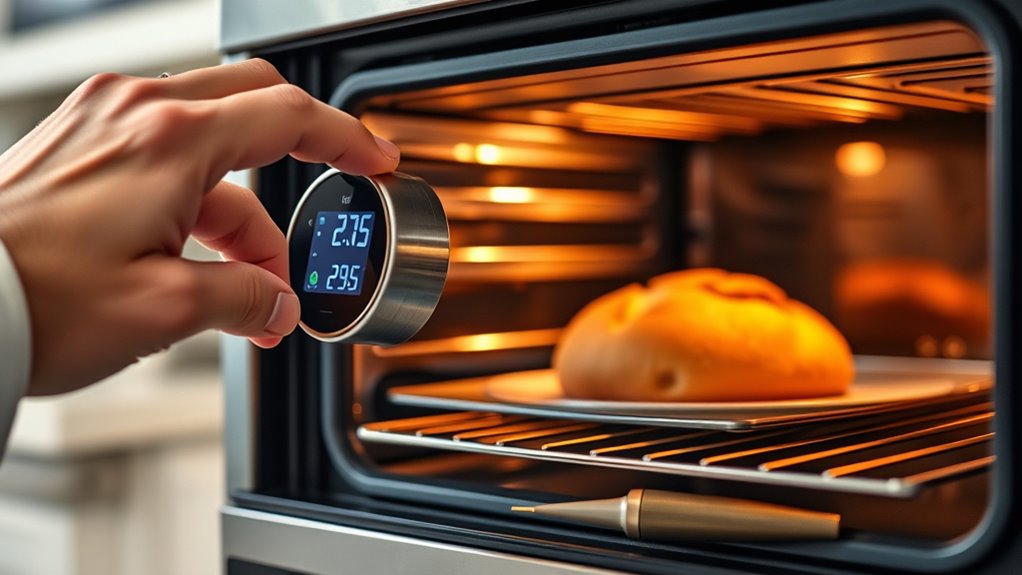
At high altitudes, you need to modify your oven temperatures and baking times to get the best results. Raising the temperature slightly can help your baked goods rise properly, while shortening baking times prevents overcooking. Paying attention to these adjustments ensures your treats turn out perfect every time. Incorporating science-backed training principles can further optimize your baking techniques at altitude. Understanding wall surface finishes and how they interact with environmental factors can also influence your baking environment, ensuring consistent results. Additionally, considering ambient-light playbooks can help you create optimal kitchen lighting conditions for precise baking and monitoring progress. Being aware of environmental factors like humidity and temperature fluctuations can also make a noticeable difference in your baking success. Recognizing how heat pump performance varies with climate can guide you in maintaining a stable kitchen environment for better baking outcomes.
Adjust Oven Temperatures
When baking at high altitudes, adjusting your oven temperature and baking time is essential to achieve the best results. First, verify your oven calibration is accurate; a thermometer can help confirm temperature accuracy. High altitudes often cause ovens to run cooler or hotter than indicated, so calibrate if needed. To optimize your baking:
- Increase oven temperature by 15-25°F to combat lower air pressure
- Use an oven thermometer to monitor actual temperature
- Adjust baking times slightly, as higher temperatures may reduce baking duration
- Be aware that air pressure changes at high altitudes can affect how baked goods rise and set.
Modify Baking Times
To guarantee your baked goods turn out perfect at high altitudes, you need to modify baking times in addition to adjusting oven temperatures. High altitudes often cause baked items to cook faster or unevenly, so shortening baking times is essential. Keep a close eye on your baked goods and start checking for doneness a few minutes earlier than the recipe indicates. You might also need to make oven adjustments, like lowering the temperature slightly to prevent over-browning. Remember, every altitude is different, so it’s a good idea to test small batches first. Adjusting baking times carefully ensures your cakes, bread, and cookies finish perfectly without becoming dry or undercooked. Consistent oven adjustments and timing tweaks are key to successful high-altitude baking.
Master Mixing and Folding Techniques for Better Bakes
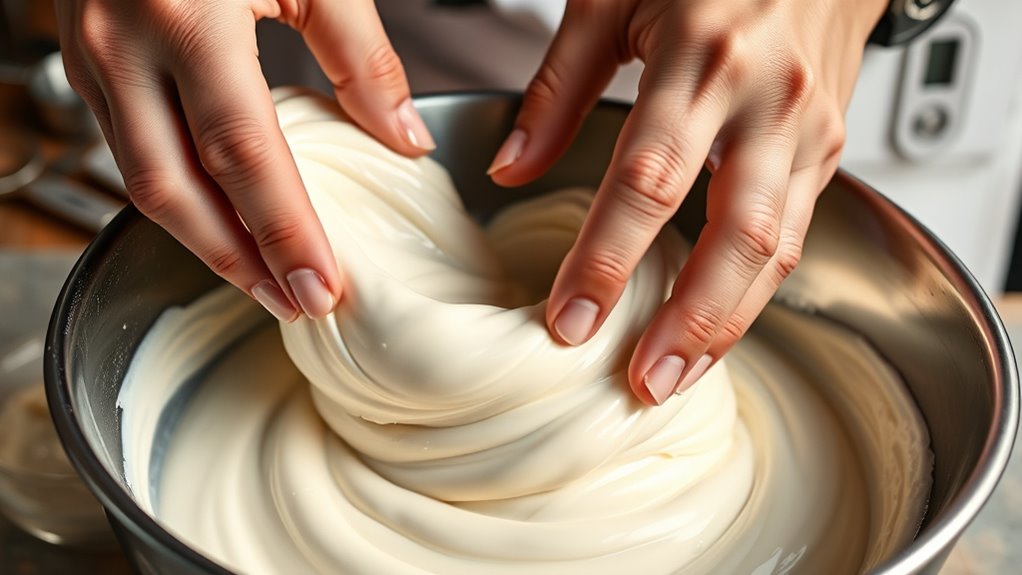
Mastering mixing and folding techniques is essential for achieving light, airy baked goods at high altitudes. Proper mixing techniques guarantee ingredients are evenly combined without overworking the batter, which can lead to dense results. Folding methods help incorporate delicate ingredients like whipped egg whites or whipped cream gently, preserving their aeration. To improve your baking results:
- Use gentle, even mixing to avoid deflating batter
- Incorporate dry ingredients gradually, avoiding sudden additions
- Fold in delicate ingredients slowly, maintaining volume and fluffiness
Choose the Right Pans for Baking at High Elevation
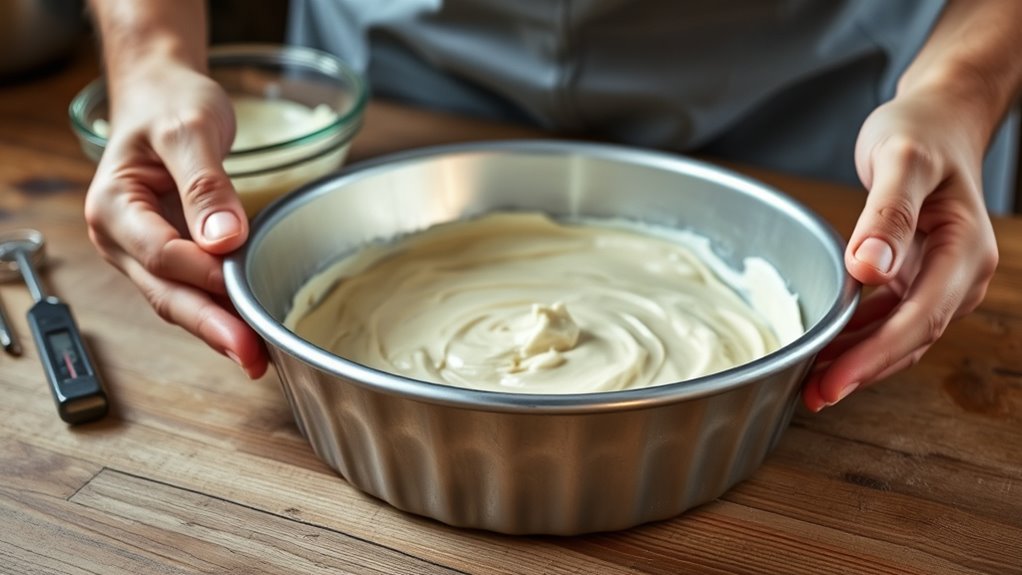
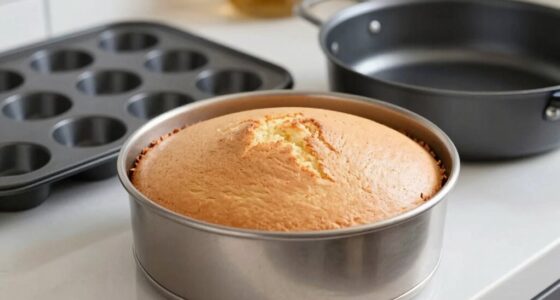
Choosing the right baking pans is vital for success at high elevations because they influence heat distribution and baking times. The pan material matters—light-colored, matte finish pans reflect heat better, preventing over-browning, while dark pans absorb heat and can cause uneven baking. Additionally, selecting the right pan size is essential; using a slightly larger pan can help your baked goods rise properly and avoid overfilling, which can lead to overflow or dense textures. Thinner pans heat more evenly, reducing hot spots that can affect your bake. Avoid glass or ceramic pans, which retain heat differently, making it harder to control baking at altitude. By choosing the appropriate pan material and size, you set a solid foundation for your high-elevation baking success.
Add Moisture and Manage Humidity for Perfect Results

At high elevations, the drier air can cause baked goods to turn out dry or crumbly. To maintain ideal moisture, focus on humidity control and moisture balance. You can do this by:
- Adding an extra tablespoon of liquid to your batter or dough
- Using ingredients like applesauce or yogurt to boost moisture
- Covering baked goods with a damp cloth during cooling
These adjustments help compensate for low humidity, ensuring your baked items stay tender and moist. Proper humidity management prevents dryness and improves texture. Remember, small tweaks in moisture content make a big difference in your final results. By controlling humidity, you’ll achieve consistently great baked goods despite the challenges of high altitude baking.
Solve Common Baking Problems When Baking at Altitude
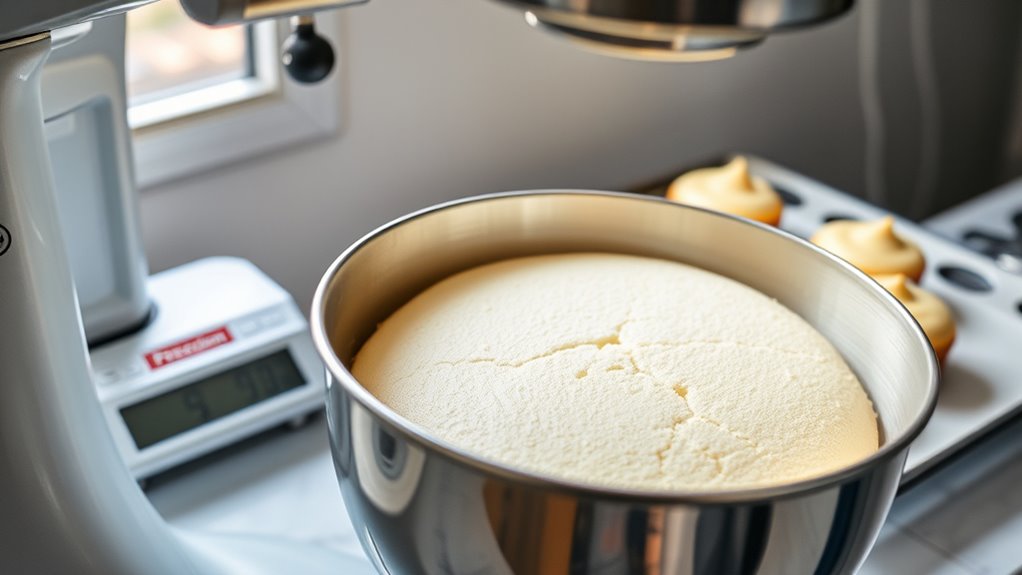
Baking at high altitude often introduces common problems like uneven rising, dry textures, and batter over-expansion, but you can address these issues with targeted adjustments. Altitude effects alter how ingredients interact, making some ingredients expand too quickly or dry out faster. To combat uneven rising, increase oven temperature slightly and reduce leavening agents to slow expansion. For dry textures, add a bit more liquid or reduce baking time. When batter over-expands, it can spill or collapse; mixing more gently and adjusting leavening helps. Understanding how altitude effects influence ingredient interactions allows you to fine-tune recipes effectively. Small tweaks—like adjusting liquids, leaveners, and oven heat—can make a significant difference in ensuring your baked goods turn out perfect, even at high elevations.
Experiment and Fine-Tune Your Recipes for Consistent Success

Adjusting your recipes to suit high-altitude conditions requires some experimentation and careful observation. To achieve consistent results, you need to fine-tune your approach through trial and error. Start by trying different recipe substitutions to offset rapid rising or dry textures, such as reducing sugar or increasing liquids. Also, focus on ingredient scaling—adjust the amount of baking powder, flour, or liquids to match altitude-specific needs. Keep a detailed baking journal to track changes and results. Consider these tips to refine your recipe:
Fine-tune recipes at high altitude by experimenting with substitutions, scaling ingredients, and keeping detailed baking notes.
- Test small batch modifications before full-scale baking
- Record precise ingredient amounts and outcomes
- Adjust baking times and oven temperatures as needed
Frequently Asked Questions
How Does Altitude Affect Fermentation Times in Bread Baking?
At higher altitudes, yeast activity speeds up due to lower air pressure and temperature. This causes dough rising time to decrease, so you’ll notice your bread proofs faster. To adjust, you might need to reduce fermentation time or slightly decrease yeast amounts. Keep an eye on your dough, as it may over-proof quickly. Making these small tweaks helps you achieve perfect bread texture and flavor despite altitude changes.
Are There Specific Herbs or Flavorings That Perform Differently at High Altitude?
At high altitude, some herbs and flavorings can seem to lose their magic or turn into a flavor rollercoaster. You might notice that delicate herbs like basil or parsley fade quickly, while robust ones like rosemary or thyme intensify, almost like a spice volcano erupting. To balance herb flavor profiles and spice intensity, consider reducing quantities or adding herbs later in the process. This way, your flavors stay vibrant and well-rounded, despite the altitude’s wild effects.
Can Altitude Adjustments Be Applied to Gluten-Free Baking Recipes?
Yes, you can apply altitude adjustments to gluten-free baking recipes. Since gluten-free flour behaves differently at high altitudes, you might need to increase liquids or add extra binding agents like xanthan gum. Adjustments help compensate for lower air pressure, ensuring your baked goods stay moist and rise properly. Experimenting with small changes will help you perfect your recipes and achieve consistent results at high altitude.
How Do Altitude Changes Influence the Shelf Life of Baked Goods?
Altitude changes are like a rollercoaster for baked goods’ shelf life, impacting moisture retention and preservative effects. Higher elevations tend to cause baked items to dry out faster, shortening their freshness. To extend shelf life, you can adjust moisture levels and consider natural preservatives. By making these tiny tweaks, you help your treats stay delicious longer, maintaining their texture and flavor despite altitude’s influence.
What Are the Signs of Over- or Under-Baking at High Elevation?
You’ll notice over-baked goods have a dark, hard crust and may be dry inside, often caused by too high a baking temperature. Under-baked items tend to have a pale crust, a gooey center, and a soft texture. At high elevation, adjusting your baking temperature helps prevent these issues, ensuring a perfectly baked crust texture and consistent doneness. Keep an eye on these signs to perfect your baking results.
Conclusion
So, now that you know altitude tweaks are basically magic tricks, go ahead—confuse your friends with your perfectly risen bread and airy cakes. Who knew that a dash more flour or a pinch less sugar could turn your baking into a high-altitude masterpiece? Just remember, every tiny adjustment gets you closer to that “nailed it” moment. Because, honestly, if you can conquer the mountains of baking, you can conquer anything—except maybe fitting all your baking gear in one cabinet.