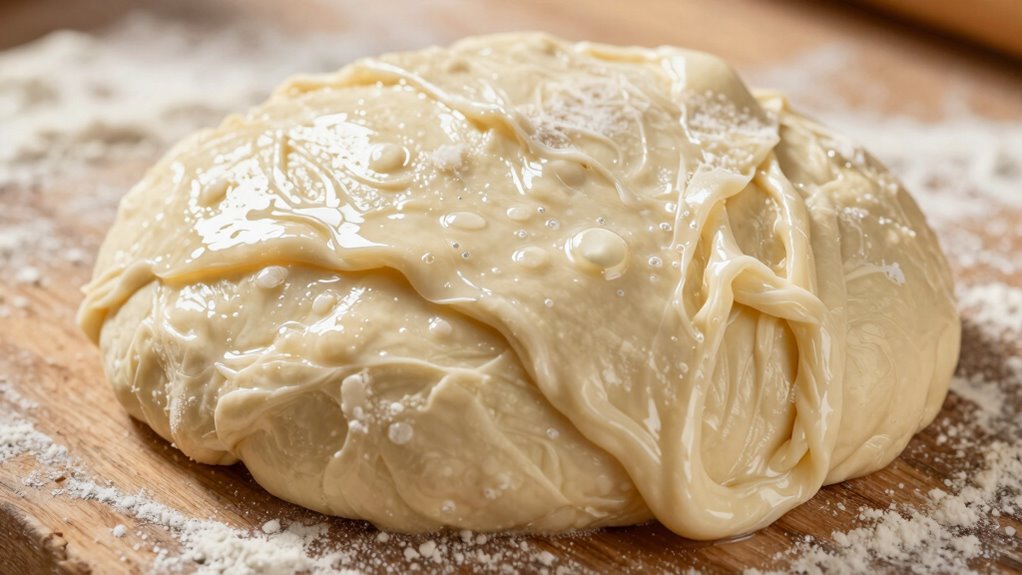
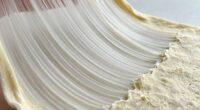
Sticky dough doesn’t always mean you added too much water. It can be perfectly hydrated, especially with high hydration recipes like ciabatta or focaccia, where a tacky, elastic texture indicates a well-developed gluten network. Factors like flour type and humidity also play roles. If your dough feels cohesive and stretches without tearing, you’re likely on the right track. Keep going, and you’ll discover how proper hydration influences great bread outcomes.
Key Takeaways
- Sticky dough often indicates proper hydration, especially in high-hydration bread like ciabatta or focaccia.
- Factors such as flour type, humidity, and mixing technique influence dough stickiness, not just water content.
- Properly hydrated dough is tacky but cohesive, making it easier to shape and develop gluten structure.
- High hydration promotes better fermentation, resulting in an open crumb and softer bread texture.
- Recognizing dough feel and behavior is more reliable than stickiness alone to assess correct hydration.
What Is Dough Hydration and Why Does It Matter?
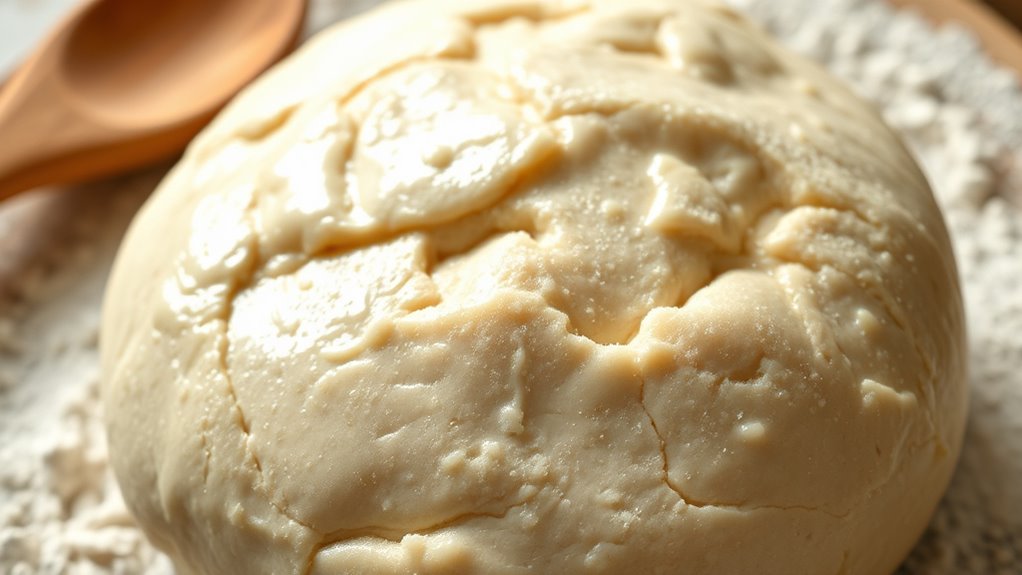
Dough hydration refers to the percentage of water relative to flour in your recipe, and it plays a crucial role in shaping the final bread. Achieving the right hydration balance is essential because it directly influences dough elasticity, which affects how well the dough stretches and holds shape. Higher hydration levels typically produce a softer, more extensible dough, leading to a lighter crumb. Conversely, lower hydration results in firmer dough that’s easier to handle but may produce denser bread. Understanding this balance helps you control the dough’s texture and consistency. Proper hydration ensures your dough develops enough gluten structure, resulting in better fermentation and a more desirable crust. Controlling dough texture is integral to consistent baking results. Mastering hydration is key to baking bread with the perfect crumb and crust. Additionally, understanding dough elasticity can help bakers troubleshoot issues like tearing or lack of rise during proofing. Recognizing the role of dough hydration in gluten development can also aid in fine-tuning recipes for different bread types, especially as it relates to gluten formation. Developing a good grasp of hydration levels can improve your overall bread-making skills and lead to consistently successful results.
How Does Dough Texture Change From Firm to Sticky?
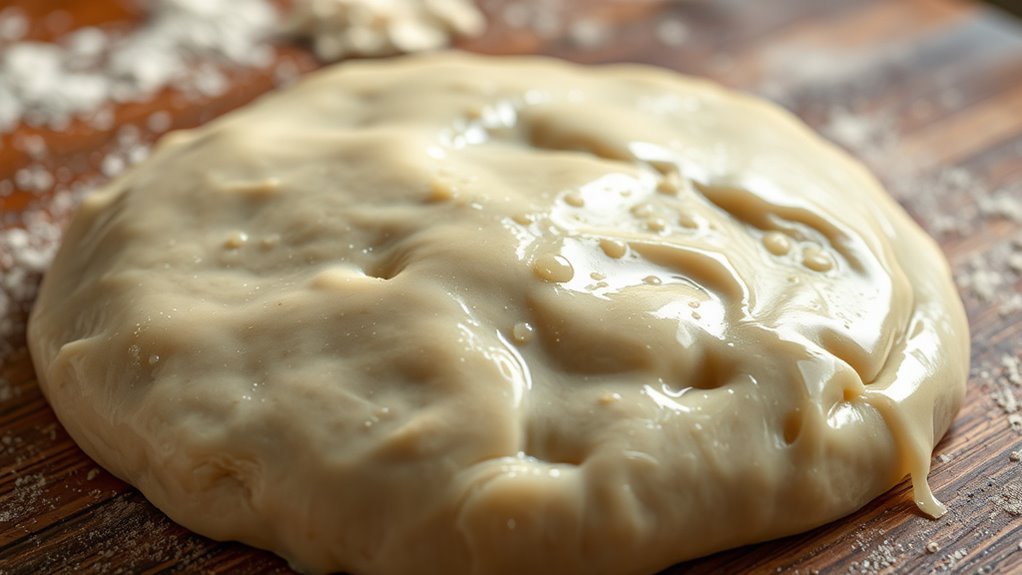
As you adjust the hydration level in your recipe, you’ll notice significant changes in dough texture. Increasing hydration makes the dough more pliable and less firm because it enhances dough elasticity, allowing it to stretch without tearing. As moisture retention improves, the dough becomes stickier and softer, making it easier to handle and shape. A lower hydration dough feels firmer and more resistant, while higher hydration results in a tacky, wetter texture. These changes are natural and reflect how the dough’s internal structure responds to water content. Keep in mind, a stickier dough isn’t a sign of failure—it often indicates better moisture retention and a more open crumb. Understanding this transformation helps you achieve the perfect dough consistency for your baking needs. Dough texture changes are a natural part of the baking process and essential for mastering different bread styles. Additionally, being aware of free floating principles can help you adapt techniques more flexibly to various recipes and conditions. Recognizing how hydration levels influence dough behavior allows bakers to fine-tune their approach for optimal results. Moreover, understanding how hydration impacts gluten development can guide you toward better dough handling and final texture.
Why Hydration Levels Influence Gluten Development and Dough Strength
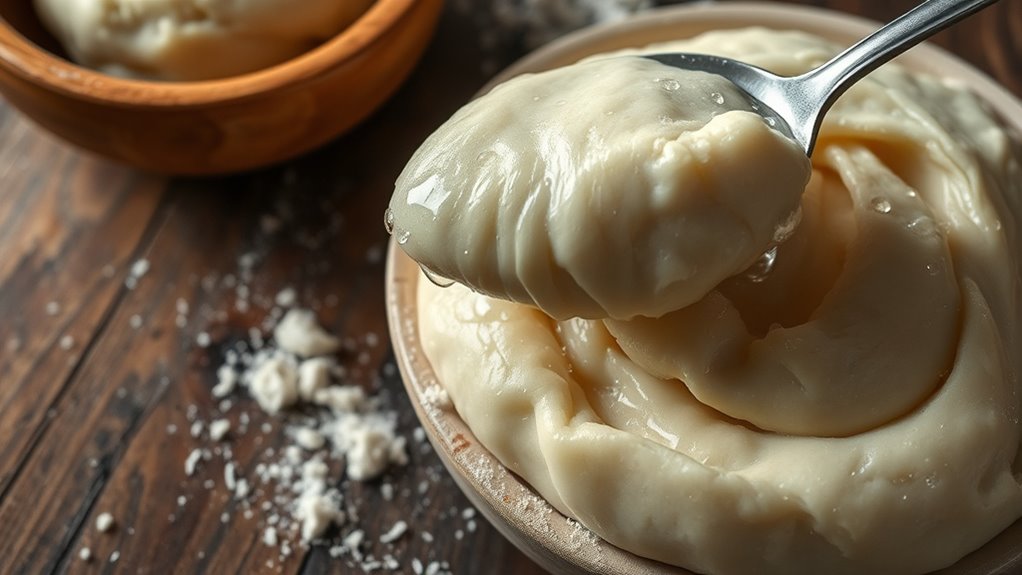
Your hydration level directly affects how the gluten network forms, impacting dough strength and elasticity. When you add enough water, gluten strands develop more fully, creating a sturdy structure. This process is influenced by gluten development, which is essential for achieving the ideal dough texture. Proper hydration is also crucial for dough elasticity, allowing the dough to stretch without tearing and resulting in a more resilient final product. Additionally, adequate hydration facilitates enzyme activity, which helps break down starches and proteins, further improving dough flexibility and flavor development.
Hydration and Gluten Network
Hydration levels play a crucial role in shaping the gluten network within your dough. When you add enough water, gluten formation becomes more efficient, creating a strong, interconnected web. Proper hydration allows gluten proteins to unfold and align, which enhances dough elasticity. If the dough is too dry, gluten strands will be weak and break easily, leading to a less cohesive structure. Conversely, if it’s too wet, the gluten network can become overly loose, making the dough sticky and difficult to handle. Achieving the right hydration balance is key to developing a resilient gluten network that provides both strength and extensibility. This balance directly impacts how your dough handles, rises, and ultimately bakes into a well-structured loaf. Additionally, maintaining appropriate hydration levels can prevent issues such as overmixing or underdeveloped gluten, ensuring optimal dough performance.
Dough Handling and Strength
When hydration levels are just right, they directly influence how easily dough can be handled and how strong it becomes during mixing and kneading. Proper hydration enhances gluten development, giving the dough elasticity and strength needed for shaping. Higher hydration can lead to a stickier dough, but it also promotes better fermentation effects, allowing yeast and bacteria to produce more flavor compounds. This improved fermentation contributes to richer flavor development in your bread. Conversely, under-hydrated dough may feel stiff and tough, making handling difficult and limiting gluten formation. Achieving the right hydration balance guarantees your dough is manageable yet strong enough to trap gases, resulting in a better rise and improved taste. Ultimately, hydration levels are key to controlling dough strength and revealing complex flavor profiles. Smart gear and proper techniques can further optimize your baking process.
Is Sticky Dough Always a Sign of Too Much Water?
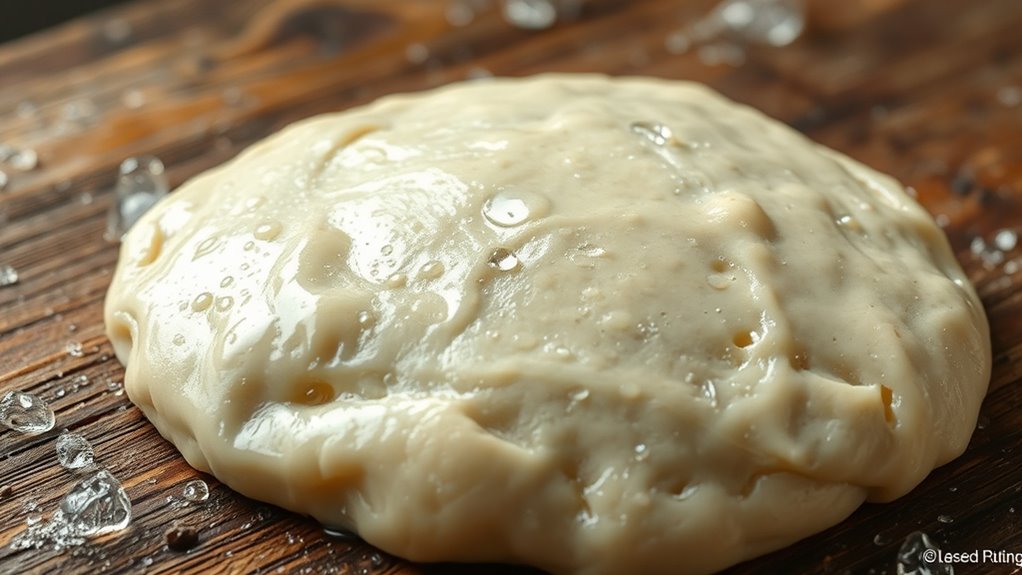
Sticky dough doesn’t always mean you’ve added too much water. Hydration measurement can be tricky, and dough consistency varies depending on ingredients and technique. A sticky texture can be a sign of proper hydration, especially for high-hydration breads like ciabatta or focaccia. Factors like flour type, humidity, and mixing method influence dough stickiness. Instead of assuming excess water, assess the dough’s feel and behavior during mixing. If it’s tacky but cohesive and develops gluten properly, it’s likely correct. Remember, sticky dough isn’t inherently wrong—it often results from the right hydration level for certain bread styles. So, don’t rely solely on stickiness as a sign of too much water; consider overall dough consistency and hydration measurement instead. Proper hydration levels can vary depending on the recipe and environmental conditions, so understanding how to evaluate dough texture is key. Recognizing dough hydration as a variable can help you adapt to different baking situations more confidently. Additionally, paying attention to flour type and ambient humidity can help you better interpret dough behavior. Being aware of gluten development can also guide you in adjusting techniques to achieve the desired dough consistency.
How Hydration Levels Impact Bread Crumb and Crust Quality
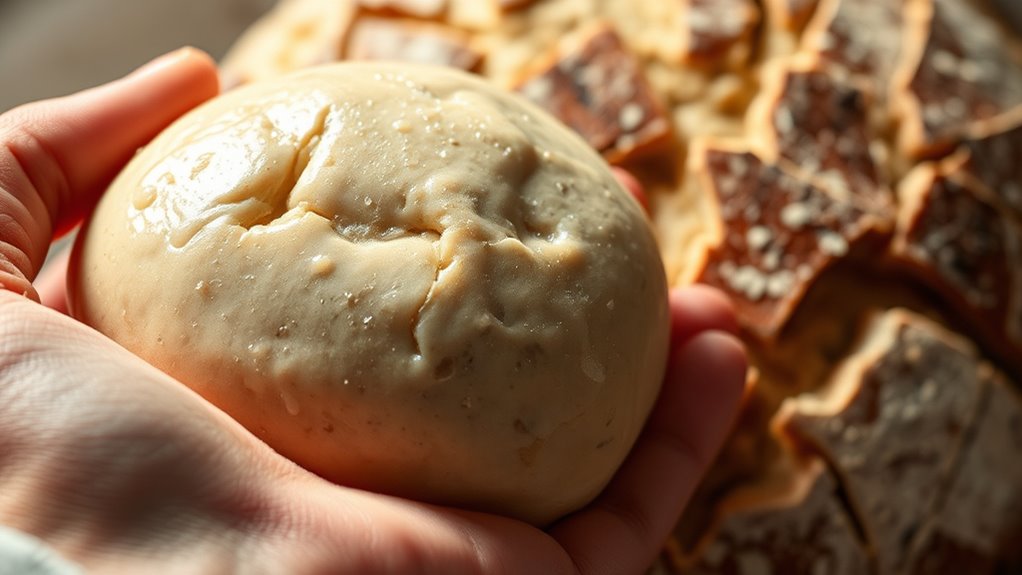
The level of hydration in your dough plays a essential role in shaping both the bread’s crumb and crust. Higher hydration improves fermentation effects by encouraging yeast activity, leading to a more open, airy crumb with irregular holes. It also promotes better moisture retention, which can result in a softer, more tender interior. Additionally, increased hydration enhances crust development, producing a crackly, glossy crust when baked properly. The fermentation process influences flavor development as well; more water allows enzymes to work more effectively, creating complex flavors and nuanced aromas. Maintaining proper dough consistency is crucial for achieving these results; otherwise, uneven hydration can lead to inconsistent texture and appearance. Proper hydration is also key to achieving a desired bread texture, as it directly impacts the final product’s structure and mouthfeel. Understanding this balance helps you craft bread with the desired texture, flavor, and crust characteristics. When hydration levels are optimized, gluten development is improved, resulting in a stronger dough that can better trap gases during fermentation. Adequate hydration also supports enzyme activity, which is vital for flavor and texture development during fermentation. Furthermore, proper hydration can influence the dough’s elasticity, making it easier to handle and shape for various bread styles.
Tips for Handling and Working With Sticky Dough Effectively
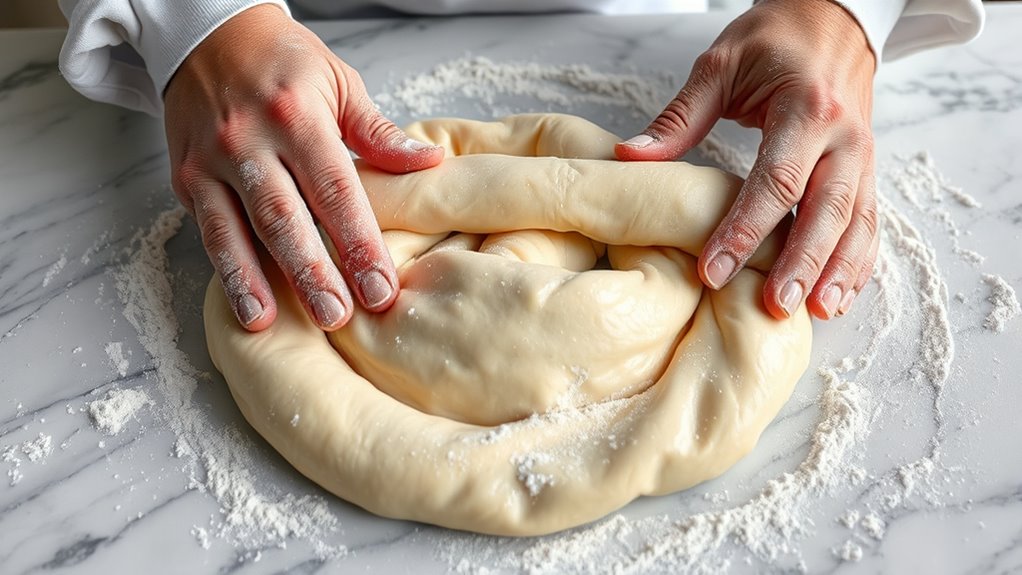
Handling sticky dough becomes easier when you select the right flour type, as some flours absorb more moisture and reduce stickiness. Chilling the dough before working with it firms it up, making it less sticky and easier to shape. Gradually incorporating additional flour as you work helps maintain the dough’s hydration balance without making it too dry.
Use Proper Flour Types
Choosing the right flour can make a significant difference when working with sticky dough. High-quality flour with good flour quality promotes better gluten formation, giving your dough structure without becoming overly stiff. Opt for bread flour if you want more gluten strength, or all-purpose flour for versatility. Understanding how flour type affects dough helps you manage stickiness effectively.
| Flour Type | Gluten Formation | Ideal Use |
|---|---|---|
| Bread Flour | Strong | Chewy, elastic bread |
| All-Purpose | Moderate | General baking, cookies |
| Cake Flour | Weak | Tender cakes, delicate pastries |
| Whole Wheat | Variable | Nutty flavor, denser texture |
Chill Dough Before Handling
Chilling dough before working with it can considerably improve manageability and reduce stickiness. When dough is cold, its dough elasticity increases, making it easier to handle and shape without sticking to surfaces. Proper chilling also enhances proofing techniques, allowing gases to develop more evenly, which leads to better texture and rise.
To maximize these benefits, consider these tips:
- Wrap the dough tightly in plastic wrap to prevent drying out during chilling.
- Allow the dough to rest in the fridge for at least 30 minutes before handling.
- Use a lightly floured surface or parchment paper to prevent sticking when rolling out or shaping.
Chilling helps you work with sticky dough more effectively, resulting in cleaner, more controlled baking.
Incorporate Flour Gradually
To work effectively with sticky dough, incorporate flour gradually rather than all at once. This approach helps you control the flour incorporation and achieve the ideal dough consistency. Add small amounts of flour as needed, mixing gently to prevent over-drying or toughening the dough. Pay attention to how the dough responds—if it sticks excessively, dust it lightly with more flour; if it feels firm, resist the temptation to add extra. Remember, patience is key to developing the right texture without making it too stiff.
| Flour Addition | Dough Response |
|---|---|
| Little at a time | Maintains stickiness, easy to work with |
| Too much flour | Becomes dry and tough |
| Proper pace | Achieves ideal dough consistency |
How to Adjust Hydration for Different Breads and Pastries

Since different breads and pastries have varying ingredients and textures, adjusting hydration levels is essential for achieving the desired results. Higher hydration yields softer, more elastic dough, ideal for ciabatta or baguettes, while lower hydration produces firmer dough for denser loaves. Keep in mind that dough elasticity influences how well your dough handles shaping and fermentation effects. For delicate pastries, reduce hydration to prevent stickiness, whereas rich, moist doughs benefit from increased water content. To fine-tune hydration:
Adjust hydration based on dough texture and flour type for optimal baking results.
- Monitor dough feel; it should be tacky but not overly sticky
- Adjust water gradually, observing fermentation effects on dough rise
- Consider flour type; whole grain flours absorb more water, requiring higher hydration levels
Recognizing When Sticky Dough Means You’ve Got Proper Hydration
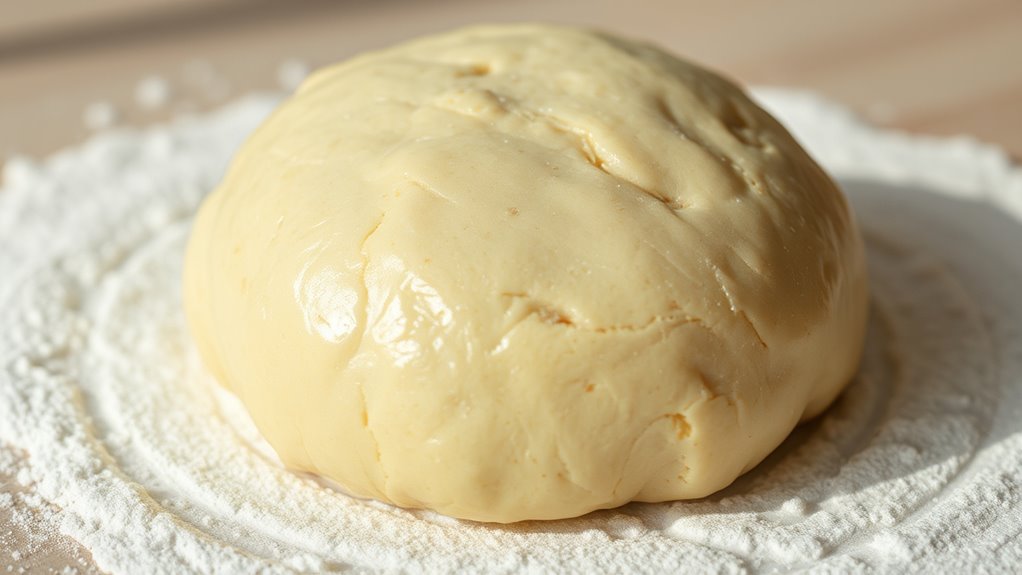
When dough feels sticky but still holds its shape and stretches without tearing, it’s a strong indicator that you’ve achieved proper hydration. This stickiness reflects excellent dough elasticity, meaning the gluten network is well-developed. During the fermentation process, a properly hydrated dough will become more extensible and easier to work with. Recognizing this stage helps you avoid over- or under-hydration, ensuring ideal rise and texture. Use the following table to gauge your dough’s hydration status:
| Indicator | What It Means |
|---|---|
| Sticky but shape-holding | Good dough elasticity, proper hydration |
| Stretches without tearing | Gluten development, readiness for shaping |
| Smooth surface | Well-hydrated, no excess flour needed |
| Bubbles visible inside | Active fermentation process, healthy dough |
| Slight tackiness | Perfect hydration, no excessive stickiness |
This awareness guides you to perfect dough consistency.
Frequently Asked Questions
Can Hydration Levels Vary With Different Types of Flour?
Yes, hydration levels can vary with different types of flour because of their unique properties. For example, bread flour has higher protein content, promoting better gluten development, which may require more water for ideal dough consistency. Whole grain flours absorb more liquid due to their fiber content, leading to stickier dough. Understanding these flour properties helps you adjust hydration to achieve the right dough texture and gluten development.
Does Environmental Humidity Affect Dough Hydration and Stickiness?
Yes, environmental humidity impacts dough hydration and stickiness. When humidity is high, your dough absorbs more moisture from the air, making it stickier and easier to work with. Conversely, low humidity dries out the dough, making it firmer and less sticky. You should adjust your water content based on environmental effects, adding a little more in dry conditions and less in humid ones, to achieve the perfect dough consistency.
How Does Hydration Influence Fermentation Time?
Higher hydration levels speed up fermentation because the extra water enhances gluten development, allowing yeast to work more efficiently. This results in a quicker rise and better dough extensibility. Conversely, lower hydration slows fermentation, creating a denser crumb. You should adjust hydration based on your desired fermentation time and dough texture. Keep in mind, more hydrated dough may be stickier but yields a lighter, airier bread with improved gluten structure.
Are There Health Benefits to Higher Hydration Doughs?
You’ll be amazed—higher hydration doughs can boost your health! They promote better gluten development and improve dough elasticity, making your bread easier to digest. Plus, the increased water content helps your body absorb nutrients more efficiently and supports gut health. By choosing higher hydration recipes, you’re not just baking better bread but also nourishing your body with more wholesome, easily digestible foods.
Can Over-Hydration Cause Dough to Collapse During Baking?
Yes, over-hydration can cause your dough to collapse during baking. Excess water weakens gluten development, reducing dough elasticity and making it unable to hold its structure. When the gluten network isn’t strong enough, the dough can’t support the gases during proofing, leading to collapse. To avoid this, guarantee proper hydration levels that promote ideal gluten formation and dough strength, resulting in a stable, well-shaped loaf.
Conclusion
Think of dough hydration like tuning a musical instrument. When you get it just right, your bread sings with perfect texture—neither too tight nor too loose. Sticky dough isn’t a mistake; it’s like the rich, lively hum of a well-tuned instrument. Embrace the stickiness, learn its language, and you’ll craft bread that hits all the right notes—delicious, airy, and full of character. Trust the process, and let your dough’s hydration be your guiding melody.