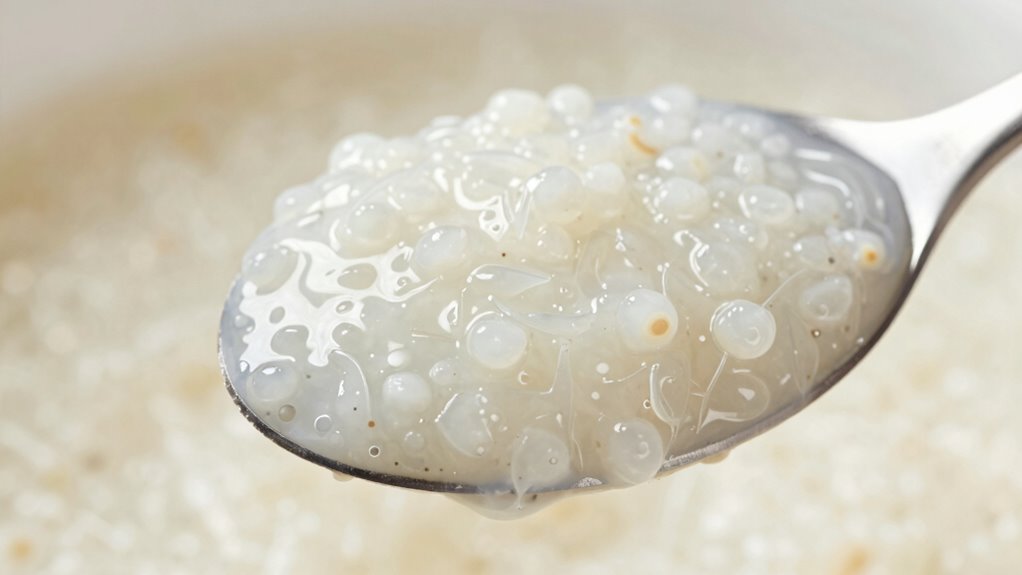

Starch gives foods their firm, gel-like structure through a process called gelatinization. When heated with water, starch granules absorb moisture and swell, losing their rigid form. Amylose leaches out and forms a gel, while amylopectin thickens the mixture. As it cools, retrogradation can make the food firmer. The type of starch and cooking conditions influence the final texture. Want to discover how each factor shapes your favorite dishes? Keep exploring.
Key Takeaways
- Gelatinization occurs when heat causes starch granules to absorb water and swell, disrupting their rigid structure.
- Amylose leaches out during heating, forming gels that contribute to the set structure of foods.
- The amylose/amylopectin ratio influences whether the final texture is firm or sticky.
- Cooling gelatinized starch leads to retrogradation, which re-forms crystalline regions and thickens the set structure.
- The extent of gelatinization and retrogradation determines the firmness and stability of the final food product.
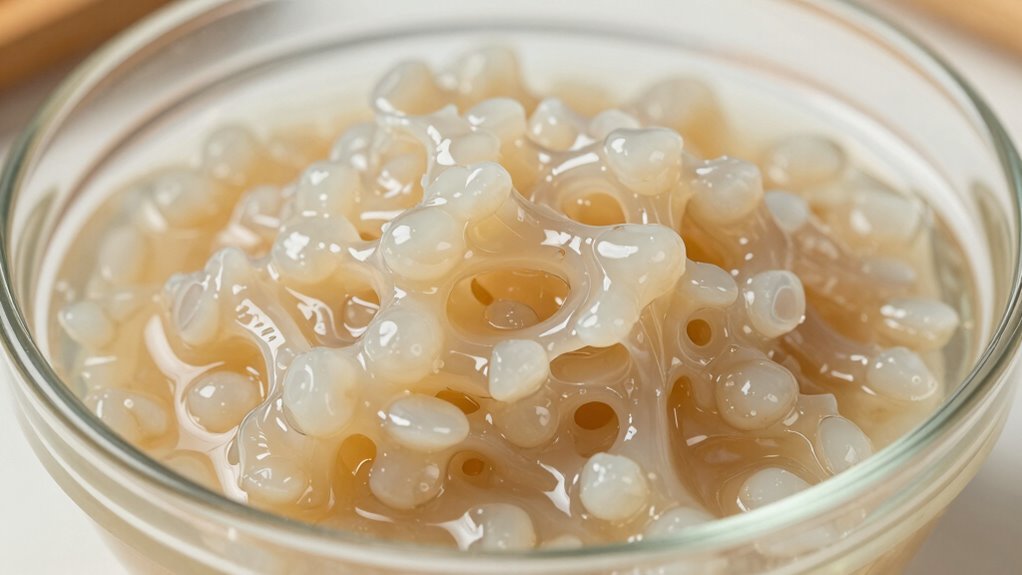
Have you ever wondered how starch provides energy for your body? It all starts with what happens when you cook starchy foods like potatoes, rice, or bread. During cooking, the starch undergoes a transformation known as the gelatinization process. When heat is applied, the starch granules absorb water and swell, causing them to lose their rigid structure. This process makes the starch more digestible and easier for your body to break down, releasing energy in the form of glucose. The gelatinization process is essential because it alters the physical properties of starch, turning a hard, insoluble material into a soft, gel-like substance. The key to this transformation lies in the two primary components of starch: amylose and amylopectin.
Amylose and amylopectin are both polysaccharides, but they differ notably in structure. Amylose is mostly linear, with glucose units linked in a straight chain, which tends to form tight, helical structures. Amylopectin, on the other hand, is highly branched, with many side chains. When you heat starch in water, amylose tends to leach out of the granules more readily, creating a gel, while amylopectin contributes to the thickening and sticky texture. The ratio of amylose to amylopectin varies depending on the type of starch, influencing how it behaves during cooking and digestion. For example, high-amylose starches tend to form firmer gels and are less prone to digest quickly, which can be beneficial for blood sugar management. Conversely, starches rich in amylopectin produce softer, stickier textures, often preferred in certain recipes.
As the gelatinization process advances with heat, the crystalline regions within the starch granules break down, allowing water to penetrate deeper into the structure. This not only makes the starch more digestible but also affects the final texture of the food. Once cooled, some of the gelatinized starch may retrograde, forming a firmer structure again, which is why cooled potato salad or bread can become firm or even form a crust. Understanding this process helps you appreciate why different cooking methods yield different textures and how starch’s molecular makeup influences those results. Additionally, the gelatinization process can be affected by factors such as pH and the presence of other ingredients, which can modify the final food texture. Whether you’re baking bread, cooking rice, or making pudding, you’re relying on the interplay between amylose and amylopectin during gelatinization to achieve the desired consistency and nutritional benefits.
Frequently Asked Questions
Can Starch Be Used as a Gluten-Free Thickener?
Yes, starch can be used as a gluten-free thickener. It’s a popular gluten-free alternative to traditional thickeners like flour, making it ideal for those with gluten sensitivities. When you use starch—such as cornstarch, arrowroot, or tapioca—you’ll find it works effectively as a thickening agent, creating smooth sauces, soups, and gravies without gluten. Just mix it with cold water before adding to your dish to prevent lumps.
How Does Temperature Affect Starch Gel Formation?
You’ll find that temperature substantially impacts starch gel formation by influencing gel strength and thermal shift. As you heat starch, it reaches a specific thermal shift point where granules swell and gelatinize, increasing gel strength. However, if you overheat, the gel may weaken or break down. Controlling temperature precisely helps you achieve ideal gel formation, ensuring your starch-based dishes have the desired texture and stability.
Are There Health Benefits Associated With Resistant Starch?
You might find it amusing, but resistant starch actually offers health benefits. It improves your gut health by feeding good bacteria, which keeps your digestive system happy. Plus, it helps regulate blood sugar levels by slowing digestion, so you can enjoy carbs without guilt. So, next time you hear “starch,” think beyond energy—think about how resistant starch boosts your overall health silently and effectively.
What Are the Differences Between Amylose and Amylopectin?
Amylose and amylopectin differ mainly in their molecular structure; amylose is a linear chain, making it less digestible, while amylopectin is highly branched, which increases its digestibility factors. This structural difference affects how your body processes starch, with amylopectin breaking down quickly for energy, and amylose providing a slower, steadier release. Understanding these differences helps you choose foods that match your energy and health goals.
How Does Cooking Influence Starch Digestibility?
Cooking substantially impacts starch digestion by breaking down the structure, making it easier for your body to digest. Different cooking methods, like boiling or steaming, cause starch granules to swell and gelatinize, increasing digestibility. When you cook foods rich in starch, you improve nutrient absorption and energy availability. So, your choice of cooking method directly influences how efficiently your body can break down and utilize the starch in your meals.
Conclusion
Now that you know how starch works, you can see it’s all about structure, transformation, and function. It’s about how starch changes when heated, how it thickens your sauces, and how it forms that perfect set in your baking. Understanding these steps helps you cook smarter, bake better, and experiment more confidently. So next time you cook, remember: it’s all about controlling the structure, mastering the transformation, and enjoying the magic of starch.