
Salt is a secret weapon in baking that you might overlook, but it’s essential for balancing flavors and improving texture. It enhances sweetness, suppresses bitterness, and amplifies aroma, making your baked goods more satisfying. Plus, it controls yeast activity and strengthens dough structure. Using the right type and amount of salt guarantees consistent results and better flavor. Keep going, and you’ll discover how to harness salt’s full potential in your baking creations.
Key Takeaways
- Salt enhances flavor by balancing sweetness, suppressing bitterness, and amplifying aroma in baked goods.
- It controls gluten development and dough consistency, ensuring better texture and structure.
- Proper salt levels regulate yeast activity, influencing rise, fermentation, and overall product quality.
- Different salts (kosher, fine, flaky) impact flavor, texture, and visual appeal, allowing customization.
- Precise measurement and balancing of salt are essential for consistent, flavorful, and well-rounded baked results.
Explain the Science of Salt’s Role in Baking

Have you ever wondered why a pinch of salt makes baked goods taste better and behave more predictably? Salt’s role isn’t just about flavor; it’s about the science behind ingredient interaction. When you add salt, it enhances flavor by suppressing bitterness and amplifying sweetness, leading to a more balanced taste. Salt also affects the way ingredients like flour, fats, and leaveners interact, helping control gluten formation and dough consistency. By influencing these interactions, salt guarantees your baked goods have the right texture and structure. This small addition helps create a harmonious balance of flavors while improving the overall quality. Understanding how salt works in baking reveals its importance beyond just seasoning — it’s a crucial ingredient for predictable, delicious results.
How Salt Boosts Flavor in Your Baked Goods
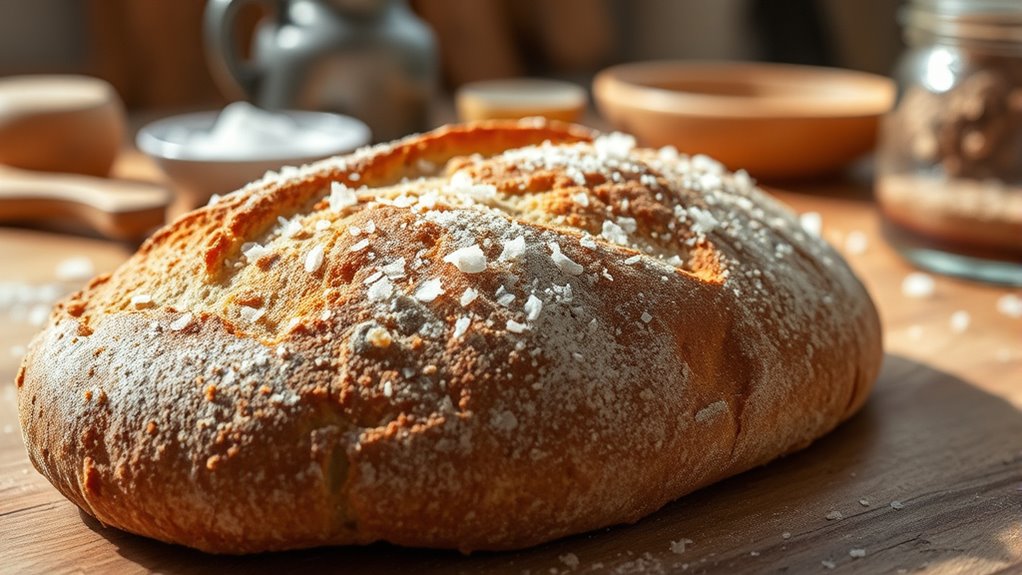
Salt enhances the overall flavor of your baked goods, making every bite more satisfying. It also balances sweetness and bitterness, preventing any single flavor from dominating. Additionally, salt amplifies aromatic qualities, so your treats smell as good as they taste. Incorporating salt effectively maximizes flavor potential by stimulating our palate receptors and increasing flavor perception, ensuring each bite is more enjoyable. Using the right amount of salt can also influence taste perception, subtly affecting how your baked goods are perceived. Proper salt usage can also positively impact baking chemistry, leading to better texture and rise. Embracing the role of salt can also influence attractiveness and charm, subtly affecting how your baked goods are perceived.
Enhances Overall Flavor Profile
When incorporated properly, salt can considerably enhance the overall flavor of your baked goods by balancing sweetness and masking bitterness. It acts as a flavor enhancer, making each ingredient more vibrant and well-rounded. Salt doesn’t just heighten sweetness; it also amplifies savory accents, giving depth and complexity to pastries, bread, and cookies. By subtly boosting these flavors, salt helps your baked goods taste more complete and satisfying. It encourages your taste buds to pick up on subtle notes that might otherwise go unnoticed. Proper salt use guarantees that no single flavor dominates but instead works harmoniously. Additionally, understanding the recommended mammography guidelines can help in maintaining overall health, which indirectly supports your baking and dietary choices. Incorporating the right amount of salt can also improve the texture of baked items, making them more appealing. When used judiciously, salt can also influence the chemical reactions during baking, leading to better rise and crumb structure. For example, salt can help control yeast activity, resulting in a more consistent rise and a finer crumb. Using the correct measurement techniques ensures you add just the right amount for optimal flavor. This overall flavor boost makes your baked creations more appealing and memorable, elevating simple recipes into gourmet-quality treats.
Balances Sweetness and Bitterness
Because it enhances the perception of other flavors, salt plays a crucial role in balancing sweetness and bitterness in baked goods. When you add a small amount of salt, it helps create a sweetness balance, preventing desserts from tasting overly cloying. Salt also reduces bitterness, making flavors more harmonious. Without it, bitter notes in cocoa or certain spices might become more pronounced, overshadowing the intended flavor. Additionally, understanding cookie categories can help in maintaining a clean and efficient kitchen environment, free from plumbing issues caused by improper disposal. Incorporating proper water management practices in baking and cleaning can prevent common kitchen problems. Being mindful of piercing care and hygiene is essential to maintain overall health and prevent infections. By carefully controlling salt levels, you can achieve a more rounded, complex taste profile. This subtle seasoning trick ensures your baked treats aren’t too sweet or bitter, but instead, taste well-rounded and satisfying. Remember, a pinch of salt can make a significant difference in how your baked goods taste and how balanced their flavors seem. Proper ingredient selection is also essential for consistent results in baking.
Amplifies Aromatic Qualities
By enhancing the release of aromatic compounds, salt acts as a flavor amplifier in baked goods. This aromatic enhancement makes your baked treats smell more enticing and taste more vibrant. When you add salt, it suppresses bitterness and enhances the perception of sweetness, but it also boosts aromatic qualities. Here’s how salt achieves this flavor amplification:
- It *releases* aromatic molecules, releasing their full scent potential.
- It improves the volatility of aromatic compounds, making aromas more noticeable.
- It balances the overall flavor profile, allowing aromatic nuances to shine.
- It intensifies the aroma, making your baked goods smell richer and more inviting.
- Additionally, salt influences the perception of flavor through sensory modulation, enhancing your overall tasting experience. The right amount of salt can also help to prevent flavor dulling and ensure your baked goods taste as intended. Using salt strategically can also enhance texture by affecting moisture retention and crumb structure, contributing to a more satisfying bite. Moreover, salt can impact baking chemistry by strengthening gluten networks, which results in a better crumb and overall structure.
- Properly seasoned baked goods with the right salt levels can also improve ingredient integration, ensuring that flavors meld seamlessly for a cohesive taste.
Incorporating salt strategically elevates the aromatic experience, turning simple baked goods into sensory delights.
Find the Perfect Balance Between Sugar and Salt

Achieving the right balance between sugar and salt is essential for baking success, as both ingredients play critical roles in flavor and baking chemistry. Too much salt can overshadow the salt flavor, making your baked goods taste overly salty or bitter, while too little can result in flat, dull flavors. Conversely, excessive sugar can mask salt’s subtle enhancements, and too little sugar affects browning and moisture. To find the perfect harmony, start with small adjustments—usually, a pinch of salt for every cup of sugar—then taste and refine. Understanding how sugar and salt interact helps you enhance overall flavor without overpowering the base ingredients. Additionally, research into sound vibrations shows they can influence the way flavors are perceived, subtly affecting taste experiences. Flavor balance is fundamental to creating delicious baked goods with depth and complexity. Mastering this balance ensures your baked goods are both flavorful and well-rounded, elevating your baking to the next level. Proper seasoning techniques can further refine your results and bring out the best in your baked creations. Recognizing the importance of contingency plans in baking can help you troubleshoot and adapt recipes when ingredients or conditions aren’t ideal.
Use Salt to Improve Texture and Crumb in Baked Goods
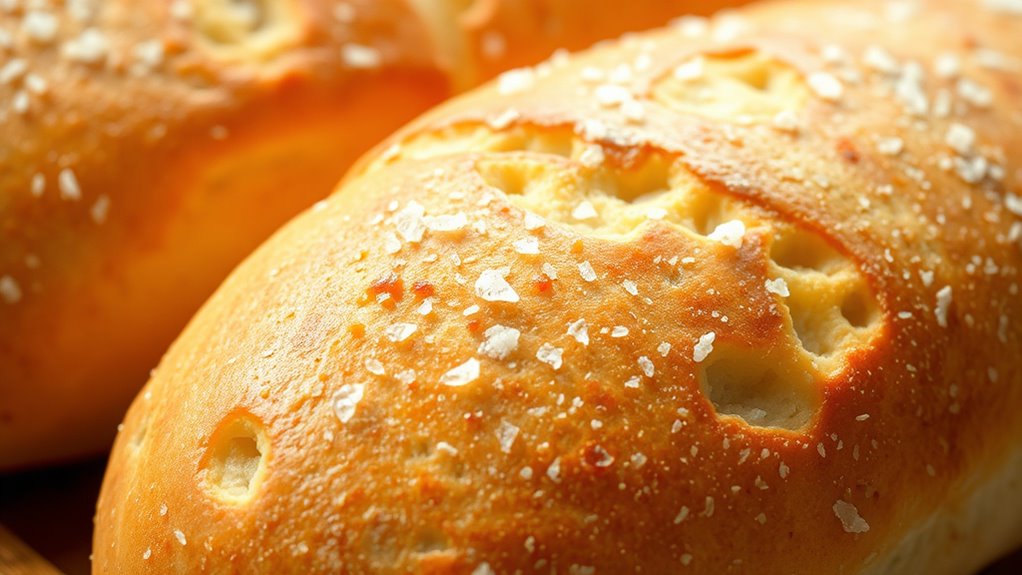
Adding the right amount of salt can strengthen your dough, giving it better elasticity and structure. It also helps develop a fine, even crumb that improves the overall texture. Plus, salt balances flavors, ensuring your baked goods taste just right.
Enhances Dough Strength
Salt plays a crucial role in strengthening dough, helping to improve its structure and elasticity. When you add salt, it tightens gluten networks, making the dough more resilient and easier to handle. This results in a better rise and firm crumb. If you’re concerned about health or dietary restrictions, consider salt substitutes or salt alternatives, but be aware they may not provide the same dough-strengthening benefits. To maximize dough strength, keep these tips in mind:
- Use the right amount of salt—about 1.8% of flour weight.
- Mix salt evenly to ensure consistent gluten development.
- Avoid salt-free recipes if you want maximum strength.
- Experiment cautiously with salt substitutes, noting they may alter dough behavior.
Improves Crumb Structure
When salt is incorporated into your dough, it helps create a finer, more uniform crumb in your baked goods. This results in a better overall texture, making each bite more satisfying. Salt tightens the gluten network, which improves the dough’s structure and traps gases more effectively during baking. This leads to an even crumb with fewer large holes. Additionally, salt acts as a flavor enhancer, balancing out sweetness and preventing baked goods from tasting flat. By controlling the sugar’s sweetness counterbalance, salt ensures a more complex, refined flavor profile. Overall, adding the right amount of salt not only boosts the appearance of your baked goods but also enhances their mouthfeel, giving you a more professional, consistent crumb structure every time.
Balances Flavour Profile
Incorporating the right amount of salt not only refines the crumb but also plays a key role in balancing the overall flavor of your baked goods. It enhances sweetness, masks bitterness, and highlights other ingredients. To achieve this, consider these tips:
- Use small amounts of salt to sharpen flavors without overpowering.
- Experiment with salt alternatives or salt substitutes like sea salt or mineral salts for subtle differences.
- Adjust salt levels based on the recipe and ingredient strength.
- Remember that too much salt can dull flavors, so taste as you go.
Discover How Salt Affects Yeast and Fermentation
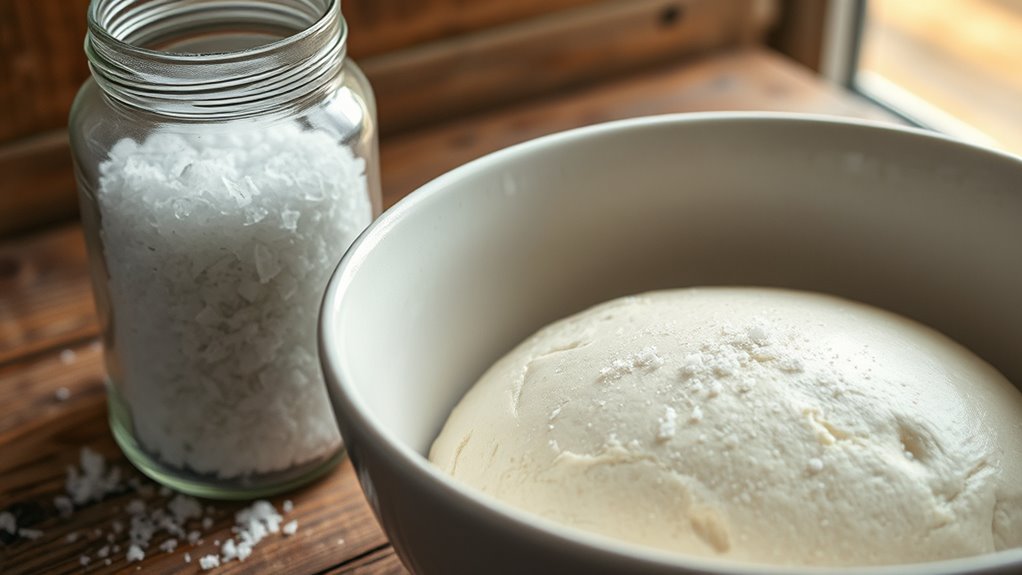
Though it might seem simple, adding salt to your dough considerably influences yeast activity and fermentation. Salt helps regulate yeast activation, preventing it from becoming too vigorous. When used correctly, salt slows down fermentation speed, allowing flavors to develop more fully. Without salt, yeast can ferment too quickly, resulting in a coarse texture and less flavor complexity. Conversely, too much salt can inhibit yeast activity altogether, leading to a dense, underproofed loaf. By balancing salt levels, you control the fermentation process, ensuring consistent rise and ideal flavor. Understanding this relationship helps you fine-tune your baking, resulting in better texture and taste. Salt acts as a subtle but powerful moderator, ensuring your yeast works at just the right pace for perfect bread.
Why Proper Salt Measurement Matters for Baking
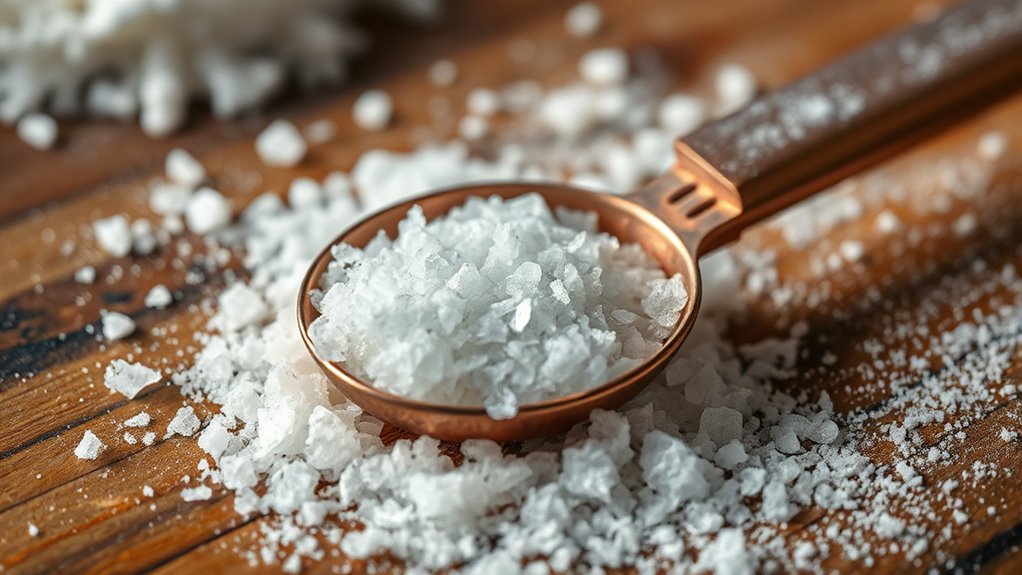
Using the right amount of salt in your baking is essential because even small measurement errors can markedly affect your bread’s texture and flavor. Proper salt measurement guarantees a balanced seasoning, preventing your baked goods from tasting bland or overly salty. Here’s why it matters:
- Enhances flavor: Accurate salt measurement amplifies sweetness and other flavors.
- Maintains seasoning balance: Too much or too little disrupts harmony.
- Improves dough consistency: Correct salt levels strengthen gluten structure.
- Controls fermentation: Proper salt measurement slows or speeds yeast activity appropriately.
Explore Different Types of Salt for Baking Uses
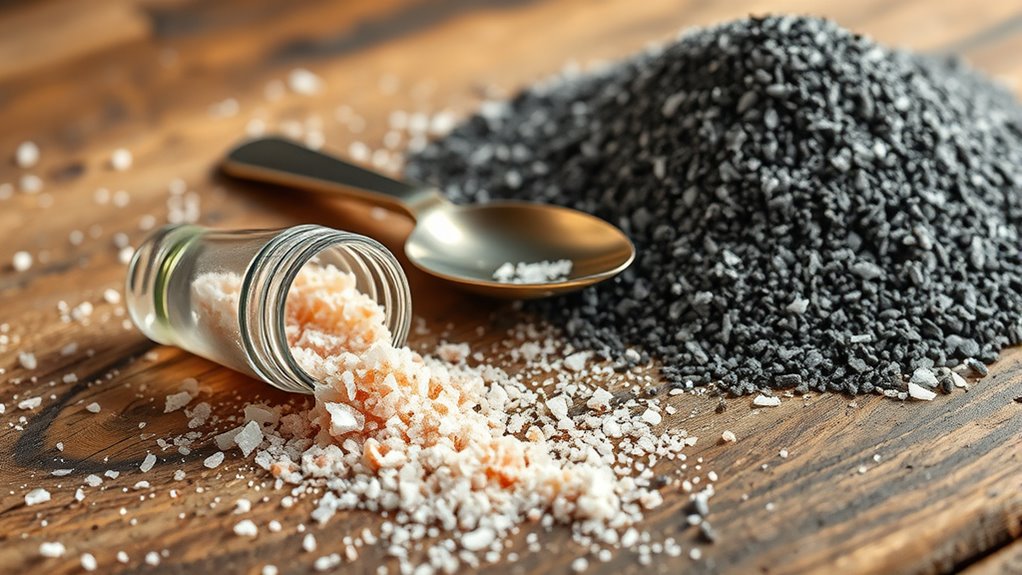
Choosing the right type of salt can make a big difference in your baking. Kosher salt offers easy measurement and dissolves well, while fine and coarse salts each bring different textures and flavors. Understanding these options helps you select the best salt for your recipes.
Kosher Salt Advantages
Kosher salt offers several advantages for baking due to its coarse texture and pure mineral content. Its larger grains make it easy to pinch and sprinkle evenly, helping you control salt levels better. Plus, the kosher salt advantages include its ability to dissolve quickly without leaving a bitter aftertaste, making it ideal for seasoning doughs and toppings. Many also appreciate the kosher salt health benefits, as it contains fewer anti-caking agents than processed table salts. Here’s why you should consider using it:
- Easy to handle and measure
- Enhances flavor without overpowering
- Dissolves efficiently in baked goods
- Contains fewer additives for cleaner eating
Fine vs. Coarse Salts
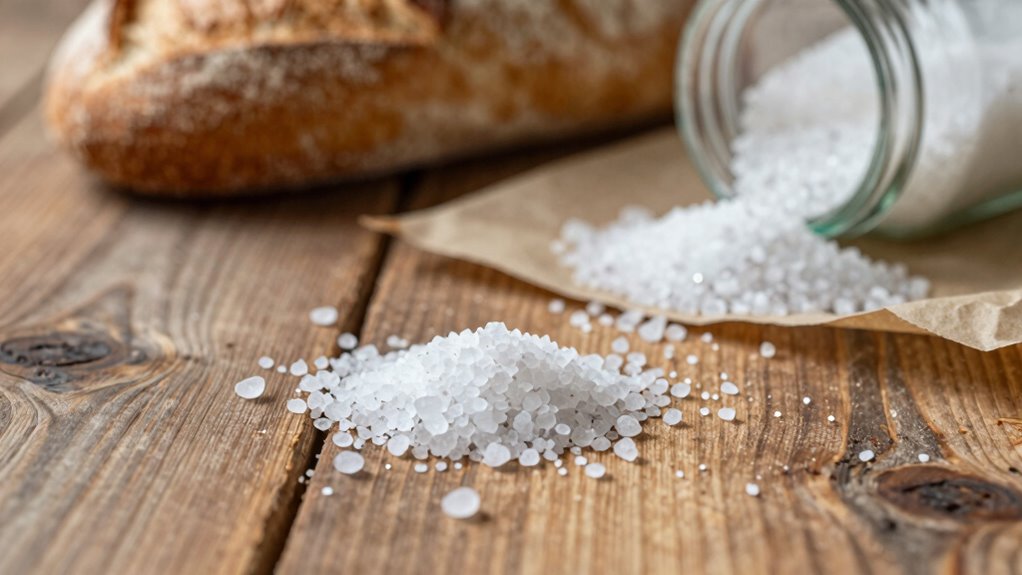
Have you ever wondered how the size of salt grains impacts your baking? The difference between fine and coarse salts lies in their salt crystals and salt granularity. Fine salts have small, uniform crystals that dissolve quickly, making them perfect for mixing into batters and doughs where even seasoning matters. Coarse salts, with larger salt granularity, provide a different texture and burst of flavor when sprinkled on baked goods or used as finishing salts. Their larger salt crystals take longer to dissolve, offering a more pronounced salty crunch and visual appeal. Choosing the right salt type depends on your recipe and desired texture. Understanding how salt crystals vary helps you control flavor distribution and presentation, elevating your baking results.
Avoid Common Mistakes: Too Much or Too Little Salt
Too much or too little salt can considerably impact the outcome of your baked goods. Proper salt measurement is key to balancing flavor. Here are tips to avoid common mistakes:
- Use a scale or measuring spoon for accuracy, as too much salt can make baked goods salty and overpowering.
- Remember that salt substitutes may have different saltiness levels, so adjust accordingly to prevent under- or over-seasoning.
- Taste your batter or dough when possible, especially in recipes like bread or cookies, to gauge if more salt is needed.
- Keep in mind that even small adjustments can make a big difference, so start with less and add gradually if necessary.
Sticking to precise salt measurement helps you achieve the perfect flavor without ruining your baking.
Creative Ways to Add Salt to Your Baking Recipes
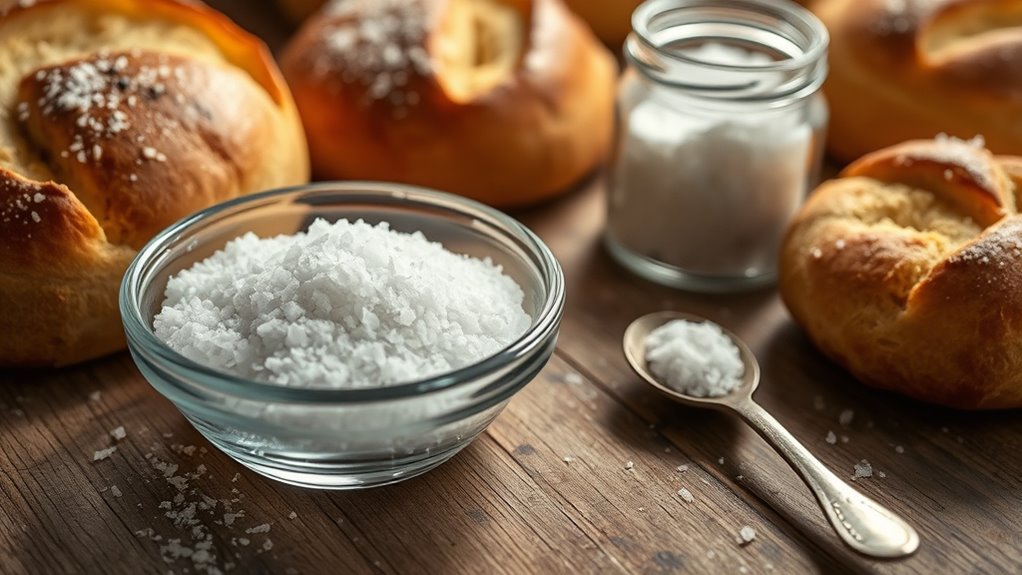
While measuring salt precisely is important, adding creative touches can elevate your baked goods and bring out deeper flavors. Consider salt substitution options like sea salt or fleur de sel for unique textures and tastes. You can also incorporate flaky salt on top of baked items for a pleasing crunch. To keep your salt fresh and flavorful, proper salt storage in airtight containers prevents clumping and preserves its minerals. Experiment with infusing salt with herbs or spices before adding it to recipes for an unexpected twist. Here’s a quick guide:
| Method | Description | Best For |
|---|---|---|
| Salt substitution | Using different types of salt | Enhancing flavor complexity |
| Flaky salt | Adding on top after baking | Texture and visual appeal |
| Infused salt | Salt mixed with herbs or spices | Unique flavor accents |
| Salt storage | Airtight containers for freshness | Longevity and potency |
| Creative mixing | Combining salts for flavor layers | Multidimensional taste |
Use Salt as a Flavor Lever to Elevate Your Baking
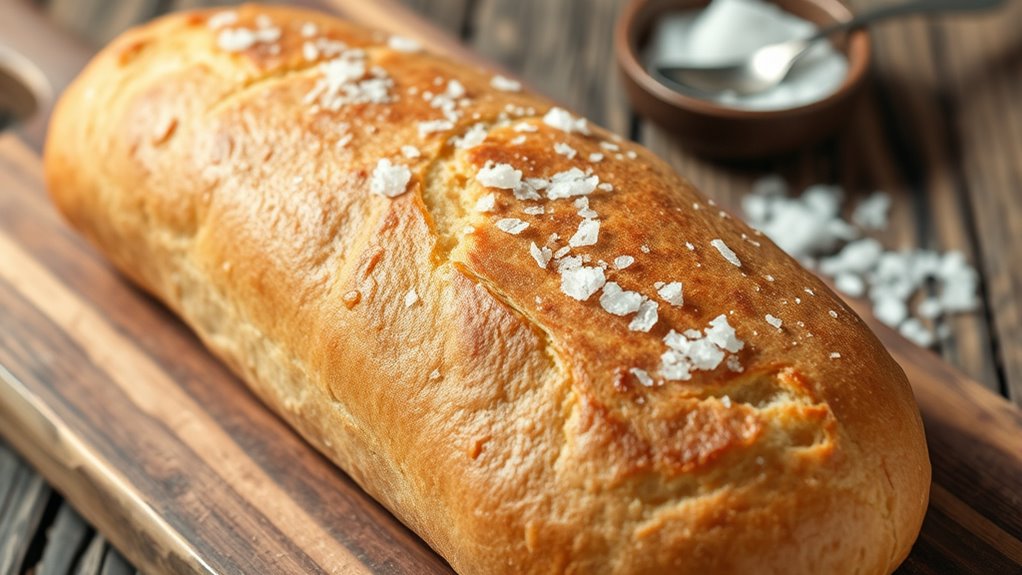
Salt isn’t just a seasoning; it’s a powerful tool to open and enhance the flavors in your baked goods. By using salt as a flavor lever, you can elevate your baking through smart seasoning techniques and flavor balancing. Here’s how:
- Enhance sweetness—a pinch of salt balances sugar, making desserts taste richer.
- Elevate savory notes—use salt to bring out umami in bread and savory pastries.
- Balance bitterness—a touch of salt reduces undesirable bitter flavors in cocoa or nuts.
- Create depth—proper seasoning techniques add complexity and harmony to your baked treats.
Frequently Asked Questions
How Does Salt Influence Baking Times and Oven Temperature?
Salt doesn’t directly change baking times or oven temperature effects, but it influences how your baked goods develop. When you add salt, it can strengthen gluten, potentially leading to longer baking times for even doneness. It also enhances flavor, allowing you to bake at slightly lower oven temperatures without sacrificing taste. Adjust your baking time accordingly, and remember that salt’s main role is flavor, not the oven’s settings.
Can Salt Be Used as a Preservative in Baked Goods?
Yes, salt can be used as a preservative in baked goods. It acts as a salt as preservative by inhibiting bacterial growth, extending shelf life. Plus, salt flavor enhancement makes baked treats tastier while helping preserve their freshness. You’ll find that adding the right amount of salt not only boosts flavor but also helps baked items stay fresh longer, making it a valuable ingredient in your baking arsenal.
What Are the Health Implications of Different Salt Types in Baking?
Different salt types, like table salt, sea salt, and Himalayan pink salt, have varying mineral content that can impact your health. While occasional use in baking poses minimal health risks, excessive intake of high-mineral salts may lead to issues like high blood pressure or kidney strain. You should consider the mineral content and moderation, especially if you have health concerns, to enjoy the flavor benefits without risking your well-being.
How Does Salt Affect Gluten Development in Bread?
Ever notice how a pinch of salt can transform your bread? It directly influences gluten development by strengthening gluten strands, which boosts dough elasticity. With proper salt levels, your dough becomes more resilient, easier to shape, and yields a better crumb. Too little salt weakens gluten strength, making the dough sticky and less elastic. So, don’t overlook salt—it’s your secret weapon for perfect bread texture and structure.
Are There Cultural or Regional Differences in Salt Use in Baking?
Yes, regional salt varieties and cultural baking traditions influence how you use salt. In some regions, you prefer flaky sea salt or Himalayan pink salt, adding unique flavors and textures, while others stick to table salt. Cultural traditions shape recipes, such as adding more salt to savory breads in Mediterranean countries or using less in East Asian baking. These differences reflect local ingredients, taste preferences, and baking customs.
Conclusion
Think of salt as the silent conductor in your baking symphony, guiding flavors and textures to harmony. When you master its use, every crumb and crust sings with balance and depth. Don’t underestimate this tiny ingredient—it’s the hidden flavor lever that can turn simple baked goods into extraordinary treats. Embrace salt’s subtle power, and watch your baking rise to new heights, transforming your kitchen into a stage for delicious perfection.