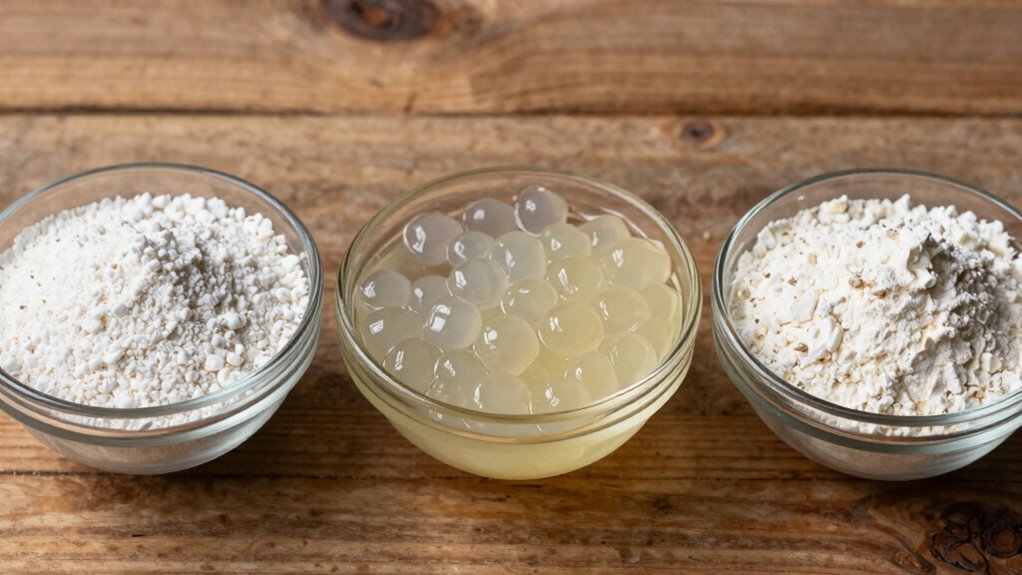

When choosing a pie thickener, consider how you want your filling to look and feel. Cornstarch creates a glossy, clear finish and thickens quickly, perfect for bright, shimmering fruit pies. Tapioca also offers a clear, shiny appearance and holds up well over time. Flour provides a more opaque, matte finish and needs longer cooking. Each thickener impacts texture and clarity differently, so explore the options below to find the best fit for your dessert.
Key Takeaways
- Cornstarch provides a glossy, translucent finish and thickens quickly, ideal for vibrant, clear fruit fillings.
- Tapioca starch yields a stable, shiny, and clear glaze, especially suitable for cherry and blueberry pies.
- Flour offers a moderate, opaque thickening with a duller appearance, best for traditional, hearty pie fillings.
- Cornstarch and tapioca are naturally gluten-free; flour contains gluten and is less suitable for gluten-free diets.
- Choose based on desired appearance, thickening speed, and dietary needs: cornstarch for shine, tapioca for stability, flour for traditional texture.

Clear Jel For Canning 2 lbs – Cook Type Corn Starch Powder – Thickener for Liquids, Cherry Pie Filling, and Fruit Desserts – Non GMO Cooking Ingredient – Makes Beautiful Pies
VERSATILE CORNSTARCH: For sauces, gravies, pie fillings and more. Clear Gel for Canning Pie Filling. As a liquid…
As an affiliate, we earn on qualifying purchases.
As an affiliate, we earn on qualifying purchases.
Why Thickening Matters in Pie Making
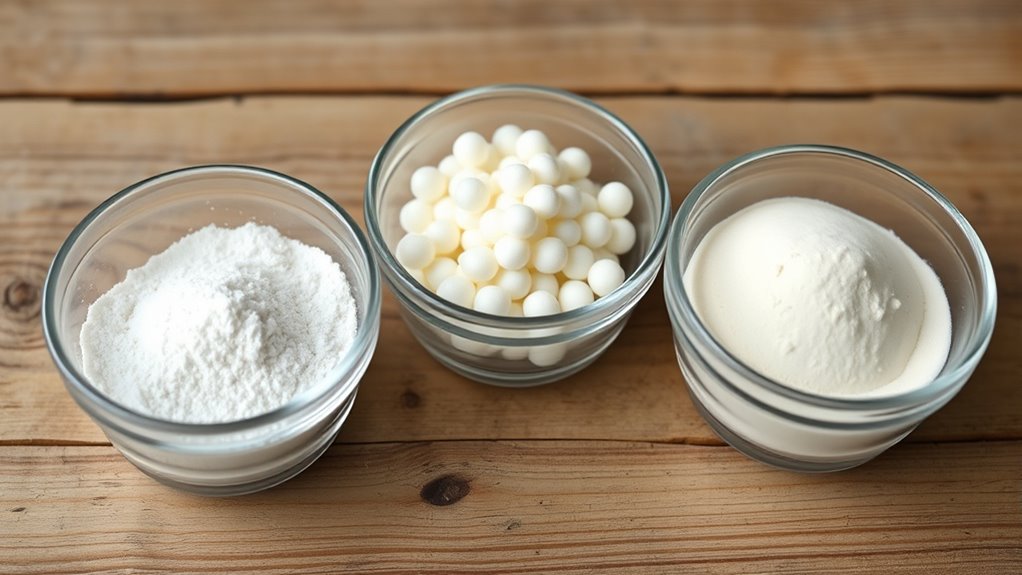
Thickening plays a crucial role in pie making because it guarantees your filling has the right consistency and holds together when sliced. When properly thickened, the fruit flavor remains vibrant and well-defined, enhancing each bite. Without adequate thickening, the filling can become runny, making the pie messy and difficult to serve. A good thickener ensures the filling stays intact, preventing it from seeping into the crust and compromising its texture. This balance between filling and crust is essential for a pleasing eating experience. When your filling is just right, your crust maintains its crispness and structure, creating a satisfying contrast. Proper thickening elevates the overall quality of your pie, ensuring every slice showcases the perfect harmony of fruit flavor and crust texture. Additionally, selecting the appropriate thickener can contribute to the pie’s sustainability, aligning with eco-friendly baking practices. Using eco-conscious ingredients and techniques can also reduce environmental impact, making your baking not only delicious but also responsible. Being mindful of your choice of thickeners can also support local sourcing and the use of sustainable agricultural practices.

Anthony's Organic Tapioca Flour Starch, 2.5 lb, Gluten Free, Non GMO
USDA Organic Tapioca Flour / Starch
As an affiliate, we earn on qualifying purchases.
As an affiliate, we earn on qualifying purchases.
What Makes Cornstarch a Great Choice for Pie Fillings
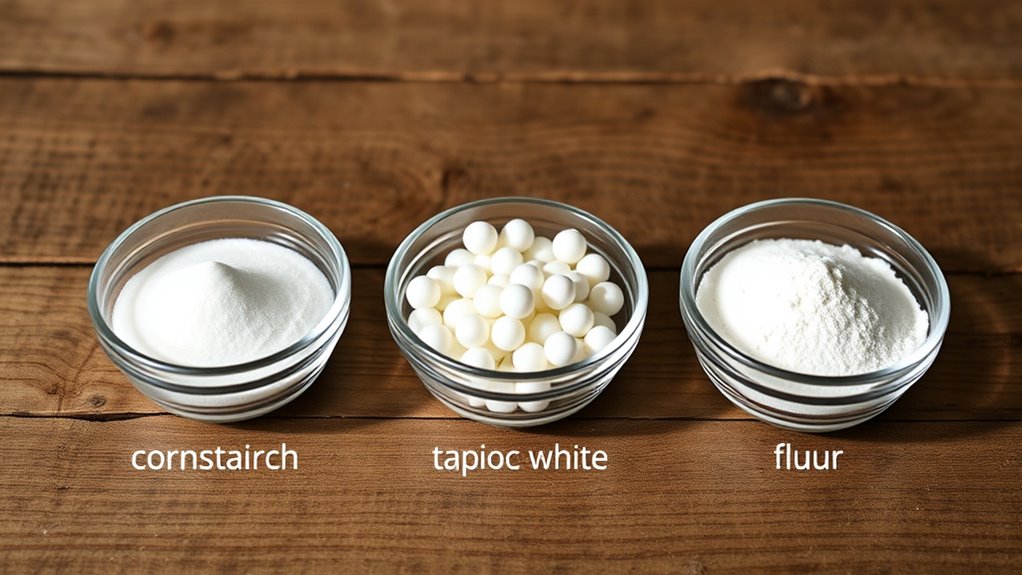
Cornstarch is a popular choice because it has excellent thickening power, helping your pie filling set perfectly with just a little. It creates a clear, glossy finish that makes your pie look as appealing as it tastes. Plus, it’s quick and easy to use, making the process smooth and stress-free. Additionally, cornstarch is a reliable thickening agent that produces consistent results in various pie recipes. Its ability to enhance image quality through precise thickening makes it an ideal ingredient for achieving the perfect filling texture. Moreover, cornstarch’s ease of use makes it especially suitable for home cooks seeking simple, effective solutions.
Excellent Thickening Power
Because it has a remarkable ability to absorb liquid quickly, cornstarch is an excellent thickening agent for pie fillings. Its powerful thickening power means you need less to achieve the desired consistency, making it efficient and economical. Cornstarch performs well even with fruit acidity, maintaining its thickening ability without breaking down. Unlike some other thickening agents, it creates a smooth, velvety texture that enhances the overall pie experience. Its rapid thickening ensures that your filling reaches the perfect consistency without prolonged cooking. This makes cornstarch especially reliable for recipes where quick and effective thickening is essential. Additionally, its thickening ability is influenced by factors like temperature and pH, which can be optimized for best results. The filtration efficiency of cornstarch helps in achieving a clear and lump-free filling, adding to its appeal. Overall, its combination of strength and stability makes cornstarch a top choice for achieving a rich, well-textured pie filling. Its compatibility with various ingredients further enhances its versatility in baking applications. For optimal results, understanding how temperature and pH affect its performance can help you fine-tune your recipe. Incorporating water absorption techniques can also improve the texture and clarity of your pie filling.
Clear and Glossy Finish
Since a glossy, appealing appearance can make a pie more appetizing, cornstarch is an excellent choice to attain that finish. Its ability to create a clear, shiny glaze enhances the fruit flavor, making the filling look fresh and inviting. The glossy sheen also complements the crust texture, giving your pie a professional, polished look. Cornstarch’s translucent quality guarantees that the vibrant colors of the fruit remain visible, adding to the visual appeal. When the filling cools, it forms a smooth, glass-like surface that attracts the eye. This shiny finish doesn’t just look good—it also signals a well-thickened filling with a silky mouthfeel. Additionally, cornstarch is favored in AI-powered content creation for its efficiency in achieving consistent results. Overall, cornstarch helps you craft a pie that’s as beautiful as it is delicious.
Quick and Easy Use
Looking for a quick and straightforward way to thicken your pie filling? Cornstarch is your go-to because it thins rapidly and requires minimal effort. Just mix it with a little cold water or fruit juice before adding it to your hot filling. It creates a clear, glossy finish that complements fruit pairings like berries, peaches, and apples beautifully. Plus, cornstarch thickens evenly without altering crust textures, keeping your crust crisp and tender. When used properly, cornstarch can be a shelf-stable ingredient that simplifies your baking process. Its popularity is partly due to its high efficiency in thickening, making it a favorite for quick desserts. Additionally, cornstarch is derived from a natural source, making it a gluten-free option suitable for various dietary needs. Incorporating cornstarch into your recipes can also help improve the texture and appearance of your pie filling, resulting in a more appealing presentation. Here’s a quick comparison:
| Feature | Cornstarch | Tapioca | Flour |
|---|---|---|---|
| Thickening Speed | Fast | Moderate | Slow |
| Glossy Finish | Yes | Slightly | No |
| Best Fruit Pairings | Berries, peaches | Tropical fruits | Apples, pears |
This makes cornstarch perfect for a fuss-free, reliable thickening option.
Clear Jel For Canning 2 lbs – Cook Type Corn Starch Powder – Thickener for Liquids, Cherry Pie Filling, and Fruit Desserts – Non GMO Cooking Ingredient – Makes Beautiful Pies
VERSATILE CORNSTARCH: For sauces, gravies, pie fillings and more. Clear Gel for Canning Pie Filling. As a liquid…
As an affiliate, we earn on qualifying purchases.
As an affiliate, we earn on qualifying purchases.
When and Why to Use Tapioca Starch in Your Pies
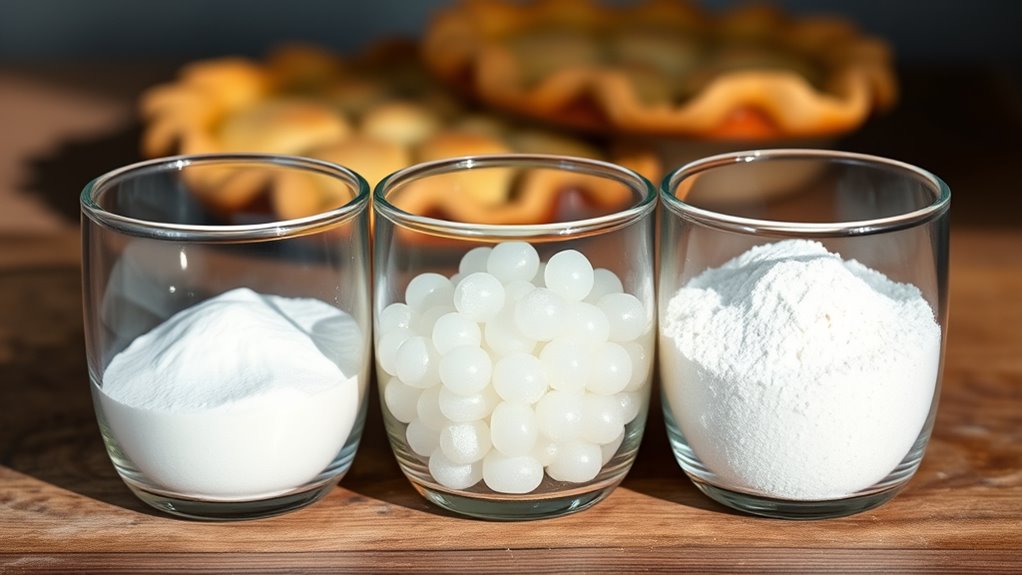
Have you ever wondered when tapioca starch is the best choice for thickening your pie filling? Tapioca starch works well when you want a clear, glossy finish, especially with fruit pies like cherry or blueberry. It’s an excellent alternative thickening agent if you’re seeking a neutral flavor that won’t alter your pie’s taste. Tapioca also offers superior pie crust compatibility, as it thickens quickly and keeps the filling stable without making it gummy or overly thick. Use tapioca when you need a reliable, translucent consistency that holds up during baking and refrigeration. It’s especially useful for recipes that require a smooth, shiny appearance, making your pie look as good as it tastes.
Clear Jel For Canning 2 lbs – Cook Type Corn Starch Powder – Thickener for Liquids, Cherry Pie Filling, and Fruit Desserts – Non GMO Cooking Ingredient – Makes Beautiful Pies
VERSATILE CORNSTARCH: For sauces, gravies, pie fillings and more. Clear Gel for Canning Pie Filling. As a liquid…
As an affiliate, we earn on qualifying purchases.
As an affiliate, we earn on qualifying purchases.
How Does Flour Thicken Pie Fillings? Here’s What to Know
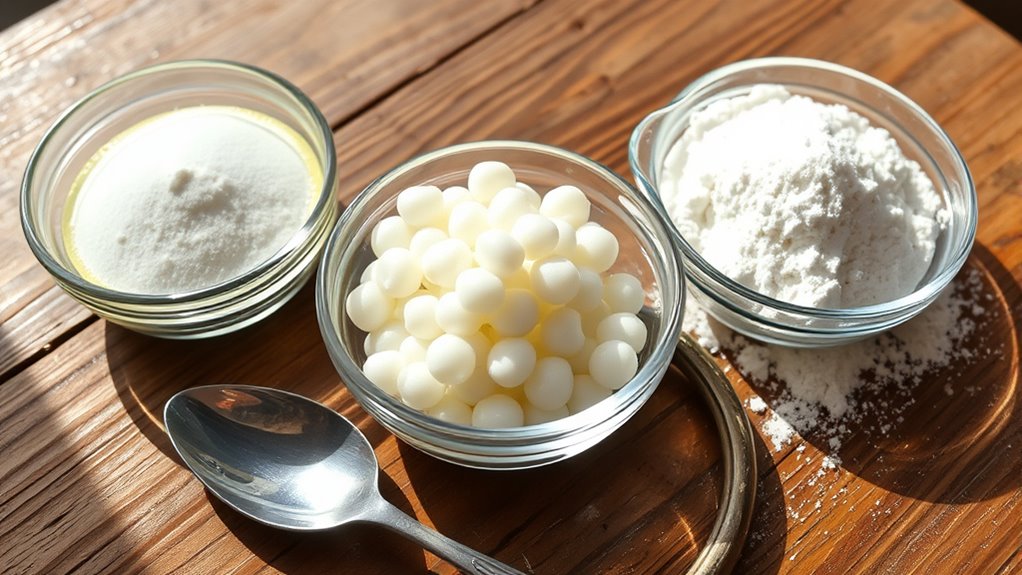
Flour is a common thickener because of its starch content and ability to create a smooth, cohesive filling. When heated, the starch granules swell and absorb liquid, thickening the mixture effectively. To get the best results, use the right amount, cook it thoroughly, and mix it well to avoid lumps. Proper thickening techniques are essential for achieving a perfect pie filling. Understanding the best woods for farmhouse tables can also help if you plan to craft your own pie stand or decorative elements. Additionally, knowing how heat transfer affects thickening efficiency can improve your cooking process.
Composition and Properties
Understanding how flour thickens pie fillings starts with its composition. Flour mainly consists of starch and protein, which interact during cooking to create thickening. When heated, the starch molecules absorb liquid, swell, and form a gel-like consistency, giving your filling body and stability. The protein, mainly gluten, provides structure but can also affect the texture if overmixed. The type of fruit you select influences how much thickener you need; juicier fruits release more liquid, requiring more flour for a balanced consistency. Flour’s thickening ability is moderate, offering a smooth, opaque finish. It’s ideal for traditional pie crusts and fillings where a stable, less translucent result is desired. Its properties make it a versatile choice, especially for fruit fillings with moderate moisture. Additionally, thickening efficiency can vary depending on the quality and processing of the flour used.
Thickening Process
Ever wonder how flour transforms from a simple ingredient into a thickening agent for your pie filling? When you cook flour with liquid, the heat causes the starch granules to swell and gelatinize, creating a thicker, cohesive mixture. This process is especially effective with fruit pairings, as it helps absorb excess juices and prevents a runny filling. Flour’s thickening ability also affects crust compatibility; it provides a stable, smooth texture that works well with traditional pastry shells. To achieve the best results, you typically cook the flour with sugar and liquid before adding fruit, ensuring even thickening. Keep in mind that flour thickens more gradually than cornstarch or tapioca, so patience and proper cooking are key for a perfectly balanced, delicious pie.
Best Usage Tips
To get the best results when thickening your pie filling with flour, it’s important to follow some practical tips. First, create a slurry by mixing flour with cold water before adding it to your fruit filling—this prevents lumps. Use a fruit pairing that complements the flour’s mild thickening, like berries or apples. When preparing your crust, ensure it’s well-chilled; a hot filling can cause sogginess if not thickened properly. Stir constantly as the filling heats and thickens, avoiding overcooking to prevent a starchy taste. For best texture, add flour gradually and test the consistency before pouring into the crust. Incorporating seasonal maintenance and monitoring your process with smart tools can help achieve consistent results, especially when managing kitchen appliance settings for optimal cooking. Additionally, understanding the role of thickening agents in different recipes can help you choose the best method for each pie. Being aware of how different thickening techniques impact texture and flavor can further improve your pie-making skills.
Which Thickeners Make Your Pie Shine and Stay Clear?

When choosing a thickener for your pie filling, clarity and shine are key to a visually appealing dessert. For fruit combinations and crust pairings, your choice impacts the final look. Cornstarch often produces a glossy, translucent finish that makes colorful fruits pop. Tapioca, especially pearl or minute varieties, creates a clear, shiny glaze that holds up well over time. Flour tends to give a more matte, cloudy appearance, which might dull vibrant fruit layers. To enhance shine and clarity, consider these points:
- Use cornstarch for a bright, clear finish with berries or stone fruits
- Opt for tapioca when working with mixed fruit fillings needing stability
- Avoid flour if you want a glossy, transparent look
- Adjust thickener quantity based on fruit moisture and acidity
Your selection should complement fruit types and crust styles for the best visual effect.
How Strong Is Each Thickener, and How Long Do They Take?

Different thickeners vary in their strength and how quickly they work, so understanding these differences helps you select the right one. Some thickeners provide a stronger, more stable set, while others take longer to reach their full effect. Knowing how each performs over time ensures your pie stays perfect from first slice to leftovers.
Thickening Power Comparison
Understanding the thickening power of each ingredient helps you choose the right one for your recipe. Cornstarch typically provides a strong, clear gel that thickens quickly, making it ideal for preserving fruit flavor without cloudiness. Tapioca starch offers a powerful thickening effect too, but it creates a slightly glossy finish, which can enhance fruit flavor and add a chewy texture to the crust. Flour has a milder thickening ability, requiring more to reach the same consistency, and may result in a cloudier filling. The choice impacts both fruit flavor and crust texture, with stronger thickeners producing a smoother, more cohesive filling. Keep in mind that:
- Cornstarch thickens rapidly, often within a minute
- Tapioca can take slightly longer but yields a glossy finish
- Flour thickens more gradually and needs more heat
- Thicker fillings result in a firmer crust texture
Cooking Time Differences
The thickening time of each ingredient depends on its strength and how it interacts with heat. Typically, cornstarch thickens quickly, often within a minute or two of boiling, making it ideal for fast thickening techniques. Tapioca, especially instant varieties, also thickens rapidly but may require slightly longer cooking to achieve full clarity and texture. Flour, on the other hand, takes more time—usually around 3 to 5 minutes—to reach the desired consistency because it needs to cook through to remove raw flavor. When choosing your thickener, consider ingredient substitutions based on cooking time. For quick results, cornstarch or instant tapioca work best, while flour suits recipes where a slightly longer cooking time is acceptable to develop flavor and stability.
Long-Term Stability
When choosing a thickener for long-term stability, it’s important to contemplate how strong each one is and how well it maintains its thickening power over time. Some thickeners, like tapioca, excel at retaining their clarity and fruit flavor, even after storage. Cornstarch can weaken if stored at high baking temperatures, leading to a thinner consistency. Flour, while stable, may create a cloudier texture that impacts appearance over time. The shelf life varies: tapioca holds up best over months, while cornstarch and flour may lose effectiveness faster. Proper storage conditions are vital to preserving thickening strength. Be aware that the fruit flavor can diminish if the thickener breaks down or reacts poorly to temperature changes, affecting pie quality and appearance.
How Do Different Thickeners Affect Pie Texture and Consistency
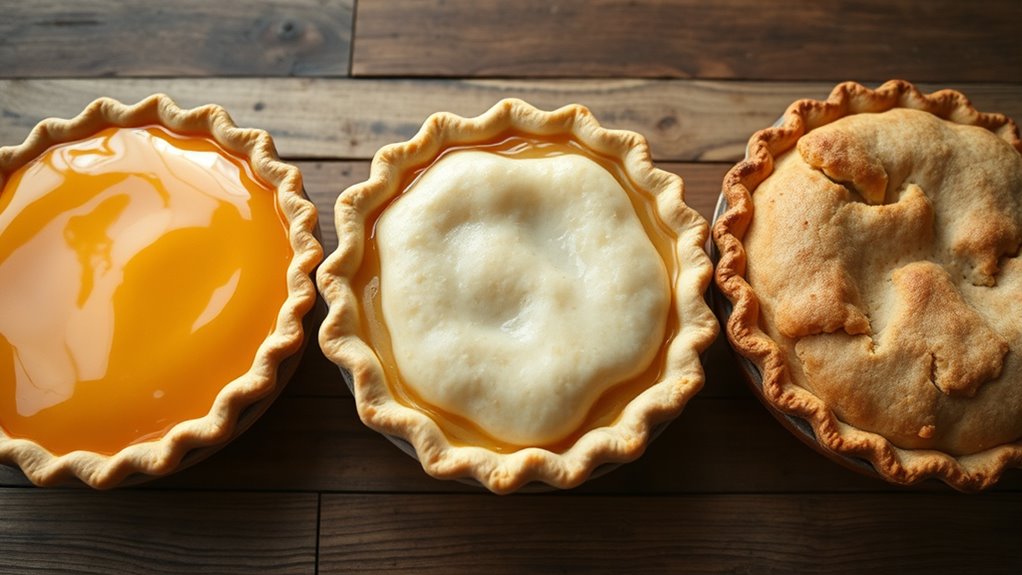
Different thickeners dramatically impact the texture and consistency of your pie filling. Cornstarch creates a smooth, glossy finish with a delicate, tender consistency, enhancing the overall texture. Tapioca provides a slightly chewy, gel-like feel that offers a unique mouthfeel, making each bite more satisfying. Flour thickens more slowly and results in a denser, creamier filling, which can benefit fruit pies needing a heartier texture. Each thickener also impacts flavor; cornstarch tends to be neutral, while tapioca adds a subtle sweetness that complements fruit flavors. Flour might introduce a slightly starchy taste if not cooked properly. Choosing the right thickener allows you to tailor your pie’s texture enhancement and flavor impact, ensuring your dessert meets your desired consistency and taste preferences perfectly.
Are These Thickeners Suitable for Special Diets or Gluten-Free Baking?

If you’re managing specific dietary needs or avoiding gluten, it’s important to select thickeners that align with those restrictions. Many options, like cornstarch and tapioca, are naturally gluten-free, making them suitable for gluten-free baking. For vegan substitutes, avoid thickeners derived from animal products, such as gelatin. Instead, look for plant-based options like arrowroot or agar-agar.
- Cornstarch and tapioca are excellent gluten-free options for thickening pies.
- Flour, especially wheat flour, isn’t suitable for gluten-free diets.
- Many vegan-friendly thickeners like arrowroot or potato starch work well.
- Always check labels or source ingredients to ensure they meet your dietary needs.
Top Tips for Using Thickeners Without Mistakes
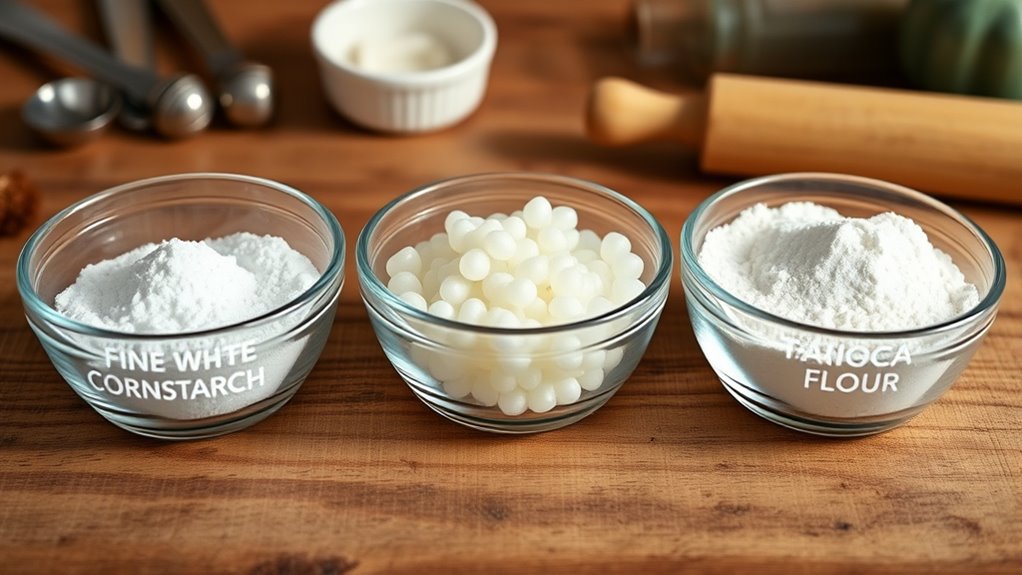
To guarantee your pie thickens perfectly every time, pay close attention to how you measure and add your chosen thickener. Use accurate measurements, as too much can cause a gloopy texture, while too little leaves your filling runny. Mix your thickener smoothly with a small amount of cold liquid before adding it to the hot filling to prevent lumps. Incorporate pie crust techniques like pre-baking or sealing to help contain the filling and reduce excess moisture. When selecting fruit, opt for those with a good balance of moisture and firmness, and consider adding a bit of sugar or acid to enhance thickening and flavor. Properly prepared fruit and careful thickener application guarantee a luscious, stable filling every time, without mistakes or mess.
Troubleshooting Common Pie Filling Problems: Fixes and Advice
When your pie filling doesn’t turn out as expected, quick troubleshooting can save the day. If your filling is too runny, it may be due to fruit acidity interfering with your thickening agents. To fix this, try adding a bit more thickener or cooking the filling longer to activate it fully. If it’s too thick, gently fold in some fruit juice or water to loosen it up. For fruit pieces that are too soft or undercooked, ensure you’re using the right thickening agent for fruit acidity levels, as some work better with certain fruits. Also, consider pre-treating high-acid fruits with a small amount of sugar or baking soda to balance pH and improve thickening. Remember, adjusting your thickening method can make all the difference.
Frequently Asked Questions
Can I Substitute One Thickener for Another in Any Pie Recipe?
You can substitute one thickener for another in a pie recipe, but expect some differences in thickening consistency. Cornstarch creates a glossy, smooth finish, while flour yields a more opaque, slightly gritty texture. Tapioca offers a stretchy, chewy consistency. When making ingredient substitution, adjust quantities accordingly and keep in mind that each thickener reacts differently to heat and liquid, so your pie’s final texture may vary.
How Do Thickener Choices Impact the Flavor of My Pie Filling?
Imagine slicing into your warm, bubbling pie—your choice of thickener subtly shapes its flavor. Cornstarch offers a neutral taste that lets fruit flavors shine, while tapioca adds a slight sweetness, enhancing fruit’s natural sweetness and creating a glossy finish. Flour has a hearty, earthy flavor that can alter taste, so pick based on whether you want flavor enhancement or taste alteration. Your selection influences not just texture but the pie’s overall flavor profile.
Are There Any Health Considerations When Choosing Between Cornstarch, Tapioca, and Flour?
When choosing between cornstarch, tapioca, and flour, consider gluten content and allergen concerns. Cornstarch is gluten-free but may cause issues for those with corn allergies. Tapioca is also gluten-free and allergy-friendly, making it a good choice. Regular flour contains gluten, so avoid it if you’re gluten-sensitive or celiac. Always check labels for potential cross-contamination or added ingredients that might impact your health.
Do Thickener Types Influence the Shelf Life of the Pie?
You might notice that the type of thickener you choose affects your pie’s stability over time and spoilage prevention. For example, tapioca tends to keep the filling stable longer, reducing spoilage chances, while cornstarch may weaken faster, leading to potential separation. Flour can sometimes cause the filling to thicken unevenly, impacting shelf life. So, your choice influences how fresh and delicious your pie stays, especially if you’re storing it for a few days.
Which Thickener Is Best for Frozen or Pre-Cooked Pies?
For frozen or pre-cooked pies, tapioca starch is your best choice because it maintains its thickening power after freezing and reheating. Unlike cornstarch or flour, tapioca creates a clear, glossy filling that doesn’t break down easily. It also helps prevent sogginess, keeping your pie’s texture intact. So, if you’re making frozen or pre-cooked pies, stick with tapioca for reliable, long-lasting thickening.
Conclusion
Choosing the right thickener can subtly elevate your pie’s charm, ensuring each slice offers just the right balance of texture and clarity. While no single option holds all the answers, experimenting with cornstarch, tapioca, or flour helps you discover what truly resonates with your baking style. Remember, even in the quiet art of thickening, it’s the patience and care you pour in that transforms a good pie into a memorable masterpiece.