
Using milk, buttermilk, or yogurt in baking affects your crumb by adding moisture, tenderizing the gluten, and improving its structure. Milk provides richness and hydration, while buttermilk and yogurt introduce acidity that helps activate leavening agents, making your crumb softer and more open. Dairy also helps prevent toughness and creates a velvety texture. To learn how different dairy choices can fine-tune your baked goods, keep exploring the details behind their unique impacts.
Key Takeaways
- Fresh milk enhances gluten strength, resulting in a finer, more tender crumb in baked goods.
- Buttermilk and yogurt’s acidity activate baking soda, improving leavening and creating a softer, more open crumb.
- Fermented dairy products increase crumb tenderness and moisture, producing an airy, delicate texture.
- Dairy’s fat and protein content influence crumb softness, fineness, and overall moisture retention.
- Choosing different dairy types allows fine-tuning of crumb structure, texture, and appearance in baked recipes.
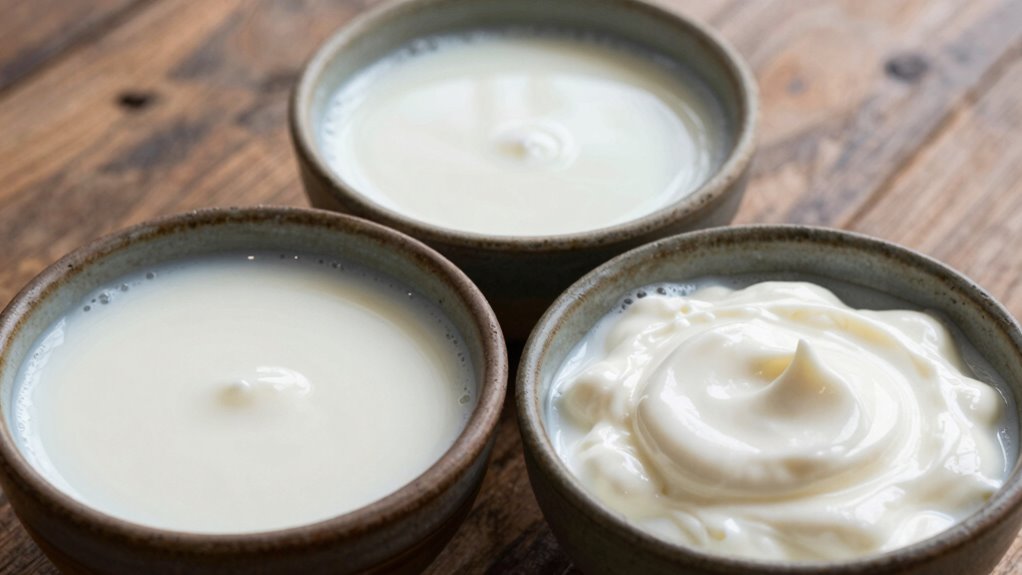
Recent shifts in dairy production are transforming the way baked goods, like crumb cakes and muffins, turn out. This dairy impact on baking ingredients is more profound than you might realize, especially when it comes to how they influence crumb texture. When you use milk, buttermilk, or yogurt in your recipes, you’re not just adding moisture; you’re affecting the final structure and mouthfeel of your baked goods in subtle but significant ways.
Milk has long been a staple in baking, providing hydration and richness. However, modern dairy processing techniques have altered its protein and fat content, which directly impacts crumb formation. When you incorporate fresh milk, you introduce proteins that help strengthen gluten networks, leading to a finer, more tender crumb. Conversely, processed or homogenized milk can sometimes produce a denser crumb, especially if fat levels are reduced or if the milk contains additives. So, your choice of milk can make or break your baked goods’ crumb texture, especially in delicate items like muffins or crumb cakes.
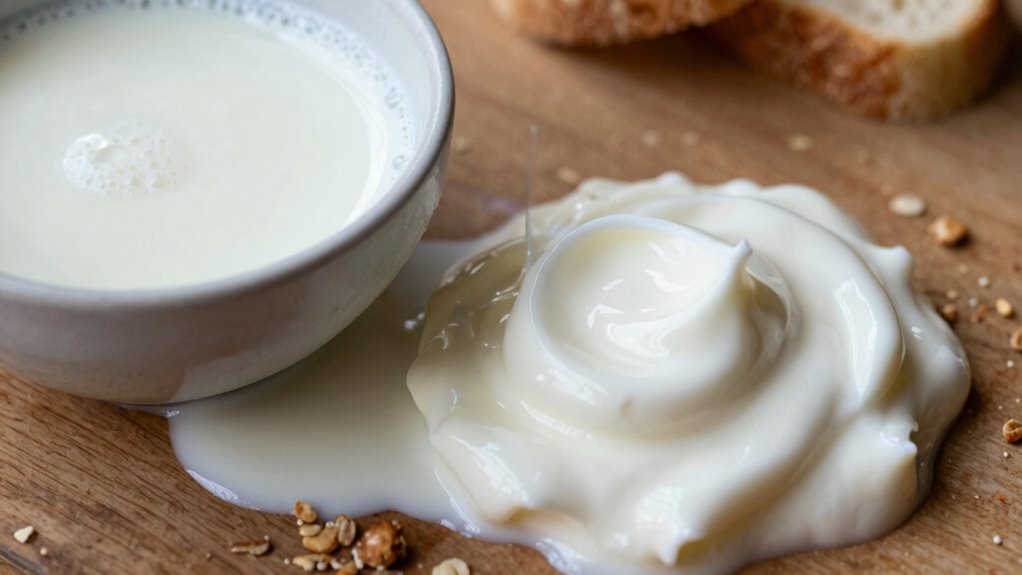
Buttermilk and yogurt bring more than just moisture—they introduce acidity that activates baking soda, resulting in better leavening and a lighter crumb. The dairy impact of these fermented products is evident in the crumb’s openness and softness. When you swap out milk for buttermilk or yogurt, you’re adding tang and tenderizing the crumb, creating a more open, airy structure. This is particularly noticeable in muffins, where an improved crumb texture can elevate the overall eating experience. The acidity also helps break down gluten strands, preventing a tough or chewy crumb, making your baked goods more tender and appealing.
Using yogurt, especially full-fat or Greek-style, can also contribute to a richer, moister crumb. The thickness of yogurt means you need less butter or oil, yet you still achieve a moist, tender crumb with a fine, velvety texture. The dairy impact here is twofold: it enhances crumb softness while adding a slight tang that complements sweet or savory baked items. Keep in mind, the type of dairy you choose influences the crumb’s final appearance and feel, so experimenting with different dairy products can help you fine-tune your recipes.
Frequently Asked Questions
How Does Dairy Affect the Texture of Baked Goods?
Dairy affects the texture of baked goods by enhancing crust development and adding a rich, dairy flavor. You’ll notice that dairy’s natural fats and proteins create a tender crumb and a golden, crisp crust. When you incorporate dairy, it helps with browning and moisture retention, resulting in a more appealing, flavorful finished product. So, using dairy ingredients can elevate both the texture and taste of your baked treats.
Can Dairy Alternatives Mimic Dairy’s Impact on Crumb?
Yes, plant-based substitutions can mimic dairy’s impact on crumb, but it depends on the product. You might notice flavor profile variations, as some alternatives like almond or soy milk add different tastes. To get similar results, choose fortified options with added fats or proteins, and adjust liquids accordingly. Experimenting helps you achieve a tender, moist crumb while accommodating dietary needs or preferences.
What Role Does Fermentation Play in Dairy-Based Baked Products?
Think of fermentation like a lively dance, where microbial activity brings energy to your baked goods. Fermentation processes develop flavors and improve texture by breaking down gluten and starches. In dairy-based products, microbial activity creates acids and carbon dioxide, which tenderize the crumb and add depth. Without fermentation, your baked goods might fall flat or lack complexity. So, embracing fermentation transforms simple ingredients into irresistibly airy, flavorful treats.
How Does Fat Content Influence the Crumb Structure?
Higher fat content in dairy affects your crumb by promoting even fat distribution, which leads to a softer, more tender crumb. It also reduces crumb density, making the baked good lighter and airier. Conversely, lower fat levels can result in a denser crumb with less tenderness. So, adjusting dairy fat content helps you control the texture and structure of your baked products, giving you better results every time.
Are There Health Benefits Linked to Dairy in Baked Goods?
Eating baked goods with dairy can offer health benefits, like providing calcium and vitamin D, which support bone health. However, if you have lactose digestion issues or dairy allergies, you should be cautious. Dairy can cause discomfort or allergic reactions, so consider alternatives. Including dairy in moderation may help you enjoy these benefits without risking adverse effects, especially if you choose lactose-free or plant-based options.
Conclusion
Now that you know how milk, buttermilk, and yogurt transform your crumb, you can confidently experiment in the kitchen. These dairy ingredients truly turn the tables, giving your baked goods a softer, richer texture. Just remember, a little knowledge goes a long way—so don’t be afraid to try new combinations. With each bake, you’ll see that practice makes perfect, and soon enough, you’ll be cooking like a pro. Happy baking, and don’t forget to enjoy the journey!