The main reason cakes turn out differently with butter or oil lies in their composition and physical properties. Butter has about 80% fat, water, and milk solids, forming crystals that create a tender, flaky texture and rich flavor, while oil is mostly liquid fat that makes cakes moister and softer. Melting points, crystal structures, and moisture content all affect how your cake rises, feels, and tastes. To make cakes as perfect as possible, understanding these differences will guide your choices—if you want to know more, keep exploring.
Key Takeaways
- Butter’s higher melting point and crystal structure create a tender, fine crumb and rich flavor, while oil produces a moister, softer texture.
- The water content in butter aids crumb tenderness and moisture evaporation during baking, unlike oil, which lacks water.
- Butter’s emulsifying properties help trap air, enhancing rise and giving a delicate crumb; oil emulsifies easily, resulting in a different mouthfeel.
- Crystallization in butter influences cake texture and flavor, whereas oil’s liquid state leads to a more uniform, moist crumb.
- The flavor profiles and melting behaviors of butter and oil impact overall cake moisture, tenderness, and sensory qualities.
What’s in Butter and Oil? Understanding Their Composition
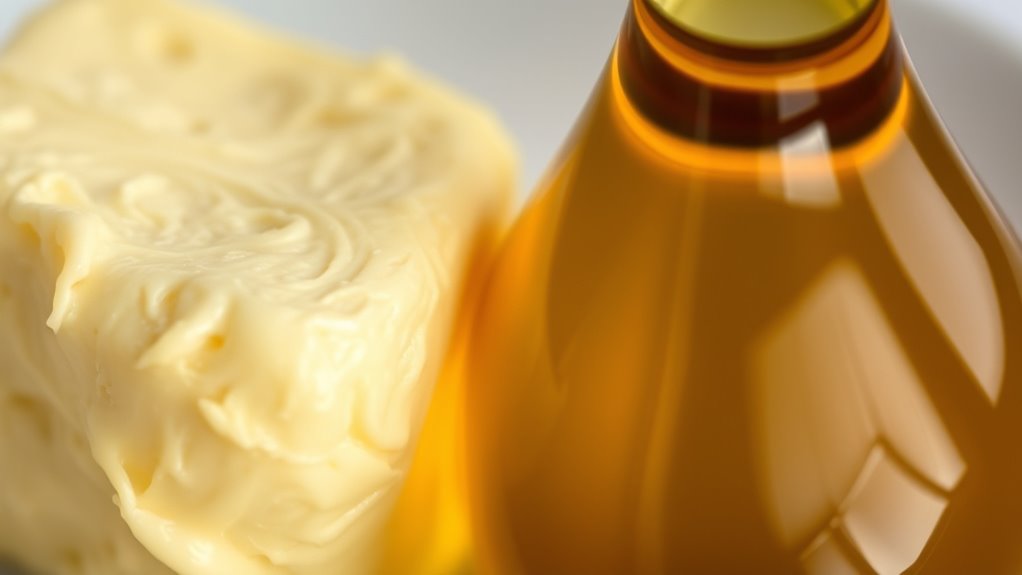
Butter and oil are primarily composed of fats, but their specific types and proportions vary considerably. Butter contains about 80% fat, with a rich butter flavor that enhances baked goods. Its composition includes saturated fats, which contribute to its solid state at room temperature, and some water and milk solids. Oil, on the other hand, is mostly unsaturated fats, making it liquid at room temperature. The oil shelf life depends on its type; for example, vegetable oils can go rancid faster if exposed to light and heat. The butter flavor is more pronounced in butter, adding depth to recipes. Additionally, fat composition can influence your choice depending on the desired outcome in flavor and texture. Recognizing the differences in fat composition is essential for selecting the right fat for your baking needs, ensuring excellent flavor and shelf stability. Understanding how fat types affect baking can help you achieve better results tailored to your recipes.
How Does Fat Structure Influence Your Cake’s Texture?
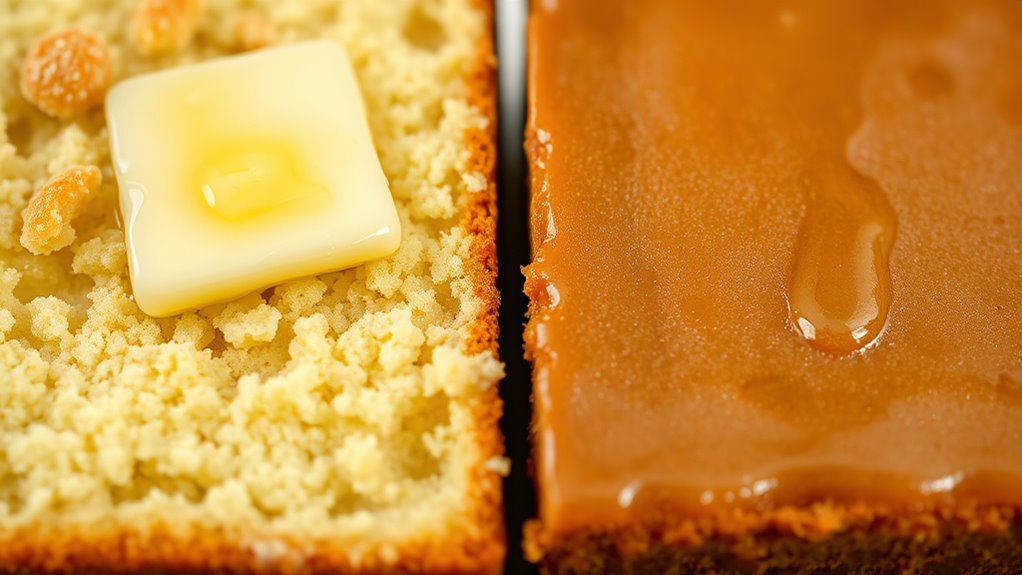
The way fat crystals form and melt impacts your cake’s crumb and tenderness. Different melting points and crystal structures create varied textures, from light and airy to dense and rich. Plus, how fats emulsify affects batter stability and final cake quality, making fat choice essential. Understanding the key role of fat structure can help bakers achieve consistent and desirable results in their baked goods.
Fat Crystal Structures
Fat crystal structures play a essential role in determining your cake’s texture by influencing how fat behaves during mixing and baking. The way fat crystallizes affects its firmness, spreadability, and how it interacts with other ingredients. Different fats develop distinct crystallization patterns, which alter the cake’s crumb and moisture retention. Butter, with its small, uniform crystals, creates a tender, fine crumb, while oils lack these structures, resulting in a different texture. When fats crystallize in specific patterns, they trap air and moisture more effectively, enhancing aeration and moistness. Understanding fat crystal structures helps you predict how your cake will turn out, whether it’s tender, crumbly, or dense. Small, stable crystals produce a delicate texture, whereas larger, unstable ones can lead to a coarser crumb.
Melting Point Differences
Because of their different crystal structures, fats have varying melting points that directly impact your cake’s texture. Butter, with its complex crystal formation, melts at a slightly higher temperature, contributing to a richer flavor and a soft, tender crumb. This melting behavior enhances the butter flavor, making each bite more flavorful. Oil, on the other hand, has a lower melting point, remaining liquid at room temperature, which results in a different mouthfeel and often a moister cake. Additionally, the melting point influences shelf life; butter’s higher melting point helps it maintain flavor and texture longer, whereas oils are more prone to oxidation, affecting freshness over time. Understanding these melting point differences helps you choose the right fat to achieve your desired cake texture and flavor profile.
Emulsification Effect
Since its structure varies, fat’s ability to emulsify considerably influences your cake’s texture. During the emulsification process, fat molecules disperse evenly throughout the batter, trapping air and moisture. Butter’s complex fat molecule behavior allows it to form stable emulsions, creating a tender crumb and fine grain. Oil, with simpler fat molecules, emulsifies more easily but produces a different crumb structure—often softer and moister. This emulsification process affects how well ingredients combine and how the batter traps air, which impacts rise and texture. When fat emulsifies properly, it aids in creating a uniform, light cake. Understanding how fat molecules behave during mixing helps you choose the right fat for the desired cake texture, whether it’s the richness of butter or the moistness of oil.
How Does Moisture Content Change Baking With Butter or Oil?
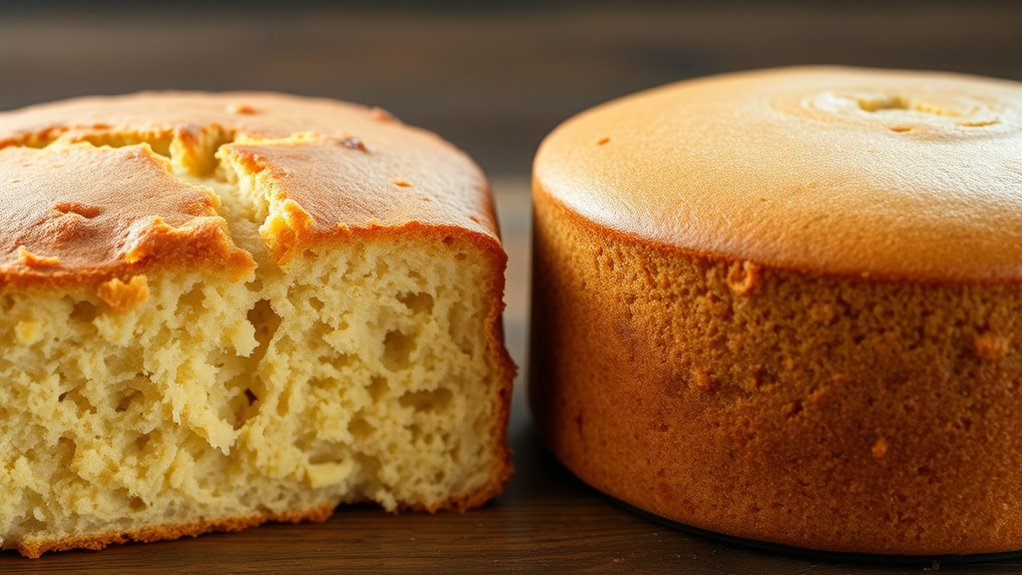
Have you ever wondered how moisture content influences baking when using butter versus oil? Butter contains about 15-20% water, which evaporates during baking, adding steam that helps create a tender crumb. Oil, on the other hand, has virtually no water, leading to a different moisture profile and texture. This difference impacts the final product’s moistness and shelf life. Additionally, the high moisture retention properties of butter can contribute to a softer texture in baked goods.
Why Do Melting Points Matter for Cake Crumb and Moisture?
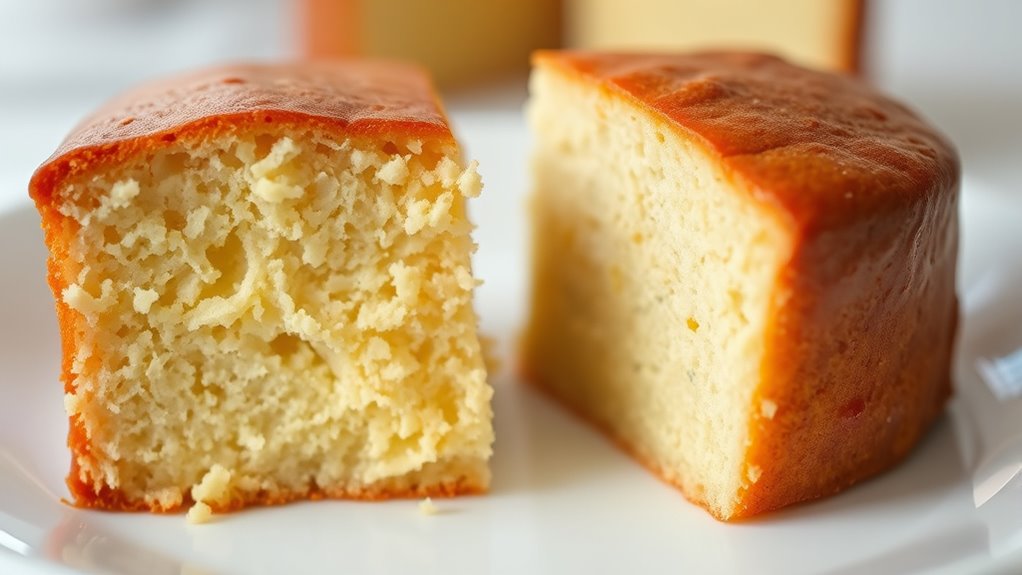
Your cake’s crumb and moisture rely heavily on melting points. When fats melt at different temperatures, they influence the cake’s texture and how well it retains moisture. Understanding these factors helps you choose the right fat for the perfect bake. Additionally, the type of fat used can affect the overall mouthfeel and stability of the cake, especially when considering hydrotherapy benefits that involve water’s therapeutic properties. Recognizing how energy-efficient cloud servers can support sustainable baking practices highlights the importance of environmentally conscious choices in the culinary industry. Being aware of credit card insights can also help bakers manage their business expenses more effectively. Moreover, the melting points of fats can impact the cake’s emulsification process, which is crucial for achieving a uniform crumb and moist texture.
A thorough understanding of melting point variations can also aid bakers in troubleshooting texture issues in their baked goods.
Melting Point and Texture
Melting point plays an essential role in determining a cake’s crumb and moisture because fats dissolve and soften at specific temperatures, impacting the overall texture. When you bake at the right temperature, fats like butter or oil melt consistently, creating a tender crumb. If the temperature is too high, fats melt too quickly, leading to a denser texture and uneven crumb structure. Conversely, a lower baking temperature allows fats to melt gradually, resulting in a moist, light cake. Additionally, melting points influence flavor development; fats that melt at appropriate temperatures release flavors more effectively, enhancing taste. Understanding how melting points interact with baking temperature helps you control cake texture, ensuring a moist, tender crumb with the desired mouthfeel. Proper temperature control is crucial for achieving the perfect balance between moisture and crumb structure in baked goods. Furthermore, using fats with appropriate melting points can help prevent over-melting, leading to more consistent results during baking. Recognizing the melting behavior of fats can also assist bakers in troubleshooting texture issues and adjusting recipes accordingly.
Moisture Retention Factors
Since fats with different melting points behave uniquely during baking, they substantially influence how much moisture the cake retains. Butter, with a higher melting point, melts gradually, helping trap moisture and keep the crumb tender. Oil, with a lower melting point, remains liquid, promoting even moisture distribution but risking faster moisture loss. Proper butter storage extends freshness, maintaining its ability to retain moisture, while oil’s shelf life remains longer, ensuring consistent moisture levels. The table below highlights key differences:
| Fat Type | Melting Point | Moisture Retention | Shelf Life |
|---|---|---|---|
| Butter | Higher | Better | Shorter |
| Oil | Lower | Moderate | Longer |
Additionally, understanding fats’ melting points can help bakers select the right fat for desired moisture and texture outcomes in cakes. Recognizing how fat composition impacts melting behavior further informs the choice between butter and oil for optimal baking results. Moreover, temperature control during storage can influence the melting properties and, consequently, the moisture retention of fats used in baking.
How Do Butter and Oil Interact With Other Ingredients During Baking?
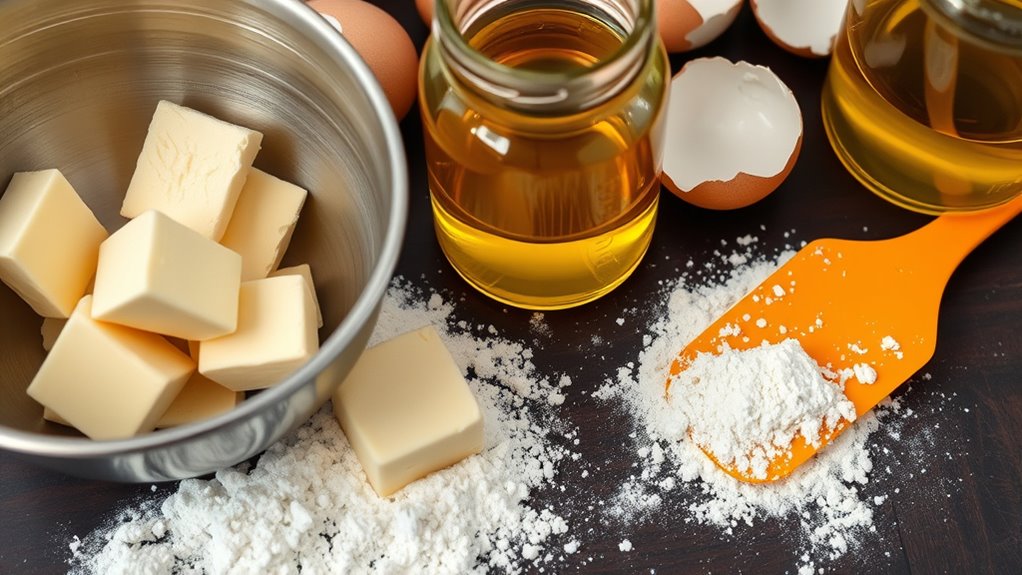
Butter and oil interact differently with other ingredients during baking, affecting the texture, structure, and flavor of your baked goods. Butter’s solid state at room temperature helps create a tender, crumbly texture by trapping air and supporting gluten development. Its flavor also enhances the overall taste. Oil, being liquid, blends smoothly with ingredients, resulting in a moister, denser crumb. The baking temperature influences these interactions; higher temperatures can cause butter to melt quickly, potentially altering structure, while oil remains stable. When substituting ingredients, consider how each fat’s behavior changes the recipe’s outcome. For example, replacing butter with oil can increase moistness but reduce structure, especially if the baking temperature isn’t adjusted accordingly. Additionally, understanding the fat composition of each ingredient can help predict how they will behave during baking. Recognizing the melting points of fats can also guide you in choosing the right fats for specific baking conditions. Understanding these interactions helps you achieve consistent, desired results. Knowing how solid vs. liquid fats behave during baking can further refine your ingredient choices for optimal texture and flavor, as different fats also influence the emulsification process in baked goods. Moreover, the emulsification ability of fats plays a crucial role in creating stable batters and improving the overall quality of your baked items.
How Flavor and Mouthfeel Impact Your Cake’s Overall Quality
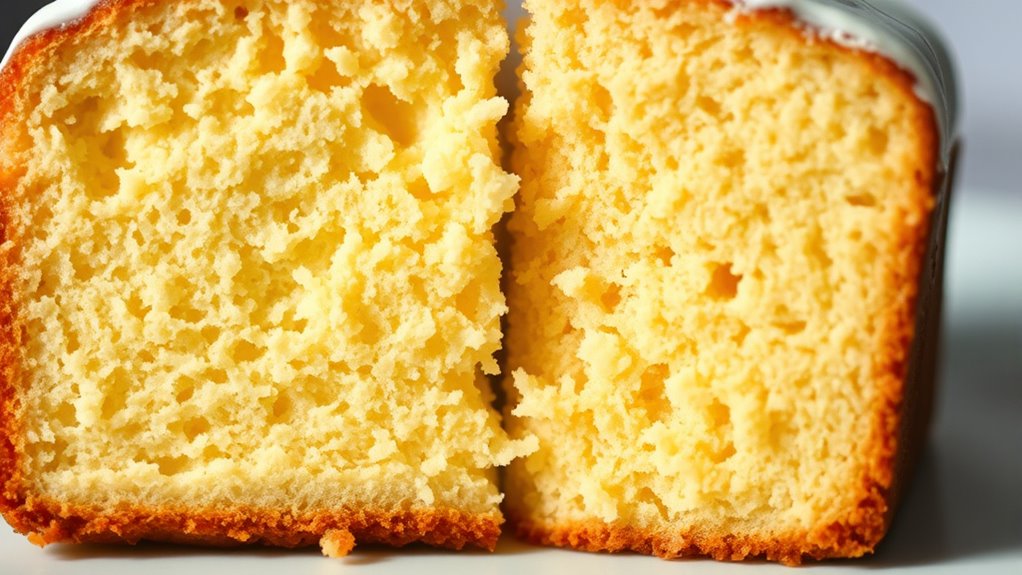
The fats you choose not only influence how your cake comes together during baking but also considerably affect its flavor and mouthfeel, shaping the overall eating experience. Butter imparts rich flavor nuances, adding a creamy, slightly nutty taste that enhances the cake’s depth. Oil, on the other hand, offers a more neutral profile, allowing other ingredients’ flavors to shine. Mouthfeel differences are also notable: butter gives a tender, crumbly texture, while oil produces a moist, smooth bite. These sensory qualities influence your perception of quality—whether you prefer the richness and complexity of butter or the light, moist feel from oil. Selecting the appropriate fat involves understanding ingredient interactions and how they contribute to the final texture and flavor profile of your cake. Understanding the cultural preferences surrounding baked goods can also help you choose the best fat for your recipe. Choosing the right fat depends on the flavor profile and mouthfeel you desire, ultimately shaping your cake’s appeal and enjoyment.
Frequently Asked Questions
Can Substituting Butter With Oil Affect Cake Rise and Structure?
Substituting butter with oil can definitely affect your cake’s rise and structure. Oil tends to create a moister texture and retains moisture better over time, but it may result in a slightly different rise and less tender crumb compared to butter. You might notice texture differences, with cakes being more moist but potentially less fluffy. Adjusting the recipe slightly can help you achieve the desired structure while enjoying the benefits of oil.
How Does the Choice of Fat Influence Cake Shelf Life?
You might think your cake’s shelf life is just about humidity, but it’s really about fat oxidation and storage stability. Choosing butter, with its higher water content, accelerates spoilage, making your cake go stale faster. Oil-based cakes, boasting better storage stability, stay fresher longer. So, if you want your masterpiece to last, opt for oils—your future self will thank you for the extended delight.
Are There Health Differences Between Cakes Made With Butter and Oil?
You’ll find that cakes made with butter have a richer flavor and more saturated fats, which can impact your health by raising cholesterol levels. Cakes with oil tend to be lighter, with less saturated fat, making them a slightly healthier option. When considering nutritional comparison, oil generally results in less fat absorption, but moderation is key. Choosing between butter and oil depends on your dietary goals and taste preferences.
Does Temperature Impact How Butter and Oil Behave During Baking?
Think of baking like a dance where temperature effects the performers. When you heat butter or oil, it’s like waking them up; temperature effects cause fats to melt differently. Butter melts at a lower temperature, so it reacts sooner, affecting cake texture. Oil remains steady longer, providing moisture. Controlling oven temperature guarantees fats behave just right, giving your cake the perfect rise and crumb.
Can Using Different Types of Oils Alter the Cake’s Flavor Profile?
Yes, using different types of oils can change your cake’s flavor profile. For example, coconut oil adds a subtle sweetness and enhances aroma profiles, while olive oil offers a rich, fruity note that influences flavor enhancement. Choosing an oil based on its aroma and taste can elevate your cake, making it unique and memorable. Experimenting with various oils allows you to tailor your cake’s flavor to suit your preferences perfectly.
Conclusion
Think of butter and oil as the artists behind your cake’s personality. Butter adds a rich, crumbly texture like a well-worn quilt, while oil keeps things moist and tender like a gentle rain. Choosing between them is like selecting the right brush for your masterpiece. By understanding their differences, you can craft a cake that’s not just baked, but truly brought to life—delivering a mouthwatering experience every time.