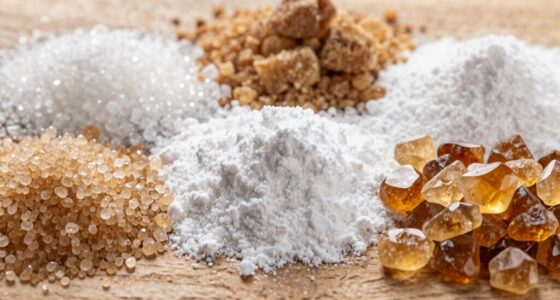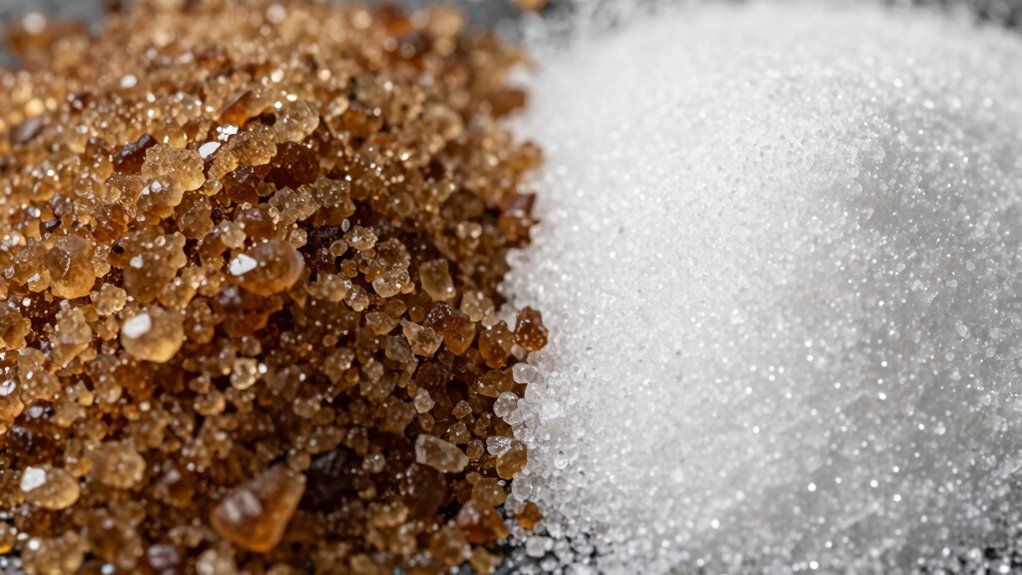

Brown sugar contains molasses, which makes it moister and richer in flavor than white sugar. Its moisture helps baked goods stay soft, chewy, and tender while creating a deeper caramel flavor during cooking. White sugar, lacking molasses, is drier and results in crisper or drier textures. Understanding these differences can help you choose the right sugar for your recipes to achieve the desired texture and flavor. Keep exploring to discover how these qualities affect your favorite baked treats.
Key Takeaways
- Brown sugar contains molasses, which increases its moisture content compared to white sugar.
- The higher moisture in brown sugar helps baked goods stay soft and chewy.
- White sugar’s lower moisture leads to crisper, drier textures in baked items.
- Moisture in brown sugar slows caramelization, producing richer, layered caramel flavors.
- The moisture difference influences baking outcomes, such as tenderness, shelf life, and flavor development.
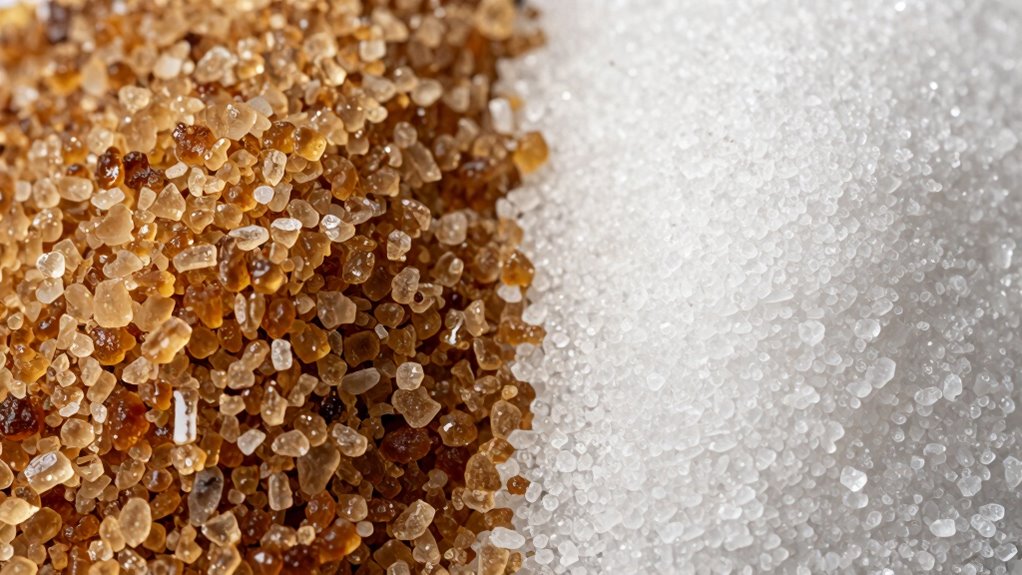
Have you ever wondered what truly sets brown sugar apart from white sugar? The answer lies in their composition and how they behave during cooking and baking, especially regarding moisture retention and sugar caramelization. Brown sugar contains molasses, which gives it its characteristic moist texture and rich flavor. This molasses component not only contributes to its dark color but also allows brown sugar to retain more moisture than white sugar. When you use brown sugar in recipes, you’re introducing more water content, which helps keep baked goods soft and moist. This moisture retention is one reason why cookies made with brown sugar tend to be chewier and more tender compared to those made with white sugar.
From a culinary standpoint, the presence of molasses in brown sugar impacts how the sugar caramelizes. Sugar caramelization is the process where sugar melts and turns into a caramel syrup when heated, developing complex flavors and a golden-brown hue. Brown sugar, with its higher moisture content, melts differently than white sugar. The additional moisture slightly slows down the caramelization process, resulting in a richer, more layered flavor. When you heat brown sugar, the molasses and retained moisture work together to produce a more intense caramel aroma and taste. Understanding this difference helps you choose the right sugar for specific recipes, especially those relying on caramelization for flavor depth.
The moisture retention properties of brown sugar also influence how it interacts with other ingredients. It helps create a softer, more pliable dough or batter because the retained moisture prevents the mixture from drying out too quickly. This is particularly useful in baked goods like gingerbread, molasses cookies, or moist cakes, where a tender, moist crumb is desired. Conversely, white sugar’s lower moisture content means it tends to produce crisper textures and drier baked goods, which can be preferable in certain recipes like meringues or sugar cookies. Additionally, moisture content plays a crucial role in the overall texture and shelf life of baked products, affecting their freshness and softness over time.
Frequently Asked Questions
How Does Moisture Content Affect Baking Outcomes?
Moisture content directly impacts your baking outcomes by influencing sugar crystallization and baking texture. Higher moisture levels, like in brown sugar, keep the sugar softer and prevent crystallization, resulting in chewier or moister baked goods. Lower moisture, as with white sugar, promotes crystallization, leading to crispier textures. Adjusting moisture helps you control the final product’s consistency, ensuring your baked goods turn out just right every time.
Can Moisture Levels Influence Sugar Shelf Life?
Moisture levels can definitely influence sugar shelf life. If moisture isn’t controlled, your sugar might cling together or develop mold, threatening its preservation. Imagine opening your pantry to find a clump of hardened sugar—what happened? Proper moisture control keeps sugar dry and fresh longer, ensuring it stays usable and safe. Stay vigilant with storage, and you’ll prevent moisture from sneaking in, safeguarding your sugar’s quality and shelf life.
Are There Health Differences Linked to Sugar Moisture?
You might wonder if sugar moisture affects your health. While higher moisture retention in brown sugar can lead to sugar crystallization more quickly, it doesn’t substantially change the health impact compared to white sugar. Both types contain similar calories and carbs. However, the moisture level can influence texture and storage, but it doesn’t directly alter the health risks associated with sugar consumption. Moderation remains key for both.
How Is Moisture Measured in Different Sugars?
Think of measuring moisture in sugar like checking the dampness of a sponge. You can use a moisture analyzer or oven drying method, which detects moisture content through sugar crystallization and moisture absorption. For example, a hygrometer measures how much water sugar holds. This helps you understand how much moisture is present, influencing texture and shelf life, much like how a sponge’s dampness affects its softness.
Does Humidity Impact Sugar Moisture Levels?
Yes, humidity fluctuations impact sugar moisture levels. When humidity rises, sugar absorbs moisture, making it clumpier and increasing the risk of sugar crystallization. Conversely, low humidity causes sugar to lose moisture, making it dry and hard. You should store sugar in airtight containers to minimize these effects, especially in environments with fluctuating humidity, ensuring it stays at the right moisture level for ideal use and preventing unwanted crystallization.
Conclusion
So, next time you’re craving that perfect sweetness, remember—brown sugar’s moisture might just be its secret weapon, keeping things softer and more flavorful. Yet, here’s the irony: all that moisture could mean more spoilage if you’re not careful. White sugar, on the other hand, stays drier and longer, but lacks that rich, caramel-mocha charm. Turns out, the choice isn’t just about taste—it’s about deciding which moisture mishap you’re willing to endure!