
Blender heat results from friction from spinning blades and motor work, raising the temperature of your mixture. In custards, this heat helps achieve a smooth, thickened texture by denaturing proteins, but too much can cause curdling. For chocolate, excess heat can cause it to seize, turning lumpy. Managing blending time, speed, and ingredient temperature can prevent overheating, ensuring your recipes turn out perfect. Keep exploring to learn how to control and benefit from blender heat effectively.

Get baking supplies delivered free — and shop member deals
- Fast, free delivery on millions of items
- Access to Prime Big Deal Days deals on October 6–7
- Prime Video, Amazon Music and more included
Key Takeaways
- Blender heat raises mixture temperatures, aiding in thickening custards and ensuring even chocolate melting.
- Excess heat can cause custards to curdle and chocolates to seize, affecting texture and consistency.
- Proper blending techniques, like short pulses and cooling breaks, help control heat buildup.
- Using lower speeds and avoiding overloading reduces friction and prevents ingredient damage.
- Monitoring temperature and adjusting blending duration maintains ingredient integrity and optimal results.
blender with temperature control
As an affiliate, we earn on qualifying purchases.
As an affiliate, we earn on qualifying purchases.
How Does Blender Heat Get Made When You Blend?

When you blend ingredients in a blender, the blades spin rapidly, creating friction against the food and liquids inside. This friction generates heat, and the amount depends on the blender motor design and the blending container material. A powerful motor delivers higher rotational speeds, which increases friction and heat production. Meanwhile, the container material influences heat transfer; for example, plastic containers tend to insulate and retain heat better than glass ones. The design of the motor and the container both play roles in how much heat accumulates during blending. As you blend, the continuous friction between the blades and ingredients raises the temperature, especially in longer cycles. Additionally, motor efficiency impacts how quickly heat is generated during blending. Moreover, heat transfer principles explain how the heat dissipates or concentrates within the mixture. Factors like blending duration and ingredient composition also significantly influence the extent of heat buildup during the process. Understanding thermal conductivity helps explain how different materials affect heat retention during blending.
high-speed blender for custards and chocolates
As an affiliate, we earn on qualifying purchases.
As an affiliate, we earn on qualifying purchases.
Why Do High-Speed Blenders Generate Heat?
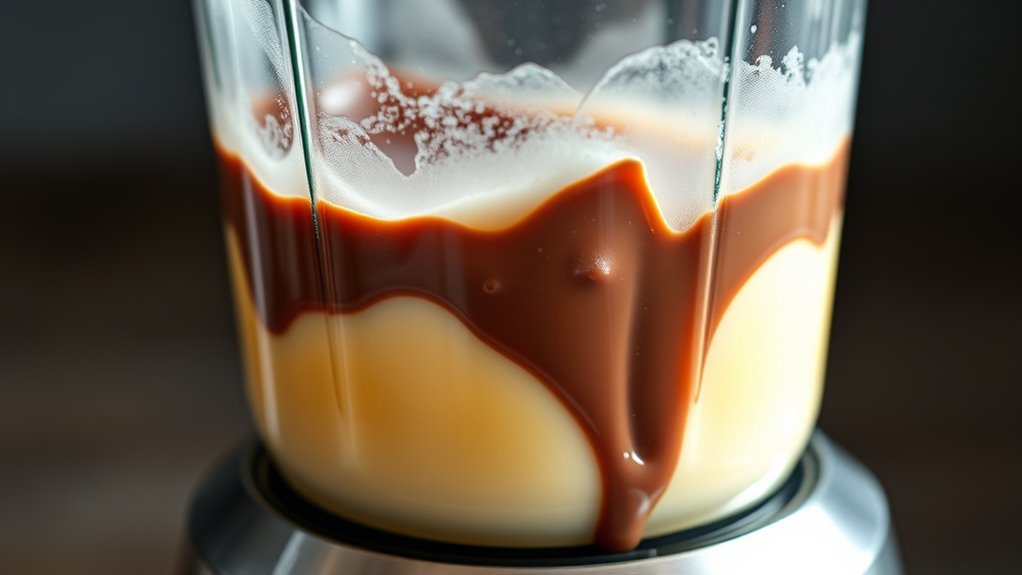
High-speed blenders generate heat because their powerful motors spin the blades at extremely high RPMs, creating intense friction against the ingredients. This rapid blending speed causes the motor to work harder, producing heat as a byproduct. The motor design plays a vital role here; more efficient designs can reduce excess heat while maintaining high performance. Your blending speed directly impacts how much heat is generated—faster blending leads to more heat. Additionally, the sound design involved in motor operation can influence heat production, as quieter models often incorporate better insulation and cooling mechanisms. The cooling systems incorporated into some blenders help dissipate heat and prevent overheating during extended use. Understanding the thermal management strategies in blender technology can further help in minimizing heat buildup during operation. Proper maintenance practices, such as cleaning and ensuring ventilation, also contribute to effective heat regulation and prolong the lifespan of the blender.
As an affiliate, we earn on qualifying purchases.
How Does Blender Heat Change Custard Texture?
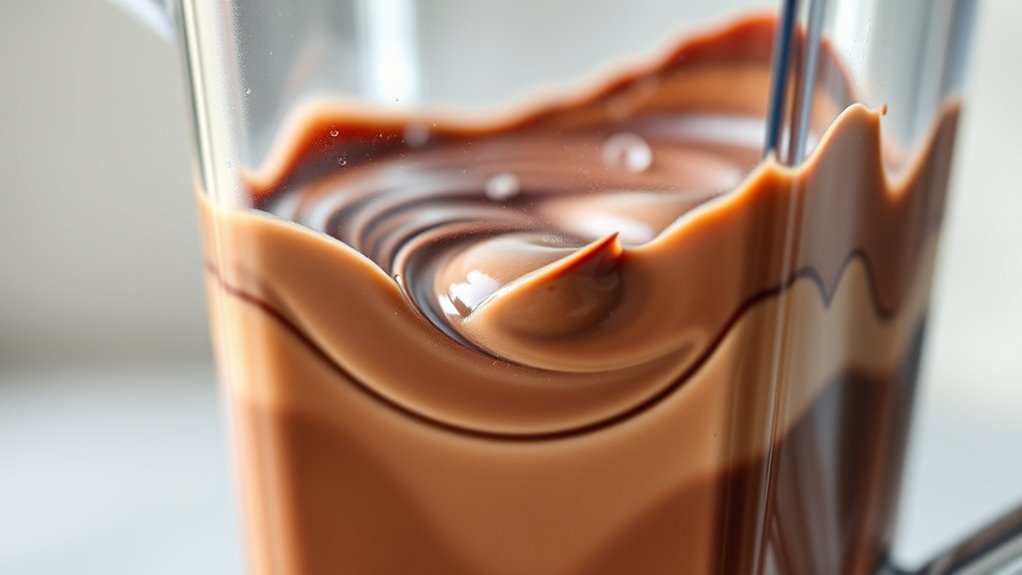
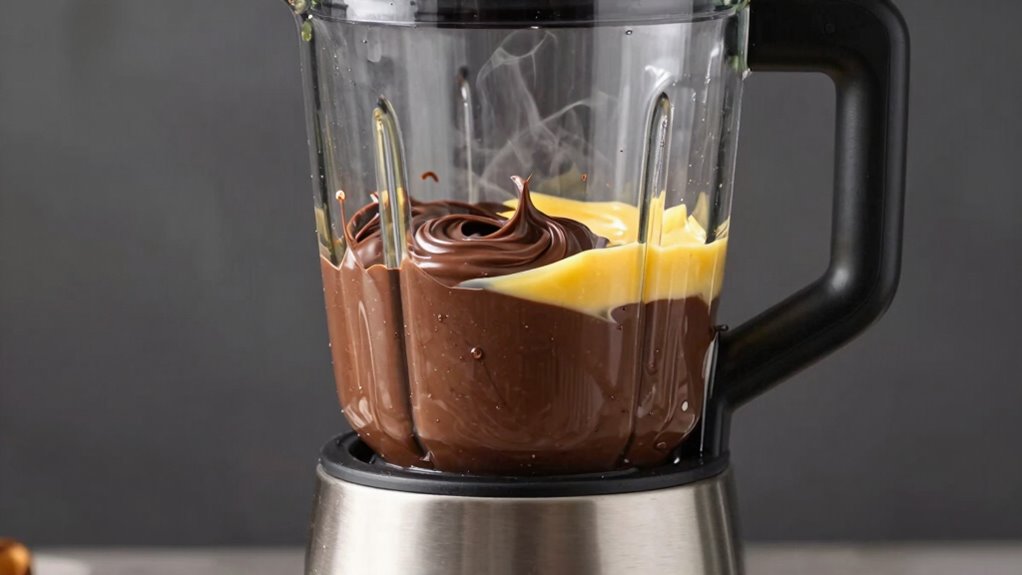
As your blender generates heat during operation, the temperature of the mixture can rise considerably. This heat can cause the custard’s proteins to denature more rapidly, leading to a thicker, creamier texture. The gentle warming encourages a smoother consistency by reducing lumps and promoting even mixing. Additionally, the elevated temperature enhances flavor development, making the custard taste richer and more rounded. The heat also helps dissolve sugar and other ingredients more thoroughly, resulting in a more homogeneous mixture. This heat-driven process can markedly improve the custard’s texture and flavor, giving you a more desirable and satisfying end product. Proper tool maintenance ensures consistent heat generation and prevents overcooking or curdling during blending. Regularly inspecting and cleaning your blender blades and motor components can help maintain optimal heat control, ensuring your custard remains smooth and perfectly textured. Moreover, understanding how temperature influence affects the mixture allows for better control and consistency in your culinary results. Additionally, controlling blender speed can help manage heat buildup and prevent overheating that might negatively affect the custard.
blender heat dissipation accessories
As an affiliate, we earn on qualifying purchases.
As an affiliate, we earn on qualifying purchases.
Why Does Blender Heat Cause Chocolate to Seize?
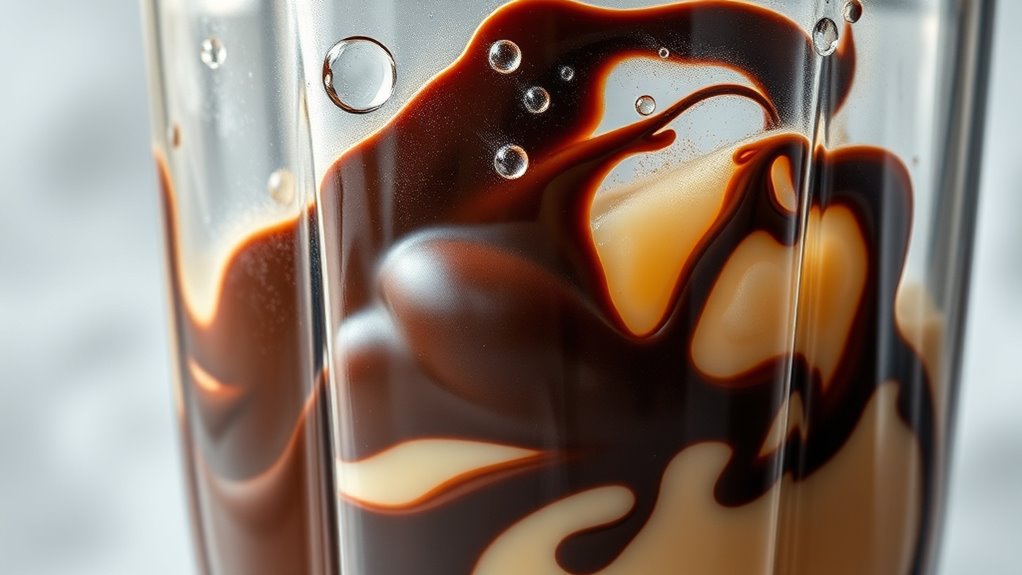
Blender heat causes chocolate to seize because the rising temperature disrupts the delicate balance of cocoa solids and fats, causing them to separate and clump together. When the blender temperature gets too high, the chocolate’s fats melt unevenly, and the cocoa solids harden suddenly, resulting in chocolate seizing. This process turns smooth, glossy chocolate into a thick, lumpy mass. To avoid this, keep your blender cool and monitor the temperature carefully. Connected equipment and proper temperature control are essential to prevent overheating during processing. Here are some common reasons why chocolate seizing happens:
- Overheating the blender during processing
- Using high blender speeds for too long
- Adding water or moisture unexpectedly
- Processing cold chocolate in a hot blender
- Not stopping before the blender gets too warm
Understanding these factors helps you prevent chocolate from seizing and ensures a smooth, luscious mixture every time. Additionally, awareness of thermal sensitivity in chocolate is crucial to maintaining its ideal texture and appearance. Proper quality assurance practices can help identify issues early and maintain consistent results. Moreover, understanding temperature control techniques can significantly reduce the risk of overheating and seizing during blending.
Which Factors Make Your Blender Heat Up Fast?
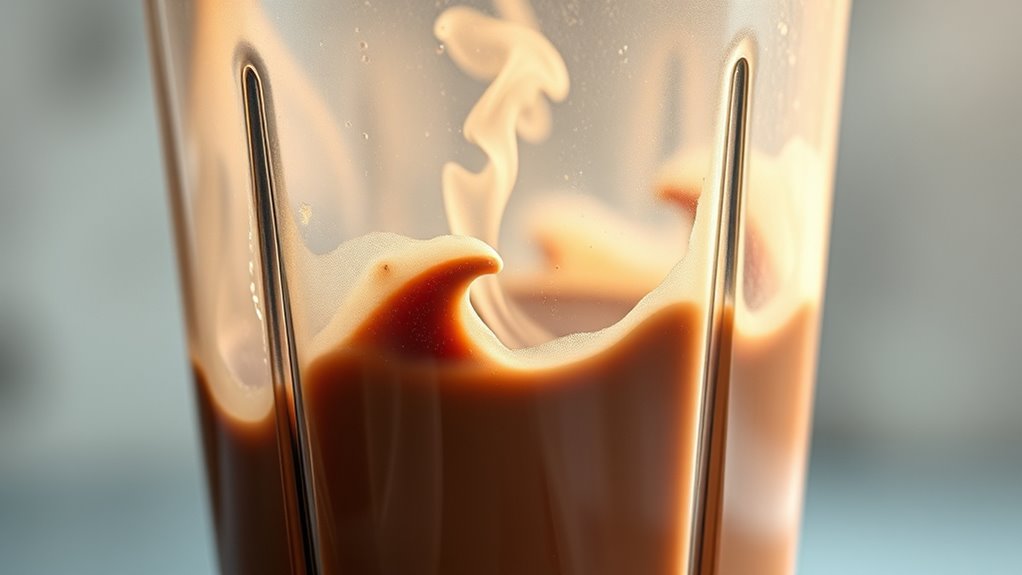
Several factors can cause your blender to heat up quickly during use. One major factor is motor friction; when the motor works harder, it generates more heat. Overloading the blender or blending tough ingredients can increase this friction, leading to faster heating. Additionally, blade design plays a role—blades with sharp, efficient edges reduce the strain on the motor, preventing excessive heat buildup. Conversely, poorly designed or dull blades force the motor to exert more effort, raising temperatures rapidly. Continuous blending at high speeds also contributes to heat accumulation. Being mindful of these factors helps you avoid overheating your blender, ensuring smoother operation and better preservation of delicate ingredients like custards and chocolates. Recognizing the impact of motor efficiency on your blending habits can also help you choose the right settings for optimal performance. Moreover, understanding heat generation during blending can guide you in preventing equipment damage and maintaining ingredient quality. Properly managing blending duration can further reduce the risk of excessive heat build-up, and paying attention to cooling mechanisms can help prolong your blender’s lifespan.
How Can You Keep Blender Heat in Check?
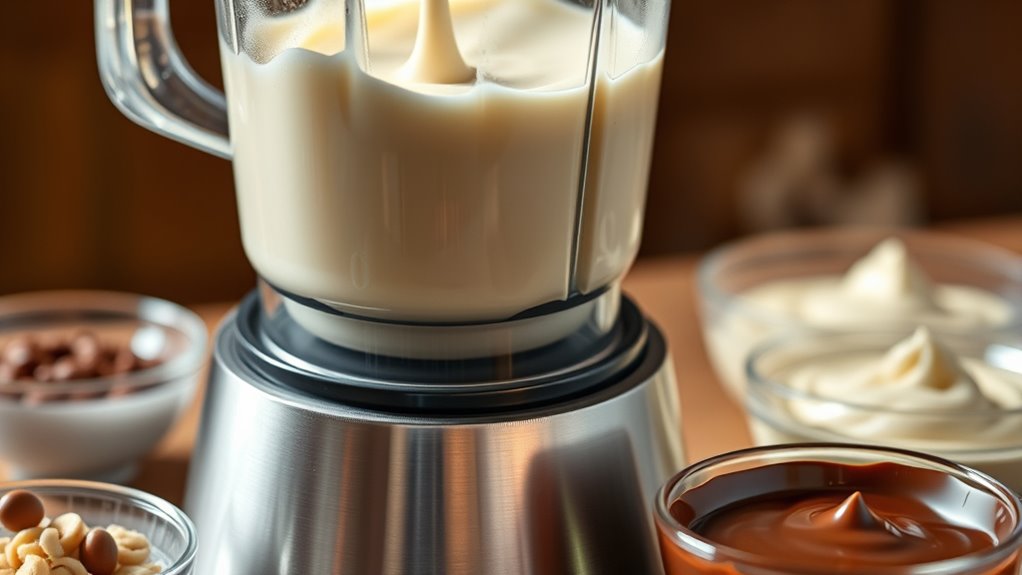
To keep your blender from overheating, try using short blending intervals and giving it breaks in between. Lowering the speed settings can also reduce heat buildup, protecting your appliance. Incorporating cooling breaks and adjustments helps maintain peak performance and extends your blender’s lifespan. Additionally, understanding simple systems for manageable maintenance can ensure your blender stays in top condition over time. Regularly inspecting and cleaning the airless paint sprayer components can prevent internal blockages and overheating issues, further safeguarding your device. Being aware of appliance cooling techniques can help you optimize your blending routine and avoid unnecessary strain on your equipment.
Use Short Blending Intervals
When managing heat buildup during blending, using shorter blending intervals can be highly effective. This prevents the motor from overheating and reduces blender noise, helping preserve motor durability. By blending in bursts of 10-15 seconds, you give the motor a chance to cool down between sessions. This approach also minimizes heat transfer to your ingredients, maintaining their texture and flavor.
- Avoid continuous blending, which causes unnecessary heat
- Let the motor rest briefly between intervals
- Keep an eye on blender noise levels—louder sounds indicate strain
- Use pulse functions for better control
- Prevent overheating to extend your blender’s lifespan
Short intervals not only protect your appliance but also improve blending consistency. Consistently monitoring the motor’s performance ensures you get smooth results without risking damage to your blender.
Incorporate Cooling Breaks
Incorporating cooling breaks into your blending routine is essential for preventing overheating and prolonging your blender’s life. To effectively manage heat, use cooling techniques such as stopping every 30 to 60 seconds to let the motor rest. During these breaks, you should also focus on temperature monitoring—check your mixture’s temperature if possible, or simply feel if it’s getting too warm. This helps prevent ingredients like custards and chocolate from overheating, which can compromise texture and flavor. Keep a close eye on your blender’s motor and avoid continuous high-speed blending, especially with dense ingredients. By integrating regular cooling breaks, you reduce the risk of damage and maintain excellent blending conditions. Consistent temperature monitoring ensures you keep heat in check without sacrificing efficiency.
Opt for Low-Speed Settings
Using low-speed settings during blending is one of the simplest ways to keep heat in check. When you blend at a slower pace, you reduce blender noise and prevent excess friction that can heat your ingredients. This also helps preserve blade sharpness, which can dull faster when overused at high speeds. Plus, lower speeds minimize splattering and create a more controlled blend, keeping ingredients evenly mixed without generating unnecessary heat.
- You’ll notice less noise, making your kitchen experience quieter
- Blade sharpness stays intact longer
- Less friction means less heat buildup
- Reduced noise makes it easier to monitor your mixture
- Gentle blending preserves delicate textures better
Choosing low-speed settings is a smart move to protect your custards and chocolates from heat damage.
When Should You Use Blender Heat to Your Advantage?
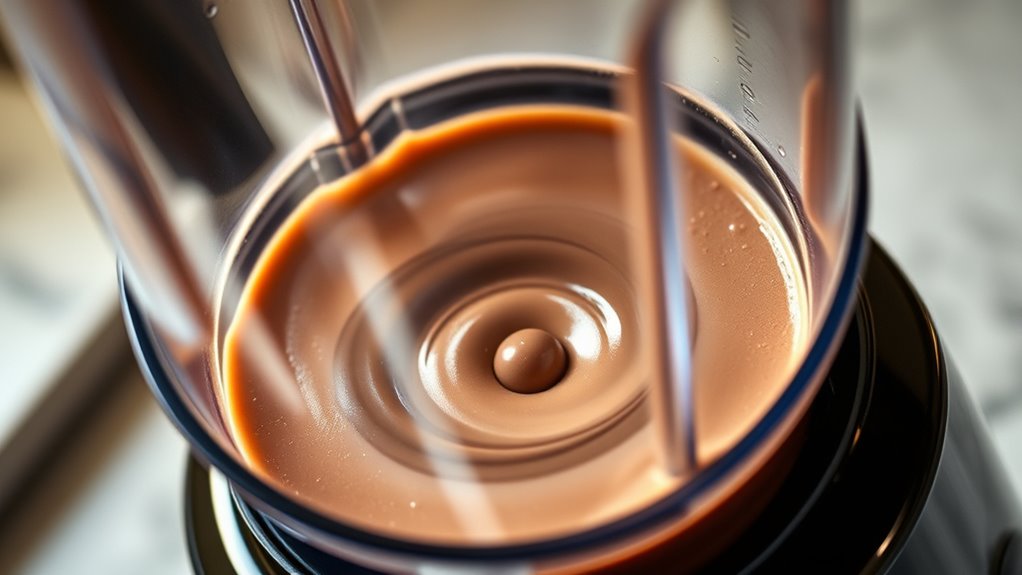
You should use blender heat when you need to achieve a perfect, smooth consistency in your mixture. It’s also essential to monitor heat closely to prevent overheating and potential damage. Knowing the right moments to use heat can help you get the best results without risking your equipment.
Achieving Perfect Consistency
Achieving the perfect consistency often hinges on knowing exactly when to turn up the heat on your blender. Using blender heat strategically can help you reach smooth, velvety textures in custards and chocolates. Keep these tips in mind:
- Use heat when your mixture begins to thicken and needs a gentle push
- Rely on thermal regulation to prevent uneven heating or burning
- Monitor equipment maintenance to avoid overheating or malfunction
- Adjust heat gradually to maintain control over the consistency
- Stop heating once your mixture reaches the desired smoothness
Balancing heat application ensures your ingredients blend seamlessly without compromising flavor or texture. Proper thermal regulation and regular equipment maintenance are key to preventing overprocessing, giving you that perfect, luscious finish every time.
Preventing Overheating Risks
While applying heat in your blender can enhance textures, it’s crucial to know when to avoid it to prevent overprocessing or burning your ingredients. Proper blender maintenance is key to avoiding overheating risks. Always monitor the temperature and duration during ingredient preparation, especially when working with delicate items like custards or chocolate. Overheating can cause ingredients to seize, scorch, or become grainy. To minimize these risks, use the lowest effective heat setting and pulse intermittently. Keep the blender clean, ensuring no residual buildup that could cause uneven heating or damage. Remember, if you notice excess steam or unusual sounds, stop and check. Knowing when to use blender heat judiciously helps preserve ingredient quality and extends your equipment’s lifespan.
How Do You Control Blender Temperature Settings?
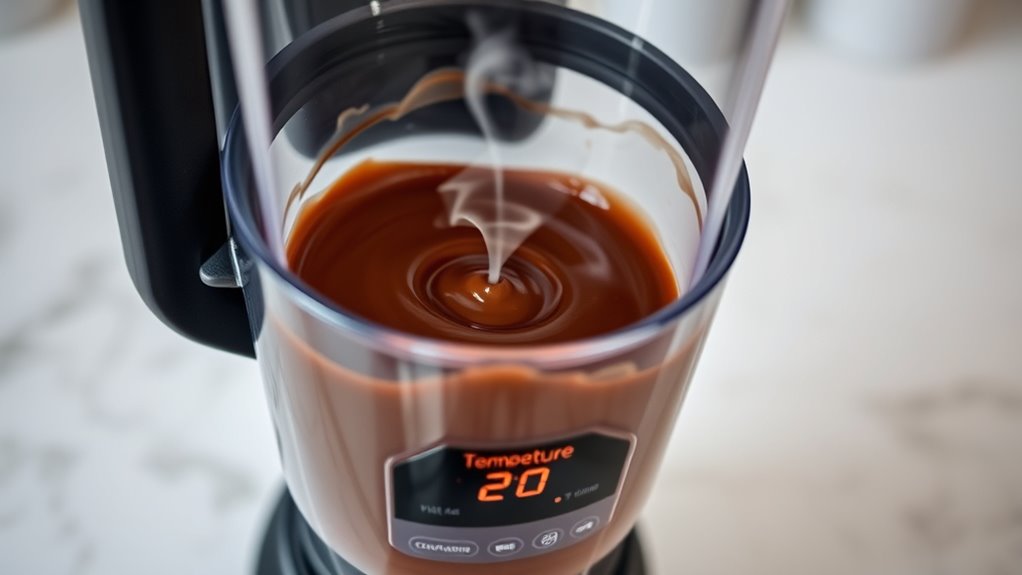
Controlling blender temperature settings is essential for achieving the perfect blend and maintaining appliance safety. To manage temperature regulation effectively, start by checking your blender’s manual for recommended settings. Use pulse functions or low-speed modes for delicate ingredients like custards and chocolates. Keep an eye on blending duration—longer blending can generate excess heat. If your blender has a built-in temperature control, adjust it according to your recipe’s needs. For manual control, consider using a thermometer to monitor internal temperatures.
Managing blender temperature is key for perfect blending and appliance safety. Use recommended settings and monitor internal heat.
- Use preset blending modes for consistent heat levels
- Avoid overloading the blender to prevent overheating
- Pause periodically to let the appliance cool down
- Clean the vents regularly to ensure proper heat dissipation
- Invest in a blender with adjustable temperature settings for better control
Tips for Perfect Custards and Chocolates With Blender Heat Control
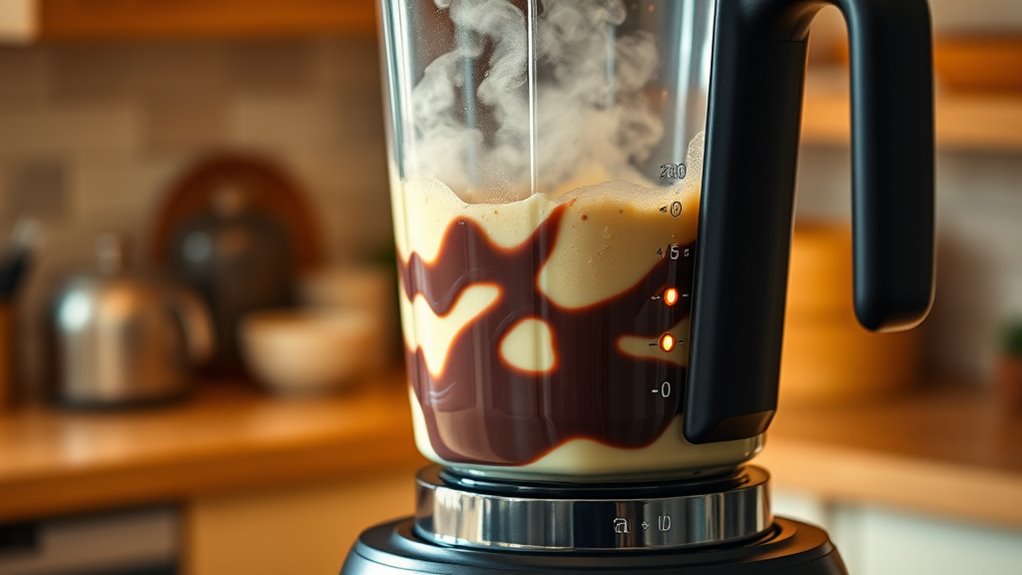
When making custards and chocolates with a blender, managing heat becomes a key factor in ensuring smooth, creamy results. To do this effectively, start with proper ingredient preparation; ensure all ingredients are at room temperature to prevent sudden temperature fluctuations. Regular blender maintenance is essential—clean the blender thoroughly to avoid residue buildup that can affect heat distribution. Use pulse settings or short blends to control heat exposure, avoiding prolonged blending that can cause overheating. Incorporate cooling pauses if you notice ingredients warming too much. Additionally, consider using a double boiler or placing the blender jar in a cold water bath between blends to regulate temperature. These tips help maintain consistent heat, resulting in perfectly smooth custards and chocolates every time.
Frequently Asked Questions
Can Blender Heat Damage Delicate Custard Recipes?
Yes, blender overheating can damage delicate custard recipes. When you blend heat-sensitive ingredients, the motor might generate enough heat to cook or curdle the custard. To prevent this, avoid running the blender for too long or at high speeds. Use short bursts and take breaks to keep the motor cool. This way, you protect your custard from overheating and maintain its smooth, creamy texture.
Does the Type of Blender Affect Heat Generation Levels?
Yes, the type of blender affects heat generation levels because different blender motors produce varying amounts of heat transfer. High-powered motors tend to generate more heat due to their increased power and speed, which can unintentionally warm delicate ingredients like custards or chocolate. Lower-powered blenders transfer less heat, helping preserve the texture and consistency of your recipes. Always consider your blender’s motor strength if heat transfer could impact your culinary results.
How Does Ambient Room Temperature Influence Blender Heat?
Imagine your blender as a tiny firebreather, its heat rising like smoke in a room. When ambient room temperature is high, it’s like adding fuel to the fire, making heat harder to control. To prevent overheat, you need effective temperature control and heat mitigation strategies. Cooler environments help keep the heat in check, ensuring your blending stays smooth without cooking your custards or melting your chocolate.
Are There Safety Risks Associated With High Blender Heat?
Yes, there are safety risks associated with high blender heat. Excessive heat can cause blender safety issues, such as burns if you open it prematurely or damage to the appliance. Heat hazards increase when blending hot ingredients, so always follow manufacturer instructions and allow the blender to cool down before handling. Ignoring these precautions can lead to accidents or equipment failure, so stay cautious to make certain safe blending practices.
Can You Intentionally Use Blender Heat to Speed up Cooking?
Sure, you can intentionally use blender heat to speed up cooking, but don’t expect precise results. With blender heat customization and manual temperature control, you might think you’re in charge, but it’s easy to overheat and ruin your custard or chocolate. So, while it’s tempting to rush things, remember that managing heat manually takes skill—otherwise, you may end up with a mess rather than a perfect dish.
Conclusion
Understanding how your blender generates heat helps you craft perfect custards and smooth chocolates. Did you know that high-speed blending can raise the temperature by up to 10°F in just a minute? By managing your blender’s speed and duration, you prevent unwanted seizing or curdling. Mastering heat control isn’t just about avoiding mistakes—it’s about unblocking your ingredients’ full potential for silky textures and rich flavors. Keep experimenting, and you’ll create desserts that truly impress.
Halloween Picks
halloween
As an affiliate, we earn on qualifying purchases.