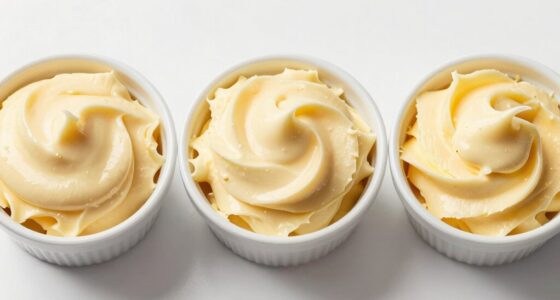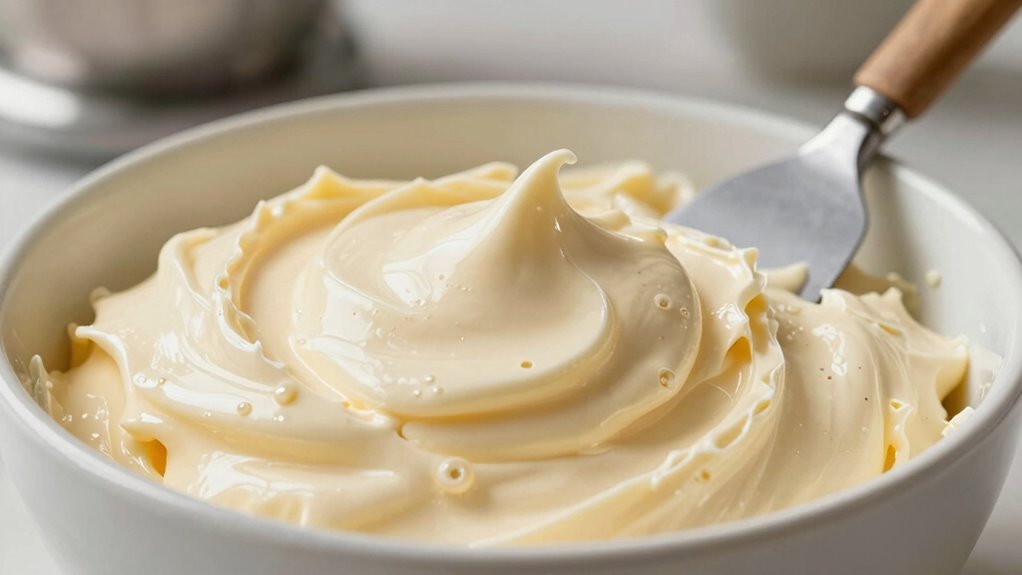

To prevent buttercream from crusting too fast, adjust your ingredients by using less powdered sugar and adding small amounts of milk or cream for softness. Keep your workspace cool and cover the buttercream when not in use. Work in a temperature-controlled environment and lightly mist the surface if needed. Choosing buttercreams like Swiss or Italian meringue can also help, along with proper mixing techniques. Keep exploring for more tips to extend your buttercream’s workable time.
Key Takeaways
- Cover buttercream with plastic wrap or damp towel when not in use to prevent exposure to air.
- Work in cooler environments or on chilled surfaces to slow crust formation.
- Incorporate small amounts of heavy cream or milk to keep buttercream soft and pliable longer.
- Use Swiss or Italian meringue buttercream, which crusts less quickly than American buttercream.
- Misting the surface lightly with water can temporarily maintain softness during decorating.

Ever wonder why your buttercream crusts too quickly, making it difficult to achieve a smooth, professional finish? It’s a common frustration among bakers, especially when you’re trying to create impressive cake decorations or enhance flavors. The key lies in understanding what causes crusting and how to control it so your buttercream stays workable longer, giving you ample time to perfect your design.
One major factor is the ingredients you use. Butter, powdered sugar, and liquids all influence how fast your buttercream crusts. Too much powdered sugar or using a high ratio of butter can cause the surface to dry out faster, forming that crust. To prevent this, consider adjusting your recipe slightly—using a bit less powdered sugar or adding a small amount of heavy cream or milk to keep the buttercream softer. When you add flavor enhancements like vanilla extract or other extracts, keep in mind that some liquids can accelerate crusting. Incorporate these gradually and in moderation to maintain a smooth, spreadable consistency.
Temperature and humidity also play vital roles. If your kitchen is warm or dry, your buttercream will crust faster. To counter this, keep your buttercream covered with plastic wrap or a damp towel when not in use. Working in a cooler environment or using a chilled work surface can slow down the drying process, giving you more time to work on your cake decorations. If you’re in a particularly dry climate, lightly misting the surface of your buttercream with a tiny spritz of water can help keep it pliable temporarily, making it easier to smooth out and decorate.
Another effective tip is to control the speed of your mixer when preparing the buttercream. Start slow to incorporate ingredients evenly, then increase to medium-high for a fluffier texture. Overmixing can introduce air that causes the surface to dry out faster, so stop as soon as the buttercream reaches the desired consistency. Once prepared, keeping your buttercream at a consistent, moderate temperature by storing it in a cool place before decorating prevents rapid crust formation.
Lastly, consider the type of buttercream you’re using. Swiss meringue or Italian meringue buttercreams tend to crust less than traditional American buttercream because of their smoother, more stable structure. These varieties also offer excellent options for cake decorations that require finesse and precision. Plus, they tend to be better at preserving flavor enhancements without compromising workability.
Frequently Asked Questions
Can the Type of Butter Affect Buttercream Crusting?
Yes, the type of butter can affect buttercream crusting. Using high-quality butter with the right fat content helps create a smoother, less crusty surface. Poor-quality or salted butter may cause faster crusting. Also, proper storage methods, like keeping butter at consistent, cool temperatures, prevent moisture loss or absorption that could speed up crusting. Choosing the right butter and storing it correctly keeps your buttercream soft and workable longer.
Does Ambient Humidity Influence How Quickly Buttercream Crusts?
Ambient humidity definitely impacts how quickly your buttercream crusts. Higher air moisture slows down evaporation, meaning your frosting stays soft longer, while low humidity accelerates crusting. If you’re in a dry environment, expect faster crust formation, so consider covering your work area or adding a bit more liquid to your buttercream. Understanding humidity impact helps you control crusting times, ensuring a smooth finish without rushing or cracking.
Is It Better to Refrigerate or Keep Buttercream at Room Temperature?
It’s better to keep buttercream at room temperature for easier spreading and smoother consistency. Use proper storage methods by covering it tightly to prevent crusting and absorbing fridge odors. Maintain temperature control by not exposing it to extreme heat or cold, which can cause it to spoil or crust prematurely. If you need to store it longer, refrigerate, but bring it back to room temperature before applying for best results.
How Does Overmixing Buttercream Impact Crust Formation?
Overmixing buttercream can cause the effects of air incorporation, making it too light and fluffy, which impacts the buttercream consistency. When you overmix, it can also lead to the buttercream crusting faster because the excess air creates a surface that dries out more quickly. To avoid this, mix just until the ingredients are combined and smooth, maintaining a stable buttercream consistency that won’t crust prematurely.
Can Adding Gelatin or Cornstarch Prevent Buttercream From Crusting?
Yes, adding gelatin stabilizers or cornstarch thickeners can help prevent buttercream from crusting too fast. Gelatin stabilizers boost the buttercream’s moisture retention, keeping it soft longer, while cornstarch thickeners absorb excess moisture and slow crust formation. Mix small amounts carefully to avoid altering the texture. These ingredients work together to extend the buttercream’s workable period, making it easier to decorate without premature crusting.
Conclusion
By keeping your buttercream at the right temperature and adding the right amount of liquid, you can prevent it from crusting too quickly. Think of it like gardening—you need to nurture your frosting with patience and care, much like watering a delicate plant. When you master these techniques, your buttercream will spread smoothly, just like a well-tended garden blooms beautifully. With practice, you’ll find frosting becomes less a race against time and more a work of art.